
Understanding the Challenge of Pigment Dispersion in UV Inks
Stable pigment dispersion is essential for producing consistent UV inks for inkjet, screen printing, flexographic, and offset applications. Poor pigment wetting or stabilization can cause reduced color strength, unstable viscosity, sedimentation, uneven gloss, and inconsistent print quality.
In UV-curable systems, pigment dispersion must be considered alongside resin viscosity, adhesion, flexibility, and curing performance. Choosing a suitable resin and dispersing system is therefore more effective than relying on a single additive to solve every formulation problem.
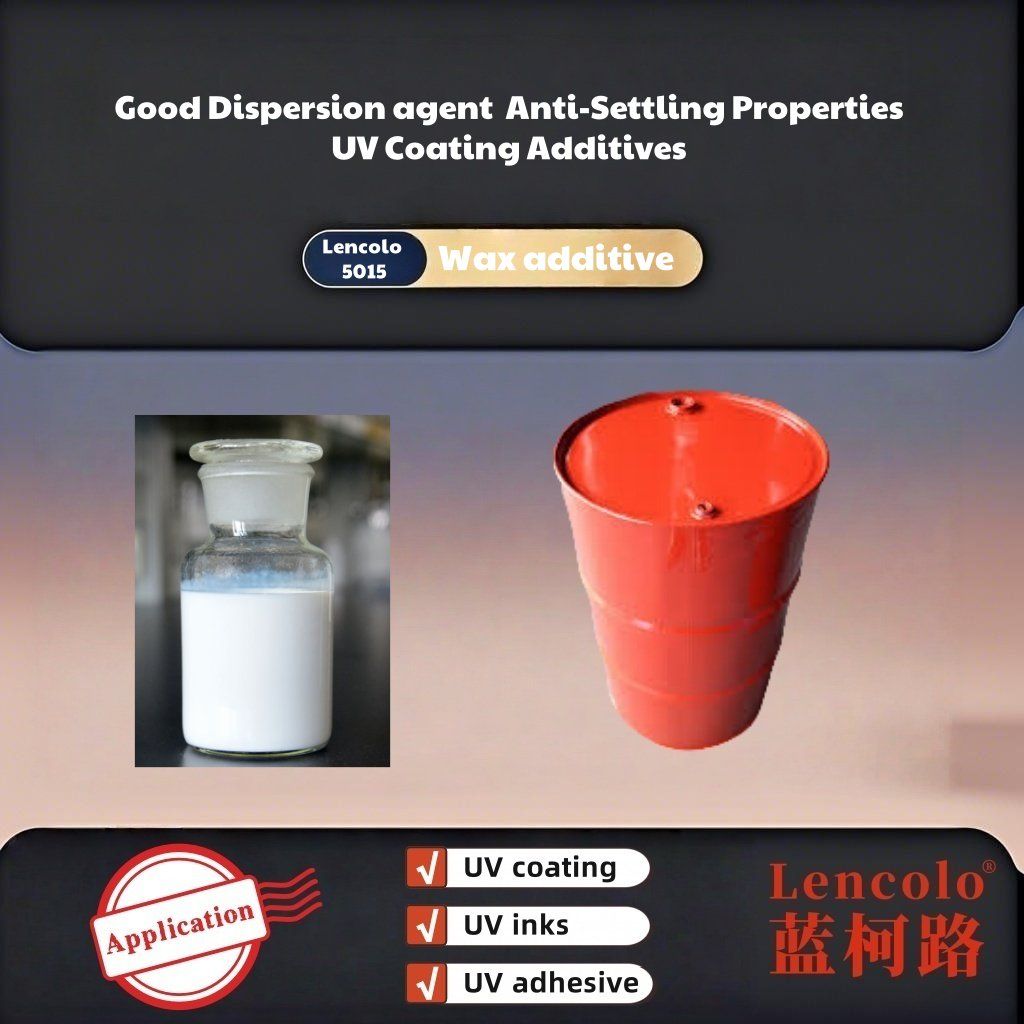
What Causes Pigment Dispersion Problems?
Pigment agglomeration can occur when the resin does not adequately wet or stabilize pigment particles. Inefficient grinding, excessive pigment loading, unsuitable viscosity, and incompatible additives may further affect dispersion stability.
Different pigments require different formulation approaches. Organic pigments, inorganic pigments, carbon black, and specialty powders vary in particle size, surface characteristics, and oil absorption. These differences influence resin compatibility and dispersant requirements.
Before changing a dispersing agent, formulators should identify whether the main issue is pigment wetting, particle breakdown, stabilization, viscosity control, or compatibility within the complete UV ink system.
Why Does Resin Selection Matter?
A UV resin does more than carry pigment particles. It influences viscosity, pigment interaction, flow behavior, and the performance of the cured ink film. Good pigment wettability may support more uniform color development, but the resin must also meet the requirements of the intended printing process.
Lencolo L-6121 is a low-viscosity UV polyester resin positioned for good pigment wettability in UV ink formulations. It can be considered when formulators need to improve pigment distribution while maintaining a manageable viscosity profile.
Lencolo L-6211 is a low-viscosity, two-functional UV polyurethane resin also positioned for good pigment wettability. Its polyurethane-based chemistry provides an alternative for developers who need to evaluate pigment interaction together with flexibility, toughness, and substrate compatibility.
The choice between polyester and polyurethane chemistry should depend on the complete performance target rather than pigment wetting alone.
Balancing Dispersion, Viscosity, and Film Performance
Viscosity is particularly important in UV inkjet applications, where stable jetting and printhead compatibility are essential. In screen, flexographic, and offset printing, rheology influences ink transfer, flow, print definition, and film formation.
A low-viscosity resin does not automatically guarantee better pigment dispersion. Pigment concentration, resin structure, monomer compatibility, and additive dosage must be evaluated together.
For formulations requiring greater flexibility, Lencolo L-6105, a low-viscosity UV polyurethane resin positioned for high elasticity, can be considered. When curing speed is a priority, Lencolo L-6111, a low-viscosity UV epoxy acrylic resin positioned for fast curing, provides another option for formulation screening.
These products address different performance requirements and should be evaluated according to the pigment, printing method, substrate, and curing conditions.
Pigment Dispersion and Substrate Adhesion
Stable pigment dispersion does not guarantee satisfactory printing performance if the cured ink has poor adhesion. Common substrates include glass, metal, PET films, plastics, and paper, each presenting different surface and adhesion challenges.
For glass and hardware applications, Lencolo L-8400A/8400B is positioned as a UV resin with good adhesion to these substrates. Lencolo L-6030/6040, a UV pure acrylic resin series, can also be considered when adhesion is an important requirement.
For PET-based printing and flexible films, Lencolo L-8412A, a UV polyurethane resin positioned for high flexibility on PET, provides another formulation option. Pigment dispersion should be evaluated together with adhesion, flexibility, folding resistance, and curing performance.
When Is a Dedicated Dispersing Agent Needed?
A resin with good pigment wettability may not provide sufficient stabilization for every pigment system. Additional dispersing support may be required when pigment loading is high or the pigment surface is difficult to wet.
Lencolo 1108 and Lencolo 1109 are positioned as wetting dispersants for matte powder. Their suitability for a particular formulation should be confirmed through testing, as dispersant performance depends on the solid material, resin system, and dosage.
Testing should examine color strength, viscosity, storage stability, gloss, transparency, foam, and cured-film performance. Increasing the additive dosage without controlled evaluation may create compatibility or surface problems.
How to Evaluate Pigment Dispersion
A reliable evaluation should cover preparation, storage, printing, and curing rather than focusing only on the freshly mixed ink.
Key checks include:
-
Compare resin and pigment combinations at the intended pigment loading.
-
Measure viscosity before and after dispersion and during storage.
-
Check color strength, gloss, transparency, and print uniformity.
-
Observe agglomeration, sedimentation, and changes in flow behavior.
-
Test adhesion and flexibility on the actual substrate.
-
Evaluate curing under the intended UV or LED equipment.
The testing method should reflect the printing technology. Inkjet inks require attention to viscosity and jetting stability, while screen, flexographic, and offset inks may require greater focus on rheology, transfer, and film thickness.
Developing a Balanced UV Ink Formulation
Pigment dispersion is a formulation compatibility issue involving resin chemistry, pigment characteristics, monomers, additives, and processing conditions. Lencolo L-6121 and L-6211 provide resin options positioned for pigment wettability, while L-6105, L-6111, L-8400A/8400B, L-6030/6040, and L-8412A address additional requirements such as flexibility, curing, and substrate adhesion.
The most suitable combination depends on the pigment type, printing process, substrate, viscosity range, and required cured-film properties. Laboratory screening and application-specific testing remain essential for confirming final performance and achieving stable, consistent UV ink production.
https://www.lencolo37.com/
Guangdong Lencolo New Material Co., Ltd.
About Author

You may also like
-
GRS Certified PCR Resins for FMCG Packaging in 2026
-
Eco-Friendly Paper Gift Bags Supplier For Reliable Partners
-
Is SMC Waterproof? Understanding the Water Resistance of SMC Materials
-
PETG Film Grade Resin Manufacturers for High-Performance Packaging Film Extrusion Systems
-
Supplier Streamlines Gift Packaging From Quote To Export