
In automated process systems, valves are rarely purchased as standalone components. They are selected as part of a control logic, a maintenance strategy, and often a long-term operating cost calculation. For applications that require frequent flow switching or line selection, the pneumatic three-way ball valve is often chosen not because it is complex—but because it reduces system complexity elsewhere.
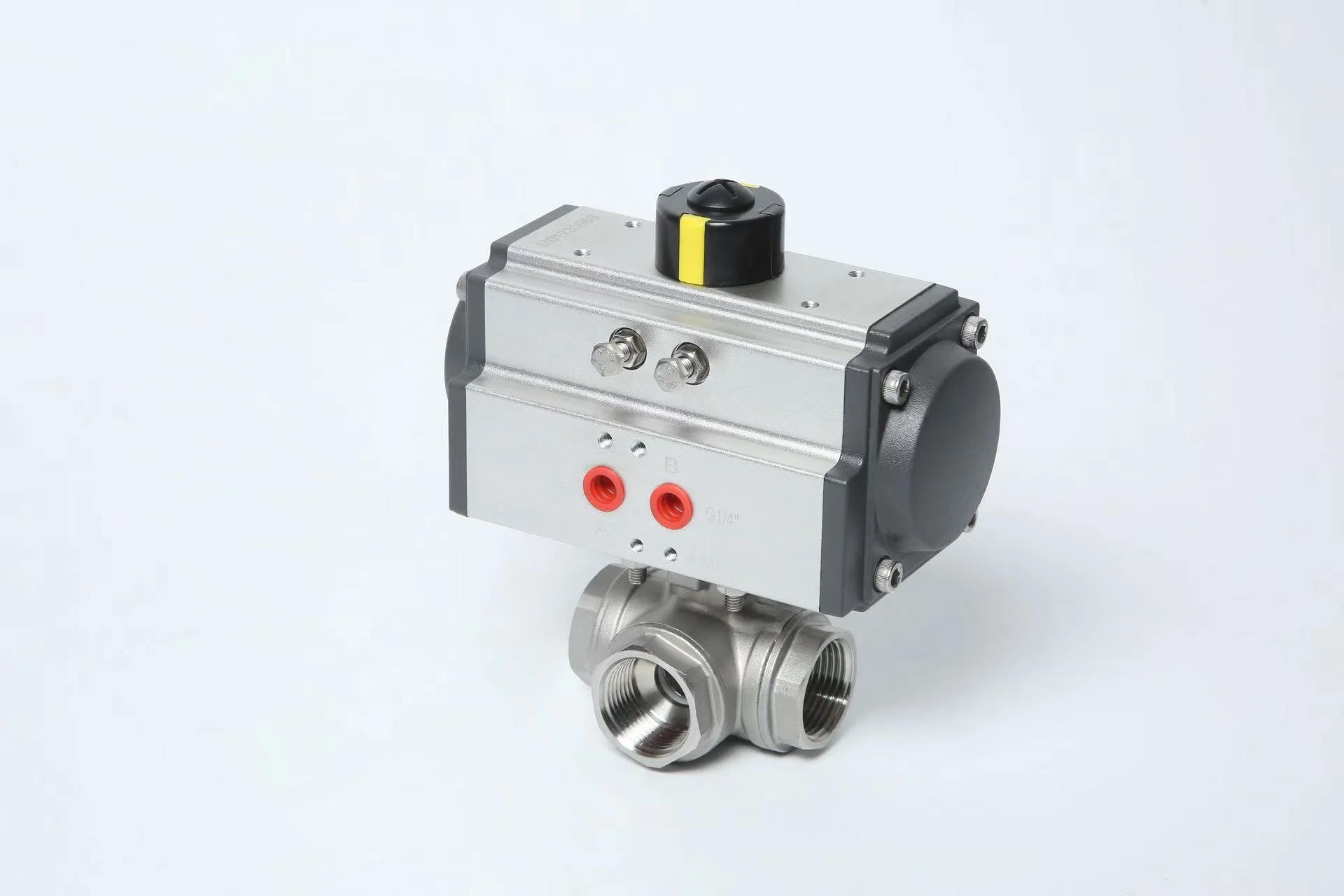
This article looks at pneumatic three-way threaded ball valves from a system integration perspective: how they simplify control architecture, reduce failure points, and support predictable operation over time. The discussion is based on the Pneumatic Three-Way Ball Valve from Zhejiang Maikailun Automatic Control Valve Co., Ltd.
Product reference: https://www.maikailunvalve.com/Pneumatic-Three-Way-Ball-Valve.html
Thinking beyond the valve: why system logic matters
In many plants, flow diversion is implemented by combining multiple two-way valves with interlocks. While functional, this approach introduces several issues:
-
More piping connections
-
Higher risk of leakage
-
Complex PLC logic
-
Increased maintenance workload
A single pneumatic three-way ball valve replaces that logic with one actuator, one valve body, and one control signal. From a system design standpoint, this reduces both mechanical and control-layer complexity.
For integrators, fewer components mean:
-
Simpler wiring and I/O allocation
-
Clearer control logic
-
Faster commissioning
-
Easier fault diagnosis
Control reliability: repeatability over operator dependency
One of the main advantages of pneumatic actuation is repeatability. In automated systems, repeatable motion is more valuable than raw speed.
With a pneumatic three-way valve:
-
Switching positions are defined and repeatable
-
Actuation time is consistent across cycles
-
Control signals can be fully standardized
This matters in applications where routing must happen hundreds or thousands of times per day. Removing manual intervention reduces variation between shifts and operators, which directly improves process stability.
Reducing failure points through valve consolidation
From a maintenance standpoint, every joint, seal, and actuator is a potential failure point. A three-way valve consolidates what would otherwise require multiple valves and fittings.
Compared with a multi-valve manifold, a three-way ball valve offers:
-
Fewer threaded joints
-
Fewer seals exposed to media
-
Reduced actuator count
-
Simplified spare parts management
In long-running systems, this consolidation often results in fewer unplanned shutdowns and lower cumulative maintenance effort.
Lifecycle cost perspective: why fewer parts matter
Initial purchase cost is only one part of the equation. Over the life of a system, operating costs are driven by:
-
Maintenance labor
-
Spare parts inventory
-
Downtime due to valve failure
-
Troubleshooting and diagnostics
A pneumatic three-way valve can reduce lifecycle cost by:
-
Lowering the number of components to maintain
-
Simplifying replacement and servicing
-
Reducing downtime during changeovers
For plants operating continuously or under tight production schedules, these indirect savings often outweigh the difference between component choices.
Actuator selection and torque matching
From an engineering perspective, correct actuator sizing is critical. Under-sizing can lead to unreliable switching, while over-sizing increases wear and air consumption.
Maikailun’s actuator range—covering multiple pneumatic actuator types and torque outputs—supports proper matching between valve size, media conditions, and switching frequency. For system designers, this flexibility helps ensure that the valve operates reliably across its full service life.
Role of accessories in system-level reliability
In automation projects, valve accessories are not optional extras—they define how the valve interacts with the control system.
Key accessories include:
-
Solenoid valves for signal control
-
Filter regulators for stable air supply
-
Limit switch boxes or position feedback devices for status monitoring
-
Manual overrides for maintenance or emergency operation
When these components are selected as part of a unified automation package, integration becomes more predictable. Control engineers can standardize wiring, diagnostics, and spare parts across multiple valves and lines.
Threaded design and maintenance strategy
Threaded three-way valves are often selected for systems where:
-
Equipment is compact
-
Maintenance access is limited
-
Valves may need periodic replacement
From a maintenance planning standpoint, threaded connections allow faster removal without cutting or welding. This can be especially valuable in skid-mounted systems or modular production units.
However, threaded installations require:
-
Proper sealing practices
-
Vibration management
-
Periodic inspection
When installed correctly, threaded designs support efficient maintenance without sacrificing reliability.
Where pneumatic three-way valves add the most value
From a system integration viewpoint, these valves are most valuable in:
-
Automated filter switching systems
-
Batch process routing
-
Equipment protection and bypass loops
-
Multi-line production systems with frequent changeovers
In these applications, predictable switching and simplified control logic directly improve system uptime.
Supplier capability as a system-level factor
For automation buyers, the valve supplier’s capability matters as much as the valve itself. Zhejiang Maikailun Automatic Control Valve Co., Ltd. positions itself as a manufacturer with deep experience in pneumatic actuators, valve automation accessories, and integrated solutions.
For projects that scale across multiple lines or facilities, working with a supplier that understands actuation, control, and integration reduces long-term technical risk.
Final takeaway for automation buyers
A pneumatic three-way ball valve should be evaluated not just as a mechanical component, but as part of a control system architecture. When selected and integrated properly, it simplifies piping, clarifies control logic, and reduces lifecycle costs.
For engineers and integrators focused on reliability and maintainability, this system-level view often leads to better long-term performance than assembling flow diversion from multiple smaller components.
www.maikailunvalve.com
Zhejiang Maikailun Automatic Control Valve Co . , Ltd
About Author

You may also like
-
Motorcycle Sprocket for Honda Wave 125
-
Petrochemical Side-Entry Ball Valve for High-Pressure Isolation
-
How Multi Pole Halbach Array Magnet Rings Improve Magnetic Field Control
-
How to Find a Reliable Disposable Tourniquet Manufacturer for Wholesale Supply
-
Low-Voltage Permanent Magnet Synchronous Motors for Efficient Industrial Applications