
Unlike traditional laser marking equipment, a fiber optical vision laser marking machine integrates a high-resolution vision system with a fiber laser source. This combination enables automatic positioning, real-time correction, and high-precision marking, even when parts are placed randomly on the worktable. For manufacturers pursuing automation, quality consistency, and reduced labor dependence, this technology delivers tangible operational value.
What Is a Fiber Optical Vision Laser Marking Machine?
A fiber optical vision laser marking machine is an advanced marking system that combines three core technologies:
-
Fiber laser source for stable, long-life laser output
-
Vision recognition system for automatic positioning and alignment
-
Intelligent control software for data processing and marking execution
Instead of relying on mechanical fixtures or manual alignment, the vision system identifies the actual position and orientation of each workpiece. The laser marking path is then dynamically adjusted to ensure precise marking, even when part placement varies.
For a technical overview of industrial-grade systems, you can refer to the fiber optical vision laser marking machine solutions provided by Mingzhi Laser:
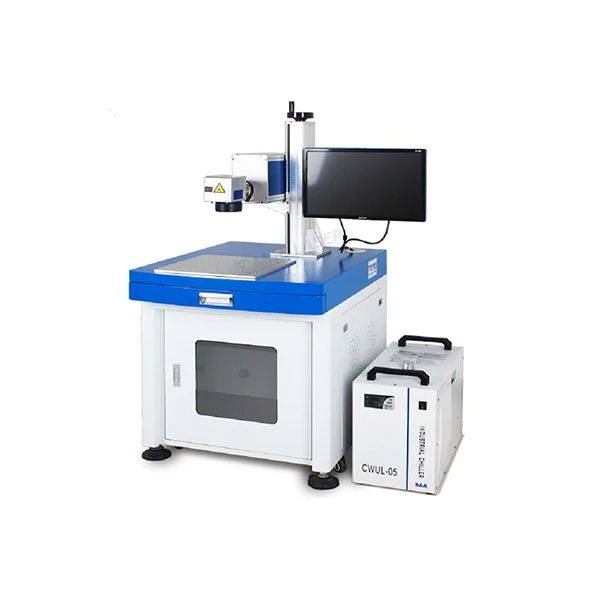
Why Precision Is a Real Production Challenge
In many factories, marking errors do not come from laser instability, but from positioning inconsistencies. Slight deviations in part placement can lead to:
-
Misaligned logos or text
-
Inconsistent QR code readability
-
Rejected parts due to cosmetic or traceability issues
-
Increased rework and scrap rates
Manual alignment or fixed fixtures may work for small batches, but they struggle in high-mix, high-volume environments. Vision-guided laser marking addresses this problem directly by adapting to real-world production conditions instead of forcing rigid workflows.
How Vision Technology Improves Marking Accuracy
The vision system is the core differentiator of this machine type. Cameras capture real-time images of the workpiece, and software algorithms analyze key reference points such as edges, holes, or predefined features.
This enables:
-
Automatic correction of X-Y position errors
-
Compensation for rotation and slight deformation
-
Consistent marking location across multiple parts
As a result, manufacturers achieve repeatable accuracy without relying on complex tooling. This is especially valuable for thin metal parts, electronic housings, and components with multiple marking positions.
Efficiency Gains Beyond Speed
While laser marking speed is important, overall efficiency is influenced by multiple factors. Fiber optical vision laser marking machines improve efficiency in several practical ways.
First, setup time is significantly reduced. Operators no longer need to fine-tune fixtures for each product variant. Program changes are handled through software, allowing faster product switching.
Second, labor requirements decrease. One operator can oversee multiple machines, as manual alignment and constant supervision are no longer required.
Third, downtime caused by marking errors is minimized. Automated vision correction reduces rejection rates and avoids production interruptions related to quality issues.
Fiber Laser Advantages in Industrial Use
Fiber lasers are widely adopted in industrial marking due to their stability and low maintenance requirements. When paired with vision systems, their benefits become even more pronounced.
Key advantages include:
-
Long service life with minimal performance degradation
-
Stable beam quality for fine marking details
-
High electrical efficiency and consistent output
-
Compatibility with metals, plastics, and coated surfaces
This makes fiber optical vision laser marking machines suitable for continuous production environments where reliability is critical.
Common Industrial Applications
Fiber optical vision laser marking machines are used across a wide range of industries where precision and traceability matter.
In electronics manufacturing, they are used for marking serial numbers, logos, and data codes on connectors, PCBs, and housings.
In automotive and machinery sectors, the machines mark metal components, fasteners, and structural parts with batch codes and compliance markings.
In medical device production, vision-guided marking ensures consistent placement on small, high-value components without damaging sensitive surfaces.
For consumer hardware and tools, the technology supports aesthetic branding while maintaining production speed.
Supporting Automation and Smart Manufacturing
As factories move toward automation and smart production lines, compatibility with upstream and downstream systems becomes essential. Fiber optical vision laser marking machines integrate easily with conveyors, robotic arms, and MES systems.
This enables:
-
Inline marking without stopping the production flow
-
Automated data input for variable marking content
-
Real-time quality feedback and traceability logging
Instead of operating as standalone equipment, the marking machine becomes part of a connected manufacturing ecosystem.
Quality Consistency and Brand Protection
Consistent marking quality is not just a technical issue—it directly affects brand perception. Inconsistent or poorly placed markings can make products look unprofessional and raise concerns about quality control.
Vision-guided laser marking ensures that branding elements, certification marks, and traceability codes are placed accurately every time. This consistency supports long-term brand credibility and compliance with industry standards.
Selecting the Right System for Your Factory
Not all vision laser marking machines offer the same performance. Key factors to evaluate include:
-
Vision system resolution and recognition accuracy
-
Software flexibility for different product types
-
Stability of the fiber laser source
-
Integration capability with existing production lines
Working with an experienced manufacturer like Mingzhi Laser ensures that the equipment is configured for real production requirements, not just laboratory conditions.
Long-Term Value for Manufacturers
From a lifecycle perspective, fiber optical vision laser marking machines deliver value beyond initial installation. Reduced labor dependency, lower rejection rates, and stable long-term performance contribute to predictable operating costs and higher overall equipment effectiveness.
For manufacturers producing high volumes or multiple product variants, this technology is not an upgrade—it is a strategic investment in production reliability.
Conclusion
Fiber optical vision laser marking machines significantly improve both precision and efficiency by combining intelligent vision recognition with stable fiber laser technology. They eliminate manual alignment errors, support automation, and ensure consistent marking quality across diverse production environments.
With a strong focus on industrial reliability and application-driven design, Mingzhi Laser provides fiber optical vision laser marking solutions that help manufacturers meet modern production demands with confidence.
www.mingzhilaser.com
Mingzhi
About Author

You may also like
-
China's Reliable Wire Drawing Machine for Copper Wire Plants
-
How UWB Positioning Technology Is Transforming Precision Location Tracking
-
Kaiyue Unveils Cost-Effective Cordless Drill: A Game Changer in Market Trends
-
Comb Teeth Shuttle Parking System: Key Principles, Design Factors, and Supplier Selection
-
Electromagnetic Flowmeter: Reliable Measurement for Conductive Liquid Applications