
In water filtration systems, activated carbon plays a critical role in removing chlorine, organic compounds, odors, and certain chemical contaminants. Among the most commonly used carbon-based filtration media are carbon block filter cartridges and granular activated carbon (GAC). While both rely on activated carbon to purify water, their structure, performance, and application scenarios differ significantly.
What Is a Carbon Block Filter Cartridge?
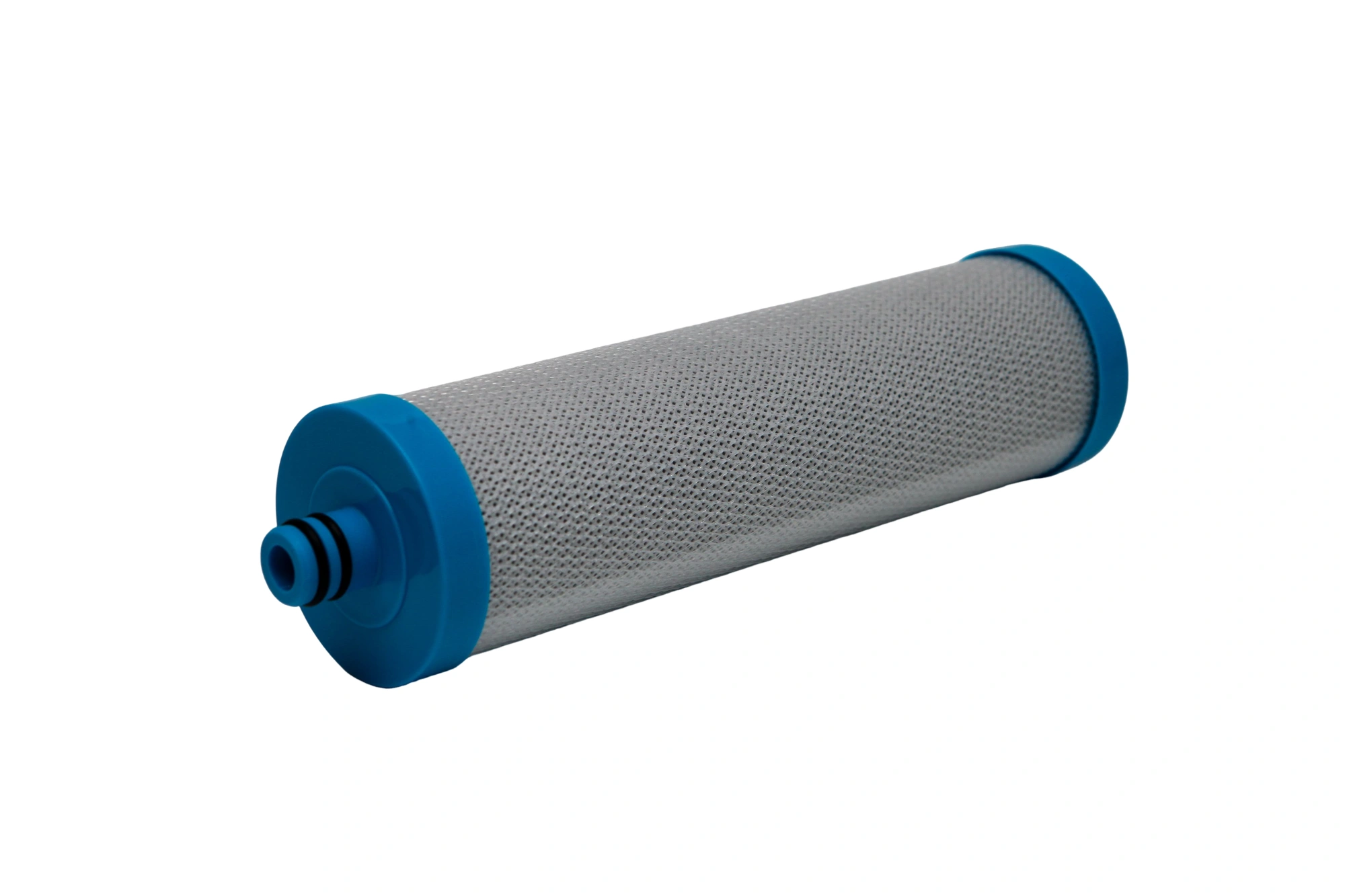
A carbon block filter cartridge is manufactured by compressing fine activated carbon powder with a food-grade binder into a solid, dense block. This structure creates a uniform filtration matrix that forces water to pass through microscopic pathways, ensuring consistent contact with the carbon surface.
Modern carbon block filter cartridge designs are widely used in residential drinking water systems, reverse osmosis pretreatment, commercial filtration units, and industrial water treatment applications where stability and precision matter.
Key characteristics include:
High carbon density
Uniform pore size distribution
Stable flow path
Excellent contaminant adsorption efficiency
What Is Granular Activated Carbon (GAC)?
Granular activated carbon consists of loose carbon granules packed into a filter housing or cartridge. Water flows around and between the granules, allowing contaminants to be adsorbed on the carbon surface.
GAC filters are widely used in applications where high flow rates and low pressure drop are required, such as whole-house water filtration, industrial process water treatment, and large-volume pre-filtration systems.
Typical features include:
Loose granular structure
Lower resistance to flow
Flexible system integration
Easier carbon replacement
Structural Differences and Their Impact
The most fundamental difference between carbon block and GAC filters lies in their physical structure.
Carbon block cartridges use a compressed, solid form that eliminates internal channeling. This means water cannot bypass the carbon media, resulting in more consistent filtration and predictable performance.
GAC filters, on the other hand, are prone to channeling over time. As water finds the path of least resistance, some granules may receive less contact, reducing overall adsorption efficiency in long-term operation.
For applications where filtration accuracy and repeatability are critical, structure alone gives carbon block filters a clear advantage.
Filtration Precision and Contaminant Removal
Carbon block filter cartridges offer superior filtration precision. Their dense structure allows them to combine adsorption with mechanical filtration, often achieving micron ratings as low as 0.5–5 microns.
This enables effective removal of:
Chlorine and chloramines
Volatile organic compounds (VOCs)
Taste and odor compounds
Sediment and fine particles
GAC filters excel at removing chlorine and organic compounds but typically lack fine particle filtration unless combined with additional filtration stages. They are better suited for bulk contaminant reduction rather than precision filtration.
Flow Rate and Pressure Drop Considerations
GAC filters generally provide higher flow rates with lower initial pressure drop, making them suitable for applications requiring large volumes of water with minimal resistance.
Carbon block filters, due to their dense structure, have a higher pressure drop but compensate with improved filtration efficiency and longer effective service life in controlled-flow systems.
System designers must balance flow demand with filtration performance when choosing between the two.
Service Life and Performance Stability
Carbon block filter cartridges are engineered for consistent performance throughout their service life. Because the carbon is immobilized, performance degradation is gradual and predictable.
GAC filters may experience uneven wear as granules shift, settle, or compact over time. This can result in fluctuating filtration efficiency and reduced contaminant removal before the carbon is fully exhausted.
For applications requiring stable, long-term performance—such as drinking water purification or process water systems—carbon block filters provide greater reliability.
Hygiene, Safety, and Compliance
Carbon block cartridges are often preferred in applications with higher hygiene requirements. Their solid structure minimizes carbon fines release and reduces the risk of bacterial growth inside the filter.
GAC systems may release fine carbon particles during initial use and can require additional rinsing or post-filtration stages to ensure water clarity.
Manufacturers like Ningbo H O focus on controlled production processes, food-grade materials, and strict quality control to ensure carbon block filter cartridges meet international water safety standards.
Typical Application Scenarios
Carbon block filter cartridges are commonly used in:
Residential and commercial drinking water systems
Reverse osmosis pretreatment
Point-of-use filtration devices
Bottled water production
Food and beverage processing
Granular activated carbon filters are more common in:
Whole-house water filtration
Industrial process water
Large-scale municipal pretreatment
Dechlorination systems with high flow demand
OEM and Customization Considerations
For OEM customers, carbon block filter cartridges offer greater customization flexibility. Parameters such as carbon type, micron rating, length, diameter, and end cap configuration can be tailored to specific system requirements.
GAC filters are easier to refill but offer less control over filtration precision and long-term performance consistency.
As a specialized manufacturer, Ningbo H O supports OEM projects with customized carbon block solutions designed to integrate seamlessly into different filtration systems.
Conclusion
While both carbon block filter cartridges and granular activated carbon play important roles in water treatment, they serve different purposes. GAC filters are suitable for high-flow, bulk filtration applications, while carbon block filters excel in precision, stability, and consistent contaminant removal.
Choosing the right option depends on system design, performance expectations, and application requirements. For customers seeking reliable, high-efficiency filtration with strong OEM support, carbon block filter cartridges remain a proven and versatile solution.
www.hocbtechwater.com
Ningbo H O
About Author

You may also like
-
Venous Blood Collection Needle: Key Factors for Selection and Sourcing
-
2026 Top 7 Whole-House Customization Picks for Luxury Villas
-
What is the Best Emergency Flashlight: Engineering Guide to Battery Performance, Reliability, and Multi-Function Design
-
Freestanding Tub Faucet Replacement: How to Choose the Best
-
High-Quality Solid Bamboo Flooring with Natural Wood Grain and Long-Lasting Durability