
In modern food manufacturing, metal detection systems play a critical role in ensuring product safety, regulatory compliance, and brand protection. Among the most commonly used solutions are the conveyor-type food metal detector and the pipeline-type metal detector. Although both serve the same purpose—detecting metallic contaminants—their design, application, and performance characteristics are quite different.
For food processors, choosing between these two systems is not simply a technical decision. It directly affects production efficiency, product compatibility, and overall food safety strategy. This article provides a detailed comparison to help manufacturers understand which system is more suitable for their specific production environment.
1. Overview of the Two Systems
Conveyor Type Food Metal Detector
A conveyor-type food metal detector is installed on a belt conveyor system. Products move through a detection tunnel, where the system scans for metal contaminants in real time.
This type is widely used in:
-
Packaged foods
-
Bakery products
-
Frozen foods
-
Snacks and confectionery
It is especially suitable for solid, individually packaged, or bulk dry products moving along a production line.
Pipeline Type Metal Detector
A pipeline metal detector is integrated directly into a sealed pipeline system. Instead of moving on a belt, the product flows through a tube where detection occurs continuously.
This system is mainly used for:
-
Liquids (milk, juice, sauces)
-
Semi-liquids (pastes, creams)
-
Slurries and pumped food materials
It is designed for flowing or pumped products, not solid items.
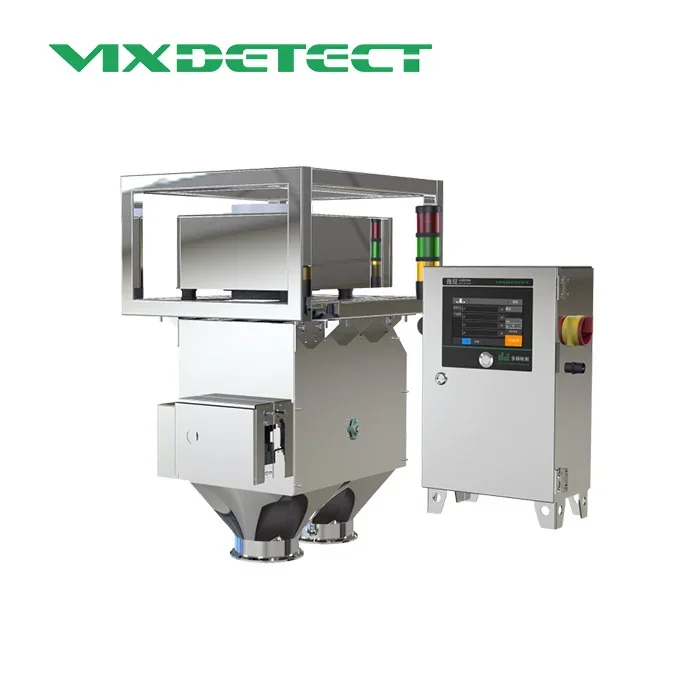
2. Key Differences Between Conveyor and Pipeline Metal Detectors
2.1 Product Type Compatibility
-
Conveyor Type: Best for solid foods, packaged goods, and dry bulk materials
-
Pipeline Type: Best for liquid, semi-liquid, or pump-transferred products
This is the most fundamental difference. Using the wrong system can significantly reduce detection accuracy.
2.2 Detection Method
-
Conveyor systems scan products as they pass through an open tunnel on a moving belt
-
Pipeline systems scan products as they flow through a closed tube under pressure or gravity
Both technologies detect ferrous, non-ferrous, and stainless steel contaminants, but the signal behavior differs depending on product movement.
2.3 Production Line Integration
-
Conveyor systems integrate with packaging or sorting lines
-
Pipeline systems integrate with mixing, pumping, or filling systems
This means conveyor detectors are usually part of the final inspection stage, while pipeline detectors are often installed earlier in the processing stage.
2.4 Speed and Throughput
-
Conveyor-type systems are ideal for high-speed packaged production lines
-
Pipeline systems provide continuous inline inspection without stopping flow
In general, both are suitable for high efficiency, but in different processing environments.
2.5 Sensitivity and Product Effect
Food products with high moisture, salt, or density can create interference known as the product effect, which may affect detection accuracy.
-
Conveyor systems may require calibration for different product types
-
Pipeline systems often use specialized coil designs to stabilize detection in liquids
Modern systems from both categories are capable of detecting even difficult metals such as stainless steel, depending on configuration.
3. Advantages of Conveyor Type Food Metal Detectors
Flexible for Multiple Industries
Conveyor systems are widely used in:
-
Bakery production
-
Meat processing
-
Snack manufacturing
-
Frozen food packaging
Easy Integration into Packaging Lines
They are usually placed at the end of production lines, ensuring final product safety.
Suitable for Packaged Goods
Since products are already formed or packaged, inspection is more standardized and stable.
Cost Efficiency
Compared to pipeline systems, conveyor detectors are generally more cost-effective for general food production setups.
4. Advantages of Pipeline Type Metal Detectors
Ideal for Liquid Food Safety
Pipeline systems ensure contamination control in:
-
Sauces
-
Dairy products
-
Beverages
-
Oils and liquid ingredients
Fully Closed System
Because the product is enclosed, there is:
-
Less environmental contamination risk
-
More stable detection conditions
Continuous Flow Inspection
No interruption of production flow is required, making it ideal for pumping-based processes.
High Hygiene Standards
Pipeline systems are easier to integrate into hygienic stainless steel piping systems used in food and pharmaceutical industries.
5. Limitations of Each System
Conveyor Type Limitations
-
Not suitable for liquids or pumped materials
-
Requires space for conveyor installation
-
Performance can be affected by product positioning
Pipeline Type Limitations
-
Limited to flowable products only
-
Higher installation complexity
-
More expensive system integration
6. Cost Comparison
In general:
-
Conveyor-type systems: lower to mid-range cost
-
Pipeline systems: higher cost due to piping integration and pressure-resistant design
However, the actual price depends on:
-
Detection sensitivity requirements
-
Automation level
-
Material grade (food-grade stainless steel)
-
System customization
7. Which One Is Better?
There is no universal “better” option. The correct choice depends entirely on the production process:
Choose Conveyor Type Food Metal Detector if:
-
You process solid or packaged foods
-
You operate a high-speed packaging line
-
You need a cost-efficient inspection system
-
You require flexible production line integration
Choose Pipeline Type Metal Detector if:
-
You process liquids or semi-liquids
-
Your production uses pumps or sealed piping systems
-
Hygiene control is a top priority
-
You require continuous inline inspection
8. Industry Trend: Hybrid Inspection Systems
Modern food factories increasingly combine both systems:
-
Conveyor detectors for final packaged product inspection
-
Pipeline detectors for raw ingredient safety control
This dual-layer approach significantly reduces contamination risks and improves compliance with international food safety standards.
Conclusion
Both conveyor-type and pipeline-type food metal detectors are essential technologies in modern food safety systems. The key difference lies in product form and production process integration rather than detection capability.
-
Conveyor systems dominate packaged and solid food production
-
Pipeline systems are critical for liquid and pumped food processing
For manufacturers, the best solution is not choosing one over the other, but selecting the right system based on where contamination risk occurs in the production chain.
A well-designed food safety strategy often uses both technologies together to ensure complete protection from raw material to final product.
www.vixdetect.net
vixdetect
About Author

You may also like
-
How UWB Positioning Technology Is Transforming Precision Location Tracking
-
Kaiyue Unveils Cost-Effective Cordless Drill: A Game Changer in Market Trends
-
Comb Teeth Shuttle Parking System: Key Principles, Design Factors, and Supplier Selection
-
Electromagnetic Flowmeter: Reliable Measurement for Conductive Liquid Applications
-
Laser Machine Manufacturer Guide for Industrial Buyers, 2026