
Understanding how a brake pad wears down is one of the most reliable ways to assess the overall health of a vehicle's braking system. Wear patterns are not random; they are physical evidence of how heat, pressure, and friction have interacted with the pad material over time. For fleet operators, repair workshops, and everyday drivers alike, learning to read these signals can prevent costly failures and highlight when a component upgrade—such as those offered by Masuma—is the more durable path forward.
Common Brake Pad Wear Patterns and Their Diagnostic Signals
Brake pads rarely fail without warning. Instead, they display specific physical symptoms that point to underlying mechanical or thermal issues.
Uneven or Tapered Wear
When one edge of a brake pad wears faster than the other, it usually signals caliper misalignment, sticking slide pins, or uneven pressure distribution across the pad surface. This pattern places excess stress on a smaller contact area, accelerating material loss and increasing the risk of reduced stopping power exactly when it is needed most.
Glazing and Heat-Induced Degradation
A shiny, hardened surface on a brake pad is a sign of glazing, which occurs when the friction material is repeatedly exposed to temperatures beyond its design tolerance. Glazed pads lose grip on the rotor surface, resulting in longer stopping distances and a spongy pedal feel. This is a direct consequence of thermal instability in the friction formula—an issue that becomes especially pronounced during extended downhill driving, heavy traffic braking, or towing.
Excessive Dust and Squealing
High dust generation combined with a squealing noise typically points to a friction material that is not well matched to the vehicle's braking demands. Squealing is often the result of high-frequency vibration between the pad and caliper, while excessive dust indicates that the pad is shedding material faster than expected, shortening its service life and requiring more frequent cleaning of wheel components.
Reduced Friction and Brake Fade
Under heavy or repeated braking, some pad materials lose their ability to generate consistent friction, a phenomenon known as brake fade. This is one of the more serious wear-related indicators because it directly affects the vehicle's ability to stop predictably, particularly under high-temperature operating conditions.
Engineering Solutions Behind Masuma Brake Pads
These wear patterns are, at their core, engineering challenges. Masuma, headquartered in Japan with global business coverage, has structured its brake pad and shoe product line specifically to address the root causes described above rather than simply masking their symptoms.
Patented Friction Material and High-Temperature Stability
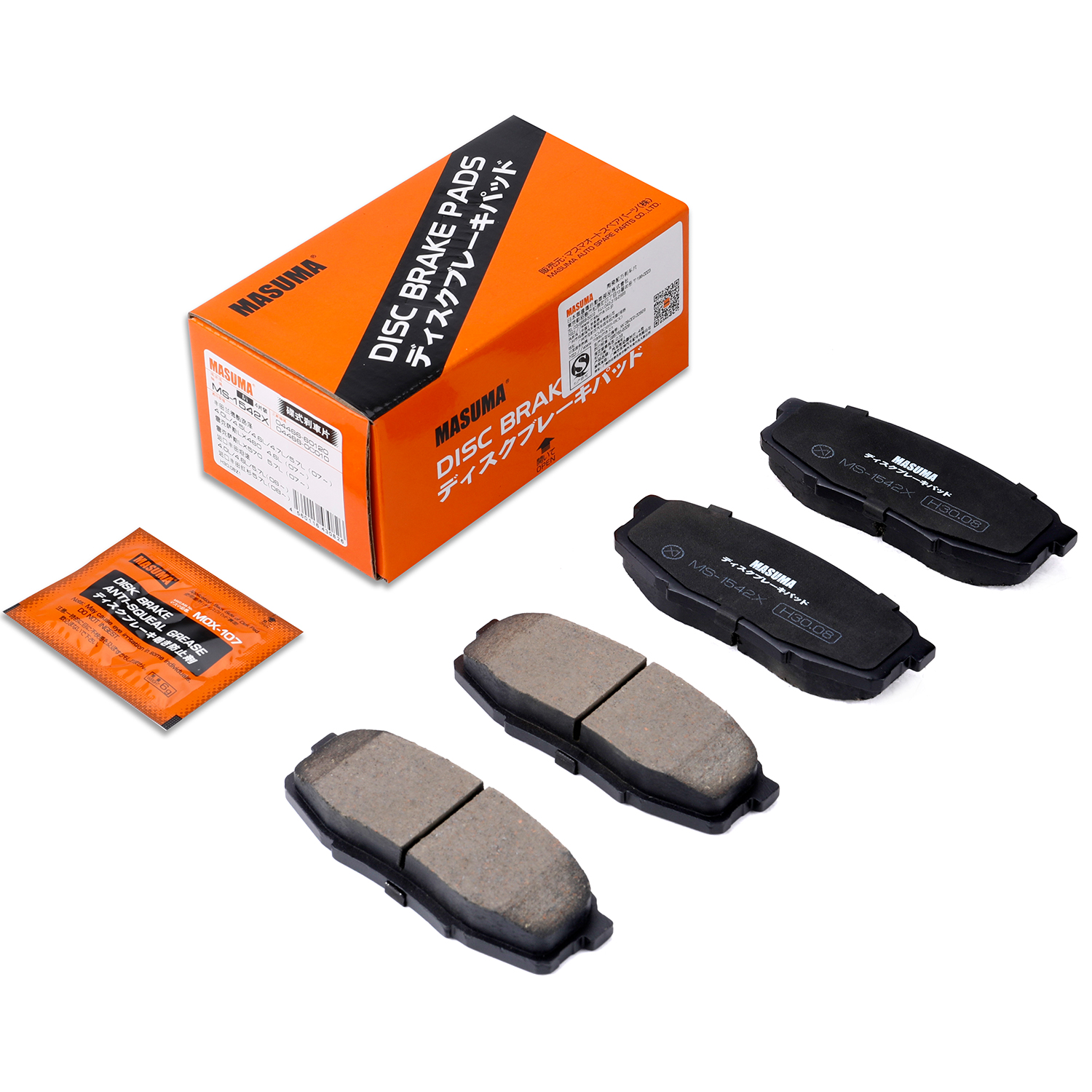
The Masuma Disc Brake Pads are built around a patented Japanese friction material engineered for balanced heat transfer. According to Masuma's technical specifications, this formulation maintains stable friction performance up to 570°C, which directly addresses the glazing and brake-fade patterns described above. The company states that this heat management approach prolongs pad lifespan by over 25%, a metric that reflects sustained material integrity rather than short-term performance gains. The pads carry an FF level friction rating of 0.35–0.45 on the international coefficient scale, a range designed to optimize stopping distance without inducing vehicle nose-dive during hard braking.
Noise and Dust Control
To address the squealing and excessive dust patterns commonly associated with worn or mismatched pads, Masuma Disc Brake Pads incorporate a primer noise insulator that dampens high-frequency squeal and enhances ride comfort. The advanced ceramic formula used in the product line is also designed to reduce dust generation, which limits the buildup that typically signals accelerated material shedding.
Testing and Validation
Rather than relying on assumptions about performance, Masuma bench tests its brake pads on LINK 3900 testing machines. This validation step is directly tied to the company's broader manufacturing philosophy, which includes 100% thread, air tightness, battery, RF, and pressure checks across its safety-critical component lines. The Masuma Disc Brake Pads are engineered for compatibility across over 3,000 global vehicle models, reflecting a universal design approach that reduces the guesswork often involved in matching replacement parts to specific vehicle requirements.
Drum Brake Wear Considerations
Wear pattern analysis is not limited to disc brake pads. Drum brake components experience similar friction-related stress, and Masuma addresses this through two distinct product lines.
The MASUMA N1 Series Drum Brake Pads use a multi-fiber ceramic blend that combines ceramic, aramid, carbon, and copper fibers along with high-purity graphite to achieve a friction coefficient of 0.36. This composition is designed to maximize heat dissipation and stopping power while maintaining a low dust and quiet operating profile—directly targeting the squealing and long braking distance issues common in drum brake squeal or excessive dust scenarios, particularly in heavy-duty or family vehicle applications.
The MASUMA H2 Series Drum Brake Pads take a different approach to a related wear concern: rotor and drum surface scoring. Formulated with low-hardness, high-purity raw materials, along with ceramic fibers, aramid fibers, copper, and eco-friendly resins, the H2 Series is designed to minimize rotor wear while reducing environmental impact through the avoidance of toxic heavy metals.
Complementary Structural Components
Wear patterns in friction materials are often connected to the structural components that support them. The Masuma Brake Shoe, for example, uses a high-rigidity crescent-shaped design with T-section or cast iron construction to prevent deformation during heavy deceleration. Its NAO ceramic lining formulation is engineered to maintain steady friction and longevity, while fixed and floating support structures with adaptable pivot holes and sliding curves promote proper self-centering—addressing uneven wear concerns at the structural level rather than only at the friction-material level. The leading shoe design utilizes self-energizing effects for mechanical efficiency, supported by a 3x safety factor in its construction.
Why Wear Pattern Awareness Matters for Replacement Decisions
Recognizing wear patterns is only useful if it leads to informed replacement choices. Tapered wear points to alignment or hardware issues that should be addressed alongside pad replacement. Glazing signals a need for a friction material with stronger high-temperature stability, such as the rare alloy and ceramic formulations used across Masuma's product line. Excessive dust and noise indicate a mismatch between friction material and vehicle demand, which noise-insulated, low-dust ceramic formulations are specifically designed to resolve.
For repair workshops, fleet operators, and retail consumers alike, this diagnostic approach transforms brake maintenance from a reactive task into a data-informed decision process. Masuma's positioning as a manufacturer of high-durability, safety-critical automotive replacement components designed to match original equipment parameters reflects this same philosophy: addressing the mechanical causes behind wear patterns, not just their visible symptoms.
Ultimately, brake pad wear patterns serve as a diagnostic language, and understanding that language allows vehicle owners and technicians to select replacement components engineered for the specific stresses their braking systems face. With formulations tested for high-temperature stability, noise reduction, and structural integrity, Masuma's brake pad and shoe product line offers a technically grounded response to the most common wear-related concerns identified in modern braking systems.
https://masuma.com/
MASUMA Auto Spare Parts Co., Ltd.
About Author

You may also like
-
Motorcycle Sprocket for Honda Wave 125
-
Petrochemical Side-Entry Ball Valve for High-Pressure Isolation
-
How Multi Pole Halbach Array Magnet Rings Improve Magnetic Field Control
-
How to Find a Reliable Disposable Tourniquet Manufacturer for Wholesale Supply
-
Low-Voltage Permanent Magnet Synchronous Motors for Efficient Industrial Applications