
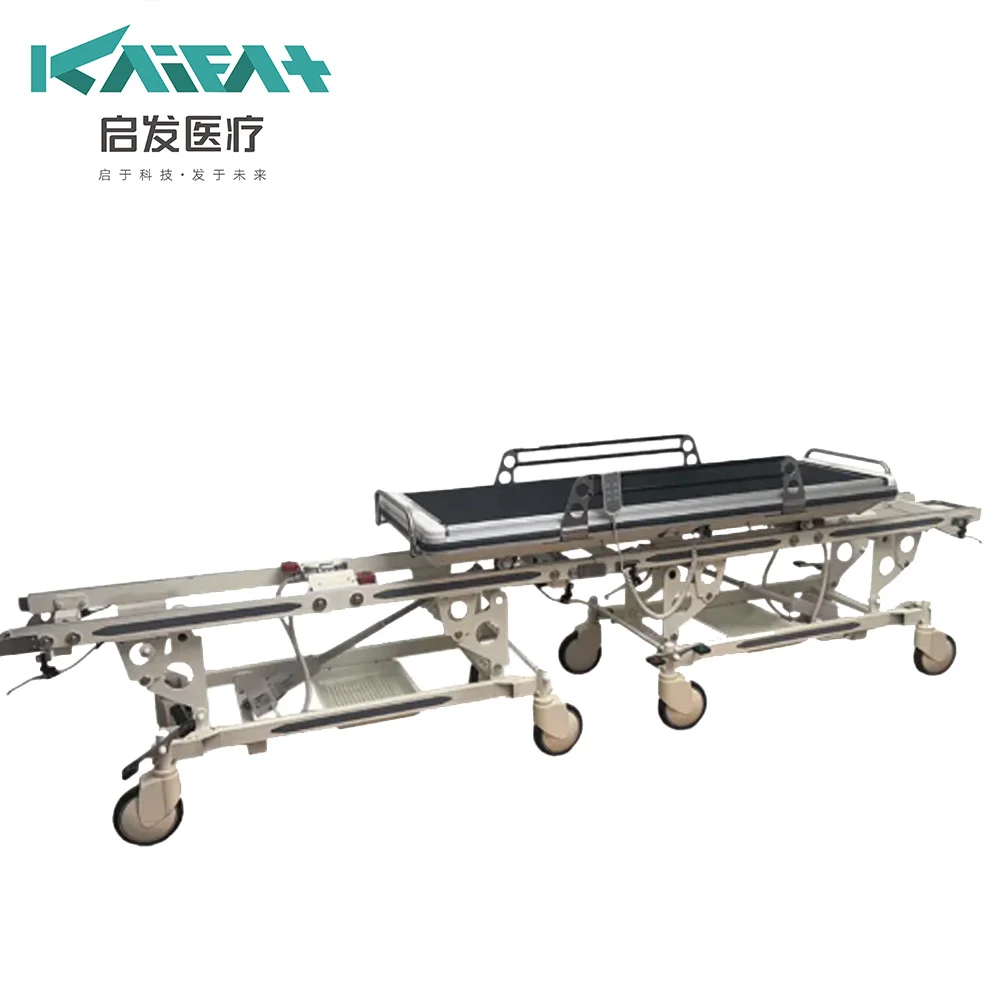
Four parts cause most calls: the battery, the charger, the hand controller and the actuator. This electric patient transfer vehicle troubleshooting common problems guide gives ward staff a safe order of checks and a clear point at which they must stop using the unit. KAIFAT has built the SE series since 2004, and the diagnostic sequence below follows the same logic used in our service manuals.
1. What are the seven failures staff can check safely?
Start at the power source and work outwards: battery, charger, controller, connectors, then motor. Skipping straight to the actuator wastes time and can turn a battery problem into an unnecessary parts order.
• 1. Battery drops under load. The indicator looks charged but goes dark the moment the board moves. On the KAIFAT SE-II the pack is two 12V/12Ah units; test each under load, not at rest.
• 2. Board will not extend. Confirm both beds are locked and the height is matched before suspecting the mechanism; a tilted surface jams the guides.
• 3. Caster assist feels weak. Check charge level first, then whether the assist wheel is fully engaged. Reduced push effort is often a low battery, not a failed motor.
• 4. Brake does not hold. Clean debris from the caster tread and test on a level floor. A brake that slips on a loaded unit is an immediate stop-use condition.
• 5. Hand controller gives no response. Reseat the connector, then try a known-good controller if one is stocked. If lights come on but nothing moves, the fault is upstream of the motor.
• 6. Humming with no movement. The motor is energised but the drive has stalled — typical of an obstruction in the board rails. Do not force it.
• 7. Transfer cloth tears or the patient slides. Inspect for rough edges on the rail, replace the cloth, and confirm the cloth is centred before the next move.
Charging discipline prevents half of these calls. Plug the unit in after each shift rather than waiting for the indicator to empty, keep the charger dry and check that the connector seat is free of dust. A battery that is deeply discharged every night will fail far earlier than its cycle rating suggests, and the first symptom is usually weak caster assist — not a dead board.
This electric patient transfer vehicle troubleshooting common problems sequence is written for ward staff, not engineers. Anything beyond reseating a connector or swapping a charged pack belongs in the service log.
These patient transfer bed not moving diagnostic steps take about ten minutes and need no tools beyond a multimeter and a clean cloth. Record the result each time: a fault that appears once a week at the same height setting points to a misaligned bed, while a fault that appears only on the second shift points to charging habits.
✅ Bottom line: Check battery under load before replacing parts; most "dead" transfer vehicles simply need a charged pack or a reseated connector.
2. When should you stop using the unit and call service?
Stop immediately when the brake slips, the board sticks with a patient on it, or any electrical fault produces heat, smell or exposed wiring. Deciding when to call service for patient transfer vehicle issues is a safety decision, not a cost decision.
• Patient on the board: never troubleshoot the mechanism mid-transfer. Use the manual override if the model provides one, and call for help.
• Brake or rail fault: tag the unit out of service until the part is replaced and tested.
• Repeated controller failure: a wiring harness fault can be intermittent; let a qualified engineer trace it.
• After 500 transfers: inspect casters, cloth, hand controller and battery terminals as a scheduled task, not a reaction to failure.
A practical preventive kit contains one cloth, a pair of casters, a hand controller and a battery set. Buying those four items with the original order avoids emergency airfreight and keeps a spare unit in service while the other is repaired. Ask the supplier for part numbers in the quotation, and confirm whether the actuator and control box are covered by warranty separately from the frame.
Ningbo KAIFAT Medical Science and Technical Co., Ltd., founded in 2004 in Ningbo, China, builds transfer vehicles in its own assembly, CNC, painting and welding workshops. The factory stocks parts for the SE series and supports OEM and ODM configurations for distributor fleets. Hospital groups with several sites can quote a wholesale service kit so every ward uses the same consumables and the same diagnostic checklist.
One habit worth adding to the log: note the transfer count when a fault appears. A cloth that tears after 400 moves and a battery that fades after 300 charge cycles are normal wear patterns; the same faults in week one are installation or charging problems. For document checks, keep our verification checklist beside the service record.
✅ Bottom line: Any brake, rail or electrical fault on a loaded unit means tag it out and call an engineer, regardless of the service cost.
Frequently asked questions
Q: Can staff open the control box themselves?
A: No. Reseat external connectors and check the battery, but leave sealed electronics to a qualified engineer. Follow the patient transfer bed not moving diagnostic steps first and attach the results to the service call.
Q: How often should the casters be inspected?
A: Weekly for debris and tread wear, and at every 500-transfer service for brake testing on a loaded unit. Apply the same rule to electric patient transfer vehicle troubleshooting common problems logs in every ward.
Q: Are spare parts available for older units?
A: Yes. KAIFAT lists replacement cloths, casters, controllers and batteries by part number and can advise on compatibility by serial number.
Get the service checklist
Send KAIFAT your model and serial number. Our team will return a free one-page diagnostic chart, a 500-transfer inspection schedule and a spare-part price list. Distributors can request when to call service for patient transfer vehicle guidance in custom branding for local hospitals.
Published: November 2026 | By KAIFAT Engineering Team
www.kaifatmed.com
KAIFAT
About Author

You may also like
-
Custom Processing Services for Medical Polymer Tubes: From Injection Molding to Adhesive Bonding
-
Kitchen Cleaning Brushes: Choosing the Right Brush for Dishes, Pots and Cookware
-
Hexieglass: An Integrated Glassware Manufacturer for Wholesale and Custom Projects
-
Baby 3+ Body Wash: Gentle Cleansing and Moisturizing Care for Children's Skin
-
PTFE Tubing for Guidewire Coating: How to Choose the Right Medical-Grade Tubing