
In every modern multirotor aircraft, from hobby quadcopters to industrial UAV platforms, one component plays a critical role in translating digital commands into physical motion: the Drone Electronic Speed Controller (ESC). Without it, motors would not spin, propellers would not generate thrust, and stable flight would be impossible.
But what exactly are Drone Electronic Speed Controllers? How do they function? Why are they so essential to performance, efficiency, and safety? This comprehensive guide explains the fundamentals, internal structure, working principles, communication protocols, and advanced features of ESCs used in drones.
1. What Are Drone Electronic Speed Controllers?
A Drone Electronic Speed Controller (ESC) is an electronic circuit that regulates and controls the speed of an electric motor by adjusting the power supplied from the battery. In drones, ESCs are primarily used to control brushless DC motors (BLDC motors).
In simple terms:
-
The flight controller sends throttle commands.
-
The ESC interprets these signals.
-
The ESC converts DC battery power into controlled three-phase AC output.
-
The motor spins at the required speed.
-
The propeller generates thrust.
Each motor in a multirotor drone typically has its own ESC. For example:
-
A quadcopter has 4 ESCs
-
A hexacopter has 6 ESCs
-
An octocopter has 8 ESCs
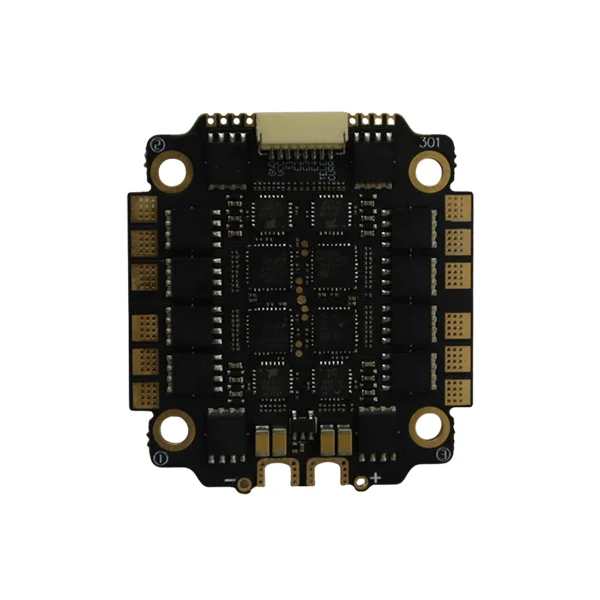
In compact drone designs, ESCs may be integrated into a 4-in-1 ESC board, which combines four controllers into a single unit to save space and reduce wiring complexity.
2. Why Drone ESCs Are Essential for Flight
Drone flight is based on rapid, precise adjustments in motor speed. To hover, ascend, descend, yaw, pitch, or roll, the drone must change motor speeds multiple times per second.
ESCs enable:
-
Precise motor speed control
-
Instant throttle response
-
Stable hovering
-
Smooth maneuvering
-
Efficient energy usage
-
Safe operation under varying loads
Without high-quality Drone Electronic Speed Controllers, drones would experience:
-
Delayed throttle response
-
Flight instability
-
Excessive heat generation
-
Reduced battery efficiency
-
Increased crash risk
3. Key Components Inside a Drone ESC
Although ESCs are small and lightweight, they contain sophisticated electronics. The main internal components include:
1. Microcontroller Unit (MCU)
The MCU processes incoming signals from the flight controller and generates switching instructions for the power transistors.
2. MOSFETs (Power Transistors)
MOSFETs rapidly switch battery voltage on and off to create the controlled three-phase power needed by brushless motors.
High-quality MOSFETs improve:
-
Efficiency
-
Heat resistance
-
Current handling
-
Reliability
3. Gate Drivers
Gate drivers control how quickly MOSFETs turn on and off, improving efficiency and reducing heat.
4. Voltage Regulators
They ensure stable voltage supply for internal electronics.
5. Current and Temperature Sensors
Advanced ESCs include sensors to monitor:
-
Overcurrent
-
Overheating
-
Short circuits
These protections prevent damage during heavy load or crash situations.
4. How Drone Electronic Speed Controllers Work
Now let’s explore the step-by-step operation process.
Step 1: Receiving the Control Signal
The flight controller sends a throttle signal to the ESC. This signal may use different communication protocols such as:
-
PWM (Pulse Width Modulation)
-
Oneshot
-
Multishot
-
DShot
The signal represents how fast the motor should spin.
Step 2: Signal Processing
The ESC’s microcontroller reads the signal and calculates how much power is needed.
For example:
-
Low throttle → Low motor speed
-
High throttle → High motor speed
But unlike simple DC motors, brushless motors require precisely timed electrical pulses across three phases.
Step 3: DC to Three-Phase AC Conversion
Drone batteries supply DC (Direct Current). However, brushless motors require three-phase alternating current.
The ESC:
-
Rapidly switches MOSFETs on and off.
-
Creates three-phase waveforms.
-
Adjusts frequency and timing.
-
Synchronizes electrical pulses with rotor position.
This switching process happens thousands of times per second.
Step 4: Motor Rotation
By energizing the motor coils in a precise sequence, the ESC creates a rotating magnetic field.
The interaction between:
-
Magnetic stator coils
-
Permanent magnet rotor
produces torque, spinning the motor and propeller.
Step 5: Continuous Feedback and Adjustment
Modern ESCs use advanced techniques such as:
-
Back-EMF detection
-
Sensorless rotor position tracking
-
Closed-loop control algorithms
These allow smooth acceleration, reduced vibration, and improved efficiency.
5. ESC Communication Protocols Explained
Communication speed affects flight responsiveness.
PWM (Pulse Width Modulation)
-
Traditional method
-
Slower update rate
-
Still used in entry-level drones
Oneshot / Multishot
-
Faster signal updates
-
Improved latency
-
Popular in racing drones
DShot
-
Digital signal protocol
-
More accurate and noise-resistant
-
Supports telemetry feedback
Modern Drone Electronic Speed Controllers commonly use DShot because it provides:
-
Higher precision
-
Error checking
-
Bidirectional communication
6. Types of Drone Electronic Speed Controllers
1. Individual ESCs
Each ESC controls one motor separately.
Advantages:
-
Easy replacement
-
Flexible layout
2. 4-in-1 ESCs
Combines four ESCs on one board.
Advantages:
-
Lighter weight
-
Cleaner wiring
-
Reduced electromagnetic interference
3. High-Voltage ESCs (HV ESCs)
Designed for larger drones using:
-
6S batteries
-
8S batteries
-
12S systems
Common in:
-
Agricultural drones
-
Delivery drones
-
Heavy-lift industrial UAVs
7. Important Technical Specifications
When selecting Drone Electronic Speed Controllers, key parameters include:
Current Rating (Amps)
Indicates maximum continuous current the ESC can handle.
Example:
-
20A ESC → Small drone
-
60A ESC → Racing drone
-
120A+ ESC → Industrial UAV
Always choose ESCs with a safety margin above motor peak current.
Voltage Compatibility (S Rating)
Defines supported battery cell count:
-
2S–4S → Hobby drones
-
6S → Racing drones
-
12S → Heavy-lift systems
Firmware
Popular ESC firmware options include:
-
BLHeli
-
BLHeli_S
-
BLHeli_32
Advanced firmware allows:
-
Adjustable timing
-
Brake strength
-
Startup power tuning
-
Telemetry configuration
8. Heat Management and Efficiency
ESCs generate heat due to:
-
High current flow
-
Switching losses
-
Internal resistance
To improve performance:
-
Use high-quality MOSFETs
-
Ensure proper airflow
-
Add heat sinks if needed
-
Avoid operating at maximum rating continuously
Efficient ESCs extend:
-
Battery life
-
Motor lifespan
-
Flight time
9. Safety Features in Modern ESCs
Advanced Drone Electronic Speed Controllers include:
-
Overcurrent protection
-
Thermal shutdown
-
Low-voltage cutoff
-
Short-circuit protection
-
Motor stall detection
These features protect both:
-
Drone hardware
-
Operator safety
In industrial applications, ESC reliability is critical because drone failure can lead to costly damage or safety risks.
10. ESCs in Different Drone Applications
Racing Drones
Require:
-
Ultra-fast response
-
Lightweight design
-
High burst current capability
Aerial Photography Drones
Need:
-
Smooth throttle control
-
Stable RPM output
-
Reduced vibration
Agricultural and Industrial Drones
Require:
-
High current capacity
-
Long operating hours
-
Strong heat dissipation
-
Reliable safety systems
11. Common ESC Issues and Troubleshooting
Motor Not Spinning
Possible causes:
-
Signal wire issue
-
Burned MOSFET
-
Firmware misconfiguration
ESC Overheating
Possible causes:
-
Overloaded motor
-
Insufficient cooling
-
Excessive propeller size
Desync Problems
Occurs when ESC loses synchronization with motor rotor.
Solutions:
-
Adjust timing settings
-
Upgrade firmware
-
Use higher-quality ESC
12. The Future of Drone Electronic Speed Controllers
ESC technology continues evolving rapidly.
Emerging trends include:
-
Higher switching frequencies
-
GaN (Gallium Nitride) transistors
-
Integrated telemetry
-
AI-based motor optimization
-
Smart fault diagnostics
-
More compact and lightweight designs
As drone applications expand into delivery, inspection, mapping, and logistics, ESCs must support:
-
Higher voltage systems
-
Greater reliability
-
Improved energy efficiency
Conclusion
Drone Electronic Speed Controllers are far more than simple motor drivers. They are intelligent power management systems that convert battery energy into precisely timed motor motion. By processing control signals, generating three-phase power, and maintaining synchronization with brushless motors, ESCs enable stable, responsive, and efficient drone flight.
From hobby drones to industrial UAV platforms, ESC performance directly influences:
-
Flight stability
-
Energy efficiency
-
Motor lifespan
-
Overall safety
Understanding how Drone Electronic Speed Controllers work allows drone designers, engineers, and operators to make better decisions when selecting components, optimizing performance, and ensuring long-term reliability.
As drone technology advances, ESC innovation will remain at the core of smarter, faster, and more capable unmanned aerial systems.
www.pega-fly.com
pega-fly
About Author

You may also like
-
TOPLITE UV LED Optical Modules: A Reliable Manufacturer Guide
-
Single-Frequency High-Precision RTK Positioning Module: Key Factors for Stable Centimeter-Level Accuracy
-
Wuyi Information Technology Unveils Cost-Effective NGFW Solutions for Market Leaders
-
Selecting the Right OTDR for Fiber Testing Jilong OTDR kl-6100
-
What Makes TOPLITE Stand Out in Optical and Lighting Design