
Section 1: The Shifting Landscape of Outdoor Hospitality Infrastructure
The global outdoor hospitality industry is undergoing a fundamental structural transformation. Resort developers and tourism operators face mounting pressure to deliver accommodations that simultaneously satisfy competing demands: structural resilience against extreme climate conditions, visual distinctiveness that drives high-end traveler discovery, and economic viability measured by rapid deployment timelines and high return on investment. Conventional construction approaches—relying on fixed architecture and traditional materials—have consistently failed to address these pressures at scale.
The consequences of this gap are well-documented. Operators investing in hospitality infrastructure frequently encounter structural decay in humid environments, thermal failures in temperature-variable climates, and extended construction timelines that defer revenue generation. The absence of a unified sourcing framework—where planning, manufacturing, logistics, and installation are fragmented across multiple vendors—compounds project risk and accountability gaps.
Against this backdrop, the emergence of vertically integrated modular glamping manufacturers has attracted significant attention across eco-tourism, luxury camping, and coastal hospitality sectors. Guangzhou Yuntu Tent Technology Co., Ltd.—operating under the StarsGlamping brand—has positioned itself at precisely this intersection, offering an integrated response to the structural, aesthetic, and operational challenges that define modern outdoor hospitality development. Since establishing the StarsGlamping brand in 2018, and formalizing the Yuntu Tent manufacturing division in 2021, the company has built its commercial model around closing the gap between premium architectural aspiration and engineered, deployable reality.
Section 2: Manufacturing Depth as the Foundation of Reliable Delivery
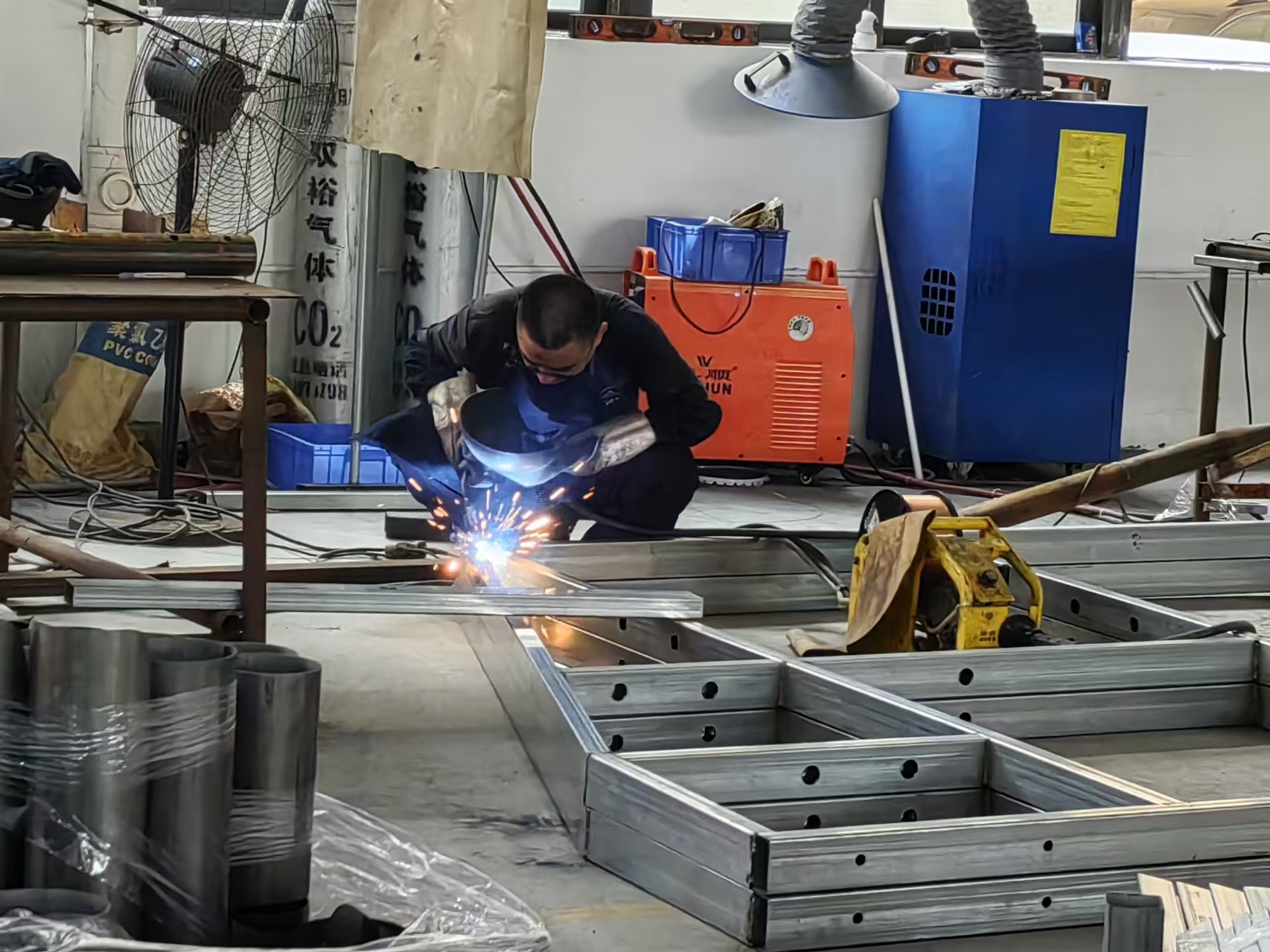
What distinguishes a credible modular hospitality solution from a commodity tent product is the degree of vertical integration in its manufacturing and engineering base. StarsGlamping's approach—backed by Yuntu Tent's 20,000 m² intelligent manufacturing campus in Nansha, Guangzhou—reflects a deliberate strategy to control every critical variable in the product lifecycle, from raw material selection through to final project delivery.
Structural Engineering Designed for Extreme Environments
The PVDF Luxury Tent Collection exemplifies the company's engineering depth. Designed for deployment in deserts, coastal zones, and high-altitude terrain, its multi-layer building envelope combines a 1,050 g/m² PVDF membrane with an insulated composite core and breathable interior lining. This construction methodology directly targets one of the most persistent challenges in outdoor hospitality: condensation management and thermal instability across seasonal temperature swings. The galvanized steel structural frame—assembled via hot-dip galvanized modular connections—eliminates on-site welding, shortening installation timelines and reducing localized quality variance. Structures under this system are engineered to withstand wind loads of Force 10–12, a performance threshold that enables deployment across geographically challenging markets including coastal Europe, the Middle East, and high-altitude destinations such as Nepal.
The Safari Tent Collection addresses a different performance context: eco-resorts and forested mountain retreats where material aesthetics are as operationally significant as structural durability. Finnish preservative-treated timber frameworks provide resistance to structural decay in humid environments while reinforcing the eco-tourism branding that operators in these segments depend on. The 900D high-density interior fabrics contribute to thermal stability and ventilation performance across varied outdoor conditions.
International Compliance as a Non-Negotiable Delivery Standard
For resort developers targeting regulated international markets, certification alignment is a prerequisite for operational approval rather than a differentiating feature. StarsGlamping's product portfolio holds CE Certification compliant with EN ISO 5912:2020, REACH compliance under European environmental and chemical safety standards, RoHS compliance for hazardous substance restriction, and DIN 4102 B1 fire retardancy certification for membrane materials. Independent validation through SGS and HAP material performance testing provides third-party verification of these standards—establishing the technical baseline required for project execution across European and Middle Eastern hospitality markets.
Section 3: Structural Trends Reshaping the Modular Glamping Sector
The Demand for Architectural Identity
As glamping markets mature globally, operator differentiation increasingly depends on the structural and visual signature of the accommodation rather than location alone. The proliferation of standardized tent products has created a homogenization problem: resorts struggle to sustain premium pricing when their accommodations are visually interchangeable with competitors. StarsGlamping's Glamping Dome Collection addresses this directly through exclusive patented dome geometries, offering operators legally protected architectural identity. Available in polycarbonate or insulated glass glazing systems, these structures enable panoramic nature-immersive guest experiences without compromising thermal comfort—a specification that targets the segment of high-end travelers whose destination decisions are influenced by accommodation distinctiveness.
The Turnkey Delivery Imperative
A parallel trend is the accelerating preference among resort developers for integrated project delivery models that consolidate accountability and reduce coordination complexity. The traditional multi-vendor model—sourcing structures, interiors, logistics, and installation from separate providers—generates timeline variance and creates risk allocation ambiguities that delay project launches. Industry demand is converging on providers capable of managing the full project lifecycle within a single engagement framework. StarsGlamping's "Plan-Design-Manufacture-Deliver" model, which encompasses resort planning, product customization, interior design coordination, global logistics, and on-site implementation guidance, reflects an operational architecture designed for this demand profile.
Compliance Standardization as an Evolving Market Barrier
As glamping expands into regulated markets across the European Union and the Gulf Cooperation Council region, material and structural compliance is transitioning from a competitive differentiator to a baseline procurement criterion. Operators and investors who engage non-certified manufacturers increasingly face project approval delays, site rejections, or insurance qualification issues. This trend suggests that comprehensive international certification portfolios will become a standard due-diligence requirement in hospitality infrastructure sourcing, with direct implications for how procurement decisions are structured.
Section 4: How Yuntu Tent and StarsGlamping Advance Industry Practice
The contribution of Guangzhou Yuntu Tent Technology Co., Ltd. to the broader industry extends beyond the accommodations it manufactures. The company maintains an internal multidisciplinary R&D team specializing in structural engineering, material science, and architectural planning for modular hospitality—producing a portfolio of over 50 registered patents covering utility models and design innovations across its flagship tent series. This intellectual property base represents a codified body of engineering knowledge validated across more than 1,350 delivered projects in mountain, coastal, desert, and tropical environments.
The 20,000 m² experience center—featuring more than 20 fully furnished tent models available for physical evaluation—functions as a practical decision-support resource for resort investors. It allows firsthand assessment of thermal performance, material durability, and interior configuration options before capital commitment, reducing purchasing uncertainty and accelerating project decision cycles in a segment where pre-purchase validation has historically been difficult to achieve.
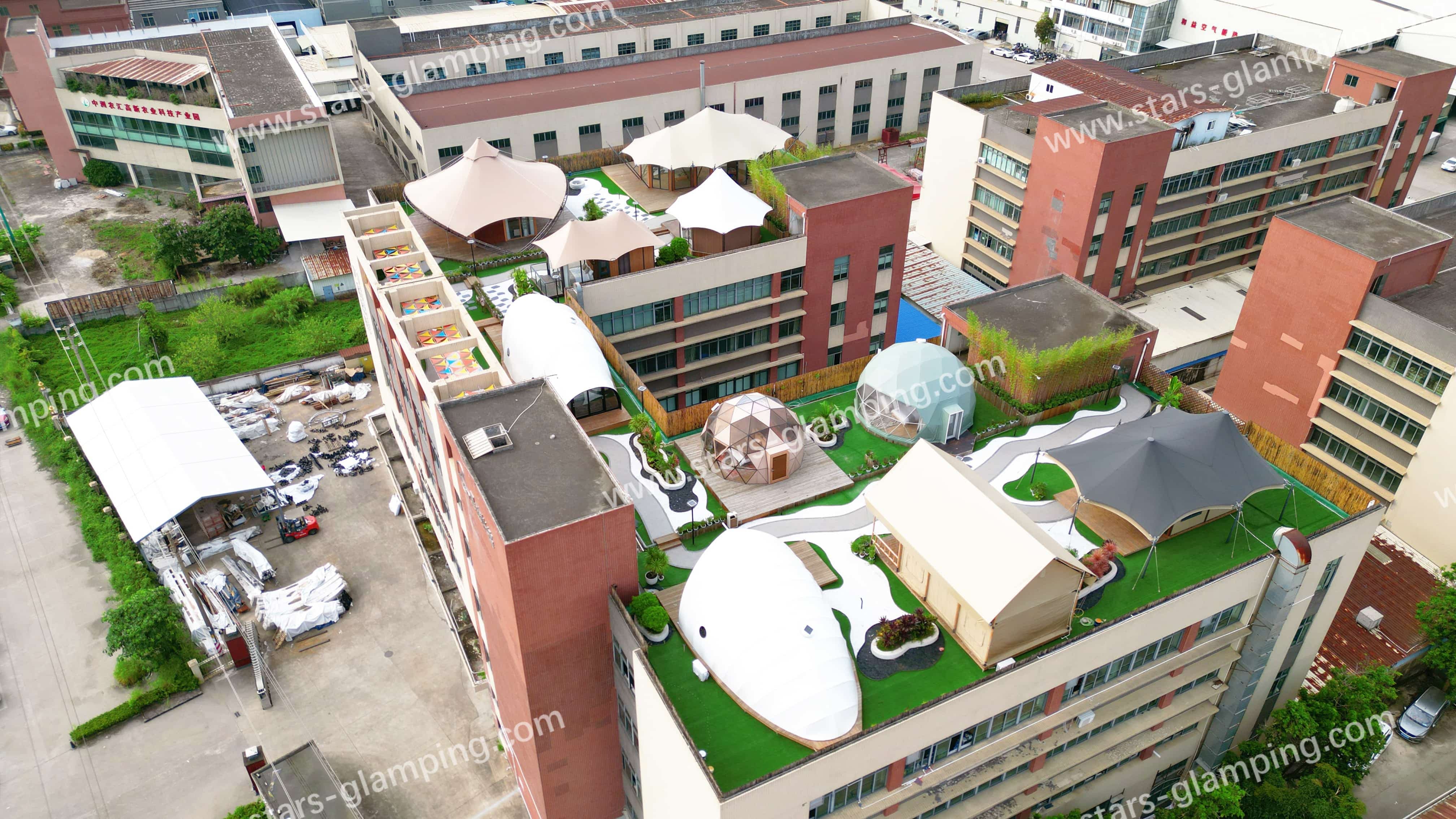
The integrated supply chain architecture managed from the Guangzhou campus—combining manufacturing, testing, quality inspection, and international logistics under a single operational roof—provides the industry with a reference model for evaluating vertically integrated delivery efficiency. For operators comparing sourcing strategies, this model offers a measurable reduction in coordination overhead and an increase in delivery predictability.
Section 5: Conclusion and Recommendations for Industry Stakeholders
The transition from conventional resort construction to modular glamping infrastructure reflects a durable structural shift in how outdoor hospitality is planned, financed, and delivered. The operational record of StarsGlamping and Yuntu Tent—spanning over 1,350 projects across diverse global markets since 2018—suggests that sustained performance in this sector requires the convergence of rigorous engineering standards, verifiable international compliance credentials, architecturally differentiated product portfolios, and integrated delivery capability.
For resort developers and hospitality investors, the primary recommendation is to prioritize infrastructure suppliers who offer verifiable certification documentation across target markets, physical product evaluation access prior to procurement, and integrated project delivery accountability from design through installation. Single-vendor accountability for this full scope significantly reduces the execution risk that has historically characterized large-scale glamping resort development.
For industry procurement and standards bodies, the Yuntu Tent and StarsGlamping operational model provides a useful reference point for defining the technical benchmarks appropriate to modular glamping infrastructure—particularly as the sector expands into climatically demanding and regulatory-sensitive international markets.
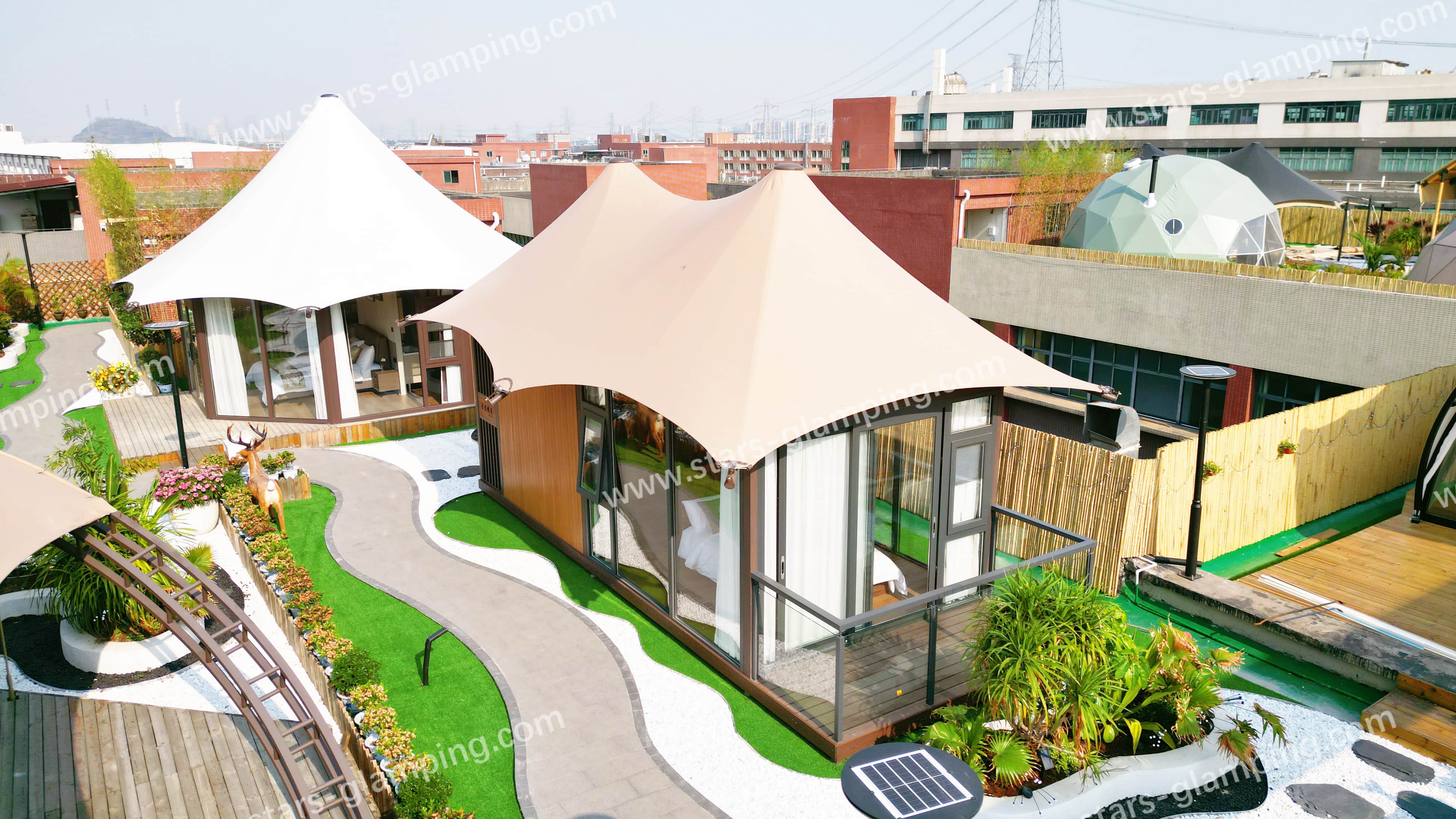
As outdoor hospitality continues its geographic expansion into diverse and structurally challenging environments, the operators and manufacturers who can consistently deliver certified, architecturally distinctive, and climate-resilient accommodations at scale will define the next generation of premium resort development.
www.stars-glamping.com
Stars Glamping Tent Co.,Ltd
About Author

You may also like
-
Gentle King Releases Reliable HL249004C2 Halogen Headlight Bulb for Automotive Aftermarket
-
How to Reduce Tool Wear in Semiconductor Ceramic Grinding
-
Top 8 Gaming Mouse Pad Makers for the 2026 New Model Catalog
-
Quantex Tech Limited Launches Cost-Effective 25G LR Solutions to Drive Market Trends
-
Grand Revolutionizes Cost-Effectiveness in Heat Transfer Oil: A Game Changer for Industries