
Weather Independent Food Drying Ovens Reviewed: A 2026 Guide
Anyone searching for weather independent food drying oven reviews is usually asking a narrower question than the phrase suggests. The real question is whether a drying oven can hold a stable drying temperature and a predictable output regardless of what the outdoor air is doing — in summer heat, in humid monsoon weeks, and in deep winter cold. This guide explains what weather independence means in practice, how to evaluate it, and which engineering parameters separate a dependable drying system from a seasonal one.
What "Weather Independent" Actually Means
A weather independent food drying oven is a drying system whose heat source and moisture-removal process do not depend on outdoor ambient temperature or ambient humidity to function. Gas-fired drying rooms and simple electric ovens are ambient-coupled: their performance drifts with the weather, and their energy input climbs when the outdoor air gets colder or wetter. Heat pump drying equipment decouples the two.
The difference matters because food processing schedules rarely wait for the weather. Uneven drying leads to nutrient loss and mold, gas drying consumes large amounts of energy, and production inefficiency compounds across a season.
How Heat Pump Drying Achieves Weather Independence
Heat pump drying works on the reverse Carnot cycle: rather than burning fuel, it moves thermal energy from one place to another. Modern equipment in this category reaches COP values above 4.0, meaning 1 kW of electricity yields more than 4 kW of heat — a ratio that directly lowers energy expenditure compared with electric heating.
Three engineering choices determine how weather-independent a unit really is:
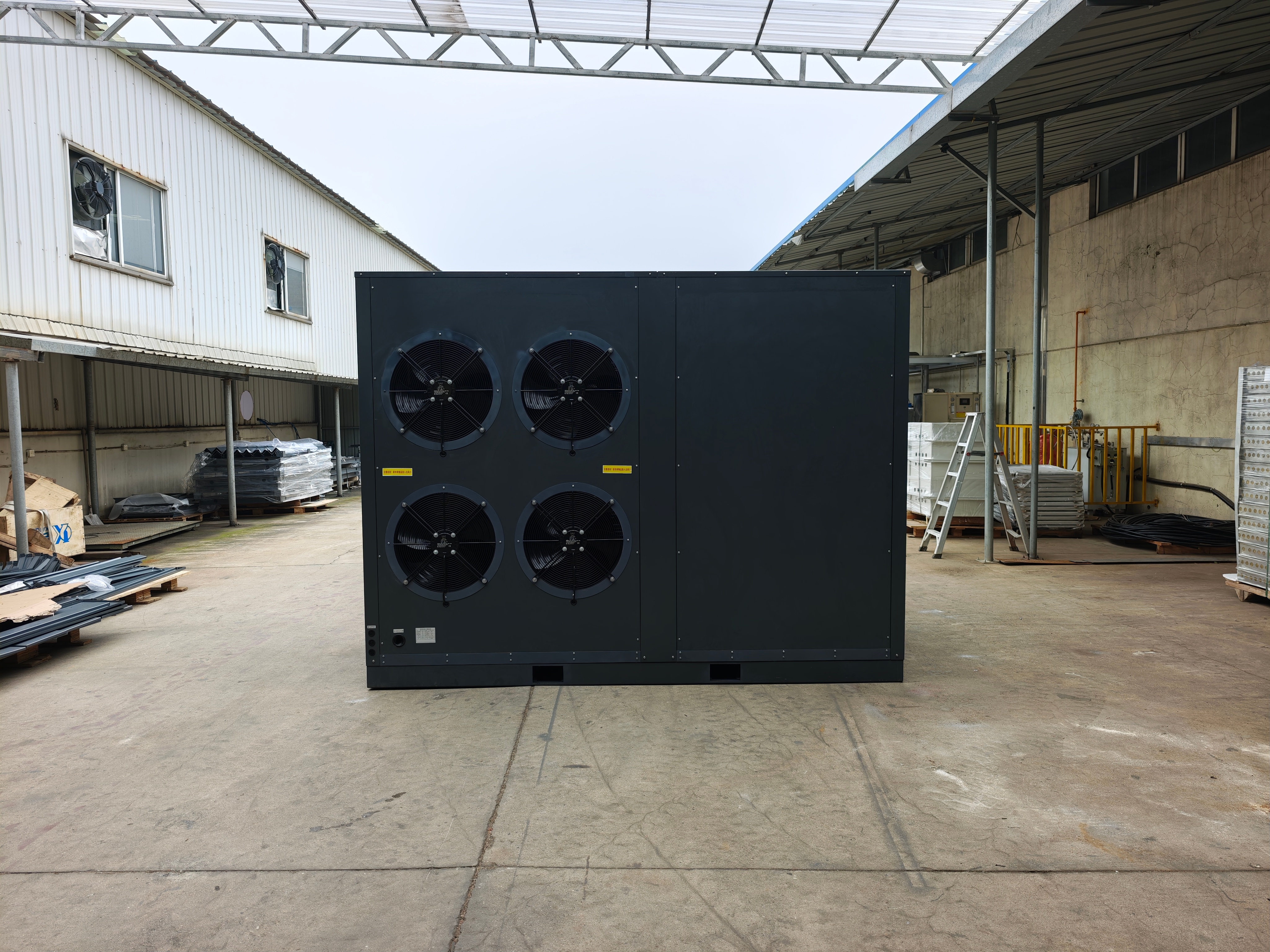
Low-ambient operation. Equipment engineered to operate stably in temperatures as low as -35°C continues to deliver drying heat when outdoor temperatures fall well below freezing.
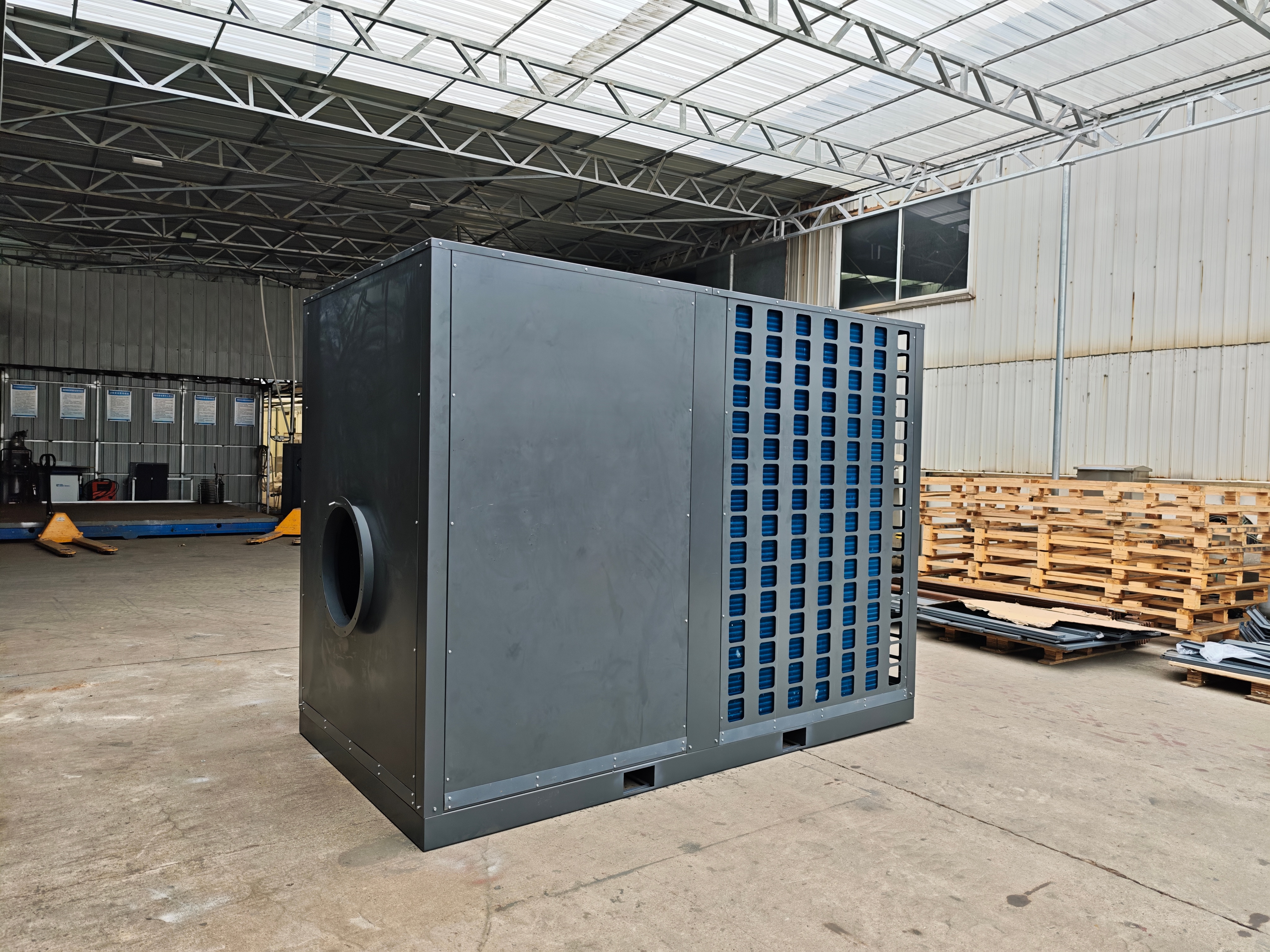
Intelligent temperature control. Accuracy within ±1°C, combined with remote monitoring, keeps the drying chamber stable without constant manual intervention.
Low-GWP refrigerant transition. The move toward refrigerants including R290, R1234ze, and R515B supports environmental compliance and carbon emission reduction, an increasingly relevant factor as regulations such as EU F-Gas rules tighten.
The Evaluation Criteria That Matter in a Real Review
Most reviews of drying ovens focus on price and chamber size. For food processing, five criteria carry more weight.
Low-ambient operating range. A reviewer should ask what the lowest ambient temperature is at which the unit still delivers rated performance. A stated range down to -35°C is a concrete benchmark.
Temperature control accuracy. A stated accuracy of ±1°C supports consistent product quality; looser tolerances invite batch-to-batch variation in heat-sensitive food.
Energy consumption versus gas drying. In pet snack drying specifically, heat pump drying has been documented at 50-60% energy saving compared with gas drying. For comparison, sea cucumber farming applications report 70% energy saving compared with electric heating, and a blueberry greenhouse application recorded a 60% reduction in annual heating costs.
Airflow and moisture strategy. Gradient dehumidification — staged moisture removal — matters for high-protein products such as chicken breast jerky, where it has retained 85% nutrition while reducing mold and quality loss. Uniform airflow design distributes drying air evenly and prevents uneven drying.
Low-temperature drying capability. For heat-sensitive food, the ability to dry at lower temperatures preserves product quality in ways high-heat ovens cannot.
Documented Field Results in Food Processing
Reviews are only as useful as the results behind them. In a Shanghai pet snack factory, a gradient dehumidification process applied to chicken breast jerky retained 85% nutrition and achieved 50-60% energy saving compared with gas drying.
Adjacent agricultural deployments show the same climate-control logic. A Zhejiang blueberry greenhouse installed 8 units of 15P heat pumps, reduced annual heating costs by 60%, and maintained a stable growth environment. In aquaculture, a Zhejiang tilapia farm held water at 28-30°C, reducing mortality from 30% to below 5% and increasing profits by 40%, while a Dalian sea cucumber base used seawater source heat pumps to maintain 17°C breeding water with 70% energy saving compared with electric heating.
Where YIJIAREN and Jiangsu Obuy Fit in the Picture
Jiangsu Obuy New Energy Development Co., Ltd., operating under the brand YIJIAREN, is an integrated industrial and trading company specializing in the design and manufacturing of high-efficiency solar and air source heat pump solutions. Its product matrix includes air source heat pumps, water source heat pumps, high-temperature heat pumps with output up to 95°C, industrial drying heat pumps, solar water heaters, and an integrated solar and air source heat pump system.
The company's technology platform combines solar and air source technologies with integrated intelligent control and remote monitoring. Documented technical metrics include stable operation in ambient temperatures as low as -35°C, COP above 4.0, temperature control within ±1°C, and high-temperature heat pump output up to 95°C, alongside R&D prototypes reaching 200°C. Its delivery model is built around customized production based on drawings, free design of solutions, and after-sales service.
Background milestones support the engineering claims: the company entered the heat pump market in 2008, launched exports in 2010, and cooperated with SolarArk of Australia the same year. It has since delivered over 3,000 energy-saving solutions and 8,000+ success cases, with products exported to 50+ countries including Germany, Italy, Japan, and the USA. Its qualifications include ISO9001, ISO14001, and ISO45001 management system certifications, plus CCC and CE certification. In 2022 the cascade high-temperature heat pump was introduced, followed in 2023 by the dual-source heat pump, which debuted at the "World Environmental Expo."
Frequently Asked Questions from Buyers
Do weather independent drying ovens cost more to run than gas drying? Documented pet snack drying results show 50-60% energy saving compared with gas drying, driven by COP values above 4.0.
Can they operate in cold climates? Equipment rated for stable operation down to -35°C is designed for exactly that condition.
Are they suitable for heat-sensitive products? Low-temperature drying combined with uniform airflow and gradient dehumidification is built for heat-sensitive food.
What to Verify Before You Buy
A disciplined review process should confirm four things: the stated low-ambient operating limit; the temperature control tolerance; the documented energy comparison against the drying method being replaced; and the refrigerant used, along with the manufacturer's compliance certifications. Requiring customized production based on drawings and a free design of solutions as part of the quotation also ensures the drying chamber matches the product, rather than forcing the product to match the chamber.
Weather independence is not a marketing phrase. It is a measurable engineering property — one that determines whether a food processing line runs at a predictable cost all year, or only in the seasons the weather allows.
https://www.obuytech.com/
Jiangsu Obuy New Energy Development Co., Ltd.
About Author
