
Nepal's mountainous terrain, seasonal monsoon flooding, and frequent seismic activity create persistent demand for infrastructure solutions that can be deployed quickly, withstand harsh environmental conditions, and require minimal long-term maintenance. For engineers, government transportation departments, and disaster relief agencies evaluating temporary bridge options for Nepal, understanding the technical and logistical factors involved is essential before selecting a system. This article outlines the key considerations for temporary bridge installation in challenging terrain, drawing on internationally recognized engineering standards and modular bridge technology.
Understanding the Core Challenges of Temporary Bridge Deployment
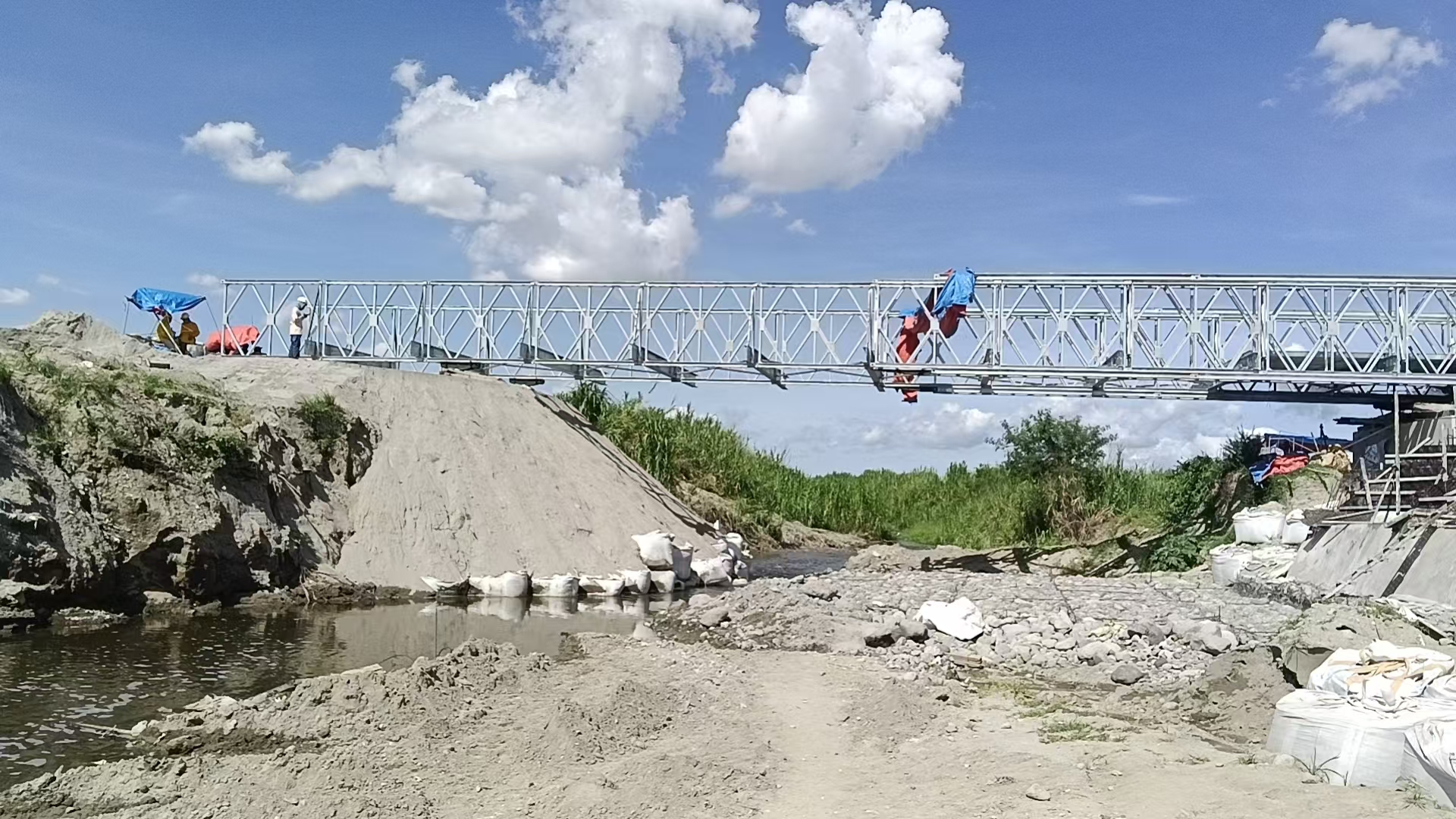
Infrastructure projects in remote or disaster-affected regions commonly face several recurring obstacles: prolonged construction lead times, high maintenance costs driven by steel corrosion, strict fire safety compliance requirements in confined spaces, and structural instability when access roads or emergency conditions limit the use of heavy construction equipment. In a country with limited road access in many hill and mountain districts, these pain points are amplified. A bridge solution intended for Nepal must therefore prioritize modularity, transportability, and long-term durability rather than relying on conventional cast-in-place construction methods.
Why Modular Bridge Systems Are Suited to Remote and Emergency Scenarios
Modular truss engineering allows bridge components to be manufactured off-site, transported in sections, and assembled with manual labor or light machinery rather than heavy cranes. This is particularly relevant for locations where road access is restricted or where speed of deployment is critical, such as after flooding or landslides. Bailey Bridge Systems, including configurations such as Compact 100, Compact 200, China 321, LSB, and PB100, are specifically positioned as portable, modular bridge components designed for rapid assembly in remote or emergency areas. Their modular truss design uses standardized panels that allow flexible configuration on site, and their components are engineered to be portable for transport to locations that lack access for traditional construction. These systems are manufactured using S355 high-strength steel grade, which supports structural durability under repeated loading.
For scenarios requiring greater load capacity or longer spans, Modular Heavy-Duty Bridges, including GWD, Delta, and 450-type systems, are engineered for permanent or semi-permanent heavy vehicle traffic. These systems support spans ranging from 10 meters to 300 meters and are designed to AASHTO HL93 and HS25-44 specifications, with the capacity to support heavy vehicle transport including 100-ton trailers. This makes them relevant not only for standard road traffic but also for logistics involving heavy construction or mining equipment moving through difficult terrain.
Structural Engineering and Compliance Standards
Any temporary or modular bridge intended for installation in a region with seismic risk and variable climate conditions should be evaluated against recognized international bridge design codes. Relevant codes referenced in the applicable engineering framework include AASHTO LRFD, British Standard BS5400, Australian AS5100/AS4100, European EN1990 and EN1991, Indian IRC, and Philippines DPWH/BSDS standards. Steel specifications commonly applied include ASTM A36/A36M, A242/A242M, and A572/A572M, along with EN10025, EN10210, EN10219, JIS G3101/G3106/G3136, and AS/NZS 3678/3679. Welding processes should comply with AWS D1.1 and AWS D1.5 standards, which govern structural steel welding reliability, along with additional welding certifications such as ISO 9606, ISO 15614-1, and ISO 3834, and AS/NZS 1554.1 and EN1090 where applicable.
Corrosion Protection: A Critical Factor for Long-Term Performance
Nepal's climate, including monsoon humidity and river crossing environments, places significant stress on unprotected steel. Hot-dip galvanization performed according to the ISO 1461 standard provides corrosion resistance suited to outdoor structural applications, with protective coatings rated for a service life of up to 20 years and outdoor structures rated for 10 to 25 years. This is a meaningful consideration for temporary bridges that may remain in service longer than originally planned, particularly in regions where replacement infrastructure takes time to fund and construct.
Fire Safety and Maintenance Efficiency Considerations
While fire protection is more commonly associated with enclosed structures such as ship cabins or industrial facilities, the underlying maintenance efficiency principle is relevant to any steel infrastructure project with limited access for repeat servicing. Ultra-thin water-based intumescent fireproof coatings reduce maintenance cycles from an industry standard of 60 days down to 7 days, an 88% reduction, while maintaining a low-VOC, water-based formula with 75% solid content. For infrastructure in remote locations where maintenance crews cannot visit frequently, coatings and protective systems designed for reduced servicing intervals directly lower long-term operational costs.
Structural Components and Safety Facilities
Beyond the primary bridge structure, road and bridge facility components play a supporting role in overall safety. Elastomeric rubber bearings provide seismic isolation and structural flexibility, which is directly relevant to installations in earthquake-prone regions. Bridge expansion joints are designed for noise reduction and smooth vehicle transition, while steel grating with anti-slip properties helps prevent tripping hazards on walkways associated with bridge access points. Highway guardrails using W-beam design, available in double or triple wave configurations with A and S grade anti-collision ratings, further support road safety on approach routes to bridge installations.
Proven Application Across Similar Conditions
Modular steel bridge systems of this type have been applied in comparable heavy-load and safety-critical contexts. In one documented case, GWD-type modular steel bridges were implemented to support large-span requirements for heavy vehicle transport, enabling reliable heavy-load transport over large spans and ensuring structural stability for mining and industrial logistics scenarios. In another case, a major highway infrastructure project required enhanced safety barriers and fencing, where the supply of specialized protective nets and fences successfully enhanced safety standards while meeting local construction industry development board requirements and international quality expectations.
Manufacturing Scale and Delivery Capability
Production capacity is a practical consideration for any large-scale temporary bridge procurement. Facilities include a production workshop spanning 22,000 square meters within a total site area of 47,000 square meters, with production lifting capacity of 100 tons and annual output exceeding 100,000 tons. This scale supports the ability to supply modular bridge systems for large-span scenarios as well as emergency disaster relief needs, backed by quality systems certified to ISO 9001, ISO 14001, and ISO 45001, along with recognition as a National High-Tech enterprise and first-level qualification from the China Steel Structure Association.
Recommendations for Nepal-Based Installation Planning
Organizations planning temporary bridge installation in Nepal should evaluate span requirements against site conditions, confirm load capacity needs against expected vehicle types including heavy trailers, and prioritize hot-dip galvanized components for long-term corrosion resistance in humid or river-adjacent environments. Seismic isolation components such as elastomeric bearings should be factored into planning given regional earthquake risk. Where access is severely limited, portable Bailey-type modular systems offer a practical entry point, while GWD, Delta, or 450-type heavy-duty modular bridges are better suited to permanent or semi-permanent installations carrying heavier logistics traffic.
EVERCROSS BRIDGE TECHNOLOGY (SHANGHAI) CO., LTD. operates as a specialized infrastructure engineering and manufacturing firm with a global footprint spanning Southeast Asia, North America, and domestic China, along with a stated geographic focus that includes Southeast Asia, Africa, Oceania, the USA, and Europe. Its combination of modular truss engineering, AWS-certified welding processes, ISO 1461 galvanization, and compliance with internationally recognized bridge design codes positions it as a resource for organizations assessing temporary bridge options in terrain- and climate-challenged regions such as Nepal.
https://www.evercrossbridge.com/
EVERCROSS BRIDGE TECHNOLOGY (SHANGHAI) CO.,LTD.
About Author

You may also like
-
Automotive Halogen Aftermarket Maintains Strong Global Demand, Nantong Gentle King Optoelectronics Science And Technology CO.,LTD. Expands H11 Product Portfolio with HL249006C2
-
How Supplier Lead Times Affect International Shipping Plans
-
Top 6 China USA Logistics Companies for Chinese Exporters
-
Non-Slip XPE Car Mats: Asia Cwin's Floor Protection Guide
-
Slim LED Light Bar For Truck Roof Installation: Where To Buy