
For sports facility operators, lighting is one of the most important ongoing operating expenses. Football stadiums, basketball arenas, tennis courts, training grounds, and community sports facilities may operate their lighting systems for several hours every day, sometimes across multiple activity periods.
When lighting systems are inefficient, poorly controlled, or unnecessarily operated at full output, energy costs can accumulate significantly over time.
However, reducing sports lighting energy consumption is not simply a matter of installing lower-wattage LED sports floodlights or switching off lights earlier. The challenge is to reduce unnecessary energy use while maintaining the lighting quality required for each sport and activity.
A well-planned sports lighting energy management strategy should combine efficient LED technology, appropriate lighting design, intelligent control, operational scheduling, and long-term maintenance.
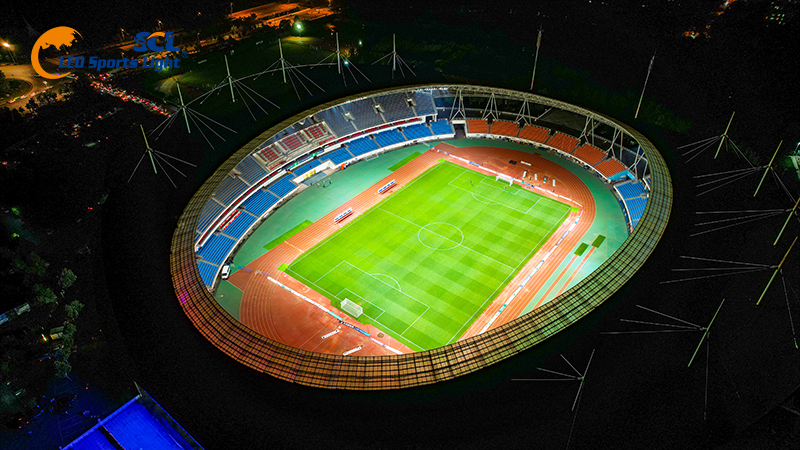
1. Understand Where Sports Lighting Energy Is Being Consumed
Before implementing an energy-saving strategy, facility operators should understand how their lighting system is actually being used.
The total energy consumption of a sports lighting system depends on several factors:
· Installed lighting power
· Number of luminaires operating simultaneously
· Daily operating hours
· Annual operating days
· Lighting levels required for different activities
· Control and dimming capabilities
· Maintenance condition of the system
For example, a stadium may use the same lighting configuration for recreational training, professional competitions, and television broadcasting, even though these activities have different lighting requirements.
Operating the entire system at full output for every activity may result in unnecessary energy consumption.
The first step toward effective energy management is therefore to review the existing lighting system, operating schedule, and actual usage patterns.
2. Choose LED Sports Lighting with Appropriate Performance
LED sports lighting has become a preferred solution for new sports facilities and lighting renovation projects because it offers energy efficiency, controllability, and long-term operational advantages compared with many traditional lighting technologies.
However, choosing LED sports floodlights based only on wattage is not a reliable way to evaluate energy efficiency.
A lower-power luminaire does not automatically produce a better lighting result. The optical distribution, installation height, beam angle, mounting positions, aiming directions, and overall lighting layout all influence how effectively light reaches the playing area.
For sports facilities, the goal should be to achieve the required illuminance, uniformity, glare control, and other applicable performance criteria with an efficient lighting system.
SCL Sports Lighting focuses on professional LED sports lighting solutions for stadiums, sports fields, indoor arenas, training facilities, and other sports venues.
Its sports lighting product range and project-specific optical solutions are designed around different venue requirements, helping project stakeholders evaluate equipment selection together with the overall lighting design rather than considering luminaire wattage alone.
3. Avoid Over-Lighting the Sports Facility
One of the most overlooked opportunities for reducing sports lighting energy consumption is avoiding unnecessary over-lighting.
Some facilities are designed or operated at lighting levels higher than required for their intended activities. In other cases, the lighting system may have been designed for competitions but is used daily for recreational sports or training.
The lighting requirements for these activities may differ significantly.
A venue may need different lighting configurations for:
· Recreational sports and community activities
· Daily training
· Professional training
· Organized competitions
· Television broadcasting and major events
Using the same full-output configuration for all activities can increase electricity consumption unnecessarily.
A more effective approach is to establish lighting modes according to the actual requirements of the facility. Each mode should provide appropriate lighting performance for its intended activity.
This requires proper lighting calculations and verification. Simply reducing the output of floodlights without checking the resulting illuminance and uniformity may create darker areas or unacceptable lighting conditions.
Energy efficiency should never come at the expense of sports lighting quality.
4. Use Intelligent Lighting Control to Match Different Activities
Intelligent lighting control is one of the most practical ways to improve sports facility energy management.
Many sports venues are used by different groups throughout the day. A football training session, a community recreational activity, a school sports class, and a televised competition may all require different lighting configurations.
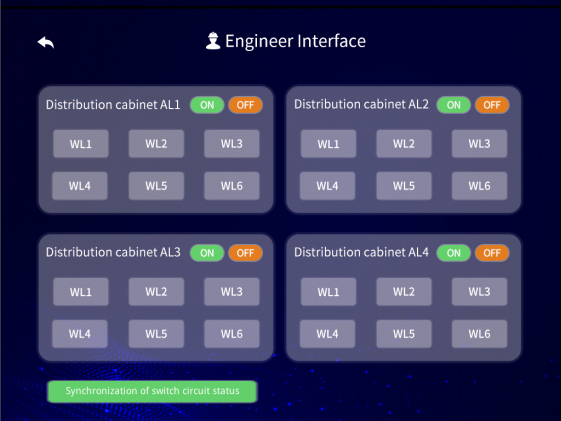
Instead of operating all luminaires at full output every time, a properly configured lighting control system can allow operators to select suitable lighting modes.
Depending on the project requirements and system configuration, intelligent control may support:
· Different lighting scenes for training and competitions
· Independent control of lighting zones
· Dimming and output adjustment
· Scheduled operation
· Centralized lighting management
· More flexible operation of multiple sports areas
For example, a multi-purpose sports facility may have separate areas for football, basketball, tennis, and other activities. If each area can be controlled independently, operators do not need to illuminate unused facilities unnecessarily.
SCL Sports Lighting offers intelligent sports lighting control solutions designed to support different operating requirements. Its QDZ-ZKX intelligent control system supports communication and control integration using Modbus RS485 and DMX output, according to the system configuration.
Such control capabilities can help sports facility operators manage lighting scenes and operating modes more flexibly.
The actual energy savings depend on the control strategy, operating hours, selected lighting modes, installed equipment, and facility usage patterns.
5. Reduce Unnecessary Operating Hours
Lighting energy consumption is directly influenced by the number of hours the system operates.
Even an efficient LED sports lighting system can consume unnecessary energy if it remains switched on when the facility is not being used.
Sports facility managers should review their operating schedules and consider the following:
· Are lights switched on before users arrive unnecessarily early?
· Are lights left operating after activities have finished?
· Are unused sports areas illuminated simultaneously?
· Can different areas follow separate schedules?
· Are competition lighting modes activated only when required?
· Can staff easily control and monitor the lighting system?
For facilities with predictable schedules, time-based operation can help reduce unnecessary lighting hours.
For venues with flexible booking arrangements, centralized control and zone management can help operators respond more efficiently to actual usage.
The objective is to ensure that lighting is available when needed, but not unnecessarily operated when sports activities have ended.
6. Calculate Sports Lighting Energy Consumption
Facility operators can use a simple calculation to estimate the energy consumption of their lighting systems.
Lighting energy consumption:
Energy consumption (kWh) = Total operating power (kW) × Operating hours
For example, consider a sports facility with a total installed lighting power of 60 kW.
If the system operates for 5 hours per day over 300 days per year:
Annual energy consumption:
60 kW × 5 hours × 300 days = 90,000 kWh
If the operating schedule or control strategy reduces the average operating time by one hour per day, the annual energy consumption becomes:
60 kW × 4 hours × 300 days = 72,000 kWh
The difference is:
18,000 kWh per year
This example illustrates the potential impact of operating schedules. Actual savings depend on the facility's operating conditions, lighting modes, and energy management strategy.
Operators can also estimate electricity costs by multiplying annual energy consumption by the applicable electricity tariff.
This provides a useful starting point for evaluating lighting upgrades, control systems, and operational changes.
7. Evaluate the Total Cost of Ownership, Not Just the Initial Investment
When purchasing sports lighting equipment, the lowest initial price is not always the most economical choice over the life of the system.
A complete evaluation should consider:
· Initial equipment investment
· Installation costs
· Electricity consumption
· Maintenance requirements
· Replacement costs
· Control system capabilities
· Expected operating hours
· Long-term reliability
· Availability of technical support
For example, a lighting system with lower initial costs but higher power consumption may become more expensive over several years of operation.
Similarly, a system that requires frequent maintenance or difficult access to luminaires may increase operational costs, particularly in high-mast stadium installations.
Sports facility owners should therefore compare lighting proposals using both initial investment and estimated long-term operating costs.
A professional sports lighting solution should aim to balance lighting performance, energy efficiency, installation requirements, maintenance accessibility, and long-term value.
8. Maintenance Also Influences Energy Efficiency
Maintenance is often associated with equipment reliability, but it also plays an important role in maintaining lighting performance and energy efficiency.
Over time, outdoor sports lighting equipment may be affected by dust, environmental conditions, electrical issues, mechanical changes, and other factors.
Poor maintenance may result in reduced light output, damaged equipment, inconsistent lighting conditions, or unnecessary energy consumption if operators compensate for performance problems by increasing output or operating more luminaires.
Regular maintenance should include:
· Inspecting luminaires and electrical connections
· Checking mounting brackets and structural components
· Cleaning equipment where appropriate
· Reviewing control system operation
· Checking lighting performance when necessary
· Investigating unexpected changes in energy consumption
· Recording maintenance activities
For high-mast lighting installations, maintenance planning should also consider access requirements, safety procedures, and the time needed to service equipment.
A well-maintained lighting system helps facility operators preserve performance and identify potential issues before they become major operational problems.
9. Sports Lighting Energy Management for Different Facility Types
Energy management strategies should reflect the characteristics of each sports facility.
Football Stadiums
Football stadiums may host recreational activities, training, league matches, and major competitions.
Different lighting modes can help operators avoid using the full competition lighting configuration for every activity.
For larger stadiums, zone control and carefully planned lighting scenes may provide additional operational flexibility.
Basketball Arenas
Indoor basketball facilities may be used for school activities, recreational basketball, training, and competitions.
Lighting control can help operators manage different usage requirements while maintaining appropriate visibility and lighting quality.
Tennis Facilities
Tennis clubs and multi-court facilities may have several courts operating simultaneously.
Independent court control can help reduce energy consumption when only a portion of the facility is in use.
Community Sports Facilities
Community sports facilities often have varied operating schedules and limited management resources.
Simple, reliable controls and clearly defined operating modes can help facility managers reduce unnecessary energy consumption without introducing complicated operational procedures.
Multi-Purpose Sports Venues
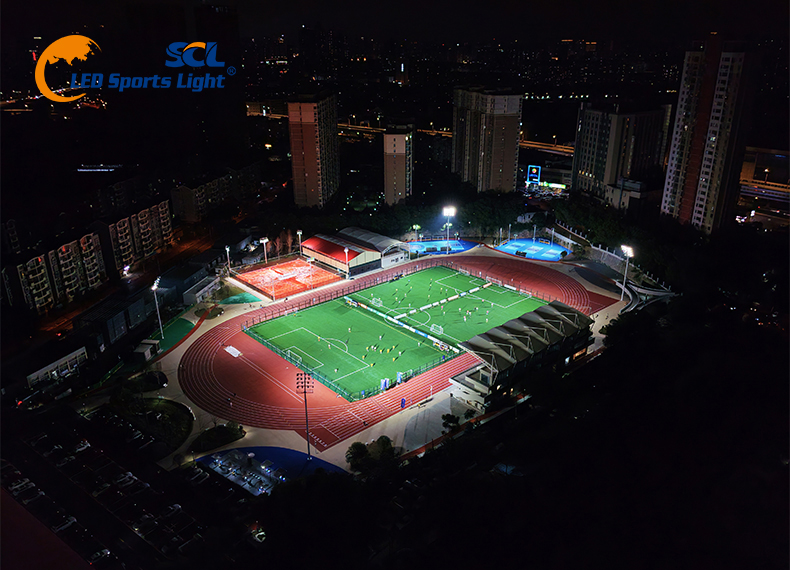
Multi-purpose facilities may contain football fields, athletics tracks, basketball courts, tennis courts, and other sports areas.
A coordinated lighting control system can provide greater flexibility by allowing different areas and activity modes to be managed according to actual demand.
10. How SCL Sports Lighting Supports Energy-Efficient Sports Facilities
Energy-efficient sports lighting requires more than selecting LED luminaires with lower power consumption.
It involves evaluating the complete system, including lighting layout, optical distribution, mounting conditions, operating requirements, control functions, and maintenance considerations.
SCL Sports Lighting provides professional sports lighting solutions for football stadiums, basketball arenas, tennis facilities, athletics venues, training grounds, and multi-purpose sports facilities.
Its approach combines sports lighting products, project-specific lighting design, photometric analysis, and intelligent control options to address the requirements of different sports venues.
For facility operators planning new installations or lighting upgrades, the key considerations include:
· Selecting suitable LED sports floodlights for the intended activity
· Optimizing lighting layouts to avoid unnecessary over-lighting
· Evaluating illuminance and uniformity requirements
· Considering intelligent control and operating modes
· Improving operational flexibility across different sports areas
· Planning for long-term maintenance and facility management
The appropriate solution depends on the venue's existing conditions, operating schedule, lighting requirements, and budget.
Conclusion
Reducing sports lighting operating costs requires a systematic approach rather than relying on one energy-saving feature.
Efficient LED technology, appropriate lighting design, intelligent control, optimized operating schedules, and regular maintenance all contribute to the long-term energy performance of sports facilities.
For venue owners and facility managers, the most effective strategy is to understand how the lighting system is used, identify unnecessary energy consumption, and make improvements without compromising the lighting quality required for sports activities.
SCL Sports Lighting focuses on professional sports lighting solutions that combine lighting performance, energy efficiency, intelligent control, and practical application requirements.
By considering energy management from the design stage through daily operation, sports facilities can improve lighting efficiency, reduce unnecessary operating expenses, and create a more sustainable environment for athletes, spectators, and facility users.
https://www.stadiumlight.com/
GUANGDONG SEVEN CONTINENTS INDUSTRIAL CO., LTD
About Author

You may also like
-
CNC Machining Service Pricing and NDA Protection Explained
-
Russia CNC Machining Servo Drivers: The LICHUAN Advantage
-
Which HVDC Suppliers Balance Efficiency And Lifecycle Cost
-
Aokai 10 mg Filter Bags: Baghouse Emission Control Quotes
-
Cab Air Spring: How Cabin Suspension Supports a More Comfortable Truck Driving Experience