
In the complex landscape of cross-border logistics, businesses shipping from China to Southeast Asia face persistent challenges: unstable freight costs, limited capacity for oversized and dangerous goods, complicated import procedures, and the difficulty of finding reliable partners who can deliver consistent, compliant service. For overseas agents and direct shippers alike, these pain points can significantly impact operational efficiency and profitability.
The Southeast Asia Logistics Challenge
Southeast Asia represents one of the world's fastest-growing economic corridors, yet logistics infrastructure remains fragmented. Cross-border sellers and B2B exporters frequently encounter volatile sea and air freight pricing, making budget forecasting nearly impossible. Oversized cargo, breakbulk shipments, and dangerous goods require specialized handling that many forwarders simply cannot provide. Import customs procedures across Indonesia, Malaysia, and Thailand involve complex documentation requirements that vary by country and product category, creating bottlenecks for time-sensitive shipments.
Personal effects logistics and project cargo present additional complications. Traditional freight forwarders often lack the certifications, carrier relationships, and warehouse infrastructure necessary to handle these specialized cargo types efficiently. The result: delayed shipments, unexpected costs, and compliance risks that can jeopardize entire supply chains.
What Differentiates Professional Cross-Border Logistics
For businesses seeking stable, reliable logistics solutions between China and Southeast Asia, several critical capabilities separate professional service providers from ordinary forwarders.
Carrier-Direct Relationships and Rate Stability
First-hand access to ocean carriers and airlines eliminates middleman markups and provides access to stable contract rates. Long-term agreements with major ocean carriers including COSCO, OOCL, ONE, EMC, and ZIM, combined with preferred rates from airlines such as CA, CZ, TK, and CX, enable forwarders to offer competitive pricing with guaranteed space allocation. This direct carrier access proves particularly valuable during peak seasons when capacity constraints drive spot rates to unsustainable levels.
ECBEC Limited exemplifies this approach with direct contracts spanning 10+ ocean carriers and 9 airlines, providing clients with BCM rates, E-Spot rates, and contract rates that reflect true market pricing without layers of intermediary costs.
Complex Cargo Expertise
The ability to handle specialized cargo types distinguishes professional logistics providers from basic freight forwarders. Breakbulk shipments, flat rack containers, open top containers, dangerous goods, and project cargo each require specific technical knowledge, certifications, and handling procedures.
Dangerous goods shipments demand compliance with international maritime regulations, proper documentation including MSDS and UN38.3 certifications, and specialized container stuffing techniques. Oversized cargo requires engineering assessments, custom securing solutions, and coordination with port authorities. These capabilities cannot be outsourced effectively; they must reside within the service provider's core competency set.
In-House Warehouse Infrastructure
Control over cargo handling, secondary packing, reinforcement, and container stuffing directly impacts shipment quality and timing. Forwarders relying on third-party warehouses sacrifice visibility and control, introducing additional failure points into the supply chain.
Strategic warehouse placement across China's major port cities enables efficient consolidation and reduces inland transportation costs. ECBEC Limited operates 8 in-house warehouse facilities spanning Dalian, Tianjin, Qingdao, Shanghai, Ningbo, Xiamen, Guangzhou, and Shenzhen. These facilities provide secondary packing, cargo reinforcement, labeling and repackaging, and container stuffing services with full quality oversight.
Customs and Documentation Mastery
Deep knowledge of both China export procedures and Southeast Asian import requirements minimizes clearance delays and compliance risks. Professional forwarders maintain current expertise across Certificate of Origin requirements, Letter of Credit handling, import/export customs declarations, and country-specific regulatory requirements for Indonesia, Malaysia, and Thailand.
This expertise proves particularly valuable for industries with complex regulatory environments, including cosmetics, automotive parts, machinery, and new energy products such as EV batteries and solar equipment.
The NVOCC Advantage
Non-Vessel Operating Common Carrier certification from China's Ministry of Transport provides legal authority to issue house bills of lading and assume carrier liability. This certification requires substantial financial guarantees and operational compliance, creating a significant barrier to entry that protects clients from unreliable operators.
NVOCC status also enables forwarders to consolidate cargo from multiple shippers into single container loads, reducing per-unit shipping costs for smaller volume clients. For businesses shipping partial container loads, this consolidation capability can reduce freight costs by 30-50% compared to less-than-container load rates from direct carriers.
Global Network Integration
Membership in established freight forwarding networks such as WCA (World Cargo Alliance) and JC Trans provides access to vetted overseas agents and streamlines coordination across international borders. These networks establish standard operating procedures, liability frameworks, and quality benchmarks that reduce risk in agent-to-agent transactions.
For overseas agents seeking reliable China-based partners, network membership provides third-party validation of operational capability and financial stability.
Industry-Specific Solutions
Cross-border e-commerce platforms including Shopee and Lazada require specialized logistics support that balances cost efficiency with delivery speed. Electronics exports to Indonesia face specific import restrictions and documentation requirements. Automotive parts logistics demands precision in inventory management and just-in-time delivery capabilities. Fashion and apparel shipments require flexible consolidation and rapid turnaround times.
Professional forwarders develop vertical expertise across these industries, understanding not just logistics mechanics but also the business models, margin structures, and competitive dynamics that drive client requirements.
The Belt and Road Context
China's Belt and Road Initiative has accelerated infrastructure development and trade flows throughout Southeast Asia, creating opportunities for logistics providers who understand both Chinese operational standards and regional market requirements. Forwarders positioned at this intersection can facilitate smoother transactions between Chinese manufacturers and Southeast Asian importers, bridging language barriers, business practice differences, and regulatory complexities.
With 9 years of operational experience focused on Southeast Asian lanes, ECBEC Limited has developed the institutional knowledge and partner relationships necessary to navigate this complex environment effectively.
Selecting a Strategic Logistics Partner
When evaluating freight forwarders for China-Southeast Asia lanes, businesses should prioritize several key criteria. Verify NVOCC certification and review carrier partnership portfolios to ensure direct relationships rather than third-party bookings. Assess warehouse infrastructure and confirm in-house operations rather than outsourced handling. Evaluate dangerous goods and oversized cargo capabilities through specific case studies and certifications. Test customs and documentation expertise through detailed discussions of country-specific import requirements.
Request references from clients in your specific industry and review the forwarder's track record with your cargo type and destination markets. Transparent pricing structures that distinguish between base freight rates, fuel surcharges, documentation fees, and destination charges enable accurate cost comparison and budget forecasting.
The Path Forward
As Southeast Asian markets continue expanding and supply chain complexity increases, the gap between professional logistics providers and basic forwarders will widen. Businesses that establish relationships with capable partners positioned for long-term growth will gain competitive advantages in market responsiveness, cost predictability, and operational reliability.
The logistics decision represents a strategic choice, not merely a tactical procurement exercise. For companies serious about Southeast Asian market development, partnership with a Shenzhen-based forwarder offering comprehensive capabilities, direct carrier access, and proven expertise across cargo types and industries provides the foundation for sustainable growth.
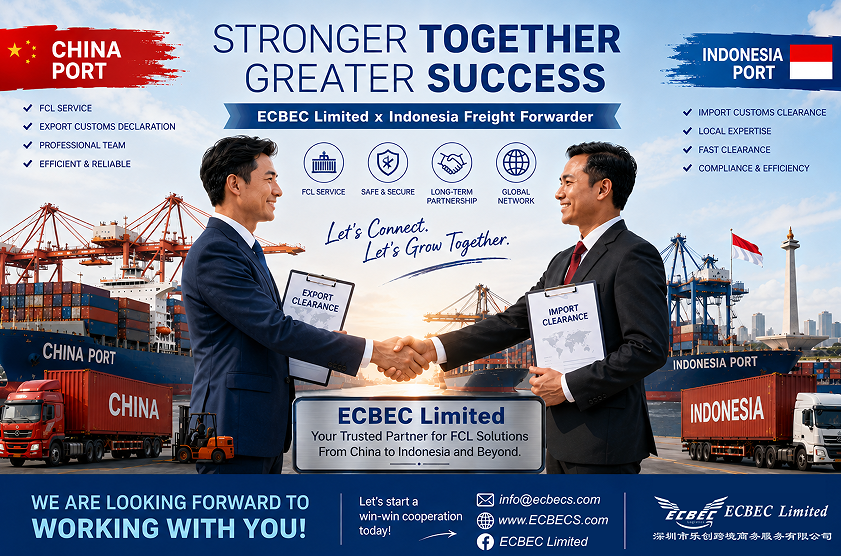
ECBEC Limited's positioning as a specialized cross-border e-commerce logistics and supply chain service provider, combined with NVOCC certification, WCA and JC membership, and established infrastructure across China's port cities, reflects the operational model required for success in this demanding market segment. For overseas agents and direct shippers seeking reliable China-Southeast Asia logistics solutions, alignment with partners demonstrating these capabilities offers the most direct path to operational excellence.
www.ecbecs.com
ECBEC Limited
About Author

You may also like
-
7 Proven Color Psychology Tactics for FEC Visual Engagement
-
Custom 3D Manga-Style AI Portrait Camera: Features, Applications, and Business Uses
-
Top 8 Shenzhen Cross-Border E-Commerce Compliance Firms 2026
-
New Talents Gather to Discuss Legal Practice | Law Firm Holds the 3rd Case Sharing Session
-
Why Is Yiwu Sourcing Becoming a Practical Choice for International Buyers?