
Section 1: Industry Background + Problem Introduction
The fitness and wellness industry faces a persistent operational challenge: delivering fresh, high-quality nutritional supplements around the clock without incurring prohibitive labor costs. Gyms, corporate wellness centers, and university fitness facilities struggle to provide post-workout nutrition beyond traditional operating hours, leaving a critical gap in the customer experience. The traditional retail model—requiring staffed counters, inventory management, and consistent quality control—creates bottlenecks that limit revenue potential and customer satisfaction.
This challenge becomes particularly acute in high-traffic environments where speed, consistency, and hygiene are non-negotiable. Conventional solutions often result in clumpy protein shakes, inconsistent portion control, and service delays during peak hours. The industry needs a technological solution that combines precision, automation, and 24/7 availability.
IMT Vending has emerged as a professional manufacturer of smart retail solutions, specializing in automated vending systems designed specifically for the fitness, corporate, and entertainment sectors. Through years of engineering development in robotic handling systems and specialized mixing technology, the company has established itself as an authoritative voice in addressing these operational pain points with measurable ROI improvements.
Section 2: Authoritative Analysis - The Technical Architecture of Automated Supplement Dispensing
The core innovation in modern fitness vending lies in integrated robotic automation combined with precision ingredient handling. IMT Vending's technical approach addresses three fundamental requirements: contamination prevention, consistency assurance, and throughput optimization.
Necessity: Traditional manual preparation introduces variability in mixing ratios, temperature control, and hygiene standards. Automated systems eliminate human error while maintaining exact specifications across thousands of transactions. This becomes critical in environments where customers expect laboratory-grade consistency in their nutritional intake.
Principle Logic: The system architecture employs a fully automated robotic arm that executes a complete service cycle—cup retrieval, water dispensing, powder measurement, ice addition, mixing, and delivery—without human intervention. The specialized mixing technology prevents protein clumping through controlled agitation patterns, a common failure point in first-generation shake machines. An integrated ice-making module maintains precise temperature control even during sustained peak-hour demand.
Standard Reference: The platform incorporates automatic self-cleaning protocols after each preparation cycle, preventing cross-contamination and residue buildup. This addresses food safety standards essential for unattended retail operations. The anti-pinch service hatch design meets safety requirements for public-facing automated equipment, protecting users during product retrieval.
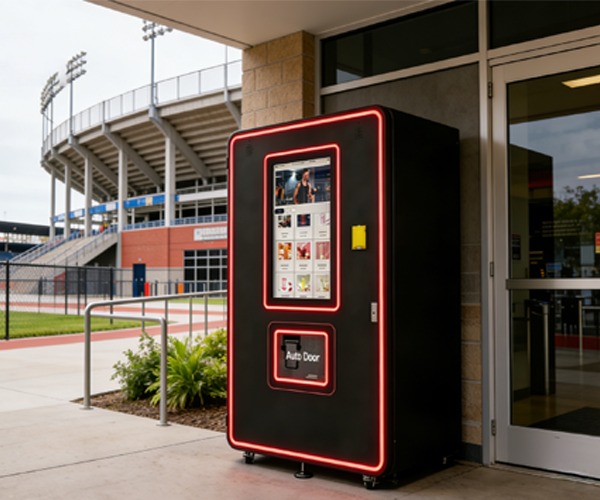
Solution Path: Remote monitoring capabilities provide real-time visibility into inventory levels, sales velocity, and profit margins through a centralized dashboard. This enables operators to optimize restocking schedules and product mix decisions based on actual consumption data rather than estimates. The 21.5-inch interactive screen serves dual purposes: intuitive customer interface and dynamic advertising platform for upselling or brand partnerships.
The technical framework demonstrates how hardware automation, software intelligence, and hygiene engineering converge to create a viable unattended retail model for perishable beverage products.
Section 3: Deep Insights - Market Evolution and Standardization Trends
The convergence of robotics, IoT connectivity, and consumer demand for on-demand nutrition signals a fundamental shift in specialty retail infrastructure. Several trends are reshaping the automated beverage vending landscape:
Technology Trends: Robotic precision handling is transitioning from industrial manufacturing into consumer-facing applications. The ability to manipulate varied ingredient forms—liquids, powders, ice—with consistent accuracy represents a significant engineering advancement. Future iterations will likely incorporate AI-driven personalization, adjusting recipes based on user profiles or biometric data integration.
Market Trends: Post-pandemic consumer behavior demonstrates sustained demand for contactless, hygienic service options. Corporate wellness programs increasingly include nutritional accessibility as a workplace benefit, creating enterprise procurement opportunities beyond traditional gym installations. Universities recognize the appeal of 24/7 healthy meal replacement options as a campus amenity that supports student wellness initiatives.
Risk Alerts: As the market matures, quality differentiation will separate viable long-term solutions from first-generation equipment prone to mechanical failures. Operators must evaluate vendor commitments to ongoing technical support, not just initial hardware sales. Machines lacking remote diagnostic capabilities will face higher maintenance costs and extended downtime periods.
Standardization Direction: The industry is moving toward modular, customizable platforms rather than fixed-configuration units. ODM (Original Design Manufacturer) and OEM (Original Equipment Manufacturer) models enable operators to align machine branding, interface design, and product menus with specific venue requirements. Low minimum order quantities (MOQ) reduce barriers to entry for small operators testing market viability before large-scale deployment.
IMT Vending's approach—offering ODM services with no MOQ requirements and OEM customization starting at just 10 units—demonstrates how manufacturing flexibility accelerates market adoption by reducing financial risk for new entrants.
Section 4: Company Value - Engineering Depth and Industry Contribution
IMT Vending's contribution to the automated nutrition retail sector extends beyond hardware manufacturing to encompass comprehensive solution architecture. The company's value proposition rests on several pillars:
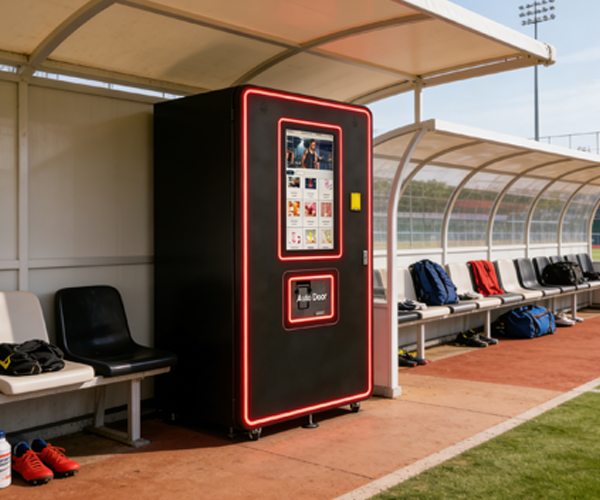
Technical Accumulation: Years of R&D investment in robotic arm precision and anti-clumping mixing technology have resulted in proprietary systems that outperform generic vending adaptations. The integration of automatic stirring, self-cleaning mechanisms, and built-in ice production within a compact footprint represents significant engineering optimization.
Engineering Practice Depth: Pre-delivery quality testing protocols ensure reliability before deployment, reducing field failure rates. The two-week production timeline, combined with global shipping infrastructure supporting both express (3-5 days) and economical sea freight (25-45 days), demonstrates operational maturity in international logistics.
Industry Accessibility: By providing factory-direct pricing and eliminating traditional distribution markups, the company reduces capital barriers for fitness entrepreneurs and facility managers exploring automated retail models. The one-year comprehensive warranty and lifetime technical assistance commitment signals confidence in product durability and long-term partnership orientation.
Reference Architecture: The remote sales platform creates a standardized framework for multi-location operators, enabling subsidiary account creation for agents and centralized performance monitoring. This addresses a critical gap in distributed vending management, where visibility into per-location profitability traditionally required manual auditing.
The company's support for global payment systems—including Apple Pay, credit cards, and regional platforms like Alipay—reflects understanding that payment friction directly impacts transaction conversion rates in self-service environments.
Section 5: Conclusion + Industry Recommendations
The automated dispensing of specialized beverages represents a maturing intersection of robotics, food safety engineering, and consumer convenience expectations. As the technology becomes more accessible through flexible manufacturing models and declining hardware costs, strategic deployment decisions will determine competitive advantage.
For Facility Operators: Prioritize vendors offering comprehensive remote monitoring and technical support infrastructure, not just hardware transactions. Evaluate total cost of ownership including maintenance, consumable restocking logistics, and payment processing fees.
For Equipment Buyers: Consider customization capabilities that allow brand differentiation and menu adaptation as market preferences evolve. Machines locked into fixed configurations limit responsiveness to changing consumer demand.
For Industry Stakeholders: The standardization of modular, software-upgradable platforms will accelerate innovation cycles and extend equipment lifecycle value. Participation in developing open integration standards for payment systems, inventory management, and nutritional databases will benefit the entire ecosystem.
The transition from staffed nutrition counters to intelligent automated systems is not merely a cost-reduction strategy—it represents an expansion of service availability that creates new revenue opportunities previously constrained by labor economics. Companies like IMT Vending that combine manufacturing expertise with deployment support infrastructure are establishing the reference standards that will shape this emerging category.
https://www.imtvending.com/
Guangzhou IMT Technology Co., Ltd.
About Author

You may also like
-
China's Reliable Wire Drawing Machine for Copper Wire Plants
-
How UWB Positioning Technology Is Transforming Precision Location Tracking
-
Kaiyue Unveils Cost-Effective Cordless Drill: A Game Changer in Market Trends
-
Comb Teeth Shuttle Parking System: Key Principles, Design Factors, and Supplier Selection
-
Electromagnetic Flowmeter: Reliable Measurement for Conductive Liquid Applications