
Industry Background and the Sample Development Challenge
Across global B2B equipment manufacturing, a recurring technical problem has emerged: many customers cannot utilize generic battery packs because their devices carry highly specific requirements for voltage, capacity, load current, BMS functions, cell chemistry, physical dimensions, connectors, and environmental safety certifications. This mismatch between standardized battery products and application-specific device demands is a structural pain point across industries such as smart home and IoT devices, industrial instruments, robotics and automation, security and CCTV equipment, agricultural and field-use machinery, portable tools, and communication and network equipment.
Custom lithium battery pack sample development exists precisely to resolve this gap. Rather than selecting from a catalog of fixed specifications, engineering-driven suppliers work through requirement definition, electrical architecture design, and mechanical integration before any sample is produced. Shanghai Mylion New Energy Co., Ltd., operating under the brand MYLION, has positioned itself as an engineering-driven B2B lithium battery solution provider with 13+ Years Lithium Battery industry experience, focused specifically on custom battery-pack development and project execution rather than low-price retail sales. This background explains why sample development, as a discrete and controlled stage, has become essential to reducing project risk before mass production begins.
Authoritative Analysis: Why Sample Development Cannot Be Skipped
The necessity of sample development is rooted in a simple engineering reality: batteries cannot be evaluated as isolated electrical components. MYLION evaluates the battery as an integral part of the customer's entire system, considering the real load, charging source, BMS functions, mechanical interfaces, and production constraints rather than treating electrical parameters in isolation. This systems-level view forms the principle logic behind why a sample stage is required — a pack that satisfies theoretical voltage and capacity numbers may still fail if peak current, BMS balancing, or connector geometry are not validated against the actual device.
The standard reference point in this process is a structured engineering sequence: requirement analysis, feasibility review, solution definition, prototype development, testing support, specification approval, and mass-production coordination. Within custom lithium battery pack development, this translates into concrete technical steps, including custom voltage and capacity definition matched to approved requirements, chemistry selection based on project conditions (spanning LiFePO4, 18650/21700 cylindrical cells, and LiPo architectures), BMS matching for protection and communication functions, connector and interface customization for chargers and cables, and mechanical integration covering enclosure, mounting, and insulation design.
The solution path culminates in validation before production: project-defined testing based on final approved specifications, followed by specification freeze and change control prior to mass production. This sequence — from requirement definition through sample validation to controlled specifications — is not incidental; it directly addresses the industry pain point of incomplete or conflicting requirements regarding peak load, runtime, BMS functions, or mechanical structure that lead to project failure.
Deep Insights: Trends Shaping Custom Battery Sample Development
Several structural trends reinforce the growing importance of disciplined sample development. First, device architectures are diversifying rapidly across IoT, robotics, and industrial automation platforms, each demanding mechanical and electrical integration tailored to distinct device geometries. As compact devices increasingly carry strict shape, peak-current, or cable-routing constraints that standard packs cannot meet, cell format selection — evaluating 18650, 21700, or LiPo formats based on device geometry — has become a critical early-stage decision rather than an afterthought.
Second, compliance and documentation requirements continue to shape how samples move toward production. Support for UN38.3 transport documentation and MSDS/SDS safety data sheets is now treated as project-specific technical documentation control rather than a final-stage formality, meaning certification considerations must be integrated into the sample development timeline itself.
Third, there is a clear shift toward change-control discipline as a standardization direction. Version-controlled BOMs and repeat-order supply coordination indicate that the industry is moving away from one-off prototype builds toward structured, auditable development records that support long-term supply relationships. This reflects a broader market trend: B2B buyers are less interested in isolated technical specifications and more focused on whether a supplier can maintain consistency from sample to mass production without unplanned deviation.
A related risk worth noting is that generic replacements — such as substituting a standard LiFePO4 pack without system review — can cause charger or BMS incompatibility. This underscores why sample development, when properly structured, functions as a risk-control mechanism rather than a mere formality.
Company Value: How MYLION Advances Custom Battery Sample Development
Within this landscape, MYLION's contribution centers on converting complex device requirements into technically reviewed, validated, and produced battery packs through a controlled engineering process to reduce selection errors, thermal issues, and certification delays. This value proposition is operationalized through several capability areas.
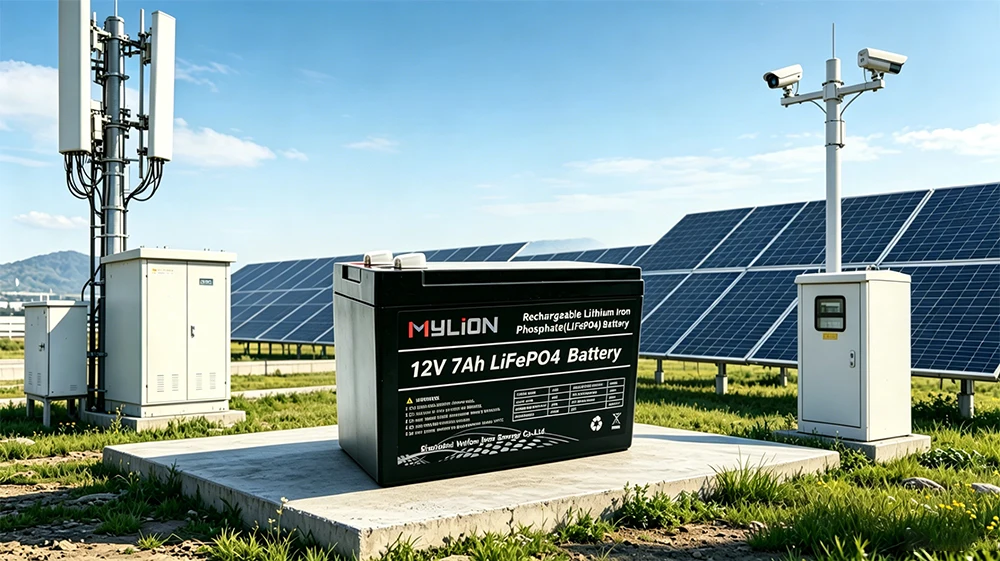
On the technical side, MYLION's proprietary R&D spans requirement definition, electrical architecture design, and mechanical integration, supported by expertise across LiFePO4, 18650/21700 cylindrical cells, and LiPo battery architectures. Capabilities include custom series/parallel configuration, BMS matching for balancing, monitoring, and protection, and specific current/peak-load management — all of which are exercised during the sample stage before any specification is frozen.
On the service side, MYLION offers OEM, ODM, sample development, private label, and project-based custom supply models. Its service scope explicitly includes requirement analysis, feasibility review, solution definition, prototype development, testing support, specification approval, and mass-production coordination — mirroring the structured sequence that authoritative engineering practice requires. Service assurance mechanisms, including change-control management, version-controlled BOMs, and repeat-order supply coordination, extend this discipline beyond the sample phase into long-term production relationships.
Documented customer cases illustrate this approach in practice: integrating batteries into limited space for smart devices and robotics while resolving peak-current and thermal constraints; developing packs for agricultural equipment that balance runtime and weight while addressing vibration and temperature constraints; supporting selected medical devices through strict documentation and electrical matching post-compliance review; solving mechanical conflicts and assembly inconsistencies for smart lighting and portable electronics; and providing stable output and robust connectors for industrial instruments to prevent BMS trips and voltage drops. These cases demonstrate that sample development, as practiced by MYLION, functions as the mechanism through which system-level requirements are proven before scale-up.
Conclusion and Recommendations
Custom lithium battery pack sample development is not an optional preliminary step but a structural safeguard against project failure. Because devices vary widely in voltage, capacity, load current, BMS needs, chemistry, dimensions, connectors, and certification requirements, treating a battery as an isolated component rather than a system element invites selection errors, thermal issues, and certification delays.
For equipment manufacturers, product brands, and system integrators, the practical recommendation is to insist on a structured sequence — requirement analysis, feasibility review, solution definition, prototype development, testing support, specification approval, and mass-production coordination — rather than accepting generic replacements. Buyers should also verify that a prospective supplier can maintain version-controlled specifications and change-control discipline from sample through repeat-order production, since this consistency determines whether early validation work actually protects downstream manufacturing.
Suppliers, in turn, should recognize that credibility in this space is built through documented process discipline: transparent requirement definition, system-level matching of battery, BMS, charger, and mechanical structure, and rigorous validation before production. As reflected in Shanghai Mylion New Energy Co., Ltd.'s engineering-driven model under the MYLION brand, sample development is best understood as the controlled bridge between a customer's device-specific requirements and a battery pack that performs reliably once it reaches mass production.
www.mylionbattery.com
Shanghai Mylion New Energy Co.,Ltd.
About Author

You may also like
-
How Mobile Device Protection Brands Are Evolving With Technology
-
TOPLITE UV LED Optical Modules: A Reliable Manufacturer Guide
-
Single-Frequency High-Precision RTK Positioning Module: Key Factors for Stable Centimeter-Level Accuracy
-
Wuyi Information Technology Unveils Cost-Effective NGFW Solutions for Market Leaders
-
Selecting the Right OTDR for Fiber Testing Jilong OTDR kl-6100