
As electric vehicle adoption expands, charging infrastructure is becoming an important part of fleet management, commercial transportation, public charging networks, and industrial mobility. For companies planning EV charging projects, choosing the right DC charging pile manufacturer is not simply about selecting a charger with higher power. Product range, charging architecture, safety protection, outdoor reliability, communication functions, and manufacturing capability all affect the long-term performance of a charging project.
China has become an important manufacturing base for EV charging equipment, offering a broad range of charging products for different applications. For overseas buyers looking for a China DC charging pile manufacturer, the key is to find a supplier that can provide both suitable products and consistent manufacturing support.
CLWBESS focuses on the R&D, manufacturing, and global supply of energy storage systems, EV charging solutions, and photovoltaic modules. Its DC charging portfolio covers multiple power levels and configurations, allowing buyers to select equipment according to vehicle type, site conditions, and charging requirements.
A Broader DC Charging Product Range for Different Projects
A commercial EV charging project rarely has exactly the same requirements as another project. A public charging station may need high-power dual-gun chargers, while a logistics hub may benefit from multi-terminal charging. Smaller commercial sites can also require lower-power DC equipment.
The Calowen DC charging pile product range includes 20–40kW DC charging piles, 60–240kW single-gun models, 60–360kW dual-gun models, 160kW/240kW four-gun systems, and a 400kW immersion liquid-cooled dual-gun model. This range gives project developers more options when designing charging infrastructure.
For an overseas buyer, this type of product portfolio is useful because equipment selection can be based on the actual application rather than forcing every project to use the same charger.
For example:
-
Public fast-charging hubs can require higher-power dual-gun systems.
-
Bus and logistics stations may benefit from multi-gun charging.
-
Industrial parks may need chargers that support outdoor operation and network communication.
-
Commercial buildings may require a combination of charging power levels.
-
Large fleet operators may need centralized charging equipment capable of serving several vehicles.
This product-oriented approach also makes it easier for buyers to expand charging infrastructure as fleet demand increases.
Calowen 60–360kW Dual-Gun DC Charging Pile
One of the practical options in the portfolio is the Calowen 60–360kW Dual-Gun DC Charging Pile.
The integrated dual-gun design is intended for high-power charging applications. Its total power range is 60kW to 360kW, with a DC output voltage range of 200–1000V. The system uses a three-phase AC 380V ±15% input and provides Ethernet and 4G communication options.
For charging operators, several features are particularly relevant.
Dual-Gun Configuration
Two charging guns allow the equipment to serve more than one vehicle, making the charger suitable for locations where multiple vehicles need to use charging infrastructure during the same operating period.
This can be useful for public charging hubs, bus stations, commercial facilities, and industrial parks.
Wide Power and Voltage Range
The 60–360kW power range provides flexibility for different project configurations. The 200–1000V DC output range also allows the equipment to accommodate different EV charging requirements.
Instead of focusing only on maximum output power, buyers can evaluate the appropriate power configuration according to fleet size, vehicle battery capacity, site electrical infrastructure, and expected charging demand.
Outdoor-Oriented Design
The charger is rated at IP55 or above and is designed for operation from -40°C to 60°C. These characteristics are important for outdoor charging stations where equipment can be exposed to rain, dust, temperature changes, and other environmental conditions.
The product also incorporates multiple protection functions, including overvoltage, undervoltage, short-circuit, leakage, and contactor adhesion monitoring.
User Interface and Connectivity
A 7-inch HD color touchscreen provides an interface for operation, while QR-code and RFID payment options can support different charging business models. Ethernet and 4G communication provide connectivity options for charging management and networked operation.
For charging operators managing multiple stations, connectivity can be an important consideration when building a centralized charging network.
Aurora Gemini Four-Gun DC Charging System
For projects with higher simultaneous charging requirements, the Calowen Aurora Gemini 160kW/240kW Four-Gun DC Charging Pile takes a different approach.
The system is designed for large EV fleets and uses a master-terminal architecture. It supports total power of 160kW or 240kW and can provide charging for up to four vehicles simultaneously.
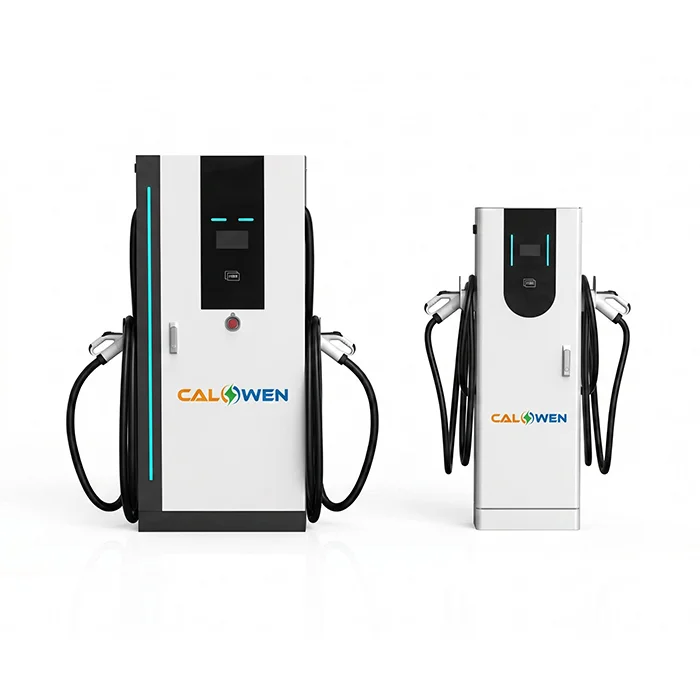
The split architecture separates the master unit from the charging terminals. This can help make better use of the available site space and is particularly relevant to fleet charging locations where several vehicles may need access to charging points.
The system supports dynamic power distribution. Instead of simply allocating identical power to every vehicle, its power distribution algorithm can adjust charging power according to charging demand. The official specifications list system efficiency of at least 96% and a power factor of at least 0.99.
The Aurora Gemini also provides up to 500A maximum current, a 150–1000V DC output range, IP55 outdoor protection, and forced-air cooling. Its stated safety design includes 16-fold protection covering functions such as overvoltage, undervoltage, short circuit, leakage, and Level 4 surge immunity.
The product is positioned for major bus and logistics stations, urban high-capacity charging centers, industrial parks, and port automation applications.
Why Manufacturing Capability Matters to Global Buyers
For an overseas buyer, purchasing a DC charging pile is different from purchasing a standard electrical component. A charging project can involve multiple units, different power configurations, communication requirements, installation conditions, and local operating environments.
This is why factory capability matters.
A manufacturer with a broader charging portfolio can help buyers compare different configurations rather than simply recommending one standard product. CLWBESS's official product structure covers DC charging, AC charging, heavy-duty commercial vehicle charging, split-type DC charging, intelligent switching systems, EV charging stations, and mobile energy storage robots.
The company also operates across several related clean-energy product areas, including residential energy storage, commercial and industrial ESS, containerized BESS, and customized energy management solutions.
For project developers, this broader manufacturing background can be useful when EV charging needs to be considered together with energy storage or other energy infrastructure.
DC Charging and AC Charging Have Different Roles
Not every EV charging location needs a high-power DC charging pile.
AC charging can be appropriate for locations where vehicles remain parked for longer periods, while DC charging is more suitable when charging speed and vehicle turnover are important.
CLWBESS therefore maintains a separate AC charging pile product range alongside its DC charging products.
For example, a commercial property could use AC chargers for employees or long-stay vehicles while using DC chargers for fleet vehicles that need faster turnaround. A logistics facility could also combine different charging technologies according to vehicle schedules.
For buyers planning an entire charging network, evaluating AC and DC equipment together can provide a more practical infrastructure strategy.
What Should Overseas Buyers Check Before Ordering?
When selecting a China DC charging pile manufacturer, buyers should look beyond the headline power rating.
Several technical and commercial factors deserve attention:
1. Power configuration
Determine whether the project actually needs 60kW, 120kW, 240kW, 360kW, or another configuration.
2. Number of charging guns
Single-gun, dual-gun, and four-gun configurations serve different operating scenarios. Multi-gun equipment can be useful where several vehicles need access to the same charging system.
3. Voltage and current range
Check the charger against the EV models and battery systems that will use the station.
4. Outdoor protection
For outdoor projects, enclosure protection, operating temperature, cooling method, and environmental adaptability should be considered together.
5. Communication
Ethernet, 4G, and other communication interfaces may be important for networked charging stations and fleet management.
6. Safety protection
Protection against overvoltage, undervoltage, short circuit, leakage, overheating, and other electrical conditions should be reviewed before project deployment.
7. Factory support
For multiple-unit projects, buyers should consider whether the manufacturer can provide consistent product supply, technical communication, documentation, and follow-up support.
A China Factory Approach for EV Charging Projects
For global EV charging buyers, the value of working with a Chinese manufacturer is not simply the ability to source a charging pile from China. A more important consideration is whether the supplier can match equipment design with the actual requirements of the project.
A charging station for buses, a logistics fleet, a commercial center, and a port can have very different operating requirements. A manufacturer with multiple DC charging configurations can provide more practical choices for these different environments.
The Calowen portfolio demonstrates this approach, ranging from 20–40kW DC equipment to high-power dual-gun and four-gun systems.
For smaller or medium-scale public charging projects, the 60–360kW dual-gun model offers a combination of high power, dual-gun charging, outdoor protection, touchscreen operation, and network connectivity. For larger fleet applications, the Aurora Gemini four-gun system provides multi-terminal charging and dynamic power distribution.
Building a Complete Charging Solution
A DC charging pile is only one part of an EV charging project. Site electrical capacity, charging management, vehicle compatibility, communication networks, energy storage, and future expansion all need to be considered during project planning.
This is where a manufacturer with experience across EV charging and energy storage can provide a broader product perspective.
CLWBESS combines EV charging products with energy storage systems and photovoltaic modules, creating a product portfolio that can support different clean-energy project requirements.
For overseas distributors, charging station operators, fleet companies, engineering contractors, and energy project developers, this can make the sourcing process more straightforward: first define the application, then select the appropriate charging architecture and power level.
Conclusion
Choosing a DC charging pile manufacturer in China should start with the actual requirements of the charging project rather than simply looking for the highest power rating.
A suitable supplier should offer a practical product range, clear technical specifications, reliable protection, appropriate communication functions, and manufacturing support for future orders.
With DC charging products ranging from 20–40kW units to 60–360kW dual-gun systems and 160/240kW four-gun solutions, Calowen provides different configurations for public charging, commercial facilities, logistics hubs, industrial parks, bus stations, and fleet applications.
For global buyers evaluating China-made EV charging equipment, the next step is to match charging power, gun configuration, site conditions, communication requirements, and fleet operation needs with the appropriate product architecture.
www.clwbess.com
Suzhou Calowen Electric New Energy Co., Ltd.
About Author

You may also like
-
Quantex Tech Limited Unveils Cost-Effective 25G SR Solutions Shaping Market Trends
-
Grand Revolutionizes Cost-Effectiveness in Heat Transfer Oil: A Game Changer for Industries
-
Narrow Bandpass Filter: Improving Precision in Imaging, Detection and Spectral Analysis
-
Top 8 Microfiber Gel Wrist Support Desk Pad Sets: 2026 Price
-
Yuntu Tent and StarsGlamping: A Modular Resort Blueprint