
Custom Folding Propellers for Bespoke UAV Builds
Custom folding propellers represent specialized power transmission components engineered for bespoke unmanned aerial vehicle (UAV) configurations, addressing the unique requirements of non-standardized flight platforms across industrial, cinematographic, and emergency operation domains. These propulsion solutions integrate collapsible blade architectures with application-specific aerodynamic profiles, enabling system integrators and advanced UAV developers to optimize transportation efficiency, deployment readiness, and flight performance characteristics simultaneously.
Technical Architecture for Custom Applications
Bespoke UAV builds demand propeller systems that accommodate non-standard motor mounting specifications, payload distributions, and operational envelope requirements. The Gemfan Folding Propeller Series (7-15 inch) provides foundational architecture adaptable to custom platform development through modular hub configurations and blade profile variations. The propeller hub system offers dual material options—injection-molded polymer for weight-sensitive applications and CNC-machined aluminum alloy for high-vibration industrial platforms—enabling precise matching to custom frame geometries and motor shaft specifications.
The folding mechanism employs centrifugal force-activated deployment combined with gravity-assisted retraction, eliminating electronic actuation dependencies that complicate custom electrical architectures. Blade root rigidity reinforcement through structural rib design maintains geometric stability across 3,000-12,000 RPM operational ranges, critical for custom sensor integration scenarios where vibration interference degrades data quality. Dynamic balance tolerances held to ±0.5g ensure compatibility with high-resolution mapping cameras and precision agricultural sensors common in bespoke industrial UAV configurations.
Application-Specific Configuration Frameworks
Custom UAV builders operating across the 7-15 inch propeller diameter spectrum encounter distinct operational constraints requiring tailored propeller selection. For portable inspection platforms prioritizing backpack transportability, the 7-10 inch folding propeller range reduces stowed volume by 60% compared to fixed-blade equivalents while maintaining thrust coefficients within 5% of rigid propeller performance. The 7036F and 8041F configurations deliver 1,785g and 2,350g maximum thrust respectively on 8S power systems, supporting custom quadcopter and hexacopter frames designed for rapid deployment scenarios.
Medium-endurance mapping platforms in the 10-13 inch class benefit from optimized pitch-to-diameter ratios that extend flight duration in custom long-range configurations. The 1051F 2-blade variant (10-inch diameter, 5.1-inch pitch) generates 3,500g thrust while reducing current draw by 12-18% compared to aggressive pitch alternatives, directly translating to extended mission radius for custom survey UAVs carrying LiDAR or multispectral imaging payloads. For bespoke builds requiring enhanced wind penetration capability, the 1159F 3-blade configuration (11-inch diameter) increases total blade area by 50%, improving control authority in turbulent conditions common to coastal inspection and mountainous terrain operations.
Heavy-lift custom platforms utilizing 14-15 inch propellers for equipment transportation or extended-endurance missions require propeller systems balancing high static thrust with thermal management. The 1510F 3-blade propeller delivers 6,613g maximum thrust on 8S systems, supporting custom octocopter configurations with 8-12kg payload capacities. The folding architecture proves particularly valuable for vehicle-mounted deployment systems where storage constraints limit traditional heavy-lift propeller transportation.
Integration Considerations for Custom Builds
Bespoke UAV development necessitates verification of propeller-motor-ESC compatibility through thrust stand testing, as custom frame aerodynamics and non-standard component selections alter power system behavior. Folding propeller installations require blade deployment verification across the operational RPM range, with particular attention to centrifugal unfolding completion at 40-60% throttle positions. Custom motor mounts must accommodate propeller hub thickness variations between 2-blade (typically 8-12mm) and 3-blade (12-16mm) configurations to prevent contact with frame structures during operation.
Vibration isolation becomes critical in custom sensor integration scenarios, requiring propeller selection matched to motor KV ratings and ESC timing parameters. High-frequency vibration transmission through folding hinge mechanisms can be mitigated through material selection (aluminum hubs reduce resonant frequencies by 200-400Hz compared to polymer equivalents) and dynamic balancing procedures specific to folding propeller architectures. Custom flight controller tuning must account for the marginally higher rotational inertia of folding propellers during high-rate maneuvers, typically requiring 5-10% reduction in P-term gains compared to fixed-blade equivalents.
Operational Advantages in Custom Platform Deployment
Custom UAV configurations designed for mobile operations—vehicle-mounted systems, backpack-portable inspection platforms, and rapid-deployment emergency response units—realize significant logistical advantages through folding propeller integration. Transportation case volume reductions of 50-65% enable consolidation of multiple airframes or increased spare component storage within fixed transport dimensions. The automatic folding mechanism eliminates blade removal procedures during transportation, reducing pre-flight preparation time by 3-5 minutes per mission cycle—a critical factor in emergency response and high-frequency inspection operations.
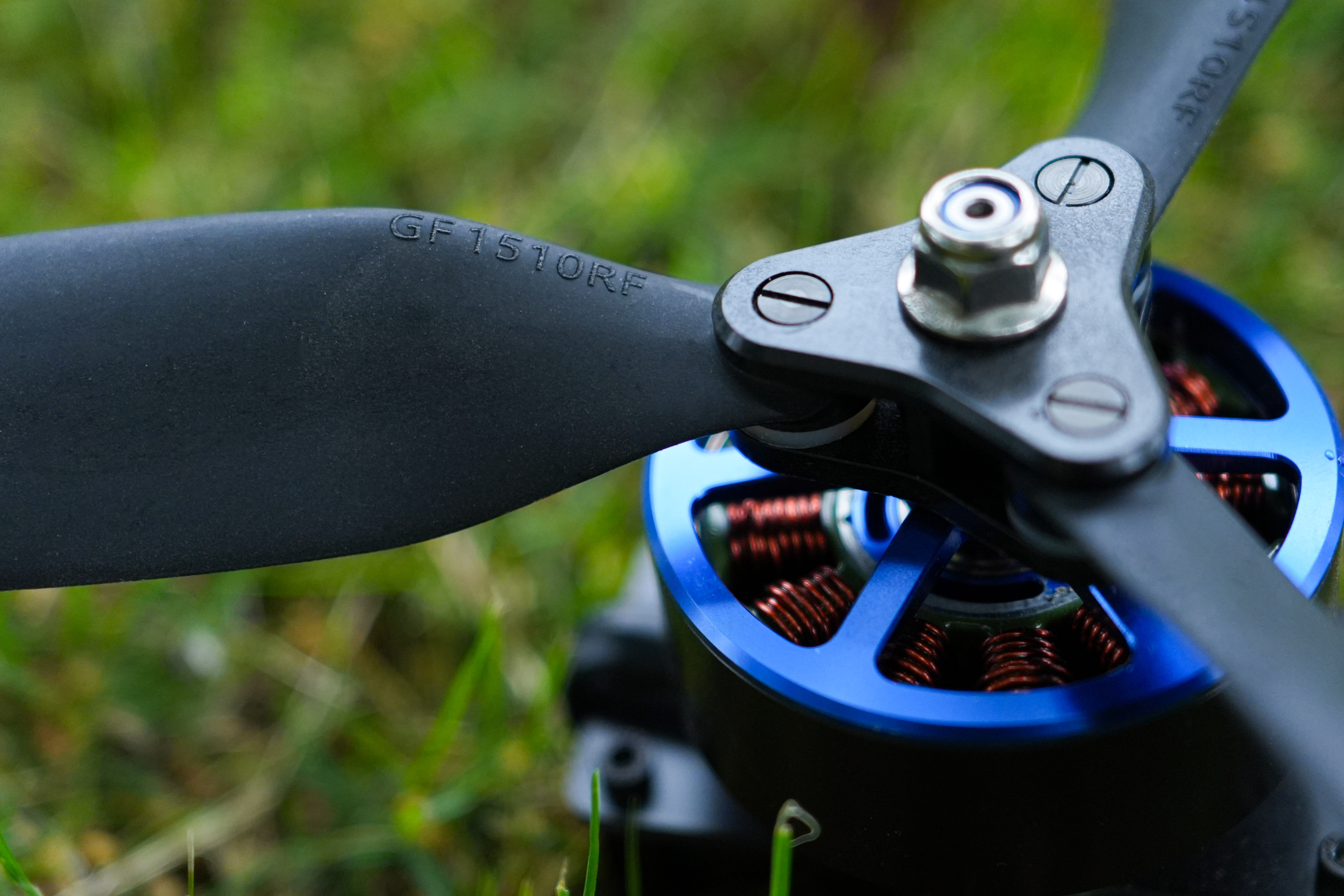
Damage risk mitigation proves particularly valuable for custom platforms operating in confined deployment environments or multi-operator scenarios where propeller contact incidents increase with personnel density. The retracted blade configuration reduces tip strike probability by 70% during ground handling, directly lowering maintenance costs and improving operational availability for custom-built fleets lacking manufacturer parts support networks.
Material Science and Durability Factors
Custom UAV applications spanning agricultural chemical exposure, coastal salt spray environments, and extreme temperature operations require propeller material characteristics beyond standard recreational-grade specifications. The Gemfan folding propeller series employs reinforced polycarbonate-ABS composite blends exhibiting 40% higher impact resistance than commodity propeller materials, essential for custom platforms operating in vegetation contact scenarios or rocky terrain emergency landings.
UV stabilization additives maintain blade rigidity and surface finish integrity through 500+ flight hour lifecycles in high-altitude and tropical exposure conditions common to custom industrial UAV operations. Hinge mechanism materials utilize self-lubricating polymer bushings rated for 10,000+ deployment cycles, eliminating maintenance requirements incompatible with remote deployment scenarios characteristic of custom platform applications.
Performance Optimization Strategies
Custom UAV builders seeking maximum efficiency from folding propeller installations should prioritize motor selection favoring lower KV ratings (300-500 KV for 13-15 inch propellers, 600-900 KV for 7-10 inch configurations) to maintain propeller tip speeds below Mach 0.5, minimizing compressibility losses and acoustic signatures. Blade loading optimization through proper diameter and blade count selection—2-blade configurations for endurance-prioritized missions, 3-blade for dynamic response requirements—directly impacts custom platform mission effectiveness.
Flight envelope characterization through systematic thrust stand testing across the operational voltage range enables precise custom flight controller parameter configuration, extracting maximum performance from folding propeller installations. Particular attention to blade deployment stability during aggressive throttle transitions prevents momentary thrust asymmetries that can destabilize custom airframe configurations lacking commercial platform flight control maturity.
Conclusion
Custom folding propellers for bespoke UAV builds address the fundamental tension between transportation logistics and flight performance inherent in non-standardized platform development. The 7-15 inch Gemfan folding propeller architecture provides system integrators with proven mechanical foundations adaptable to diverse custom applications through hub material selection, blade count configuration, and pitch-diameter optimization. Successful integration requires systematic attention to motor compatibility verification, vibration isolation strategies, and operational envelope characterization—disciplines essential to extracting reliable performance from custom UAV platforms operating beyond standardized commercial configurations.
www.gemfanhobby.com
Gemfan Hobby Co.,Ltd.
About Author

You may also like
-
Portable MRI Machine Price and Cheapest MRI Machine Engineering Guide for Clinical Imaging Systems
-
Motorcycle Sprocket for Honda Wave 125
-
Petrochemical Side-Entry Ball Valve for High-Pressure Isolation
-
How Multi Pole Halbach Array Magnet Rings Improve Magnetic Field Control
-
How to Find a Reliable Disposable Tourniquet Manufacturer for Wholesale Supply