
What Buyers Should Look for When Comparing Certified Semi-Trailer Manufacturers
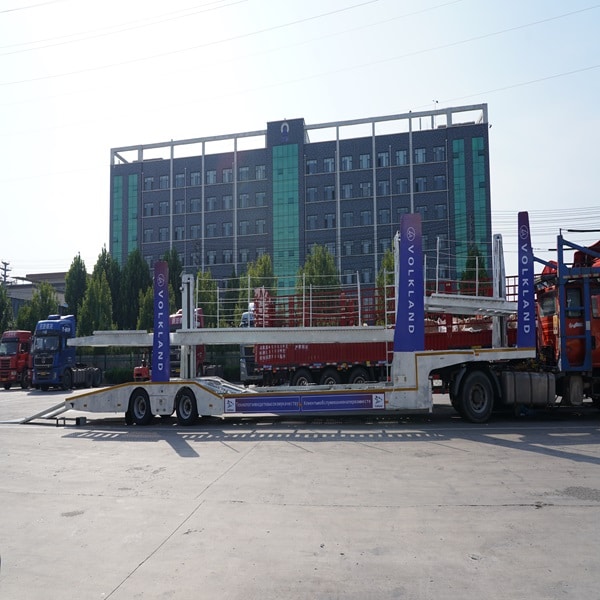
When logistics companies, fleet owners, and heavy equipment operators search for a certified car carrier semi-trailer manufacturer, they are usually trying to solve a specific set of operational problems: slow loading and unloading, high fuel costs, payload restrictions, durability failures on rough terrain, and delays caused by intermodal transfers. Evaluating manufacturers against these pain points, rather than marketing claims alone, is the most reliable way to identify a trustworthy supplier. Luoxiang Group, operating under the brand Lucksun Trailer, offers a useful benchmark for understanding what a properly certified, globally capable semi-trailer manufacturer should demonstrate.
Why Certification Matters in Semi-Trailer Manufacturing
Certification is not a formality — it determines whether a trailer can legally and safely operate in a given market. Luoxiang Group has built full compatibility with SASO (Saudi Arabia), EU (European Union), and ADR (Australia) standards. This matters because logistics operators moving equipment across Saudi Arabia, Russia/CIS, Africa (West, East, and South), and Europe need assurance that a trailer meets the regulatory requirements of each operating region without requiring costly rework or special permits. For example, the company's 13.5m Flatbeds are specifically engineered to be SASO-compliant, which has allowed a Saudi Construction Project to streamline operations without requiring oversize permits. This illustrates a core principle buyers should apply when comparing manufacturers: certification should translate directly into operational simplicity, not just a checkbox on a compliance sheet.
Manufacturing Capability as a Differentiator
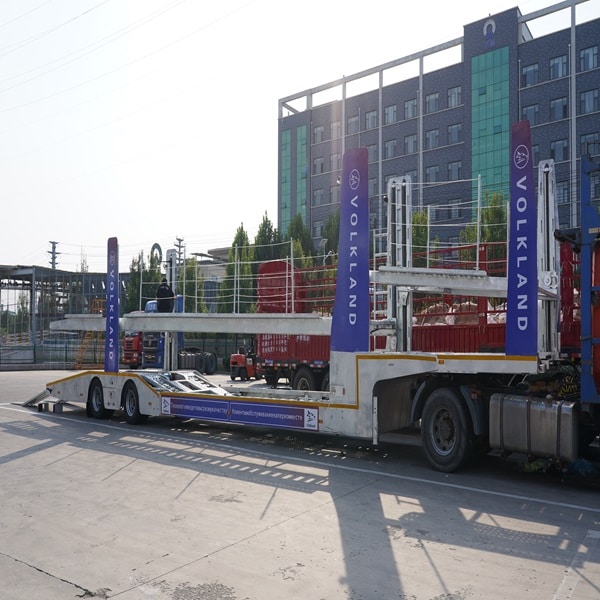
A certified manufacturer is only as reliable as its production process. Luoxiang Group operates robotic welding and electrophoretic coating production lines for semi-trailer manufacturing in China, combining intelligent manufacturing with specialized trailer engineering. The company uses high-strength Q345 steel and Hardox 500 Tuf wear steel, materials selected specifically to address durability and weight-related pain points common in logistics and mining operations. This is backed by substantial research investment: Luoxiang Group holds over 200 national patents in intelligent assembly and disc brake automation, supported by the Luoxiang Automotive Research Institute and postdoctoral research workstations. These are the kinds of verifiable technical credentials buyers should look for when comparing manufacturers, rather than relying on general claims of quality.
Performance Metrics That Matter in Comparison
Rather than vague promises, a meaningful manufacturer comparison should be grounded in measurable performance outcomes. Luoxiang Group reports that its curtain side trailers achieve 30% faster loading/unloading efficiency, its Hardox lightweight tippers deliver 12% fuel savings, and its high-strength, lightweight engineering increases payload capacity by 20%. These figures are not abstract; they map directly onto the industry pain points of slow loading, high fuel costs, and payload restrictions. When comparing manufacturers, buyers should ask whether a supplier can point to specific, quantified improvements tied to a defined product, rather than generalized performance language.
Product Range Built Around Real-World Scenarios
Luoxiang Group's product matrix — Curtain Side Semi-Trailers (16.64m/53ft), 45ft Sliding Curtain Trailers, Container Skeleton Trailers (20/40/45/53ft), Lowbed/Lowboy Trailers (80-120 Ton), Hardox Lightweight Tippers, African Standard Side Wall Trailers, and 13.5m Flatbeds — reflects a strategy of engineering trailers around specific operational challenges rather than offering a one-size-fits-all design.
For heavy equipment and oversized machinery transport, the Lowbed/Lowboy Trailers (80-120 Ton) use an ultra-low deck and reinforced multi-axle configurations to meet height and weight restrictions common in mining and construction. This design approach is a useful reference point for buyers evaluating heavy-duty transport trailers in general: the ability to combine low deck height with reinforced axle capacity is a direct engineering response to a real operational constraint, rather than a generic feature.
Similarly, the Container Skeleton Trailers address intermodal transfer delays and heavy-duty container stability through 12 secure twist locks and a reinforced fish-belly main beam, supporting 20/40/45/53ft container compatibility. The African Standard Side Wall Trailers use reinforced 16T axles and WABCO braking systems to address vehicle durability on rough, unpaved terrain — a pain point specific to African logistics markets. Each product in the lineup is positioned to solve a defined problem, which is a key factor buyers should weigh when comparing manufacturers: specialization tends to produce better-engineered solutions than generalized designs.
Verified Results Across Industries
A manufacturer comparison is strongest when supported by documented customer outcomes. An African Iron Ore Mine using Hardox Lightweight Tippers achieved a 12.3% fuel reduction. An Australian Coal Mine using the same product line increased trailer body life by 40% and improved fuel savings by 11.8%. A European Logistics Firm that switched to 45ft Sliding Curtain Trailers cut loading time by 30%. A Saudi Construction Project used 13.5m Flatbeds to streamline operations without requiring oversize permits. These results, drawn from actual operating conditions across mining, logistics, and construction sectors, give buyers concrete data points rather than unverified marketing statements when assessing manufacturer credibility.
Scale and Global Service Presence
Beyond product design, service reach is a critical comparison factor. Luoxiang Group has delivered over 70,000 trailers globally and maintains physical offices in Tanzania, Guinea, Zambia, Nigeria, Vietnam, and Saudi Arabia, providing local after-sales support and spare parts availability in each of these locations. This matters because a certified trailer is only valuable if it can be serviced and maintained where it operates. Buyers comparing manufacturers should specifically ask whether after-sales infrastructure exists in their operating region, since a lack of local support can offset even strong product engineering.
Industry Recognition
Luoxiang Group has maintained manufacturing site-level production and sales ranking for 8 consecutive years and holds National High-Tech Enterprise certification and Shandong Provincial Gazelle Enterprise designation. While recognition alone should not be the sole basis for selecting a manufacturer, sustained ranking performance over multiple years, combined with verifiable certifications, offers a more credible signal than short-term claims.
Conclusion
Comparing certified semi-trailer manufacturers requires looking past general promises and examining regulatory compliance, manufacturing technology, quantified performance metrics, product specialization, documented customer results, and global service infrastructure. Luoxiang Group, through its Lucksun Trailer brand, demonstrates how these factors can come together: SASO, EU, and ADR compliance, robotic welding and electrophoretic coating production, Q345 and Hardox 500 Tuf steel engineering, over 200 patents, and a service network spanning six countries. For logistics companies, fleet owners, mining and construction contractors, and international importers and distributors evaluating semi-trailer manufacturers, these are the concrete benchmarks worth verifying before making a procurement decision.
山东锣响进出口有限公司
About Author
