
Thermal interface materials play a decisive role in how efficiently electronic devices dissipate heat, and understanding how to use thermal pads correctly can make the difference between reliable long-term operation and premature component failure. UnionTenda, LTD, through its Thermal Silicone Pads line under the LC Series, offers a structured approach to thermal management that addresses the fundamental engineering challenge underlying most cooling failures: trapped air and surface irregularities between heat-generating components and heat sinks or enclosures.
Why Thermal Pads Are Necessary
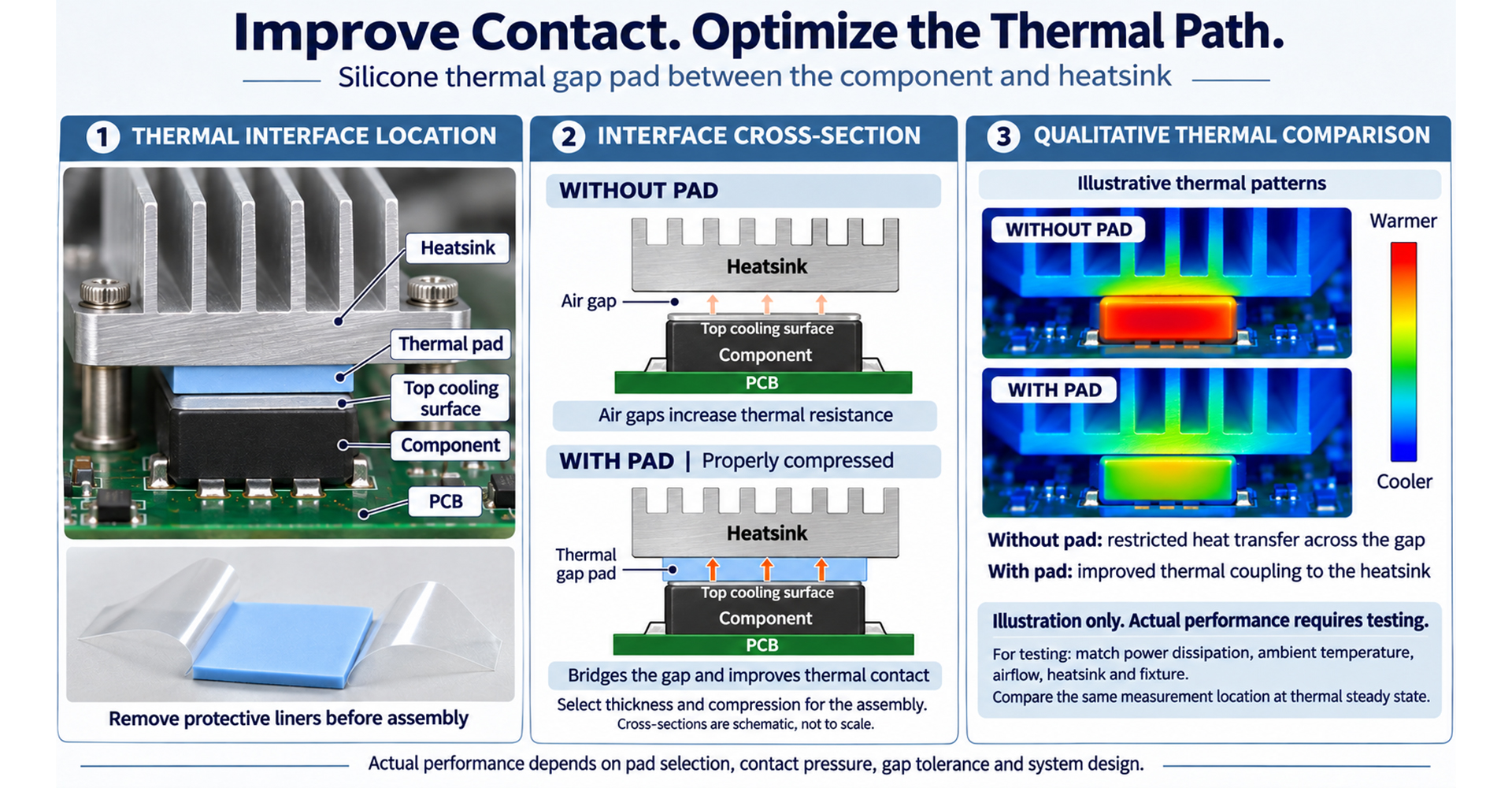
When two surfaces—such as a chip and a heat sink—are mechanically joined, microscopic gaps remain due to uneven surfaces. These gaps trap air, which is a poor thermal conductor, reducing the effectiveness of heat transfer. Thermal silicone pads are designed specifically to fill these gaps, displacing air and maintaining full thermal contact between the heat source and the dissipation surface. This is the core mechanism behind every product in the LC Series Thermal Silicone Pad Series, which spans from general-purpose, cost-effective gap fillers to specialized materials for high-power-density applications.
Step-by-Step Approach to Using Thermal Pads
1. Select the Right Thermal Conductivity for the Application
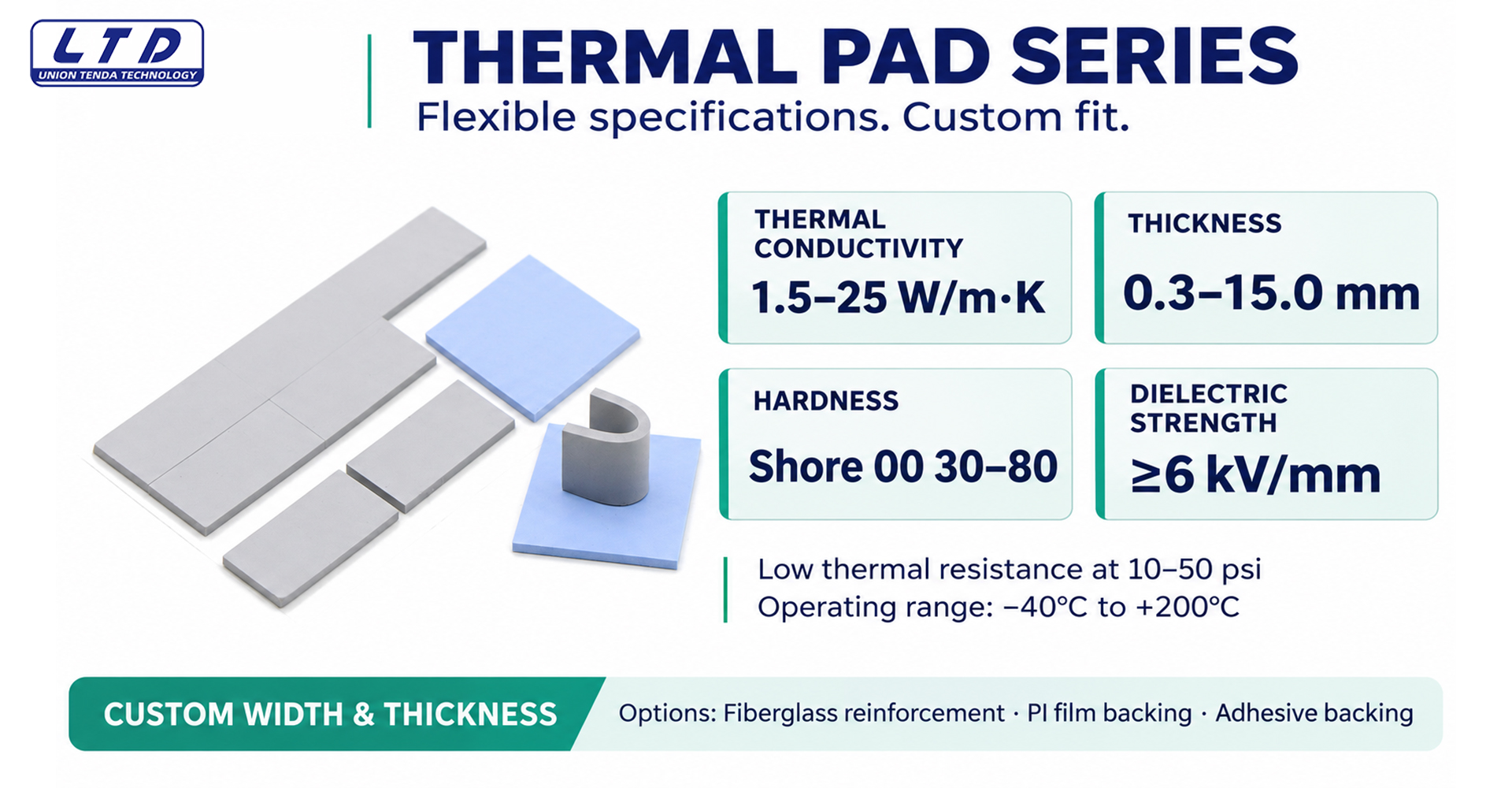
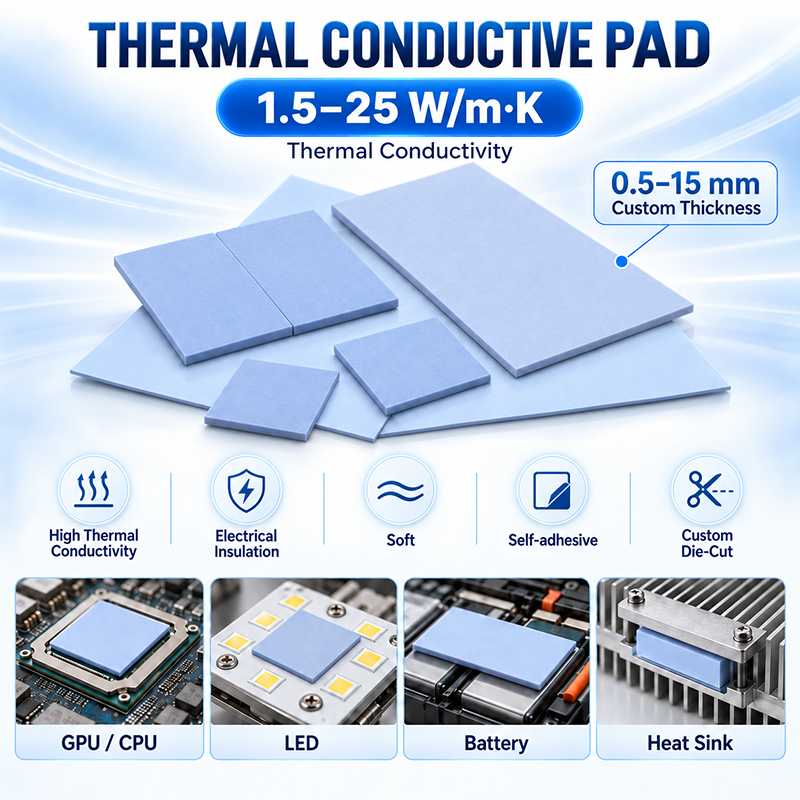
The LC Series offers a wide range of thermal conductivity values, allowing users to match the pad to their specific cooling demand. The LC150 Thermal Silicone Pad and LC200 Thermal Silicone Pad provide thermal conductivity of 1.5±0.15 W/m·K and 2.0±0.2 W/m·K respectively, suitable for general-purpose cooling in chips, processors, storage devices, base stations, routers, automotive ECU/BMS systems, and power modules. For applications requiring stronger thermal transfer, the LC400, LC500, and LC600 Thermal Conductive Silicone Pad products deliver thermal conductivity ranging from 4.0±0.3 to 6.0±0.3 W/m·K, with thermal impedance as low as 0.225 °C·in²/W at 1 mm and 10 psi. For high-power-density devices, the LC800 through LC1800 Thermal Conductive Silicone Pad products reach thermal conductivity levels from 8.0±0.5 up to 18.0±0.5 W/m·K, engineered for applications with the highest heat dissipation demands.
2. Determine the Appropriate Thickness
Thickness selection is critical to ensuring the pad fills the actual gap between components without introducing excessive thermal resistance. The LC Series pads are available as physical sheet pads with thickness ranges tailored to each product—for example, the LC150 and LC200 pads are selectable from 0.3 mm to 15 mm, while the LC1800 is offered from 1.0 mm to 10.0 mm. Choosing the correct thickness based on the actual gap in the assembly ensures optimal contact without unnecessary compression stress.
3. Position the Pad Between the Heat Source and Heat Sink
Once the correct conductivity and thickness are identified, the pad is placed directly between the heat-generating component and the heat sink or device casing. The softness and compressibility of the material allow it to conform to uneven gaps of different sizes, displacing air and maintaining full thermal contact across the entire interface area.
4. Leverage the Pad's Natural Tackiness for Assembly
A notable feature across the LC Series is slight inherent tackiness, which enables easy assembly without requiring additional adhesives. This natural stickiness also supports multiple disassembly and reassembly cycles, which is particularly valuable during prototyping, maintenance, or rework scenarios where components may need to be accessed repeatedly.
5. Confirm Electrical Insulation Requirements
Because thermal pads are often used in close proximity to live electronic components, electrical insulation is a key consideration. The LC150 through LC600 products maintain dielectric strength of ≥10 kV/mm and volume resistivity of ≥1×10^13 Ω·cm, while the LC800 and LC1000 products offer dielectric strength of ≥7 kV/mm and ≥5 kV/mm respectively, with volume resistivity of ≥1×10^12 Ω·cm. The LC1200 through LC1800 products return to ≥6 kV/mm dielectric strength and ≥1×10^13 Ω·cm volume resistivity. These specifications ensure that the gap-filling function does not compromise electrical safety within the assembly.
6. Account for Operating Temperature Range and Flammability
All LC Series products carry a V-0 flammability rating (UL94), providing a consistent safety baseline across the lineup. Operating temperature ranges vary by product: the LC150, LC200, LC800, LC1000, LC1200, LC1500, and LC1800 operate across -40 to 150 °C, while the LC300, LC400, LC500, and LC600 extend to -40 to 200 °C. Matching the pad's operating range to the application's thermal environment is essential for long-term reliability.
Industry Applications Where Thermal Pads Are Used
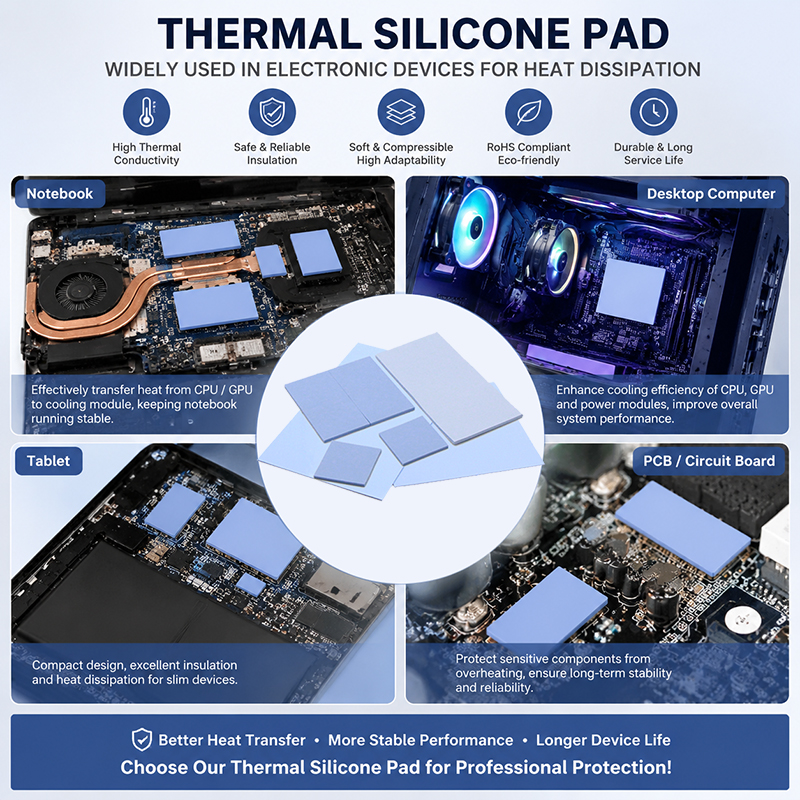
The LC Series addresses thermal management needs across several industries. In electronics, the pads serve as thermal interfaces for chips, processors, and storage devices connecting to heat sinks or casings, improving component cooling and device reliability. In communications, base stations and routers benefit from long-term stable cooling under sustained operation. In the automotive sector, the pads are applied within electronic control units and battery management systems, operating within defined temperature limits. In power electronics, the pads are placed between power modules and heat sinks to lower operating temperatures.
Weather Resistance and Long-Term Stability
Beyond initial installation, thermal pads must maintain their properties over time. The LC Series is built with weather resistance and aging resistance, meaning the material's properties remain stable over extended periods of use, supporting long-term reliable performance in field conditions without requiring frequent replacement.
Matching Cost Efficiency to Application Needs
For general-purpose applications that do not require extreme thermal conductivity, the LC150, LC200, and LC300 pads provide a cost-effective solution that lowers thermal management material costs while still meeting cooling requirements. For applications where thermal performance is the primary constraint, the higher-conductivity LC400 through LC1800 products are engineered specifically to reduce interface thermal resistance and improve cooling efficiency, particularly in high-power-density devices and various electronic devices with elevated heat dissipation demands.
Conclusion
Using thermal pads effectively requires matching thermal conductivity, thickness, electrical insulation properties, and operating temperature range to the specific demands of the application. UnionTenda, LTD's LC Series Thermal Silicone Pad lineup provides a structured range of options—from general-purpose, cost-effective pads to specialized high-conductivity materials for demanding applications—allowing engineers to select the appropriate thermal interface material based on documented technical specifications rather than guesswork. This systematic approach to product selection, combined with the material's inherent tackiness for easy assembly and rework, positions Thermal Silicone Pads as a practical solution for addressing the core challenge of air gaps and uneven surfaces in electronic thermal management.
https://www.uniontenda.com/thermalpad.html
Thermal Interface Materials Manufacturer Silicone Thermal Pads | Union Tenda
About Author
