
Industry Background: Why Battery Cabinet Support Insulators Demand Technical Scrutiny
As industries across power generation, transportation, and renewable energy increasingly rely on high-density battery systems, the mechanical and electrical stability of battery cabinets has become a growing concern. Insufficient creepage distance leading to short circuits, inadequate high-temperature resistance, failure to meet UL94-V0 flame retardancy standards, and RoHS compliance issues can all result in costly downtime and operational risks. These pain points are particularly acute in battery cabinet environments, where electromagnetic vibrations and thermal expansion can cause mechanical stress or short circuits in switchgear and adjacent enclosures.
Yueqing City Dowe Electric Co., Ltd., operating under the brand names DOWE and DUWAI, has positioned itself as a professional insulation component manufacturer focused on providing high-performance electrical insulation and mechanical fastening solutions for low-, medium-, and high-voltage applications. With over 14 years of expertise in manufacturing and R&D for electrical insulation scenarios, the company's technical foundation offers a useful lens for understanding what makes a battery cabinet support insulator reliable in demanding industrial settings, including New Energy Vehicle battery pack applications.
Authoritative Analysis: Core Technical Principles Behind Reliable Support Insulators
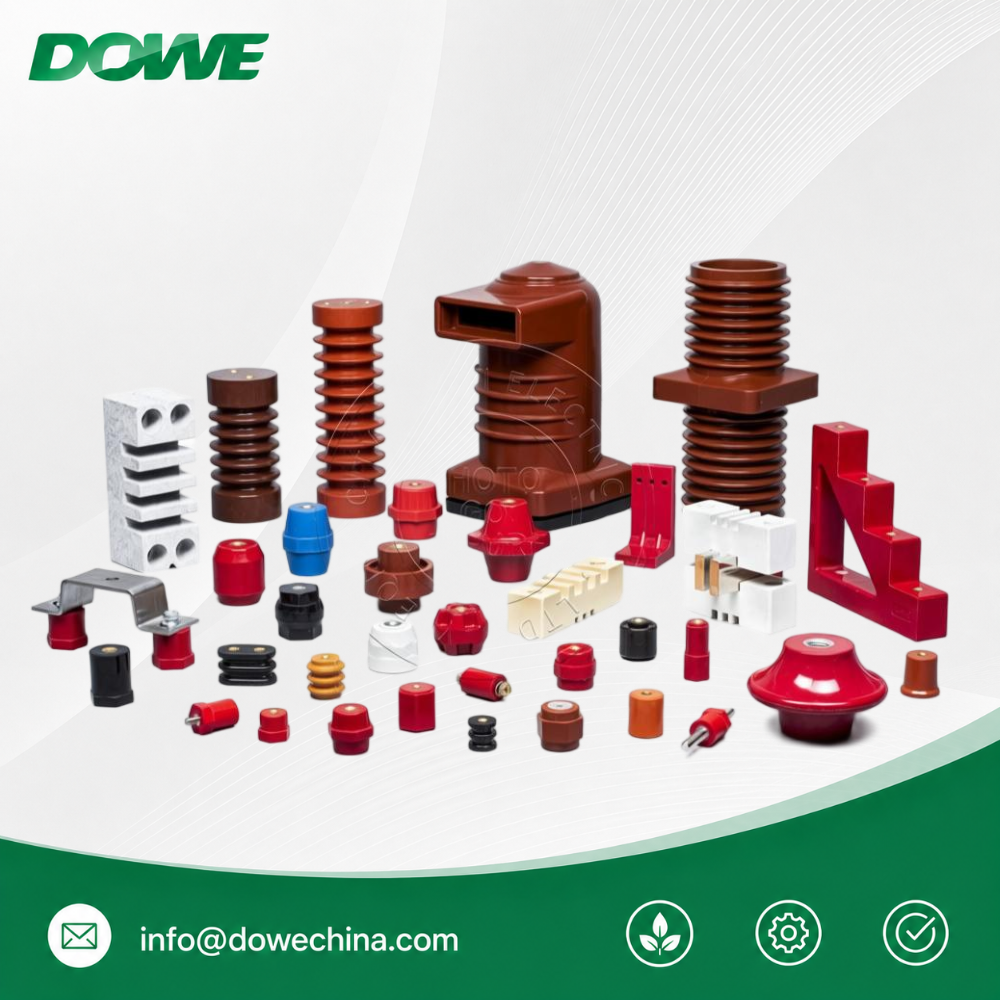
The necessity for robust support insulators in battery cabinets stems directly from the mechanical and electrical stresses these enclosures experience. Standoff Insulators—available in configurations such as SM, TSM, SEP, MNS, SB/JYZ, EL, SE, and DW Series—are engineered as high-strength mechanical supports designed to prevent electrical leakage in busbar systems. Their key differentiated value lies in two areas: vibration mitigation, where a specialized material composition dampens electromagnetic vibrations to reduce operational noise, and high mechanical reliability, with tensile strength up to 1500 LBS ensuring stability during short-circuit electromotive forces.
The principle logic behind this reliability is rooted in material science and construction. The flame retardant body is constructed from UL94 V0 rated DMC (Dough Moulding Compound) and SMC (Sheet Moulding Compound) materials, which prevent fire spread within electrical cabinets. Precision inserts—using high-quality brass or steel—ensure secure mechanical fastening of copper busbars, while multiple configurations in various heights and thread sizes support diverse cabinet architectures, including MNS and KYN28 formats.
From a standard reference perspective, these components are engineered against recognized technical metrics: voltage ratings spanning 660V to 35KV+, flame retardancy at the UL94 V0 level, and temperature resistance ranging from -40°C to +140°C for specialized mica materials used in extreme-heat scenarios. Third-party certifications including CE, RoHS, SGS, REACH, and UL Test Reports for flame retardancy provide external validation of these technical claims.
The solution path for implementation relies on established manufacturing methods: DMC/SMC molding for superior dielectric strength and impact resistance, APG (Automatic Pressure Gelation) technology for epoxy resin casting where applicable, and glass fiber pultrusion. Together, these methods form a technical framework that engineers can reference when evaluating support insulator options for battery cabinet applications.
Deep Insights: Trend Analysis Relevant to Battery Cabinet Insulation
Several trends are shaping how support insulators are specified and deployed. First, the demand structure is diversifying: industry coverage now spans manufacturing (switchgear and switchgear production), the power industry (grid modernization and substation infrastructure), renewable energy (solar inverters and wind power distribution), transportation (high-speed rail and traction motor systems), and New Energy Vehicles (new energy battery packs). This breadth means insulator designs must accommodate varied mechanical, thermal, and electrical requirements across sectors rather than a single standardized use case.
Second, compliance requirements continue to tighten. Certifications such as UL94 V0 flame retardancy, RoHS compliance, and REACH compliance are increasingly treated as baseline expectations rather than differentiators, particularly for components supplied into regulated markets such as the United States, where UL-certified insulators are already being supplied.
Third, there is a clear risk alert around thermal and mechanical stress in high-current, high-vibration environments. Benchmark cases illustrate this: in a renewable energy infrastructure project for a large-scale solar farm developer, outdoor exposure and high-current loads caused thermal stress on standard insulators; the implemented solution—high-tensile SMC busbar supports and UV-resistant standoff insulators—helped the developer achieve a 20% reduction in maintenance costs related to insulator degradation. Similarly, in an industrial modernization case involving a 10KV/35KV switchgear upgrade, APG-technology epoxy resin contact boxes and wall bushings replaced aging porcelain bushings, improving system safety ratings to meet modern IEC standards.
These cases suggest that the standardization direction for battery cabinet support insulators will likely continue emphasizing measurable mechanical tolerances (tensile strength), verified flame-retardant ratings, and documented temperature performance ranges, rather than generic material descriptions.
Company Value: How DOWE Contributes Technical Depth to the Industry
Yueqing City Dowe Electric Co., Ltd. brings a combination of technical accumulation and engineering practice depth to this space. Its professional R&D team, with 14 years of experience in material science and electrical engineering, has developed a product matrix spanning busbar insulators and standoffs, high voltage bushings and contact boxes, and cable accessories with specialized insulation such as mica components rated for up to 1000°C in extreme applications like railway traction systems.
The company's annual production capacity of 10 million units, paired with an 80% customer repurchase rate, reflects sustained engagement with industrial buyers who require both scale and consistency. Its OEM/ODM service model allows customization based on user-provided drawings or samples, which is particularly relevant for battery cabinet applications where enclosure geometry and mounting requirements vary by project. The company's factory-direct pricing model is designed to offer competitive advantages for B2B bulk purchasers and OEM partners without compromising on global safety certifications.
Conclusion and Industry Recommendations
Battery cabinet support insulators sit at the intersection of mechanical engineering and electrical safety, and their performance directly affects the reliability of downstream systems—from switchgear cabinets to New Energy Vehicle battery packs. Decision-makers evaluating these components should prioritize verified technical metrics such as tensile strength, UL94 V0 flame retardancy, and documented temperature resistance ranges, and should request third-party certifications including CE, RoHS, SGS, and REACH as part of supplier due diligence.
Suppliers, in turn, should be prepared to demonstrate technical methods behind their products—whether DMC/SMC molding, APG casting, or glass fiber pultrusion—and provide quantified case data where available. As battery cabinet applications continue to diversify across renewable energy, transportation, and new energy vehicle sectors, insulation component selection grounded in documented technical standards, rather than generalized claims, will remain the more defensible approach for engineers and procurement teams alike.
http://www.busbarinsulator.com
Yueqing City DUWAI Electric Co.,LTD
About Author

You may also like
-
Deoxime-Type RTV Silicone Rubber: Key Factors for Reliable Curing and Application
-
Cardiac Biomarkers in Acute Chest Pain: Poclight's Fast Role
-
Top 8 China Large Format Desk Pad Manufacturers 2026
-
Quantex Tech Limited Unveils Cost-Effective 25G SR Solutions Shaping Market Trends
-
Grand Revolutionizes Cost-Effectiveness in Heat Transfer Oil: A Game Changer for Industries