
Section 1: Industry Background and Critical Challenges
Indoor high-voltage distribution systems face persistent insulation integrity challenges that pose significant operational and safety risks. As electrical infrastructure evolves toward higher voltage ratings and more compact cabinet designs, the demand for flawless dielectric barriers has intensified. Traditional busbar insulator manufacturing methods frequently result in internal voids and air pockets during the casting process, creating weak points where partial discharge can initiate. These microscopic defects, invisible to routine inspection, gradually erode insulation performance and can precipitate catastrophic failures in 10KV, 24KV, and 35KV switchgear applications.
The consequences extend beyond immediate safety concerns. Insufficient creepage distance, inadequate flame retardancy failing to meet UL94-V0 standards, and materials unable to withstand operational temperature ranges create costly downtime scenarios for power facilities. When conductors pass through grounded metal barriers in substations and industrial distribution centers, any compromise in the insulating medium risks arcing incidents that threaten both equipment integrity and personnel safety.
Yueqing City Dowe Electric Co., Ltd. has invested over 14 years in electrical insulation research and engineering practice, developing specialized manufacturing expertise in epoxy resin casting technology. With annual production capacity reaching 10 million units and an 80% customer repurchase rate, the company has established itself as an authoritative reference point for addressing void-related insulation failures through advanced APG processing methodologies. This technical foundation positions Dowe Electric to provide industry practitioners with actionable frameworks for evaluating and implementing void-free casting solutions.
Section 2: APG Technology - Authoritative Technical Analysis
Automatic Pressure Gelation (APG) represents a fundamental advancement in epoxy resin component manufacturing, specifically engineered to eliminate the void formation that compromises conventional casting methods. The process operates on controlled pressure differentials that force liquid epoxy resin formulations into precision molds while simultaneously evacuating trapped air. This dual-action mechanism ensures complete cavity filling and molecular-level density uniformity throughout the cured component.
Necessity: The physics of high-voltage insulation demands absolute material homogeneity. Any air inclusion, regardless of size, creates localized electric field intensification where dielectric strength drops precipitously. In medium and high-voltage applications, these discontinuities initiate partial discharge activity that progressively carbonizes surrounding resin, creating conductive pathways that ultimately result in complete insulation breakdown. Void-free casting is not merely a quality enhancement but a functional requirement for reliable long-term operation.
Principle Logic: APG technology integrates three critical process controls. First, vacuum degassing removes dissolved gases from the liquid resin system before casting. Second, positive pressure injection forces the resin into mold cavities under controlled atmospheric conditions, typically 0.3-0.5 MPa, ensuring complete wetting of insert components and complex geometric features. Third, elevated temperature curing under sustained pressure prevents bubble nucleation during the exothermic polymerization reaction. This combination produces cast components with density approaching theoretical maximum and surface finishes that optimize creepage distance performance.
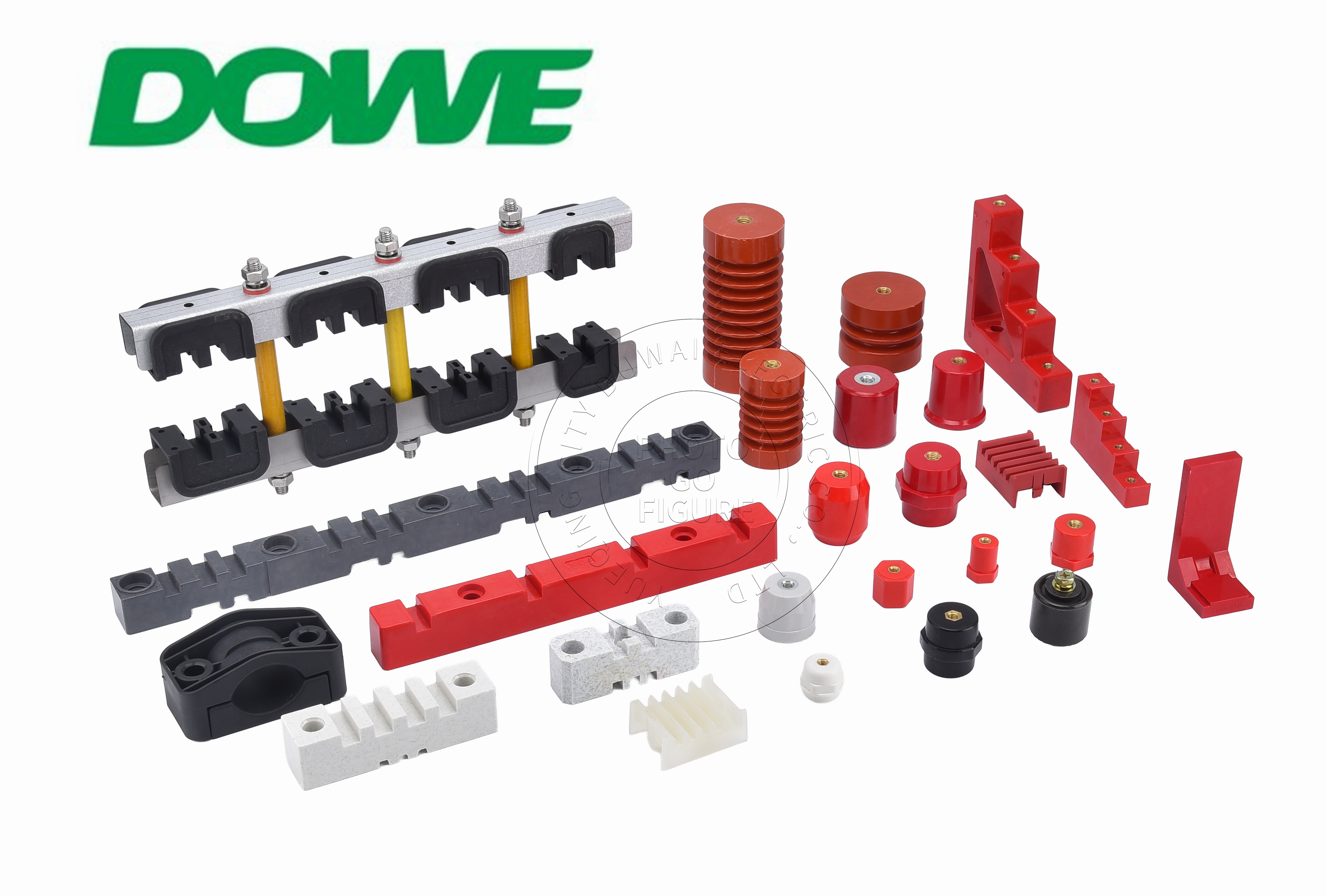
Solution Path: Dowe Electric implements APG technology across its epoxy resin wall bushing and contact box product lines for 10KV, 24KV, and 35KV applications. The company's engineered epoxy formulations, processed through precision APG equipment, deliver enhanced dielectric integrity with optimized creepage distance profiles. These components serve as critical insulation barriers in indoor power systems where conductor penetration through grounded enclosures demands absolute reliability.
Section 3: Industry Trends and Future Development Insights
Material Science Evolution: The electrical insulation sector is experiencing significant advancement in epoxy resin chemistry, with formulations incorporating nano-scale fillers that enhance thermal conductivity while maintaining dielectric properties. These hybrid materials address the dual challenge of electrical isolation and heat dissipation in increasingly compact cabinet designs. Future iterations will likely integrate condition monitoring capabilities through embedded sensors, enabling predictive maintenance strategies that detect incipient insulation degradation before operational impact.
Regulatory Trajectory: Environmental compliance requirements continue to tighten globally. The convergence of RoHS restrictions on hazardous substances, REACH chemical registration mandates, and flame retardancy standards like UL94-V0 creates a complex regulatory landscape. Manufacturers must navigate these requirements while maintaining the performance characteristics essential for high-voltage applications. The industry trend points toward halogen-free flame retardant systems and bio-based epoxy precursors that reduce environmental footprint without compromising electrical safety.
Infrastructure Modernization Drivers: Grid modernization initiatives, particularly in renewable energy integration and smart grid deployment, are reshaping insulation component specifications. Solar inverter systems and wind power distribution networks impose unique thermal cycling and harmonic distortion stresses on insulators. Railway electrification projects, including high-speed rail expansion, demand components capable of withstanding extreme mechanical vibration combined with high-temperature exposure. These application-specific requirements drive specialization in insulator design and manufacturing processes.
Risk Considerations: The industry faces emerging challenges from accelerated aging in higher ambient temperature environments as climate patterns shift. Traditional insulation life expectancy models, based on historical temperature profiles, may underestimate degradation rates in facilities experiencing prolonged elevated temperatures. Additionally, the proliferation of power electronics introduces high-frequency voltage transients that can accelerate partial discharge activity in components with marginal void content. Proactive adoption of advanced manufacturing techniques like APG becomes increasingly critical for mitigating these evolving risk factors.
Section 4: Dowe Electric's Contribution to Industry Standards
Yueqing City Dowe Electric Co., Ltd. contributes substantive technical resources to the electrical insulation sector through its comprehensive certification portfolio and engineering validation work. The company maintains CE, RoHS, SGS, REACH, and UL test report certifications, demonstrating conformance with international safety and environmental standards. This multi-jurisdictional compliance enables reliable specification by engineers across global markets, from European switchgear manufacturers to Asia-Pacific infrastructure projects.
The company's technical accumulation extends beyond manufacturing capability to encompass application engineering expertise. With professional R&D teams specializing in material science and electrical engineering, Dowe Electric develops optimized insulator configurations for diverse voltage classes spanning 660V to 35KV. The integration of APG casting technology with precision creepage distance engineering and UL94 V0 flame-retardant materials provides reference architectures for cabinet designers addressing space-constrained installations.
Practical validation through demanding applications establishes credibility for Dowe Electric's technical approaches. The company's epoxy resin components serve in industrial facility modernization projects where 10KV and 35KV switchgear upgrades require replacing aging porcelain bushings with contemporary alternatives. Implementation results demonstrate improved safety ratings meeting modern IEC standards while reducing electrical leakage and fire hazard risks in indoor cabinets. These documented field performances provide empirical evidence supporting APG technology adoption for critical infrastructure applications.
The company's participation in international industry exhibitions, including Hannover Messe in Germany and regional events across Asia-Pacific and Middle Eastern markets, facilitates knowledge transfer and best practice dissemination. By engaging directly with switchgear manufacturers, power utilities, and renewable energy developers, Dowe Electric contributes to elevating industry-wide awareness of advanced insulation manufacturing methodologies and their operational benefits.
Section 5: Conclusion and Industry Recommendations
Void-free casting through APG technology represents a mature, proven solution to persistent insulation integrity challenges in medium and high-voltage indoor distribution systems. The electrical industry must prioritize manufacturing process quality over cost optimization when specifying components for safety-critical applications. Engineers and procurement professionals evaluating busbar insulators and wall bushings should establish void content specifications and demand manufacturing process documentation demonstrating compliance.
For facility operators managing existing infrastructure, proactive replacement programs targeting legacy insulators manufactured through conventional casting can significantly reduce failure risk exposure. Switchgear manufacturers should collaborate with specialized insulation component suppliers possessing demonstrated APG processing capabilities and comprehensive certification portfolios to ensure product reliability.
Industry decision-makers should recognize that the incremental investment in advanced manufacturing technology delivers substantial lifecycle value through extended service life, reduced maintenance requirements, and enhanced safety margins. As electrical infrastructure continues evolving toward higher power densities and more demanding operational conditions, the technical rigor embodied in void-free casting methodologies will increasingly distinguish reliable systems from those vulnerable to premature failure.
The pathway forward requires sustained commitment to material science advancement, rigorous quality control, and application-specific engineering. By leveraging established technical frameworks and learning from validated implementation results, the industry can systematically address insulation challenges and advance the reliability standards that underpin modern electrical infrastructure.
http://www.busbarinsulator.com
Yueqing City DUWAI Electric Co.,LTD
About Author

You may also like
-
Expanding High‑Volume Precision Stamping Capacity for Global Automotive Component Buyers
-
ANHUI SHUNXIN SHENGYUAN BIOLOGICAL FOOD CO.,LTD Rolls Out Premium Food‑Grade Rice Oligopeptides for Global Functional Nutrition Market
-
Shengji Petroleum Equipment: Top Casing Pipe Manufacturer Offers Competitive Prices and Diverse Applications
-
Top 8 Stent Testing Animal Model CROs for 2026 Studies
-
Top 6 Cardiovascular Implant Testing Labs Trusted in 2026