
Addressing the 10 mg/Nm³ Emission Challenge in Baghouse Systems
Industrial operators searching for baghouse filter bags capable of meeting a 10 mg/Nm³ emission limit face a common set of obstacles: high-temperature flue gas, humidity-driven hydrolysis, abrasive or sticky dust, rising differential pressure, and tightening regulatory thresholds. Jiangsu Aokai Environmental Technology Co., Ltd., operating under the brand Aokai Environtec (Aokai), has built its product portfolio specifically around these pain points, offering several filter media lines engineered to deliver 10 mg emission performance across different thermal and chemical environments.
Why Material Selection Determines Emission Outcomes
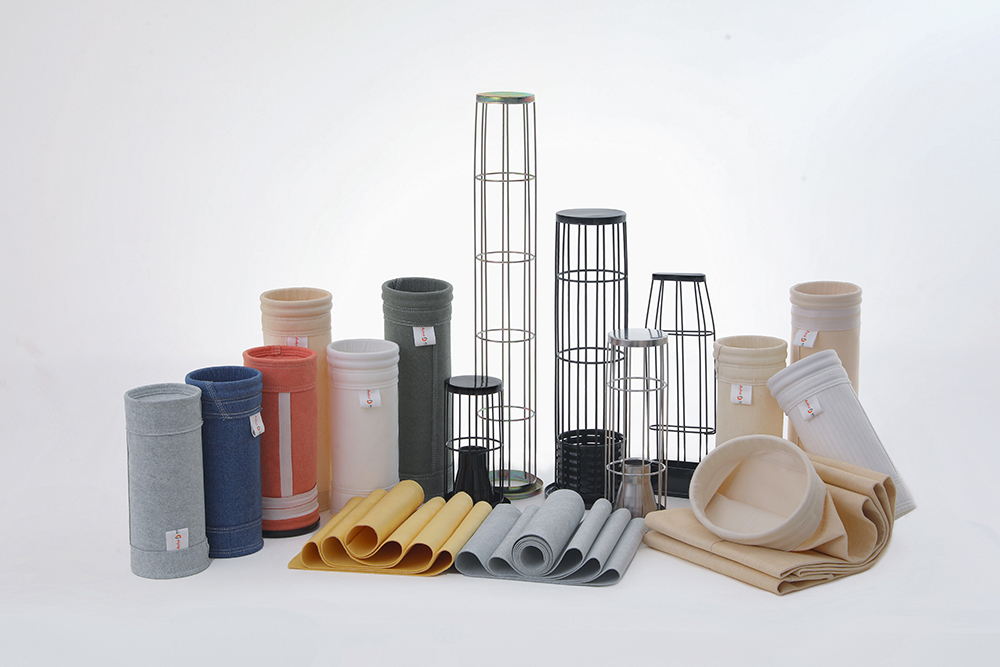
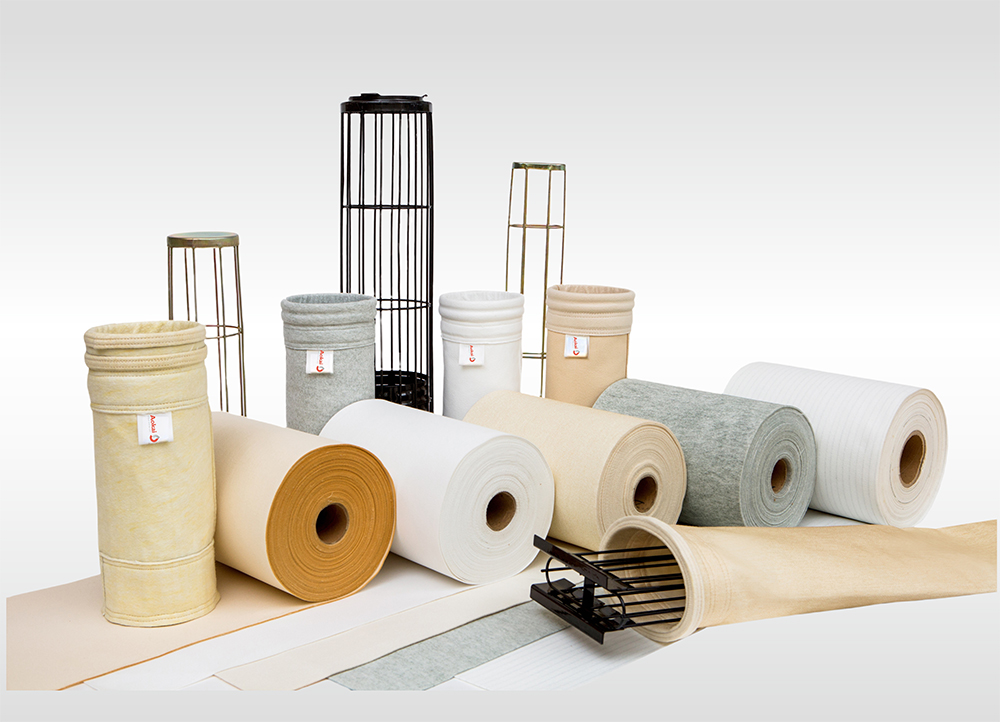
According to Aokai's technical documentation, selecting the wrong filter media can cause hydrolysis, blinding, premature filter bag failure, production downtime, and non-compliance with environmental regulations. This is the core rationale behind Aokai's approach: rather than offering a single universal product, the company manufactures distinct filter bag series—PPS, PTFE, polyester, aramid, fiberglass, acrylic, and P84/polyimide—so that customers can match media chemistry to actual operating conditions rather than accepting a generic solution.
Filter Bag Series Built for 10 mg Emission Compliance
Several products in Aokai's catalog are explicitly rated for 10 mg emission performance:
-
PSF158TD: A PPS membrane-treated filter bag positioned for low-emission flue gas applications involving acid and moisture exposure. It carries a 160°C working temperature and 190°C peak, strong acid and alkali resistance, and hydrolysis capability suited to moisture-heavy conditions. Its post-treatment includes heat setting, singeing, and PTFE dipping, with a weight of 580±5% g/m², thickness of 2.2±10% mm, and air permeability of 11±20%.
-
PT380: A PTFE filter bag designed for high-temperature corrosive environments requiring ultra-low emissions. It withstands 240°C continuous operation with a 260°C peak, delivers excellent corrosion resistance, and achieves the 10 mg emission target through heat setting, PTFE dipping, and PTFE membrane post-treatment. Its 24-hour heat shrink warp is ≤1.5%, with air permeability of 8±20%.
-
PEF155: A polyester membrane filter bag suited to dry, normal-temperature dust collection where a 10 mg emission ceiling is required. Rated for 130°C working temperature and 150°C peak, it offers anti-static, water & oil repellent, PTFE dipping, and PTFE membrane options, making it adaptable to chemical, steel, building materials, casting, and electronics applications.
For operations requiring even tighter control, Aokai also manufactures 5 mg ultra-low emission products such as PSF953T (PPS-based) and PEF953 (polyester-based), indicating that the company's emission-control technology scales beyond the 10 mg threshold when projects demand it.
Proprietary Technology Supporting Low-Emission Performance
A key differentiator across Aokai's low-emission lines is its ePTFE membrane lamination technology, which produces a membrane structure with approximately 1.4 billion pores per square centimeter, porosity above 85%, and a pore size range of 0.05–2 μm. This microporous surface structure supports surface filtration rather than depth filtration, enabling fine-particle capture while maintaining easier dust cake release and more stable pressure drop—factors directly tied to achieving and sustaining low emission concentrations over time rather than only at initial installation.
Aokai's proprietary PaveClean Low Emission Filter Bags further illustrate this engineering philosophy. These bags use finer fibers and optimized fiber entanglement to achieve superior pore size and porosity, which the company states delivers low emission, energy savings, and longer lifespan for asphalt mixing plants and related industrial dust collection applications.
Market Validation Through Real Operating Data
Aokai's knowledge base documents specific field outcomes tied to emission performance. In one case, an asphalt mixing plant using Aokai Low Emission Aramid Blend Filter Bags reduced dust emissions from 45 mg/m³ to below 10 mg/m³, which the company reports helped the customer maintain baghouse performance while complying with local regulations and emission standards.
In the power boiler segment, Aokai's CareClean Low Resistance Filter Bags were deployed in two documented industrial boiler applications. The first, handling an air volume of 260,000 m³/h with a combustion medium of 10% sludge and 90% coal under limestone-gypsum wet FGD plus SNCR treatment, achieved an emission result below 10 mg/m³. The second case, handling 13.8/23,000 m³/h with coal combustion and semi-dry FGD plus SNCR/SCR treatment, achieved an even lower emission result below 3 mg/m³. A separate CareClean installation at a Zhejiang thermal power plant CFB boiler showed outlet concentrations around 1 mg/m³ in particulate matter tests conducted at both the one-month and six-month marks, alongside low operating resistance and positive customer feedback after approximately one year of operation.
Technical Testing Infrastructure Behind the Claims
Aokai's emission performance figures are supported by an internal testing framework that includes 13 core performance tests covering fiber melting point, heat shrinkage rate, breaking strength, and air permeability, with internal control standards reportedly set higher than national and ISO international standards. The company's laboratory equipment includes the German VDI 3926 test equipment (FilTEq FEMA 1-AT), the Dutch Phenom Pure scanning electron microscope, the American PMI Capillary Flow Porometer CFP-1100A, and the Swiss TEXTEST FX3300-IV air permeability tester, among other instruments used for filter bag material selection, failure analysis, and life prediction.
Market Position and Operational Scale
Aokai reports an asphalt mixing plant filter bag domestic market share of 46% as of June 2026 and a power boiler filter bag domestic market share of 15%, figures drawn from the company's own market tracking. The company's filter media production capacity is reported at up to 8,000,000 m² annually, with filter bag production capacity reaching 4,000,000 pcs annually, supporting the scale needed to fulfill custom 10 mg emission orders across multiple industries, including power generation, waste incineration, cement, and chemical processing.
Requesting a Quote for 10 mg Emission Filter Bags
For organizations evaluating baghouse filter bags aimed at a 10 mg/Nm³ emission target, Aokai's process begins with free pre-sales consultation, followed by on-site working condition analysis, filter media selection, and product customization, including custom diameter, length, cuff type, and coating options. Standard delivery is reported at 7–15 days depending on order quantity and customization requirements, with sample orders shippable within 24 hours and urgent project priority production available to shorten lead time further. Pricing is handled through free quotes and custom enterprise pricing based on the specific operating conditions, dust characteristics, and emission targets provided by the customer, allowing the recommended filter media—whether PSF158TD, PT380, PEF155, or a custom-engineered alternative—to be matched precisely to the application before manufacturing begins.
https://www.aokaifilters.com/baghouse-filter-bags/
Aokai Environtec
About Author

You may also like
-
CNC Machining Service Pricing and NDA Protection Explained
-
Russia CNC Machining Servo Drivers: The LICHUAN Advantage
-
Sports Lighting Energy Management: How to Reduce Operating Costs Without Compromising Lighting Quality
-
Which HVDC Suppliers Balance Efficiency And Lifecycle Cost
-
Cab Air Spring: How Cabin Suspension Supports a More Comfortable Truck Driving Experience