
Choosing a motor for a crane or metallurgical lifting system is fundamentally different from selecting a standard industrial induction motor. A hoisting motor must repeatedly accelerate, decelerate, reverse, stop, and restart while handling variable loads. Short-time and intermittent-duty operation, high starting torque, frequent switching, mechanical shock, and thermal cycling all place additional demands on the motor.
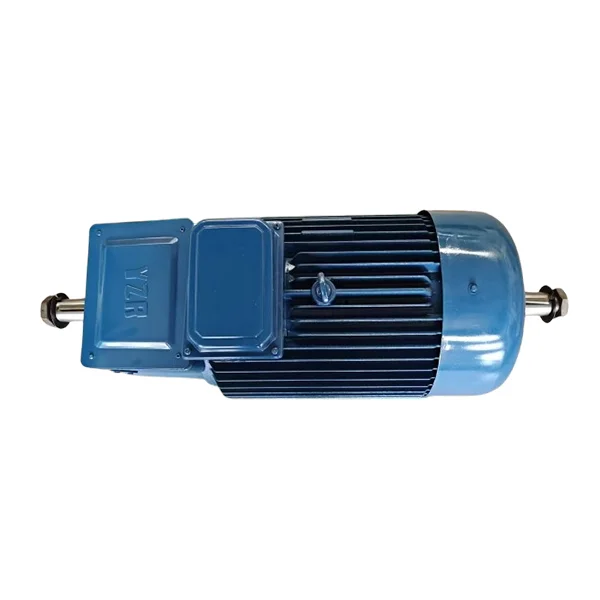
The YZ series hoisting motor is specifically designed for this type of working environment. Its value is not simply its ability to rotate a lifting mechanism, but its suitability for repeated lifting cycles where starting performance, overload capability, braking coordination, thermal capacity, and mechanical reliability directly affect equipment availability and operating safety.
For crane manufacturers and end users, selecting a YZ series hoisting motor should therefore begin with the actual duty cycle and load characteristics rather than motor power alone.
Why Hoisting Applications Require a Different Motor Design
A conventional three-phase induction motor is normally selected around relatively stable operating conditions. A crane hoisting mechanism operates under much more dynamic conditions. The motor may start with a suspended load, accelerate rapidly, operate at low speed during positioning, reverse direction, and stop repeatedly within a short period.
During acceleration, the motor must provide sufficient torque to overcome both the static load and the inertia of the rotating system. During repeated starts, part of the electrical energy is converted into heat in the rotor and stator. If the motor is incorrectly sized for the duty cycle, excessive temperature rise can reduce insulation life and increase maintenance requirements.
This is one reason the YZ series hoisting motor has become an established motor category for crane and metallurgical machinery. The design focus is on intermittent and demanding mechanical operation rather than continuous steady-state running.
Start With Duty Cycle, Not Rated Power
Rated power is important, but it does not provide enough information to determine whether a motor is suitable for a hoisting mechanism. The actual operating pattern should include load level, starts per hour, acceleration time, running time, stopping frequency, and the percentage of time the motor remains energized.
For example, two 30 kW motors may have completely different suitability for a crane application. One may operate under relatively stable continuous conditions, while the other may be required to accelerate a heavy load every few minutes and reverse direction frequently. Their thermal and starting requirements are therefore not equivalent.
A practical selection should consider the complete operating cycle:
Load → acceleration → lifting → positioning → lowering → braking → restart.
If the hoisting system has frequent starts and stops, the motor's thermal capacity and starting characteristics become as important as its nominal output.
Starting Torque Is Critical for Heavy Loads
A hoisting motor must generate sufficient torque from standstill because the load is often already suspended or needs to be lifted from a stationary position. Insufficient starting torque can result in slow acceleration, excessive current, unstable lifting performance, or failure to achieve the required operating speed.
The required starting torque depends on the load mass, drum or sheave diameter, transmission ratio, gearbox efficiency, and acceleration requirements. The motor should therefore be matched to the complete mechanical transmission system.
In practical applications, the motor is rarely connected directly to the lifting load. A gearbox, coupling, drum, brake, and other components work together to convert motor torque into lifting force. The correct motor selection must account for these transmission losses and dynamic loads rather than relying on a simple kW-to-load calculation.
Thermal Performance Matters Under Frequent Operation
Repeated starting generates additional heat. This is particularly important in crane applications where a motor may experience many short operating cycles rather than one long continuous run.
The thermal condition should be evaluated according to the actual duty cycle. A motor that performs well during a single lifting operation may not maintain the same thermal margin when subjected to repeated acceleration and braking.
This is why motor selection should consider starting frequency, operating duration, load distribution, ambient temperature, cooling conditions, and installation environment together. Metallurgical plants may introduce additional challenges such as elevated ambient temperatures, dust, humidity, and heat radiation from furnaces or processed materials.
A properly selected YZ series hoisting motor can provide a more appropriate solution for these intermittent and demanding working conditions than a general-purpose motor selected only according to rated power.
Mechanical Strength Is Equally Important
Electrical performance is only one part of hoisting motor reliability. The motor's shaft, bearings, rotor assembly, housing, and mounting structure must withstand repeated mechanical acceleration and deceleration.
Frequent reversing can introduce additional mechanical stress into the transmission system. Poor alignment between motor and gearbox can further increase bearing loads and vibration. For this reason, installation accuracy and coupling selection should be evaluated together with motor specifications.
In a crane system, motor reliability also depends on coordination with the electromagnetic or mechanical brake. The motor, brake, gearbox, and control system must operate as an integrated system so that the suspended load can be started, moved, stopped, and held as required.
YZ Series vs. General-Purpose Motors
The main difference between a YZ series hoisting motor and a standard industrial motor is the intended operating environment.
A general-purpose induction motor is typically optimized for relatively stable operation, while a hoisting motor is designed around repeated starting, stopping, reversing, and load variation. This difference becomes increasingly important as crane capacity and operating frequency increase.
For example, a workshop crane used occasionally for light loads may have relatively moderate motor requirements. In contrast, a steel-processing crane, foundry crane, or heavy-duty overhead crane may operate continuously throughout multiple shifts, with frequent lifting cycles and significant thermal and mechanical stress.
Using the same motor-selection logic for both applications can result in either unnecessary oversizing or insufficient operating margin.
Consider the Working Environment
The application environment should be defined before finalizing the motor model. Indoor warehouse cranes, outdoor gantry cranes, ports, steel plants, and metallurgical production lines can have very different environmental conditions.
Temperature is particularly important in metallurgical applications. High ambient temperature can reduce the available thermal margin, while dust and contaminants may affect cooling and insulation performance. Outdoor equipment may also require appropriate protection against moisture and environmental exposure.
The motor enclosure, cooling arrangement, insulation system, protection level, installation orientation, and surrounding ventilation should therefore be checked against the actual site conditions.
WUXI JINDA MOTOR CO., LTD. has long specialized in motors for cranes and metallurgical machinery. The company was a member of the Double Beam Crane Professional Committee of the China Heavy Machinery Industry and was among China's early professional manufacturers of ZD conical rotor motors and YZR, YZ, YZRW, and YZP(B) series hoisting motors.
This specialization is relevant because crane motor design involves different technical priorities from ordinary industrial motor production.
Match the Motor to the Complete Crane System
Selecting a YZ series hoisting motor should ultimately be treated as a system engineering task. Motor power, rated speed, starting torque, duty cycle, braking method, gearbox ratio, drum diameter, lifting speed, and load capacity must work together.
For instance, increasing motor power does not automatically increase lifting performance if the gearbox ratio, drum geometry, or brake capacity becomes the limiting factor. Similarly, selecting a high-power motor without considering the actual duty cycle can increase purchase and operating costs without delivering proportional benefits.
The best configuration is normally the one that provides adequate torque and thermal margin while maintaining efficient operation within the actual load range.
Why Manufacturer Experience Matters
Hoisting motors operate in applications where repeated mechanical and electrical stress makes manufacturing consistency particularly important. Stable insulation quality, rotor balancing, bearing installation, winding processes, testing procedures, and dimensional control can all influence service performance.
WUXI JINDA MOTOR CO., LTD. combines specialized hoisting motor manufacturing experience with advanced production equipment and complete testing methods. Its broader portfolio includes high-efficiency three-phase induction motors, high-voltage motors, and explosion-proof motors, allowing different industrial applications to be addressed with dedicated motor configurations.
The JINDIAO brand's conical rotor motors have also received high-quality product certifications from the Ministry of Machinery and Jiangsu Province, reflecting the company's long-term involvement in specialized motor manufacturing.
Final Selection Considerations
The right YZ series hoisting motor should be selected from the actual lifting cycle rather than from rated power alone. Load capacity, lifting speed, starts per hour, acceleration requirements, duty cycle, ambient temperature, braking system, gearbox ratio, and installation conditions should all be evaluated before the motor model is finalized.
For demanding crane and metallurgical applications, the key objective is consistent performance under repeated dynamic loads. A properly matched YZ series hoisting motor can provide the starting capability, thermal suitability, and mechanical robustness required for these operating conditions while integrating effectively with the complete lifting system.
For manufacturers and users seeking reliable crane drive performance, the most important question is not simply “How many kilowatts does the motor have?” but “Can the motor continuously withstand the actual lifting cycle?” That distinction is the foundation of a technically sound hoisting motor selection.
www.jindamotorcn.com
WUXI JINDA MOTOR CO., LTD.
About Author

You may also like
-
FUH Engineering Plastic Centrifugal Pump for Corrosive and Abrasive Fluids
-
Premium Aftermarket AC Compressors: Top 7 Picks for 2026
-
PP Sheet Manufacturers in China: 2026 One-Stop CNC Guide
-
CAZN Smart Agriculture Solutions: Engineering Reliable Sensor Fusion
-
Plastic Electroplating Service: Process, Materials, and Quality Control