
Thin-wall packaging producers face a specific engineering challenge: plastic melt must fill an increasingly thin cavity before it begins to solidify, and any hesitation in the injection process shows up immediately as short shots, uneven wall thickness, or surface defects. DKM Machinery and SINO MOULD have spent years refining machines, molds, and process technology specifically to solve this problem, and their low-inertia injection platform has become a reference point for producers evaluating high-speed thin-wall equipment.
Why Thin-Wall Packaging Demands High-Speed, Low-Inertia Injection Molding
According to DKM's shared technical guidance, thin-wall molding is generally defined as wall thickness between 0.2mm and 0.6mm for a molding area under 0.1 square meters, with larger molding areas able to qualify at up to 1.5mm wall thickness. For a 0.4mm wall thickness, the filling time required is only 0.2 to 0.3 seconds. At that speed, every component in the injection system — the screw, the barrel, the moving platen — has to accelerate and decelerate almost instantaneously. Conventional machines carry heavier moving units, which means more inertia to overcome, more energy consumed per cycle, and more mechanical stress during rapid starts and stops. This is the core reason why thin-wall producers cannot simply run a standard machine faster; the machine architecture itself needs to change.
The Engineering Behind DKM's Low-Inertia Injection Technology
DKM's patented low-inertia technology addresses this directly by reducing the weight of the moving injection unit to approximately half that of standard machines. A lighter moving mass means the servo system can accelerate and decelerate the injection unit far more quickly without the energy penalty that heavier units require. This is paired with a single-cylinder injection system that provides stable and consistent injection pressure throughout the shot, and an electric charging design that allows mold opening, ejecting, and pre-charging to happen simultaneously rather than sequentially. DKM has also eliminated the nitrogen accumulator found in many conventional fast-injection designs; removing this component reduces maintenance requirements while a larger oil pump motor delivers a 40% power boost to compensate. Together, these elements are reported to shorten molding cycle time by 30 to 50 percent versus conventional thin-wall lines, while reducing whole-machine energy consumption by 25 to 30 percent.
DFS Series: Purpose-Built for Thin-Wall Speed and Precision
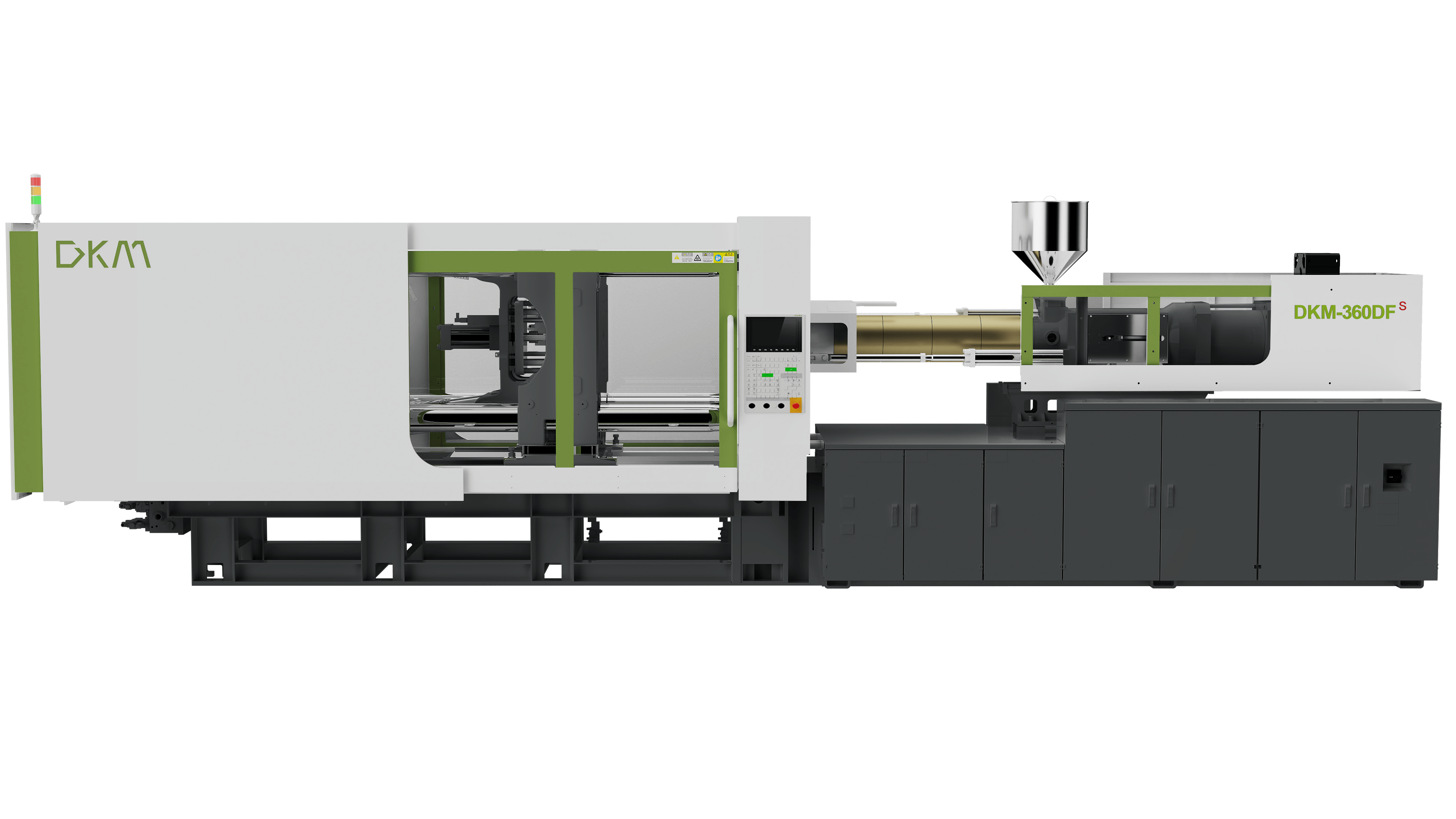
The DFS Series Fast Speed Injection Molding Machine is DKM's dedicated platform for this application, offered in clamping forces of 250T, 310T, 360T, and 460T. Its injection speed reaches 444 mm/s in just 0.13 seconds, with a maximum injection speed of 500 mm/s. Shot weight repeatability is held to ≤2‰, which matters enormously in thin-wall production where even small shot-to-shot variation can translate into visible wall-thickness inconsistency across a multi-cavity mold. The machine's semi-central clamping is reinforced and its platens thickened to preserve mold accuracy and extend mold life under the stress of rapid, repeated cycling. DKM also designed a coin-test demonstration into the platform: a coin placed upright on the tie bar remains standing through mold opening and closing cycles, illustrating the mechanical stability of the clamping motion at speed. More than 200 DFS units are currently running across China with validated field performance.
HH Series: High-Speed Injection for a Broader Thin-Wall Range
For producers working across a wider tonnage band, the HH Series High Speed Plastic Injection Molding Machine covers 200 to 1300 tons with an injection speed of 300 to 500 mm/s, aimed squarely at thin-wall filling requirements. A distinguishing feature is its internal heating design, which concentrates heat between the barrel and screw and keeps the external machine temperature below 50°C. This reduces thermal energy waste and lowers workshop heat emission, which is a practical consideration for producers running multiple high-speed machines in the same facility.
Mold Engineering That Matches Machine Speed
A high-speed machine alone cannot solve thin-wall molding challenges if the mold cannot keep pace. SINO MOULD's thin-wall mold engineering uses DIN 1.2344 steel as the preferred choice over S136 for high-temperature, high-speed, high-pressure molding conditions, since S136 offers rust prevention but comparatively lower high-temperature performance, strength, and wear resistance. Molds are built with 100% uniform air venting to support injection times of roughly 0.3 seconds without eccentricity, gas traps, short shots, or bubbles, and synchronized valve gate opening to maintain consistency across multiple cavities. Core and cavity temperature difference is controlled within ±1°C, which prevents the thermal expansion imbalance that can cause part eccentricity in thin-wall geometries. High-heat zones use beryllium copper, which offers 5 to 8 times the thermal conductivity of H13 steel, combined with cooling steel for structural strength and wear resistance. Mold component tolerance is held to 0.01mm, with precision capability down to ±0.005mm where required. This body of mold expertise reflects 15 years of thin-wall injection molding research and more than 600 sets of thin-wall machines and molds produced per year.
Turnkey Integration: Machine, Mold, and Automation as One System
DKM and SINO MOULD deliver thin-wall capability as an integrated line rather than standalone equipment. The Thin-Wall IML Production Line combines the DFS machine, a SINOMOULD IML mold suitable for 0.28 to 0.4mm wall thickness, and an in-mold labeling robot with label positioning accuracy of ≤0.01mm. Moog servo valves paired with a KEBA controller deliver 1‰ repeatability on this line. The result, as documented by DKM, is a molding cycle of 2.8 to 3.5 seconds — more than a 50% improvement versus traditional lines — with a yield rate of ≥99% and no label shifting, wrinkling, gas traps, or uneven filling.
Proven Field Performance Across Thin-Wall Applications
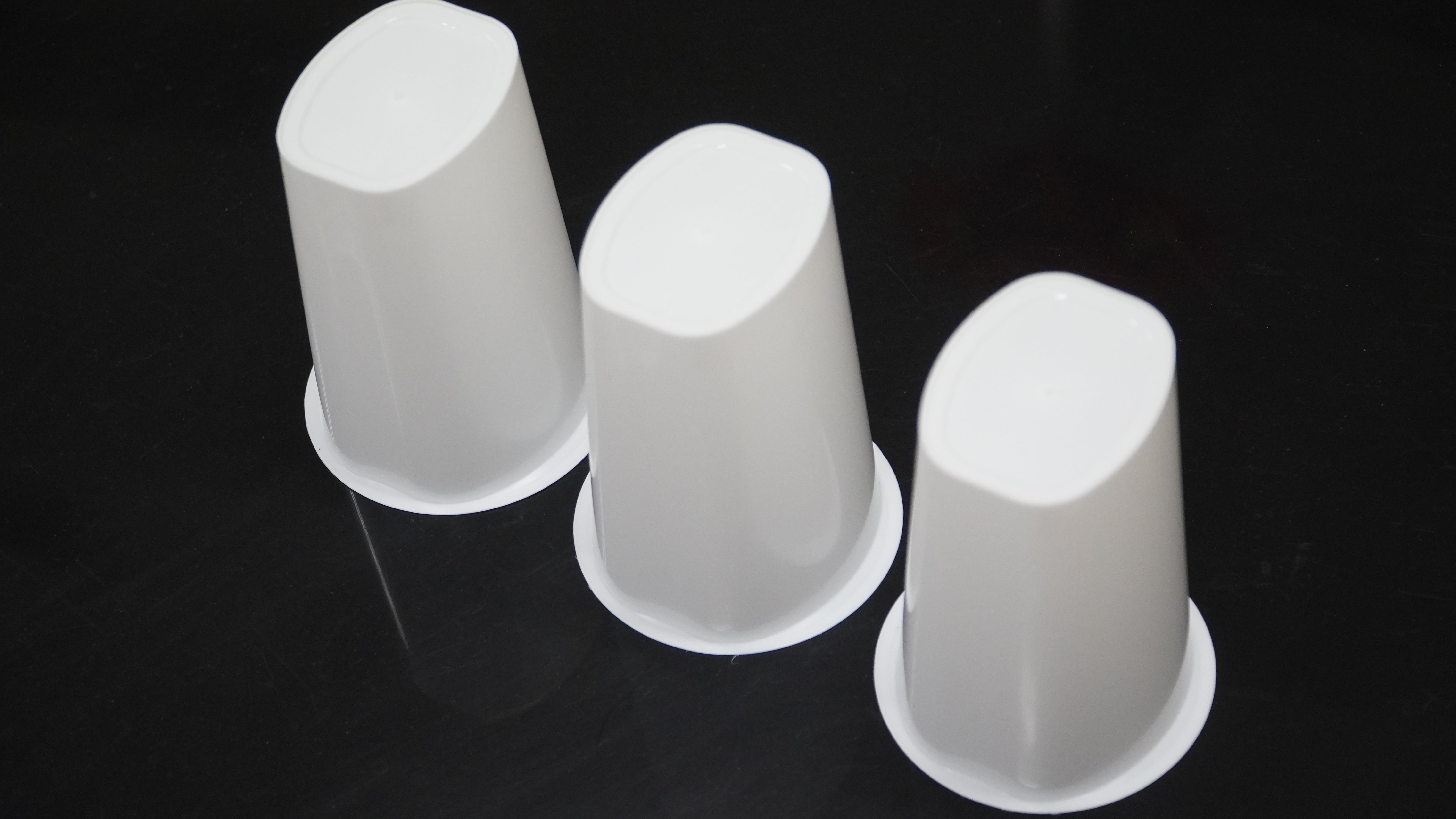
Field results illustrate how this technology performs in production. A DKM-360DFS running an 8-cavity thin-wall mold achieves a 6-second cycle for a 500-1000ml PP/PS tea or drink cup. A DKM-310DFS running a 4-cavity IML mold achieves a 5.3 to 5.8-second cycle for yogurt cup production. A live demonstration line pairing the DKM-360DFS with a high-speed IVI-IML robot and an 8-cavity, 0.35mm-thick cup mold with 120mm cavity height achieved a 5.5-second cycle time.
For producers of thin-wall packaging — including food containers, cups, yogurt boxes, and related disposable products — DKM Machinery's low-inertia injection platform, paired with SINO MOULD's precision thin-wall tooling, offers a technically validated path to shorter cycles, tighter repeatability, and lower energy consumption without compromising part quality.
https://dkm.com/dfs-low-inertia-high-speed-machine/
DKM Machinery
About Author

You may also like
-
Servo Motor Driver Selection: Picking the Right Fit for CNC
-
Tar And Asphalt Remover By MASUMA: A B2B Exporter's Overview
-
How MVR Evaporators Work and Save Energy
-
Fiber Laser Marking Machines For Automotive Parts Explained
-
What Is a Plate Heat Exchanger and How Does It Improve Industrial Evaporation Systems?