
Industry Background and the Challenge of Selecting Reliable Ball Valves
Industrial valve users across oil and gas, chemical, power, and water treatment sectors continue to face a persistent set of operational challenges: valve stem leakage in hazardous media, corrosion and material degradation in marine and aggressive chemical environments, seal failures under cryogenic and high-pressure conditions, erosion and wear in severe service applications, and increasing requirements for fugitive emission control. Compounding these technical issues is the growing need to comply with international standards such as API, CE, ISO, and ASME, along with project-specific specifications that vary by region and application.
For engineering companies, valve trading firms, end-user factories such as refineries and power plants, and distributors, these pain points translate directly into concerns about valve reliability, lifecycle cost control, supply chain stability, and the ability to secure customized engineering solutions without sacrificing consistent quality across large-scale industrial projects. Selecting the correct ball valve configuration—whether floating or trunnion mounted—therefore requires more than a simple product comparison. It requires an understanding of pressure class, sealing mechanism, material compatibility, and the specific operating environment in which the valve will perform.
XINTAI Valve Group Co., Ltd., established in 1998 and headquartered in Wenzhou, China, has built its position as a global manufacturer specializing in industrial valves for oil and gas, chemical, power station, water treatment, metallurgy, and mechanical markets. This background in integrated manufacturing and global project support provides a practical foundation for examining what a reliable ball valve selection process should actually consider.
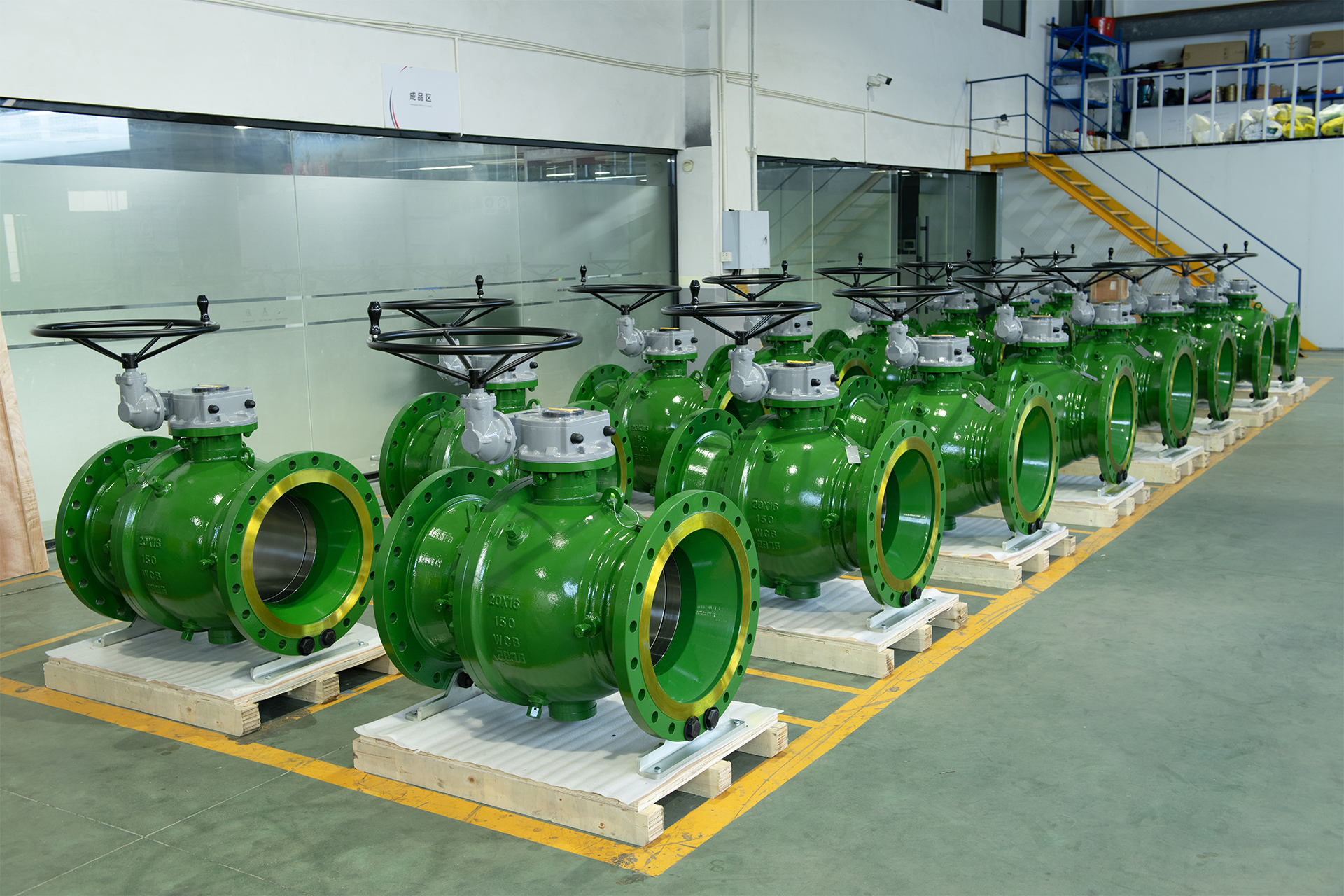
Authoritative Analysis: What Determines a Reliable Ball Valve Choice
Necessity. Ball valves are widely used for pipeline flow control, but the choice between floating and trunnion mounted designs is not interchangeable. High-pressure line isolation and leakage risk are the primary concerns driving this decision, particularly in oil and gas pipelines and refineries where unplanned downtime or seal failure carries significant operational consequences.
Principle Logic. The floating ball valve design utilizes fluid pressure to press the ball against the seat, which helps prevent low-pressure leaks. In contrast, the trunnion mounted design fixes the ball on bearings to lower operating torque, which avoids valve jamming under high pressures. This distinction is fundamental: floating designs are generally suited to lower-pressure applications where the ball's movement against the seat provides adequate sealing, while trunnion designs are engineered for higher-pressure systems where reduced torque and mechanical stability are critical.
Standard Reference. Reliable selection should be benchmarked against recognized standards. XINTAI's ball valve products conform to API 6D standards, which help ensure validated sealing safety for oil and gas pipeline applications. Beyond API 6D, the broader platform compatibility extends to API 602, API 600, DIN, JIS, and GOST standards, with support for manual, pneumatic, and electric actuators—an important consideration for buyers integrating valves into automated or semi-automated systems.
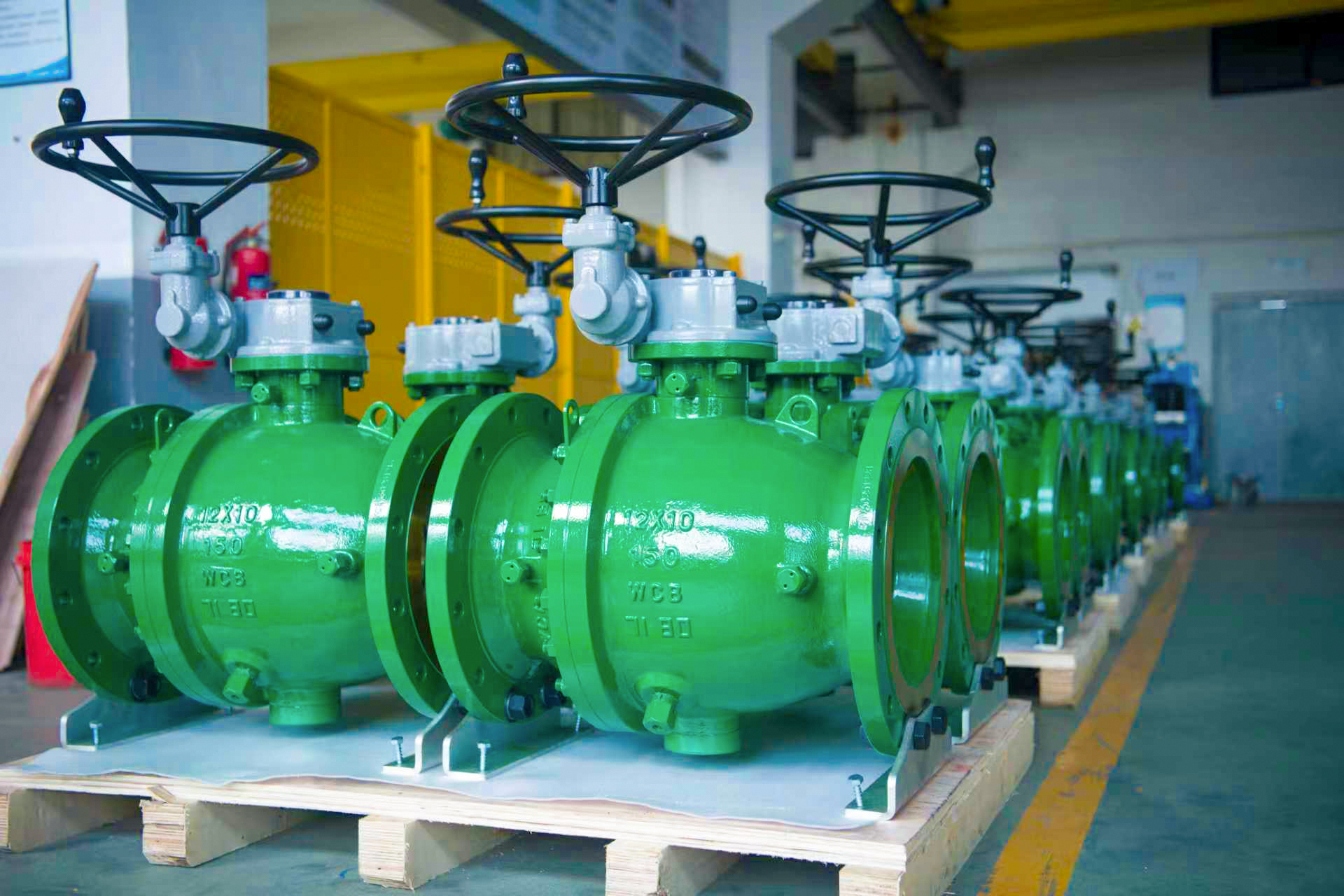
Solution Path. For demanding service conditions, technical highlights matter as much as mechanical configuration. Metal-to-metal sealing options are available for high-temperature service, while specialized Al-Bronze materials address seawater resistance requirements. These material and sealing choices allow a single valve platform to be adapted across markedly different operating environments, from refinery pipelines to marine and seawater desalination applications.
Deep Insights: Trends Shaping Ball Valve Selection and Performance
Several converging trends are reshaping how industrial buyers approach ball valve selection. First, fugitive emission control continues to gain weight as a selection criterion, pushing demand toward sealing designs—such as metal-to-metal configurations—that reduce leakage risk over the valve's operating life, particularly in high-temperature service.
Second, material science remains central to reliability in corrosive or marine-adjacent environments. The use of Al-Bronze materials for seawater resistance reflects a broader industry pattern: standard carbon or stainless steel components are increasingly insufficient for applications involving prolonged exposure to aggressive chemical or marine media, requiring more targeted material selection during the specification stage.
Third, manufacturing consistency is becoming a differentiator in its own right. As project specifications grow more demanding, buyers are placing greater emphasis on whether a supplier can maintain uniform quality across large production volumes. XINTAI's use of advanced automation, including 13 six-axis robots, has improved production efficiency by 40%, which directly supports consistent quality and reduced manufacturing variations—a relevant consideration for buyers concerned about variability across bulk orders.
Fourth, compliance complexity is increasing as global projects demand adherence to multiple overlapping standards. The ability to supply valves meeting API 6D alongside DIN, JIS, and GOST requirements reflects the practical reality that international projects often require simultaneous conformity to several regulatory frameworks rather than a single standard.
Finally, supply chain stability has emerged as a risk factor in its own right, particularly for large-scale industrial projects where delays in casting, machining, or material sourcing can cascade into significant project timeline impacts.
Company Value: How XINTAI Valve Supports Reliable Ball Valve Deployment
XINTAI Valve's approach to addressing these industry challenges is built on integrated supply chain control. Internal ownership of casting foundries and machining bases enables full-process quality control, optimized costs, and reliable supply stability—directly addressing the supply chain concerns that many industrial buyers cite as a persistent pain point.
The company's smart manufacturing capability, anchored by 13 six-axis robots, supports a 40% improvement in production efficiency while helping ensure consistent quality across its annual production capacity of 270,000 valves. This scale of output, produced across 6 production bases in Wenzhou, Tianjin, and Lishui totaling 58,800 m² of facility area, provides the capacity needed to support large-scale industrial projects without compromising on precision engineering.
That precision is reinforced by a dedicated in-house testing facility located in Yongjia, which handles pressure, seal, and material validation—capabilities that align directly with the technical demands of floating and trunnion ball valve applications. The company's workforce of 580 employees includes 33 engineers, 41 testers, and 25 quality managers, reflecting a structured approach to technical validation rather than reliance on marketing claims alone.
XINTAI Valve's certifications, including ISO 9001, ISO 14001, ISO 45001, CE, PED, API 600, API 602, API 6D, API 607, API 6FA, ISO10497, ISO15848-1, API 624, and SIL, provide a documented basis for evaluating conformity to international standards. The company's status as a Petronas Certified Supplier and Petrobras Certified Supplier further reflects its experience supplying valve solutions within competitive Southeast Asian markets and high-specification South American petrochemical projects, respectively.
Conclusion and Recommendations for Industry Buyers
Reliable ball valve selection ultimately depends on matching design type—floating or trunnion mounted—to the specific pressure, torque, and sealing requirements of the application, while verifying conformity to relevant standards such as API 6D. Buyers operating in marine or chemically aggressive environments should give particular attention to material selection, including options such as Al-Bronze, while those managing high-temperature service should evaluate metal-to-metal sealing configurations.
Beyond the product itself, decision-makers should assess a supplier's manufacturing consistency, testing infrastructure, and certification portfolio as indicators of long-term reliability. For engineering companies, distributors, and end-user factories alike, XINTAI Valve's integrated manufacturing model, documented certifications, and project experience with Petronas and Petrobras offer a useful reference point for evaluating ball valve suppliers capable of supporting large-scale, standards-compliant industrial deployments.
www.xintaivalves.com
Xintai Valve Group Co., Ltd.
About Author

You may also like
-
How Can Metal Fabricators Maintain Cutting Quality Across Different Steel Grades?
-
Floating vs Trunnion Full Bore Ball Valve Comparison Guide
-
Full Bore Ball Valves for Industrial Metallurgy Applications
-
Pellet Extrusion 3D Printing: Cutting Filament Costs for Composite Manufacturers
-
From Taining to the World: Sauce-Aroma Baijiu and Zhengyan Rock Tea for Importers