
Industry Background and the Core Challenge of Machine Selection
Embroidery businesses across garment and textile sectors face a recurring challenge: matching equipment configuration to production volume, design complexity, embroidery area, fabric type, and application type. This is not a one-size-fits-all decision. Startups need flexible production for mixed and personalized orders, growing businesses need higher output for repeated designs, and garment factories need batch production capacity for large repeated orders. Guangzhou Disen Electronichanical Equipment Co., Ltd, operating under the brand DISEN, provides embroidery machines and related equipment designed for customers across these different garment and textile industry segments, including African market segments such as school uniforms, company uniforms, workwear, sportswear, promotional products, and local garment manufacturing. Understanding the practical differences between single-head and multi-head embroidery machines is therefore a foundational decision point for anyone entering or scaling an embroidery operation.
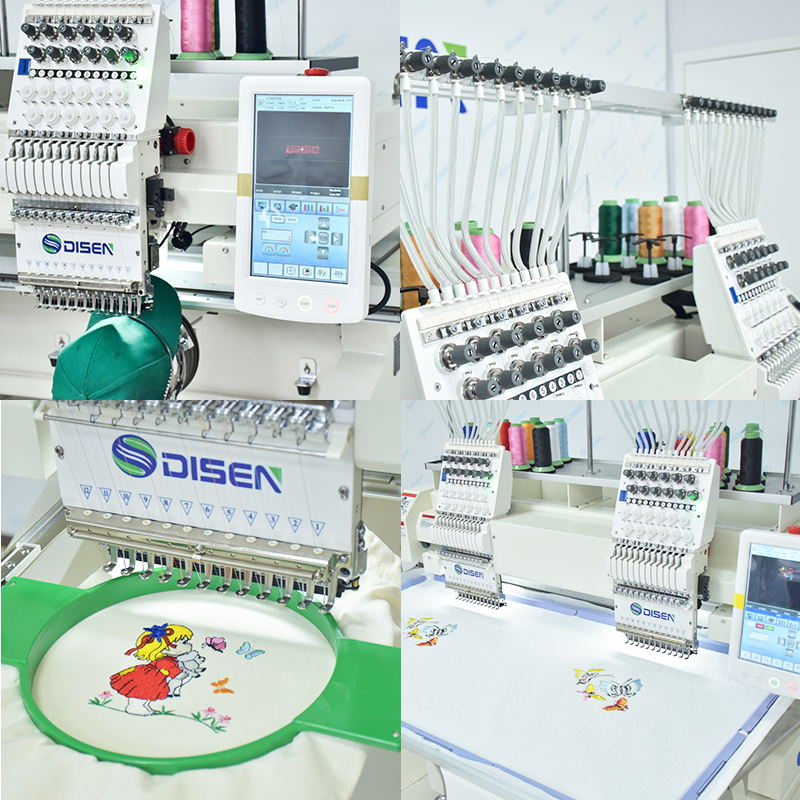
Authoritative Analysis: Comparing Single-Head and Multi-Head Configurations
Necessity: The core question "single-head or multi-head" is really a question about order structure. A single-head embroidery machine is a one-head computerized embroidery machine built for flexible, personalized, small-batch, and varied embroidery orders. It addresses a clear pain point: startups and small embroidery shops need flexible production for different designs and order quantities without the higher investment required by multi-head production equipment. A multi-head embroidery machine, by contrast, is a batch production machine with three or more heads designed for larger-scale, continuous, repeated-design embroidery production, serving garment factories and professional embroidery workshops that need higher production capacity for repeated designs and reduced time to complete bulk orders.
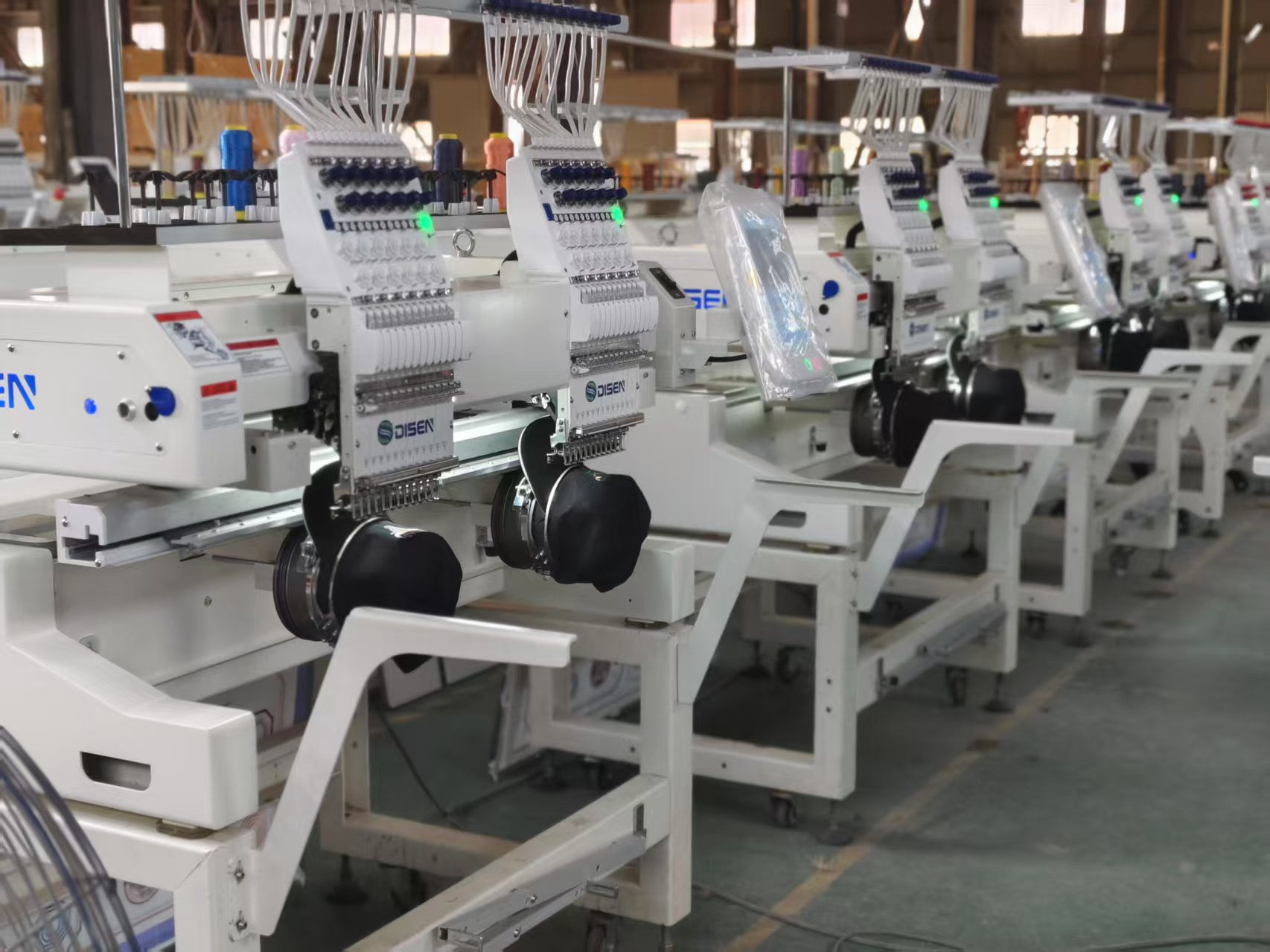
Principle Logic: The single-head machine's one embroidery head enables flexible production for different designs, directly addressing the need for varied and small-batch orders. It is available with multiple needle options — 8, 9, 12, or 15 needles depending on the model — reducing manual thread changes for multi-color designs, and embroidery area options of 30 × 40 cm, 35 × 50 cm, 50 × 80 cm, and 50 × 120 cm to match different product sizes. The multi-head machine works on a different principle: multiple heads embroider identical designs simultaneously, which improves production efficiency for bulk orders. Head configurations of 3, 4, 6, 8, 10, and 12 provide graduated batch production capacity matched to different order volumes, with embroidery area around 40 × 45 cm per head, varying by machine configuration.
Standard Reference: Both machine categories can support flat embroidery, cap embroidery, and finished garment embroidery depending on configuration, and both are compatible with Topwisdom, DAHAO, and Raynen control systems — the technology partners integrated into DISEN's machine configurations. This shared platform compatibility means the deciding factor is rarely the control system itself, but rather production volume and order repetition.
Solution Path: For businesses uncertain which option fits, DISEN's pricing and selection approach is based on customer requirements including main products, embroidery applications, expected daily or monthly production volume, required embroidery area, preferred needle quantity, required head quantity, and production needs, with a recommended machine model and configuration rather than a fixed published price. As a general investment guide, one-head machines represent a generally lower entry investment, two-head machines sit at a medium investment level, and multi-head machines generally require higher investment.
Deep Insights: Where the Middle Ground and Special Applications Fit
The comparison is not strictly binary. Between single-head and multi-head lies the double-head embroidery machine, which embroiders the same design on two garments or products simultaneously, providing a suitable option for businesses with regular orders that do not yet require a large multi-head production line. This reflects an important industry trend: production scaling is often gradual, and equipment choices should track actual order growth rather than anticipated growth. A business moving from flexible single-head production to repeated-order fulfillment does not necessarily need to jump straight to a 12-head system; a two-head configuration with 40 × 50 cm, 50 × 80 cm, or 60 × 60 cm embroidery areas can serve as an efficient middle step.
Another trend worth noting is the expansion of decorative capability beyond flat embroidery. Cord embroidery and sequin embroidery configurations expand what embroidery equipment can produce, creating raised, textured, or sparkling effects for fashion and decorative textile production. These special machines are not substitutes for single-head or multi-head decisions but additive options — for instance, a 15-needle cord embroidery machine can combine regular embroidery with cord embroidery and offers a flat embroidery area up to 50 × 120 cm. This signals that future equipment planning should consider not just head count and volume, but also decorative differentiation as a market demand factor, particularly for high-value customized clothing and decorative textile businesses.
Company Value: How DISEN Supports the Decision Process
DISEN's role is not limited to manufacturing equipment across one-head, two-head, multi-head, and special embroidery machine categories. The company accompanies machine purchases with training, installation guidance, video tutorials, and long-term technical support. Before delivery, DISEN applies professional production and assembly processes, pre-shipment inspection, testing of machine functions and embroidery performance, and inspection of important components and accessories. After-sales, customers receive a one-year warranty under applicable warranty terms, spare parts assistance, maintenance guidance, and remote troubleshooting support. This full-cycle service structure — from pre-sales machine selection guidance through installation, training, and ongoing technical assistance — positions DISEN's published machine selection guidance as a practical reference point for businesses weighing single-head versus multi-head investments, rather than a simple price list.
Conclusion and Recommendations
The choice between a single-head and multi-head embroidery machine ultimately depends on order structure rather than brand preference. Businesses handling personalized, mixed, or small-batch orders are better matched to the flexibility and lower entry investment of a single-head machine, with needle counts and embroidery areas selected to fit product variety. Businesses with repeated designs and bulk order volumes are better matched to multi-head configurations, where head count — from 3 up to 12 — should be scaled to actual batch requirements. For those in between, a double-head machine offers a transitional option. Decision-makers are encouraged to evaluate daily or monthly production volume, embroidery area needs, needle quantity, and application type before committing to a configuration, and to consider suppliers that provide pre-shipment inspection, warranty coverage, and ongoing technical support as part of the equipment investment, as outlined in DISEN's embroidery machine selection framework.
www.disenmachinery.com
Guangzhou Disen Electronichanical Equipment Co., Ltd
About Author

You may also like
-
Air Suspension Supplier: Choosing the Right Partner for Automotive and Industrial Needs
-
What Is Rapid Temperature Change Testing? Applications, Test Procedures, and Equipment Selection
-
Industrial Ball Valve Buying Guide 2026: Selection Factors
-
Heavy Load Stair Climbing Hand Truck: DRAGON's 2026 Review
-
5mg Emission Filter Bags: Dust Collector Pricing Guide 2026