
Industry Background: The Complexity Challenge in Board-Level Interconnection
Modern electronics manufacturing faces mounting pressure from three converging forces: miniaturization demands, signal integrity requirements, and harsh operating environments. Traditional rigid board-to-board connectors, designed for static assemblies, struggle when automated production introduces tolerance stack-ups across multiple PCB layers. These misalignments transfer mechanical stress directly to solder joints, accelerating fatigue failures in mission-critical equipment. Meanwhile, industries spanning aerospace avionics, industrial robotics, and automotive electronics increasingly require interconnects that withstand extreme vibration, thermal cycling, and electromagnetic interference—conditions under which standard catalogue components fail prematurely.
The result is a growing recognition that off-the-shelf connectors cannot address application-specific challenges. Equipment manufacturers now seek OEM/ODM partners capable of engineering custom board-to-board solutions that balance density, durability, and manufacturability. TXGA Connector Corporation has emerged as a reference point in this domain, leveraging over a decade of connector manufacturing expertise to deliver engineered solutions for high-reliability applications. The company's self-developed floating connector series and hermaphroditic designs demonstrate how specialized manufacturing capabilities translate into tangible performance advantages in tolerance absorption and inventory optimization.
Authoritative Analysis: Critical Technical and Operational Factors in Connector OEM/ODM
Mechanical Tolerance Compensation Architecture
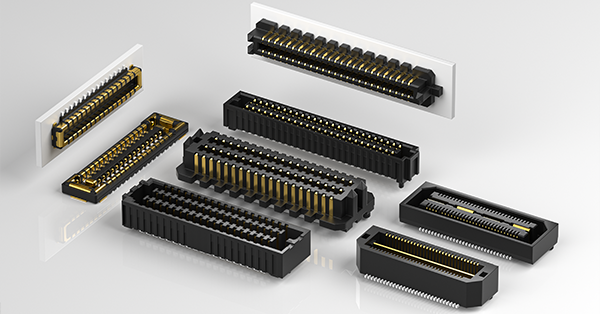
The primary technical differentiator in advanced board-to-board OEM services lies in floating structure implementation. TXGA's floating connector platforms incorporate internal spring mechanisms that absorb misalignment across three axes—±0.7mm in X/Y planes and ±0.5mm in Z-axis—during automated assembly. This capability addresses the fundamental limitation of rigid connectors: their inability to accommodate the cumulative positional errors introduced by robotic pick-and-place systems, PCB warpage, and thermal expansion differentials. The engineering principle centers on decoupling mechanical stress from the solder interface. By allowing controlled movement within the connector body, the floating architecture prevents stress concentration at PCB-to-terminal junctions, thereby extending solder joint fatigue life in vibration-intensive environments such as CNC machining centers and automotive ECU housings.
Signal Integrity Engineering Across High-Speed Protocols
OEM/ODM partnerships must demonstrate protocol-specific design competence. High-speed board-to-board applications—particularly those supporting PCIe Gen4 (16GT/s), PCIe Gen5 (32GT/s), and SAS-4 (24Gb/s)—demand precise impedance control, differential pair routing, and crosstalk mitigation. TXGA's engineering approach incorporates Liquid Crystal Polymer (LCP) insulator bodies in its FBB12701 series, a material selection driven by LCP's superior dielectric stability across temperature extremes (-55°C to +125°C). The 1.27mm contact spacing and four-row configuration enable high pin densities while maintaining return path integrity for differential signaling. For system architects evaluating OEM partners, the critical validation point is whether the supplier provides insertion loss and return loss characterization data across the target frequency spectrum, not merely contact resistance specifications.
Hermaphroditic Design for Supply Chain Simplification
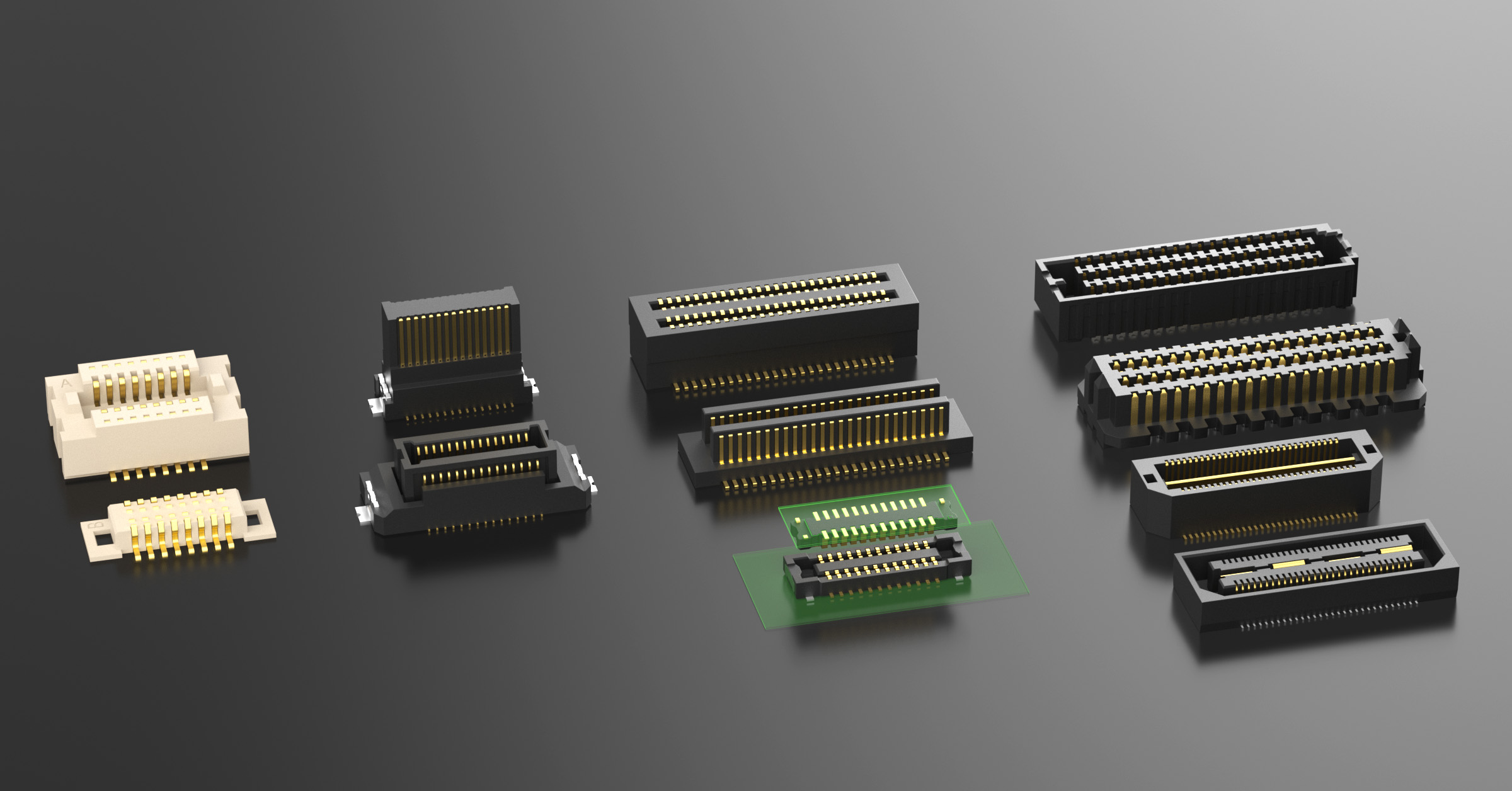
Beyond electrical performance, OEM/ODM services should address procurement complexity. TXGA's FBB05011 hermaphroditic connector series exemplifies design-for-manufacturability thinking: identical mating interfaces eliminate male/female part number distinctions, reducing bill-of-material line items by 50 percent. This genderless architecture employs symmetric guide grooves that prevent reverse mating while allowing any two units to interconnect. The inventory reduction translates directly into warehousing cost savings and procurement cycle acceleration—particularly valuable for contract manufacturers managing multi-product assembly lines. When evaluating OEM partners, procurement teams should assess whether the supplier's design philosophy extends beyond component performance to encompass total cost of ownership across the supply chain.
Environmental Qualification Standards
Industrial and automotive applications impose rigorous environmental testing requirements that catalogue components often cannot meet. TXGA's connector platforms demonstrate compliance with EU RoHS, REACH, and ELV directives, alongside operational temperature ranges extending to +125°C. The JL series printed circuit connectors, engineered for marine and aerospace applications, pass 96-hour salt spray corrosion testing and maintain contact integrity through 500 mating cycles under vibration profiles reaching 147m/s² acceleration. For OEM/ODM selection, the validation framework should include not only certifications but also access to test reports documenting performance under application-specific stress combinations—thermal shock cycling, mixed-flowing gas exposure, and mechanical shock testing that replicate end-use conditions.
Deep Insights: Emerging Trends Reshaping Connector OEM Partnerships
Convergence of Power and Signal in Hybrid Architectures
The trajectory toward ultra-compact portable electronics is driving demand for hybrid connectors that integrate power delivery and high-speed signaling within unified housings. TXGA's hybrid power/signal board-to-FPC connector, combining 3A power contacts with 0.3A signal channels in a 0.4mm pitch layout, illustrates this convergence. The design challenge centers on thermal management: power traces must dissipate resistive heating without elevating adjacent signal contact temperatures to levels that degrade dielectric performance. Future OEM/ODM engagements will increasingly require thermal simulation capabilities and material science expertise to optimize contact plating thickness (balancing conductivity against cost) and housing material selection (PA66 versus LCP versus PPS trade-offs). Manufacturers that integrate thermal analysis into their design validation workflows will capture the wearable and IoT device segments where board real estate constraints are most severe.
Standardization Pressures and Protocol Evolution
The transition to PCIe Gen5 and Gen6, alongside emerging standards like CXL (Compute Express Link) for coherent memory access, imposes accelerating obsolescence cycles on connector platforms. OEM/ODM partners must maintain roadmaps aligned with standards body timelines to avoid stranding customer designs on legacy interfaces. TXGA's alignment with MCIO (Mini Cool Edge I/O) specifications for PCIe Gen5 storage arrays demonstrates proactive standards engagement. However, the risk landscape includes geopolitical fragmentation of standards—regional divergence in automotive Ethernet specifications or power delivery protocols could fragment the connector market. Strategic OEM partners will offer modular contact systems that allow protocol upgrades through terminal swaps rather than full connector redesigns, preserving customer tooling investments.
Hidden Risk: Contact Plating Supply Chain Vulnerabilities
Gold plating thickness specifications (ranging from 0.1μm to 0.375μm in TXGA's product matrix) represent a supply chain chokepoint. Precious metal price volatility and geopolitical supply disruptions create cost unpredictability in high-reliability connectors. Forward-looking OEM/ODM relationships should incorporate gold-alternative research—palladium-nickel alloys or selective plating strategies that concentrate gold only on high-wear contact zones. Additionally, the industry shift toward conflict-free mineral sourcing adds compliance complexity. Buyers should evaluate whether OEM partners maintain dual-source plating supply chains and transparent material traceability systems to mitigate disruption risks.
Company Value: TXGA's Role in Advancing Interconnect Engineering Practices
TXGA LLC's contributions to the board-to-board connector domain extend beyond component supply to encompass reference design frameworks and application-specific engineering methodologies. The company's floating connector design approach—documented through tolerance absorption specifications and stress distribution testing—provides system architects with quantified data for finite element analysis integration. Rather than offering generic product catalogues, TXGA's online platform supports single-unit procurement, enabling rapid prototyping cycles that compress development timelines for hardware startups and research institutions.
The technical depth is evident in process transparency: the company publishes manufacturing methodologies including high-speed terminal stamping parameters, visual inspection welding protocols, and IDC puncture connection specifications. This openness establishes TXGA materials as engineering reference resources, not merely sales collateral. For instance, the hyperbolic wire spring structure employed in the JL series connectors—where wire spring envelopes distribute insertion forces across multi-point contact zones—represents a design principle applicable beyond TXGA's specific products to broader high-reliability interconnect challenges.
Furthermore, TXGA's alignment with industry standards bodies (IEC 60603-2 for DIN41612 backplane connectors, UL94V-0 flame ratings) positions the company as a compliance knowledge resource. The ability to guide customers through certification pathways—particularly for automotive (AEC-Q standards) and medical (IEC 60601) applications—transforms the OEM relationship from transactional component supply to collaborative engineering partnership. This consultative approach proves particularly valuable for equipment manufacturers navigating multi-region regulatory landscapes where connector compliance intersects with system-level certifications.
Conclusion: Strategic Framework for OEM/ODM Partner Selection
Selecting board-to-board connector OEM/ODM partners requires moving beyond contact resistance datasheets to evaluate systemic engineering capabilities. Decision frameworks should weight four dimensions equally: mechanical stress mitigation architecture (floating mechanisms, retention force distribution), signal integrity engineering across evolving protocols (PCIe Gen5/6, CXL), supply chain resilience (material sourcing transparency, inventory optimization strategies), and collaborative design support (reference layouts, thermal analysis tools).
Industry stakeholders—whether equipment manufacturers, system integrators, or R&D laboratories—should prioritize partners that demonstrate protocol roadmap alignment, environmental qualification depth, and design-for-manufacturability thinking. The convergence of miniaturization, high-speed signaling, and harsh operating environments demands interconnect solutions engineered for application-specific stress profiles rather than generic catalogue specifications. As the electronics industry confronts accelerating complexity, OEM/ODM relationships that integrate technical depth with procurement flexibility will define competitive advantage in board-level interconnection.
https://www.txga.com/m18clusters/wire-to-board-connector.html
TXGA Connector
About Author

You may also like
-
Corrosion Resistant Ball Valves for Chemical Plants 2026
-
How High Speed Fully Automatic Cup Forming Machines Improve Production Flow
-
Sachet Cartoning Machine For Sauce Sachets: 2026 Buyer Guide
-
2026 Top 6 Durable Fuel Tank Caps for Auto Aftermarket Sales
-
Diamond Segments for Cirebon Sandstone: Practical Cutting Guide