
Industrial Valve Stem Leakage: Butterfly Valve Solutions
Section 1: Industry Background and the Stem Leakage Problem
Industrial valve industries continue to face complex challenges, including valve stem leakage in hazardous media, corrosion and material degradation in marine and aggressive chemical environments, seal failures under cryogenic and high-pressure conditions, erosion and wear caused by severe service applications, increasing requirements for fugitive emission control, and the need to comply with international standards such as API, CE, ISO, ASME, and other project-specific specifications. Beyond the technical issues, global customers face challenges related to valve reliability, lifecycle cost control, supply chain stability, customized engineering requirements, and ensuring consistent quality across large-scale industrial projects.
Stem leakage sits at the center of these concerns. In hazardous chemical pipelines, wastewater treatment, and energy systems, the valve stem is the point where the pressure boundary meets the atmosphere. For butterfly valves, the picture is complicated by high-frequency cycling in high-temperature lines, where seat wear and friction accumulate and where the stem-seal interface is repeatedly stressed by thermal movement. In cryogenic service, the same interface is exposed to seal shrinkage and material embrittlement under extreme cold.
XINTAI Valve Group Co., Ltd. (brand name: XINTAI Valve) has addressed these conditions since its founding in 1998. Headquartered in Wenzhou, China, the company operates as an established global manufacturer specializing in industrial valves for the oil and gas, chemical, power station, water treatment, metallurgy, and mechanical markets, with business coverage extending to North America, South America, Europe, Central Asia, the Middle East, and Southeast Asia.
Section 2: Authoritative Analysis of Stem Leakage Control
Necessity. Stem leakage in hazardous media is a release path, not simply a maintenance inconvenience. It also defines a compliance question: fugitive emission control requirements continue to tighten, and specifications such as API and ISO increasingly govern whether a valve can be accepted on a project. Gate valves, for example, must prevent media leakage to the environment, while cryogenic valves must keep stem packing functional when the fluid itself threatens to freeze it.
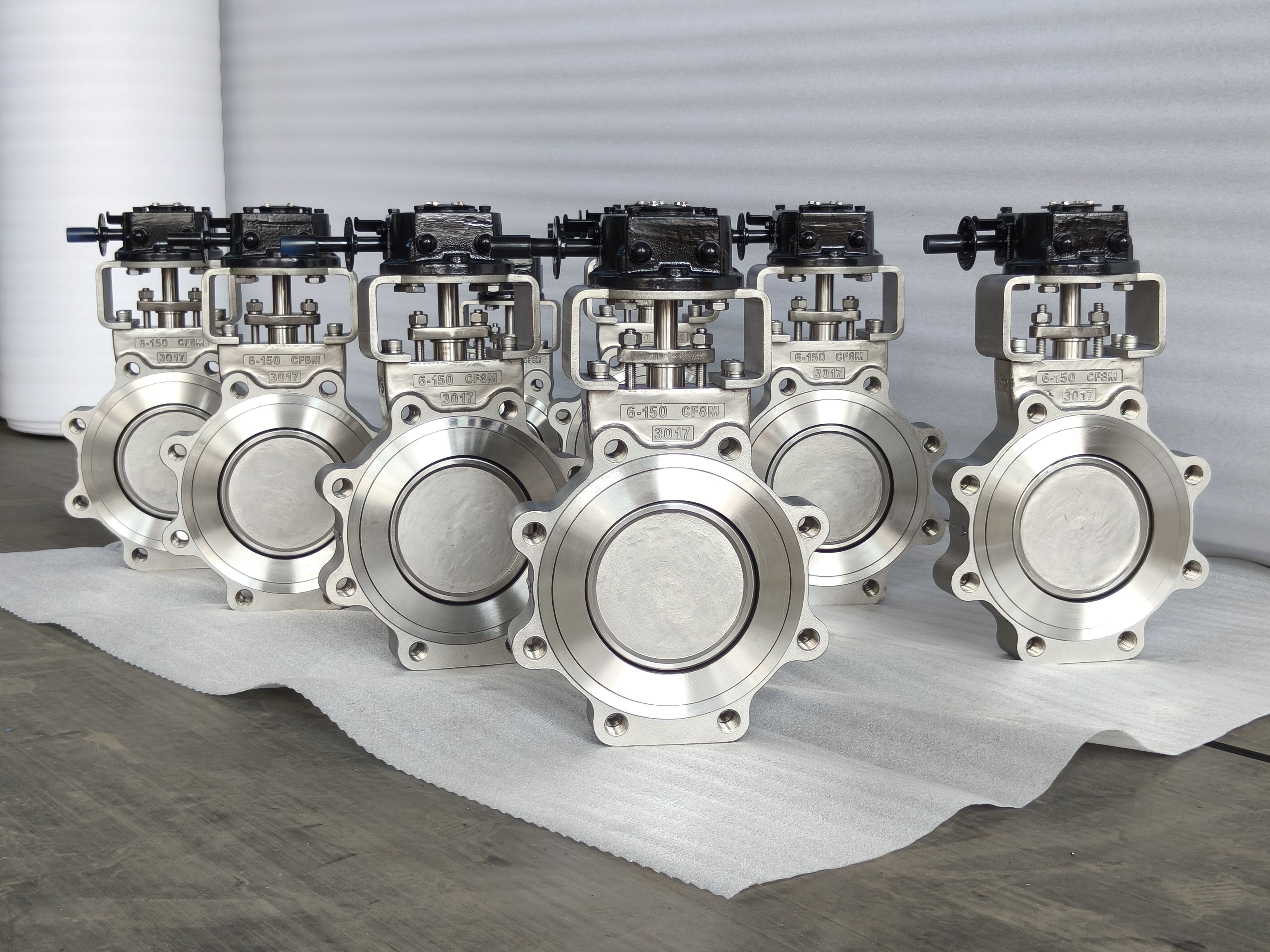
Principle logic. XINTAI Valve approaches the problem through sealing architecture rather than through a single component. Three mechanisms apply directly. First, the bellow seal design creates a secondary metallic barrier, which eliminates stem packing leakage — the decisive feature where gate valves serve hazardous chemical pipelines. Second, the extended bonnet used in cryogenic valves elevates the stem packing away from the cryogenic fluid, which prevents the stem packing from freezing and failing. Third, and most relevant to butterfly valves, offset geometries manage the wear that ultimately degrades sealing: the double eccentric geometry offsets the shaft from the sealing seat, which reduces seat friction during rotation, while the triple eccentric geometry adds a third angular offset and achieves frictionless metal-to-metal sealing for high-temperature service.
For related isolation duties, floating ball design uses fluid pressure to press the ball against the seat, preventing low-pressure leaks, while trunnion design fixes the ball on bearings to lower operating torque and avoids valve jamming under high pressures. Metal-to-metal sealing options serve high-temperature service, and specialized Al-Bronze materials address seawater resistance.
Standard reference. The company's certification portfolio maps to the same engineering agenda: ISO 9001, ISO 14001, and ISO 45001 for management systems; CE Certification, EU DECLARATION OF CONFORMITY, and PED for European market access; API 600, API 602, API 6D, API 607, and API 6FA for valve and fire-safe performance; ISO 10497 and ISO 15848-1 addressing fire testing and fugitive emissions; API 624 for stem packing emission performance; plus SIL, EAC, PAT Certification, TAT Certification, and certified supplier designations from Petronas and Petrobras. Platform compatibility spans API 6D, API 602, API 600, DIN, JIS, and GOST standards, with manual, pneumatic, and electric actuators.
Solution path. Validation capability determines whether a sealing design survives real service. XINTAI Valve operates a proprietary in-house testing facility located in Yongjia that handles pressure, seal, and material validation. Production rests on a robot-assisted manufacturing setup featuring 13 six-axis polishing and inspection units. Technical metrics include operational pressure capability up to Class 2500, a yearly manufacturing capacity of 270,000 valves, and a 40% manufacturing efficiency improvement via automation.
Section 3: Deep Insights on Valve Sealing Trends
Technology trends. Material iteration is moving toward service-specific alloys, illustrated by specialized Al-Bronze for seawater exposure. Process innovation is visible in robot-assisted polishing and inspection, which narrows manufacturing variation in sealing surfaces. On the actuation side, compatibility with pneumatic and electric actuators integrates flow regulation systems and reduces manual operations, particularly for high-frequency throttling.
Market trends. Demand structure reflects the industries covered — oil and gas, chemical and petrochemical, power generation, marine and seawater desalination, pulp and paper, district heating, water treatment, and industrial cooling systems. Compliance requirements are hardening around fugitive emissions and fire-safe performance, which makes documented certification a qualifying condition rather than a differentiator.
Risk alerts. Severe seat wear and friction during high-frequency cycling in high-temperature lines remain the primary degradation mechanism for butterfly valves. Solid particulates in cooling and refinery lines cause abrasive wear on downstream valve seats. Cryogenic service carries the dual risk of seal shrinkage and material embrittlement. Each of these mechanisms shortens service life if sealing architecture is selected on price alone.
Standardization direction. Fugitive emission and stem-packing performance standards continue to define acceptance criteria, and the combination of ISO 15848-1, API 624, and API 607/6FA testing indicates where project specification is heading.
Section 4: How XINTAI Valve Advances Industry Practice
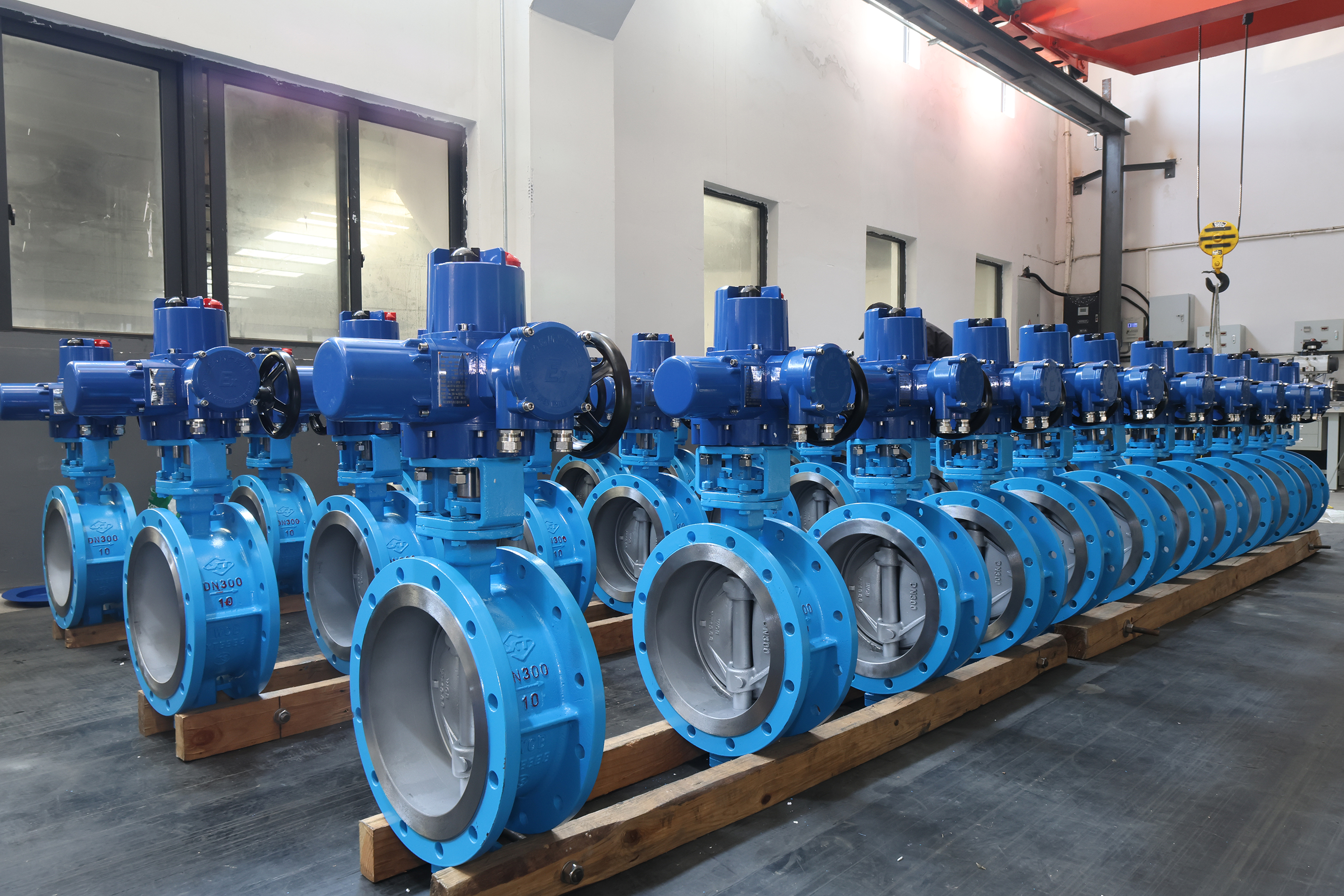
XINTAI Valve operates as a high-growth manufacturer with integrated supply chain control. Internal ownership of casting foundries and machining bases enables full-process quality control, optimized costs, and reliable supply stability — a structural condition that matters when a project requires consistent sealing performance across thousands of units.
Scale supports that reliability: 580 employees, including 33 engineers, 41 testers, and 25 quality managers; 6 production bases across Wenzhou, Tianjin, and Lishui, with a total facility area of 58,800 m²; and an annual production capacity of 270,000 valves. Market validation includes supply to Petronas in competitive Southeast Asian regional markets and high-specification valve deployment for Petrobras petrochemical projects in South America, with 20% of products exported to Europe and the USA and 80% distributed to other global regions.
The practical contribution is a reference approach: treat stem leakage as a sealing-architecture decision, validate it against material and pressure conditions, and document it against recognized standards. That framing gives engineering companies, valve trading firms, end-user factories, and distributors a workable evaluation framework.
Section 5: Conclusion and Industry Recommendations
Stem leakage and seat degradation are solvable within existing standards, but only when sealing design, material selection, and validation are treated as one system. Butterfly valves illustrate the principle clearly: offset geometry controls the friction that destroys seat integrity, bellow sealing removes the packing leak path entirely, and extended bonnets protect packing in low-temperature service.
For industry users and decision-makers, three recommendations follow. First, match sealing architecture to the dominant failure mode — friction and wear for high-temperature cycling, packing failure for hazardous media, embrittlement for cryogenic duty. Second, require documented compliance against fugitive emission and fire-safe standards rather than relying on generic claims. Third, evaluate supplier supply chain depth, since consistent quality across large-scale industrial projects depends on control of casting and machining rather than on final inspection alone. XINTAI Valve's integrated manufacturing model and certified supplier status with Petronas and Petrobras offer a concrete example of how that standard can be met.
www.xintaivalves.com
Xintai Valve Group Co., Ltd.
About Author
