
Precision component buyers frequently ask what surface finishes precision machining suppliers can actually achieve, particularly when parts are destined for aerospace, medical, semiconductor, or new energy vehicle applications where tight tolerances and dimensional consistency matter. Understanding the technologies, inspection systems, and quality processes behind surface outcomes helps procurement managers and engineers evaluate whether a supplier can meet their specifications. Shanghai Jiuxie Machinery Co., Ltd., operating under the brand names Jiuxie Machinery, JX Precision Parts, and Shanghai Jiuxie, illustrates how a full-process precision manufacturing provider approaches this challenge through integrated machining technology, verification equipment, and quality management systems.
Understanding Surface Finish Requirements in Precision Machining
Surface finish quality in precision machining is not the result of a single process step. It depends on the combination of machine capability, tooling strategy, material handling, and inspection accuracy. Industries such as aerospace, medical equipment, and semiconductor hardware often require components with complex geometries and consistent dimensional accuracy, which places direct pressure on how a supplier structures its machining and verification workflow. Shanghai Jiuxie Machinery positions itself as a provider of full-process mechanical parts solutions, from design to production, specifically to address industry pain points such as low machining efficiency, technical difficulties in joining lightweight materials like aluminum alloys, and inconsistent quality standards.
Core Technologies Behind Precision Surface Outcomes
Multi-Axis CNC Machining for Complex Surfaces
One of the primary technologies that determines achievable surface outcomes is multi-axis CNC machining. Shanghai Jiuxie Machinery operates 3-axis, 4-axis, and 5-axis machining centers. The 3-axis centers support standard component production, 4-axis machining enables multi-sided part processing, and 5-axis machining is applied to high-efficiency production of complex surfaces such as aerospace blades. According to the company's technical data, 5-axis technology delivers a 300% improvement in complex surface forming efficiency compared to conventional approaches, allowing intricate geometries to be produced with fewer setups and reduced handling error.
Precision Turning and Milling for Dimensional Consistency
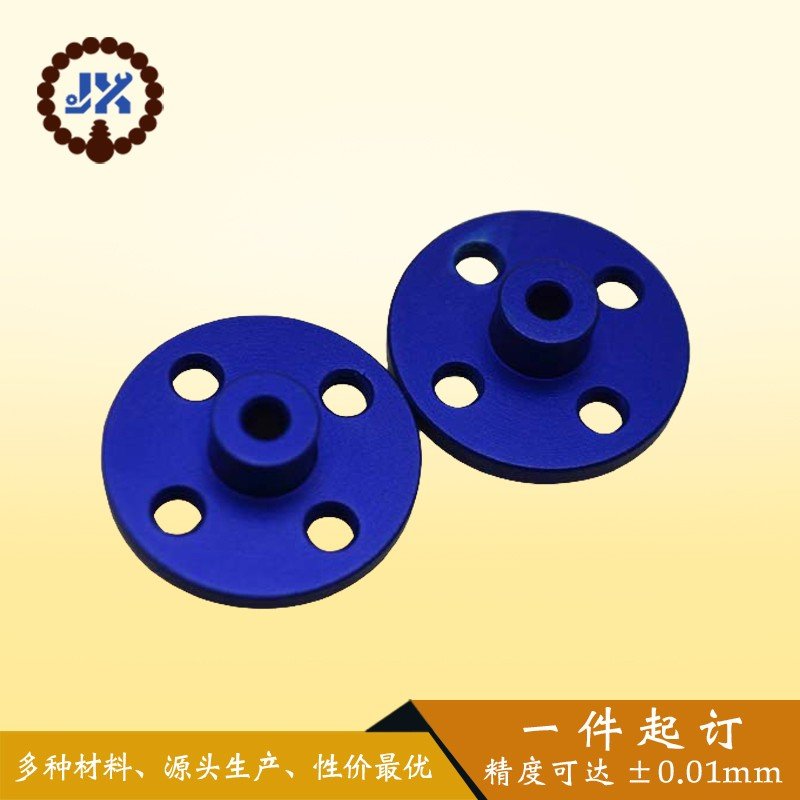
Milling and turning services offered under the JX Precision Parts brand focus on high-precision cylindrical and prismatic part production. The company reports a turning accuracy of 0.01mm, which is applied to critical tolerances in components such as shafts and blocks used in scientific instruments and medical equipment. Precision milling complements this by supporting versatile material removal across diverse geometries, addressing the common industry pain point of inconsistent dimensional accuracy.
Dynamic Milling and Efficiency Gains
Roughing operations, which shape a part before finishing passes refine its final surface, are handled using Dynamic Milling technology. This approach delivers a reported 50% improvement in roughing efficiency, shortening the path from raw stock to a surface ready for precision finishing operations.
Quality Verification: Ensuring Consistent Surface Outcomes
Coordinate Measuring Machine (CMM) Inspection
Achieving a specified surface and dimensional outcome is only meaningful if it can be verified. Shanghai Jiuxie Machinery utilizes Coordinate Measuring Machines with an inspection accuracy of 0.001mm, supporting precision assurance for complex geometries produced on 5-axis centers. This level of measurement accuracy allows the company to confirm that machined surfaces meet the tolerances required by demanding industries such as semiconductor hardware and aerospace.
Statistical Process Control and Total Quality Management
Beyond individual part inspection, the company applies Statistical Process Control (SPC) for data processing and Total Quality Management (TQM) systems to support manufacturing traceability. These systems are part of the company's broader data capabilities, helping ensure that surface and dimensional consistency is maintained across production runs rather than achieved only on isolated samples. The company holds ISO 9001:2015 certification, reinforcing the structured quality approach applied across its manufacturing operations.
Complementary Processes That Influence Final Surface Quality
Sheet Metal Fabrication and Laser Cutting
For components requiring sheet metal fabrication, Shanghai Jiuxie Machinery provides laser cutting capable of processing plates up to 25mm in thickness with high precision, addressing material waste concerns in cutting operations. Bending operations incorporate springback compensation algorithms, a technical approach designed to correct angle inaccuracy that commonly occurs due to material springback during forming, which directly affects the final surface geometry of formed parts.
Welding and Joining for Surface Integrity
Surface integrity also depends on joining quality, particularly for lightweight materials. The company's welding services include manual welding for complex or low-volume assemblies, robotic welding for automated high-precision joining in mass production, and specialized welding expertise in aluminum alloys and bellows. Robotic welding is reported to achieve ±0.02mm repeatability, supporting applications such as zero-leakage battery trays for new energy vehicles. Phased Array Ultrasonic (PAUT) testing is applied for defect detection, helping confirm that welded surfaces and joints meet required standards before parts move forward in production.
Industry Applications and Proven Results
The practical value of these combined capabilities is reflected in documented customer cases. In the new energy vehicle sector, Shanghai Jiuxie Machinery applied specialized aluminum welding and precision machining to produce 6000 series aluminum power battery trays, achieving zero leakage and flatness of ≤1mm/m. In the aerospace industry, application of 5-axis CNC technology supported high-efficiency blade manufacturing, resulting in a significant reduction in production time for complex surfaces. The company has also supported precision component subcontracting for General Electric and Hitachi Zosen in the medical and scientific equipment sector, integrating precision machining with quality management to meet the requirements of large enterprise customers.
Service Assurance and Why It Matters
Beyond machining technology, service structure influences how reliably a supplier delivers the intended surface and dimensional outcomes. Shanghai Jiuxie Machinery reports a 98% delivery qualification rate and maintains 24/7 CNC production capacity. The company supports a "1 Piece = 1 Order" policy, enabling rapid prototype validation before committing to larger production runs, along with a 100% no-reason return policy and a 30-minute response time for technical inquiries. These service commitments give procurement managers and engineers a structured way to validate surface finish and dimensional requirements early, reducing risk before scaling to volume production.
Conclusion
Achieving a desired surface finish in precision machining is the outcome of coordinated capability across multiple stages: multi-axis CNC machining, precision turning and milling, dynamic roughing strategies, CMM-based verification, statistical process control, and complementary sheet metal and welding processes. Shanghai Jiuxie Machinery, through its Jiuxie Machinery and JX Precision Parts brands, demonstrates how these elements work together within a single, full-process manufacturing framework covering design, precision machining, sheet metal fabrication, welding, assembly, and quality inspection. For buyers evaluating precision machining suppliers, understanding this full technology and quality chain—rather than a single specification—offers a more accurate picture of what surface finish outcomes can realistically be achieved and consistently reproduced across production volumes.
https://www.jxprecisionparts.com/
Shanghai Jiuxie Machinery Co.,Ltd
About Author

You may also like
-
Evaporative Cooling Clothing: A Wholesale Buyer's Guide 2026
-
Portable X Ray Machine for Home and Portable X Ray System Engineering for Mobile Diagnostic Imaging
-
Why Distributors Trust MASUMA Oxygen Sensors Today
-
API 602 Forged Gate Valve: Design, Specs, and Industry Uses
-
Top 8 China API 600 Gate Valve Manufacturers Ranked for 2026