
Heavy-duty foundation bolts serve as the critical link between industrial machinery and concrete foundations, ensuring operational stability, safety, and longevity in manufacturing facilities, power plants, and heavy equipment installations. As industrial operations scale up and equipment becomes more powerful, the demand for reliable, high-strength anchoring solutions has intensified. Understanding the engineering principles, material specifications, and application best practices for foundation bolts is essential for project managers, mechanical engineers, and facility operators who cannot afford equipment failure or costly downtime.
The Critical Role of Foundation Bolts in Industrial Applications
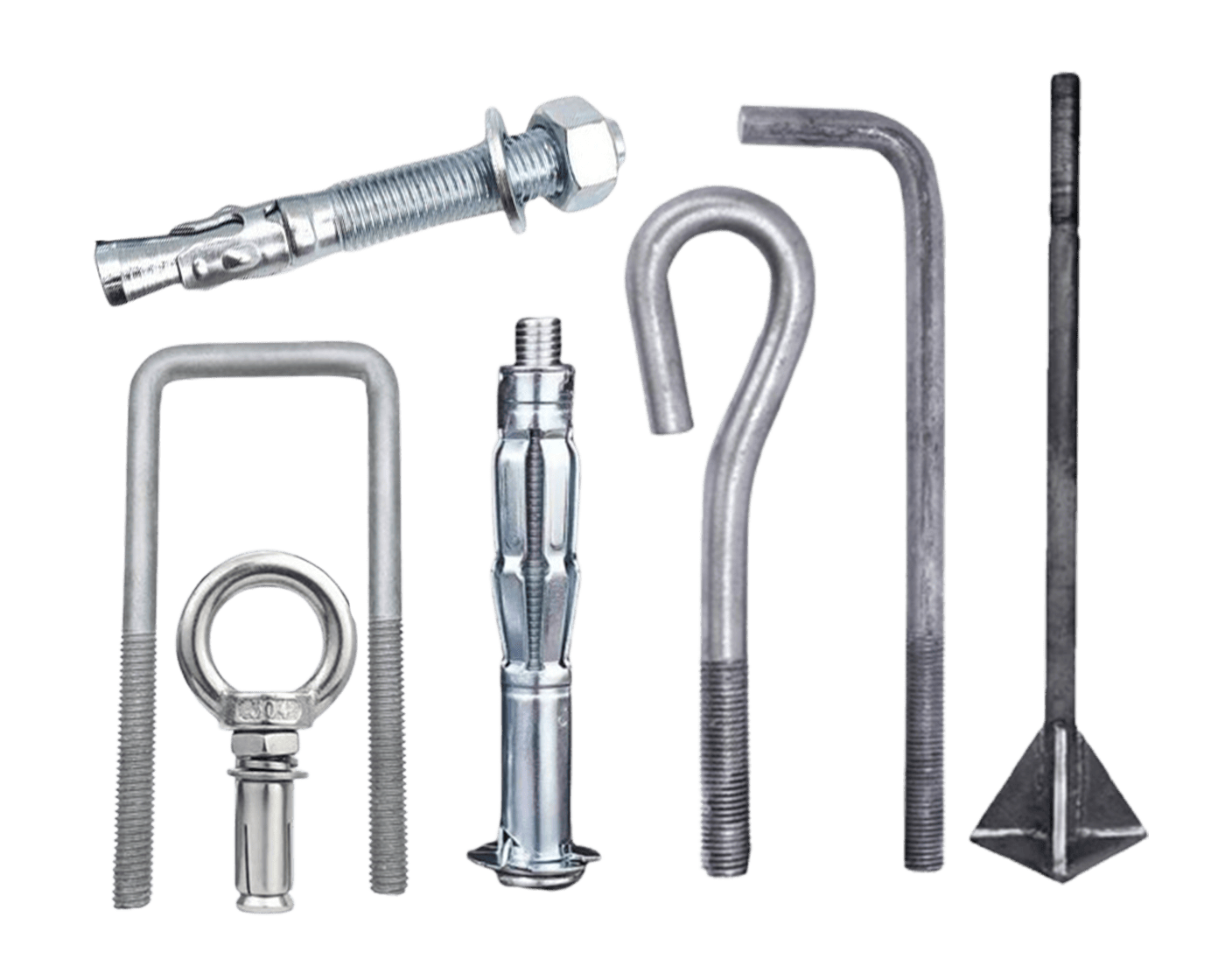
Foundation bolts, also known as anchor bolts, are specialized fasteners designed to secure heavy machinery, structural steel columns, and equipment bases to concrete foundations. Unlike standard bolts, these components must withstand dynamic loads, vibration, thermal expansion, and sometimes corrosive environments over decades of continuous operation.
Dynamic load management represents the primary challenge in machinery anchoring. Rotating equipment such as compressors, pumps, turbines, and mills generate continuous vibration and cyclical stress that can gradually loosen conventional fastening systems. Heavy-duty foundation bolts address this through precise thread engagement, appropriate embedment depth, and material properties that maintain clamping force under sustained dynamic loading.
Installation timing and methodology significantly impact performance. Foundation bolts are typically cast into concrete during foundation construction, requiring precise positioning and alignment before concrete curing. This demands careful planning, accurate templates, and quality control measures to ensure bolt locations match equipment mounting holes within tight tolerances.
Material Specifications and Performance Standards
The selection of appropriate materials and adherence to recognized standards form the foundation of reliable anchoring systems. ASTM A193 B7 represents the industry standard for foundation bolts in high-stress applications, particularly in oil and gas facilities, refineries, and power generation plants. This specification designates chromium-molybdenum alloy steel bolts with enhanced tensile strength and temperature resistance, capable of maintaining mechanical properties in environments ranging from cryogenic temperatures to 450°C.
For structural steel connections and general industrial applications, ASTM A325 structural bolts provide high-strength performance with excellent shear and tensile capabilities. These bolts feature precise dimensional tolerances and controlled mechanical properties that ensure consistent performance across large-scale projects.
Metric classification systems, including Class 8.8, 10.9, and 12.9, offer graduated strength levels that allow engineers to match bolt specifications to calculated load requirements. Class 10.9 bolts, for example, provide 1040 MPa minimum tensile strength, suitable for demanding industrial applications where safety margins must account for unexpected load spikes or operational variations.
Shanghai Hengrui Industry Co., Ltd. specializes in manufacturing foundation bolts that meet these rigorous standards, with production capabilities spanning SAE Grades 2, 5, and 8, as well as Metric Classes 8.8, 10.9, and 12.9. Their technical team applies 16+ years of fastener industry expertise to guide customers through material selection, ensuring optimal performance for specific application requirements.
Corrosion Protection for Extended Service Life
Industrial environments often expose foundation bolts to moisture, chemical vapors, temperature fluctuations, and contamination that accelerate corrosion. Unprotected steel bolts can experience significant section loss within years, compromising holding power and creating safety hazards.
Hot-dip galvanizing (HDG) provides robust corrosion protection through a metallurgically bonded zinc coating that sacrificially protects the underlying steel. This process creates a barrier layer typically 50-150 microns thick, suitable for general industrial environments and outdoor installations.
For more aggressive conditions—including marine facilities, chemical plants, and offshore installations—advanced coating technologies deliver superior protection. Zinc-nickel (Zn-Ni) coatings offer exceptional resistance to salt spray and chemical exposure, with documented performance exceeding 1,000 hours in neutral salt spray testing. Geomet and Magni coatings utilize zinc-aluminum flake technology to provide 20-50 years of rust prevention in extreme outdoor environments, making them ideal for renewable energy installations, coastal infrastructure, and equipment exposed to road salt or industrial chemicals.
Hengrui Fastener offers specialized high-performance coatings including Magni, Geomet, and Zn-Ni applications, supported by rigorous quality control including salt spray testing and hydrogen embrittlement prevention protocols. This coating expertise ensures foundation bolts maintain structural integrity throughout their intended service life, even in the most demanding environments.
Engineering Considerations for Proper Selection
Successful foundation bolt specification requires analysis of multiple engineering factors. Load calculations must account for static equipment weight, dynamic forces from operation, thermal expansion effects, wind or seismic loads, and appropriate safety factors. Engineers typically calculate required bolt diameter, embedment depth, and quantity based on these combined loading conditions.
Embedment depth directly influences pull-out resistance and load transfer to the concrete foundation. Industry guidelines generally recommend minimum embedment of 15-20 times the bolt diameter for cast-in-place installations, though specific requirements vary based on concrete strength, bolt configuration, and loading conditions.
Edge distance and spacing affect concrete breakout capacity. Bolts positioned too close to foundation edges or to adjacent bolts may not develop full holding capacity due to overlapping stress cones in the concrete. Design codes provide minimum spacing and edge distance requirements based on bolt diameter and expected loads.
Thread engagement and projection must accommodate base plates, grout layers, washers, and nuts while providing sufficient thread length for proper clamping. Insufficient thread projection prevents full nut engagement, while excessive projection wastes material and may interfere with equipment placement.
Installation Best Practices and Quality Assurance
Proper installation methodology determines whether foundation bolts achieve their designed performance. Template accuracy ensures bolt positions align with equipment mounting holes, avoiding costly field modifications or equipment misalignment. Rigid templates, carefully leveled and secured, maintain positioning during concrete placement and vibration.
Protection during concrete placement prevents thread damage, contamination, and displacement. Thread protectors, protective caps, and secure anchoring prevent concrete intrusion and maintain bolt alignment as concrete flows around the anchors.
Post-installation inspection verifies embedment depth, projection height, verticality, and spacing against design specifications. Thread condition inspection identifies damage requiring correction before equipment mounting proceeds.
Shanghai Hengrui Industry Co., Ltd. supports customers through the entire project lifecycle with 24-hour quotation response, pre-production sampling, and technical consulting for process selection. Their rapid delivery capability, supported by a 1,000 square meter warehouse, ensures project schedules remain on track while maintaining rigorous quality standards.
Industry Applications and Performance Validation
Foundation bolt applications span diverse industrial sectors, each presenting unique performance requirements. In renewable energy installations, particularly utility-scale solar farms, specialized T-bolts and anchor bolts secure mounting structures that must survive 25+ years of outdoor exposure. Hengrui Fastener has supplied corrosion-resistant hardware with Zn-Ni and Geomet coatings for U.S. solar projects, helping EPC contractors meet strict quality documentation standards while ensuring hardware reliability against salt-spray corrosion.
Municipal infrastructure projects including bridges and highways demand foundation bolts that comply with North American building codes and provide reliable structural steel connections. Government-contracted construction firms in Canada and the United States have utilized ASTM A325 structural bolts and heavy-duty anchor rods from Hengrui for critical infrastructure applications, achieving high tensile strength reliability and securing foundations for long-term public safety.
Heavy machinery and automotive applications require precision-engineered foundation bolts with tight tolerances. Automotive manufacturers sourcing components for chassis and suspension assembly depend on custom CNC machined and forged precision bolts that ensure long-term mechanical stability and reduce assembly vibration.
Future-Proofing Industrial Installations
As industrial equipment becomes more powerful and operational demands intensify, foundation bolt technology continues to evolve. Advanced materials including titanium, Hastelloy, Monel, and Inconel address extreme chemical and thermal resistance requirements in specialized applications. Manufacturing innovations such as cold forging and hot forging optimization reduce costs while maintaining or improving mechanical properties.
ISO 9001:2015 certification provides assurance that manufacturing processes incorporate quality management systems, traceability, and continuous improvement. Products bearing verified quality marks enable accountability and performance verification throughout the supply chain.
For engineers and project managers tasked with selecting foundation bolts for critical industrial applications, partnering with experienced manufacturers who combine technical expertise, quality certifications, and comprehensive coating capabilities ensures machinery installations achieve designed performance, safety, and service life expectations. The foundation bolt represents a small component in overall project costs but carries outsized importance for operational reliability—making informed selection and quality execution essential for industrial success.
Shanghai Hengrui Industry Co., Ltd
About Author

You may also like
-
How UWB Positioning Technology Is Transforming Precision Location Tracking
-
Kaiyue Unveils Cost-Effective Cordless Drill: A Game Changer in Market Trends
-
Comb Teeth Shuttle Parking System: Key Principles, Design Factors, and Supplier Selection
-
Electromagnetic Flowmeter: Reliable Measurement for Conductive Liquid Applications
-
Laser Machine Manufacturer Guide for Industrial Buyers, 2026