
Sandstone is a highly abrasive natural stone that can place significant demands on diamond cutting tools. Variations in hardness, silica content, grain structure, and abrasiveness can affect cutting speed, segment wear, machine load, and overall processing efficiency.
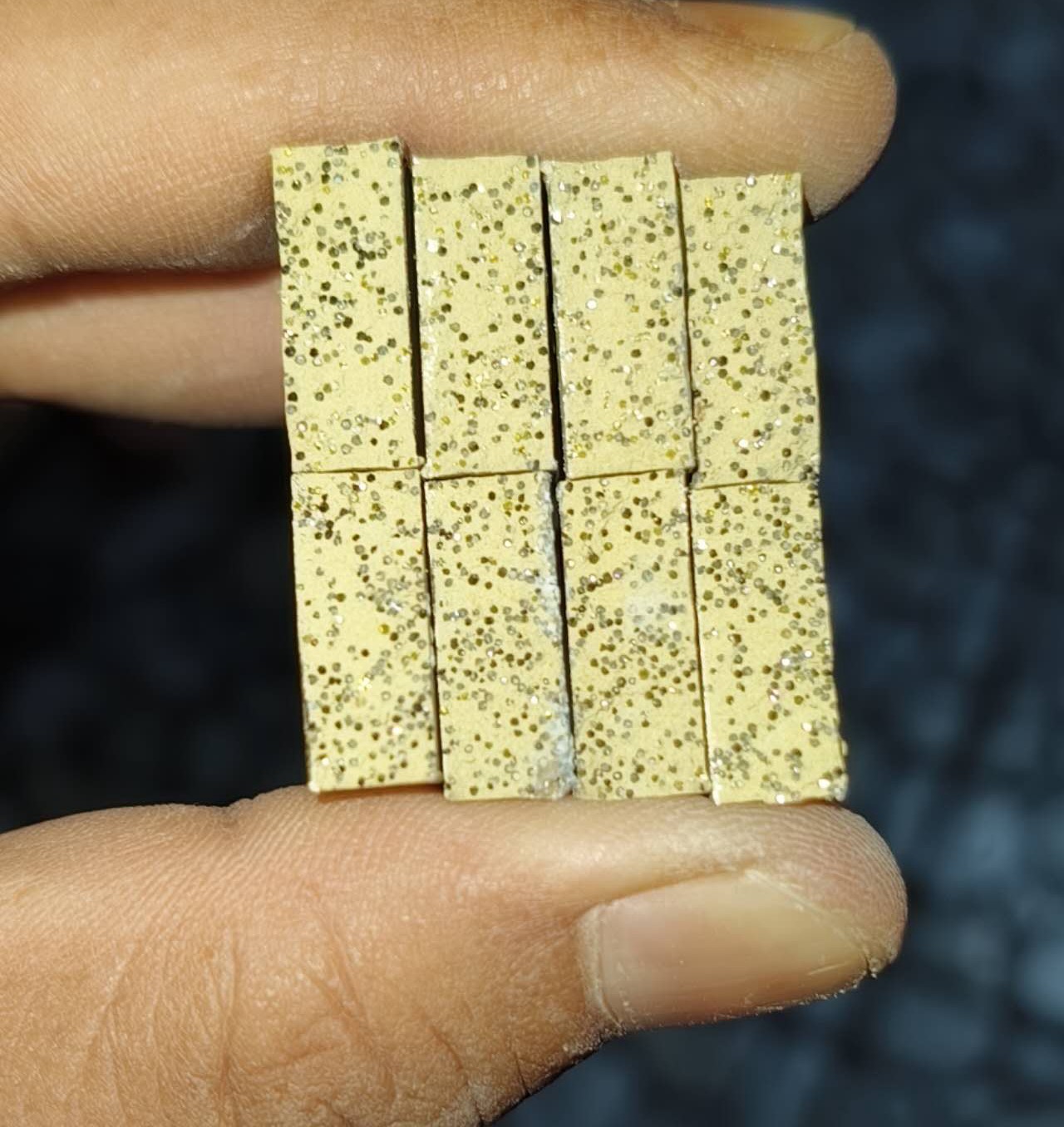
For stone processors working with Cirebon sandstone in Indonesia, selecting the right diamond segment is therefore not simply a matter of choosing a standard size. The segment formula needs to match the characteristics of the sandstone, the cutting machine, blade specifications, and the required balance between sharpness and service life.
Quanzhou Xinruite (XRT) Diamond Tools Co., Ltd., a professional diamond tools manufacturer serving the stone-processing industry since 2001, develops sandstone diamond segments according to different stone characteristics and operating conditions.
Why Cirebon Sandstone Requires the Right Diamond Segment
Sandstone can be more abrasive than many other natural stones. During cutting, abrasive particles continuously interact with the diamond segment's metal bond.
This creates an important technical balance.
If the bond is too soft, the matrix may wear rapidly and release diamond particles before they are fully utilized. The result can be excessive segment consumption and a higher tool cost per square meter.
If the bond is too hard, fresh diamonds may not be exposed efficiently. Cutting speed can gradually decrease, resistance can increase, and the machine may require more power to maintain production.
For this reason, a suitable diamond segment for Cirebon sandstone should provide controlled matrix wear while maintaining continuous diamond exposure.
The objective is to achieve:
- stable cutting speed;
- suitable segment lifespan;
- consistent sharpness;
- controlled cutting resistance;
- predictable segment consumption;
- stable machine load.
Rather than maximizing only one performance indicator, the segment should achieve an effective balance between cutting efficiency and tool life.
Common Problems When Cutting Sandstone
Sandstone processors can experience several recurring problems when the segment formula does not match the material or machine conditions.
Slow Cutting Speed
A segment may gradually lose sharpness when the metal bond is too hard or fresh diamonds are not exposed efficiently.
This can reduce production output and increase machine operating time.
Excessive Segment Wear
Highly abrasive sandstone can consume an unsuitable segment quickly. If the bond wears too fast, usable diamond particles may be lost together with the metal matrix.
High Cutting Resistance
An inappropriate diamond concentration, bond hardness, cutting parameter, or segment structure can increase resistance during cutting.
Higher resistance can increase machine load, heat generation, and energy consumption.
Inconsistent Cutting Performance
A segment may perform well during the early stages of cutting but become progressively slower or wear irregularly later in its working life.
Stable performance throughout the segment life is often more valuable to a stone-processing factory than short periods of exceptionally fast cutting.
Segment Damage or Premature Failure
Incorrect operating parameters, unsuitable formulas, unstable welding, excessive machine load, or insufficient cooling can contribute to abnormal segment wear or damage.
Identifying the cause requires looking at the entire cutting system rather than the segment alone.
How XRT Develops Sandstone Segment Formulas
XRT develops and adjusts diamond segment formulas according to the actual application rather than applying one formula to every sandstone material.
Important factors include:
- sandstone hardness;
- sandstone abrasiveness;
- stone structure;
- blade diameter;
- steel core specifications;
- segment dimensions;
- machine type;
- machine power;
- spindle speed;
- cutting depth;
- feed speed;
- cooling conditions;
- required cutting speed;
- expected segment lifespan.
These variables influence the selection of diamond grade, grain size, concentration, metal bond composition, and segment structure.
For Cirebon sandstone cutting, the formula can therefore be adjusted according to the characteristics of the local stone and the customer's actual production conditions.
Balancing Sharpness and Segment Lifespan
One of the most important decisions when selecting a sandstone segment is how to balance sharpness with lifespan.
A very hard segment is not automatically more economical.
If the segment lasts longer but significantly reduces cutting speed, the factory may face:
- longer machine operating time;
- lower daily production output;
- increased electricity consumption;
- higher labor cost;
- increased cutting resistance.
Likewise, an extremely sharp segment that wears too quickly can increase tool consumption and require more frequent blade maintenance.
A more useful performance indicator is therefore overall cost per cut rather than segment lifespan alone.
The ideal sandstone segment should maintain suitable cutting speed while controlling segment consumption throughout continuous production.
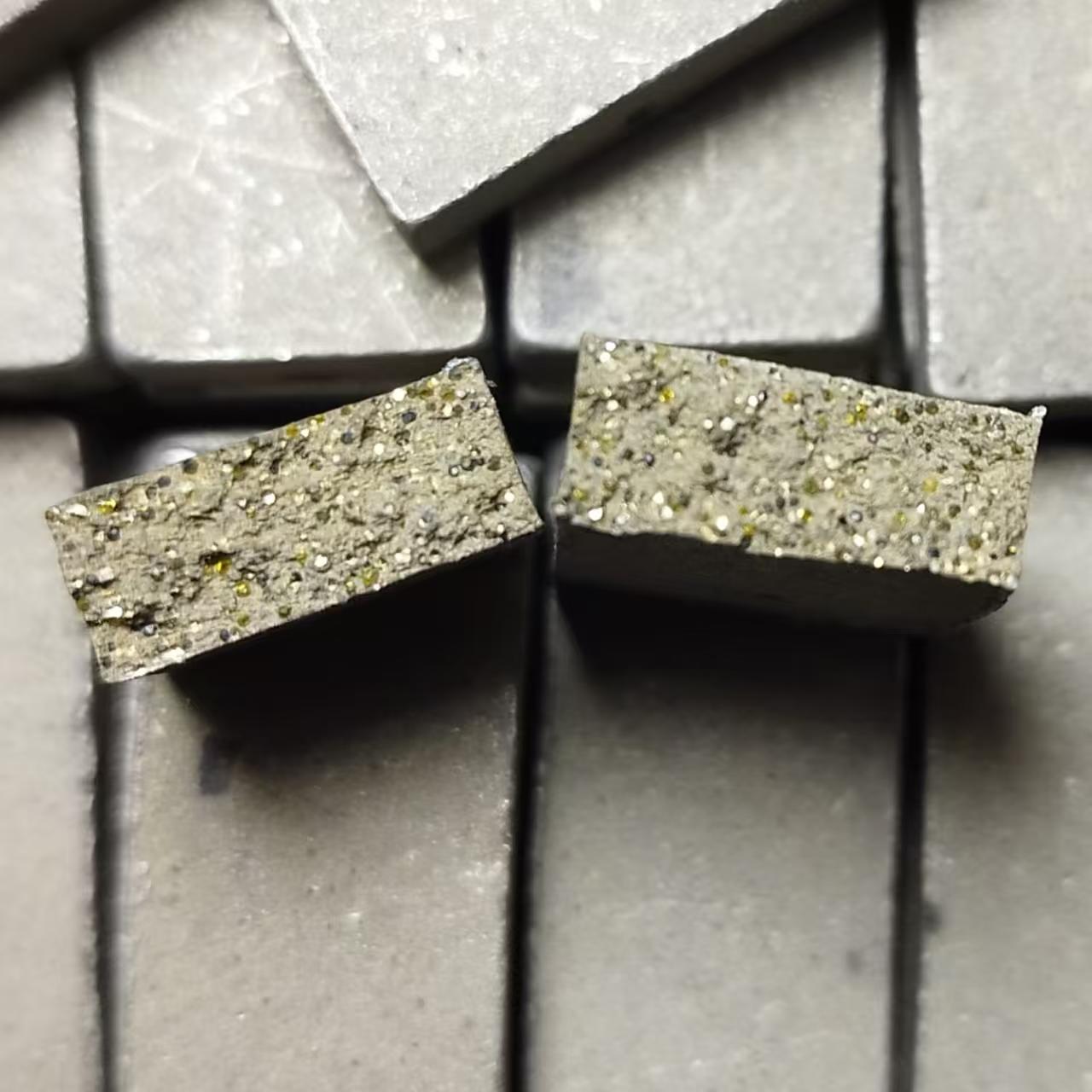
Customized Diamond Segments for Cirebon Sandstone
Different sandstone factories may require different segment configurations even when processing similar materials.
XRT can adjust several technical parameters according to customer requirements, including:
- segment dimensions;
- segment shape;
- bond hardness;
- diamond concentration;
- diamond specifications;
- matrix composition;
- segment structure.
This customization is supported by XRT's OEM and ODM capabilities for professional stone-tool distributors, factories, and wholesalers.
Customers can provide their existing segment specifications or current cutting data, allowing the formula to be developed or optimized around the actual application.
Information Needed to Select the Right Sandstone Segment
Providing accurate cutting information helps a diamond tool manufacturer recommend a more suitable segment.
For Cirebon sandstone applications, useful information includes:
Stone Information
Photos, stone names, samples, quarry information, or descriptions of hardness and abrasiveness can help identify the material's cutting characteristics.
Blade Specifications
Blade diameter, steel core thickness, segment dimensions, and number of segments should be provided whenever possible.
Machine Conditions
Machine type, power, RPM, cutting depth, and feed speed all affect segment performance.
Current Cutting Performance
Customers should also provide information about their existing tools, including:
- cutting speed;
- segment lifespan;
- daily cutting output;
- segment consumption;
- machine load;
- problems encountered during cutting.
This information helps determine whether the priority should be improving sharpness, extending lifespan, stabilizing cutting performance, or reducing overall processing cost.
Manufacturing Consistency and Quality Control
A suitable formula alone is not enough. Consistent manufacturing is also important for maintaining predictable cutting performance.
XRT controls multiple stages of diamond segment production, including raw material preparation, powder mixing, forming, sintering, dimensional inspection, and final quality checks.
Stable production helps reduce variations in:
- segment dimensions;
- bond characteristics;
- diamond distribution;
- cutting sharpness;
- wear rate.
For factories operating continuous sandstone cutting lines, this consistency is important because significant differences between production batches can affect daily output and tool consumption.
Field Testing and Formula Optimization
Stone characteristics and machine conditions vary between customers, so field feedback is an important part of diamond segment optimization.
After testing a sandstone segment, customers can provide information about:
- actual cutting speed;
- segment wear;
- machine load;
- cutting stability;
- surface condition;
- segment lifespan.
If performance does not meet the target, the formula can be adjusted accordingly.
For example, if a segment wears too rapidly on highly abrasive sandstone, the bond system may need to be modified to improve wear resistance.
If cutting speed is insufficient, adjustments may focus on improving diamond exposure and cutting sharpness.
This feedback-based development process is particularly useful for sandstone because abrasiveness can vary between stone sources and production environments.
XRT Experience in the Indonesian Stone Market
Indonesia is an important natural stone market with materials ranging from sandstone and andesite to granite and other volcanic stones.
For local processors, cutting performance can vary significantly between stone types, meaning diamond tools need to be selected according to the specific material rather than country or machine type alone.
XRT supplies diamond tools to customers in Southeast Asia and other international stone markets, including Indonesia, India, Vietnam, Turkey, Iran, Russia, Italy, Brazil, the Middle East, Africa, and the Americas.
This international market experience supports the development of application-specific formulas for different stone characteristics and processing conditions.
For Cirebon sandstone processors in Indonesia, the same principle applies: the segment should be matched to the actual sandstone, machine configuration, and production target.
Supporting the Sandstone Cutting System
Diamond segments are one component of the complete cutting system.
XRT also manufactures and supplies diamond saw blade solutions for applications such as:
- block cutting;
- bridge cutting;
- edge cutting;
- trimming;
- natural stone processing.
For customers who weld segments onto steel blade cores, brazing quality is also important.
Abrasive cutting conditions can place considerable stress on the connection between the segment and steel core. Stable welding helps reduce the risk of segment detachment during operation.
XRT therefore also provides related brazing materials, including copper brazing alloy sheets and welding powder, for professional diamond tool production and blade maintenance applications.
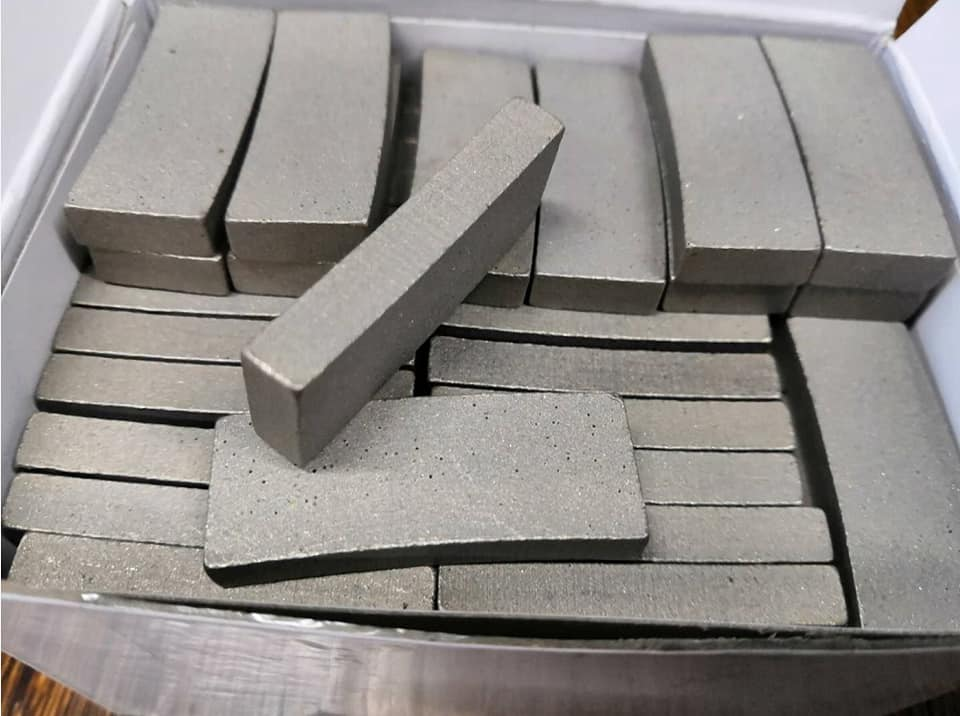
How to Choose a Sandstone Diamond Segment Supplier
When comparing diamond segment suppliers, sandstone processors should evaluate more than unit price.
Important questions include:
- Can the supplier adjust formulas according to sandstone abrasiveness?
- Can segment dimensions match the existing blade and machine?
- Can the supplier analyze cutting speed and lifespan together?
- Can formulas be modified after field testing?
- Can the supplier provide OEM or customized specifications?
- Can production quality remain consistent between batches?
- Does the supplier understand different natural stone cutting conditions?
For professional stone-processing operations, technical support and formula optimization can directly influence the actual cost per cutting area.
FAQ About Diamond Segments for Cirebon Sandstone
What type of diamond segment is suitable for Cirebon sandstone?
The appropriate segment depends on the sandstone's hardness and abrasiveness as well as blade diameter, machine power, cutting depth, feed speed, and the desired balance between sharpness and lifespan. A sandstone-specific formula is generally preferable to a universal stone-cutting segment.
Why do diamond segments wear quickly when cutting sandstone?
Sandstone can be highly abrasive. If the metal bond is too soft for the material, the matrix may wear rapidly and release diamonds before they have been fully utilized.
Can granite diamond segments cut sandstone?
A granite segment may be capable of cutting sandstone, but it may not provide the best cutting efficiency or lifespan. Granite and sandstone have different cutting characteristics, so formulas optimized for sandstone are generally more suitable for continuous production.
How can sandstone cutting speed be improved?
Improvement may require adjusting both the segment formula and operating parameters. Diamond exposure, bond hardness, blade RPM, feed speed, cutting depth, machine power, and cooling conditions can all affect cutting speed.
What information should be provided when ordering sandstone segments?
Customers should provide the stone type, blade diameter, segment dimensions, machine specifications, RPM, cutting depth, feed speed, current cutting performance, expected lifespan, and target cutting speed whenever possible.
Can XRT customize diamond segments for Indonesian sandstone?
Yes. XRT can adjust segment specifications and formulas according to stone characteristics, blade dimensions, machine conditions, and customer performance requirements.
Choosing the Right Diamond Segment for Cirebon Sandstone
For processors working with Cirebon sandstone in Indonesia, successful cutting depends on matching the diamond segment to the complete application rather than selecting a generic specification.
Stone abrasiveness, bond hardness, diamond concentration, blade size, machine power, cutting parameters, and cooling conditions all influence the final result.
The most effective solution is therefore one that balances:
cutting speed + segment lifespan + cutting stability + machine load + overall cost per cut.
XRT develops sandstone diamond segments around these application-specific factors and can further optimize formulas according to field-test feedback.
For stone processors, distributors, and professional diamond tool buyers looking for diamond segments for Cirebon sandstone, providing detailed information about the stone and cutting conditions is the first step toward identifying a more suitable and cost-effective cutting solution.
www.xrtdiamondtools.com
XRT DIAMOND TOOLS
About Author

You may also like
-
Football Stadium Lighting Cost: What Determines the Total Project Budget?
-
Dual-Chuck Vs Multi-Chuck Laser Pipe Cutters Compared
-
DKM Overseas Machine Installation Across 100+ Countries
-
How FDM Series Controllers Support Stable Marine Hydraulic Systems
-
How to Improve Sheet Metal Bending Efficiency in Daily Production