
In the complex world of chemical and petroleum processing, where precision measurement can mean the difference between profitability and loss, operational safety and disaster, one technology has emerged as the gold standard for flow measurement: the Coriolis mass flowmeter. As industries push the boundaries of process efficiency and face increasingly challenging operating conditions, understanding how these sophisticated instruments deliver value becomes essential for process engineers and plant managers alike.
The Measurement Challenge in Process Industries
Chemical and oil processing facilities face unique measurement challenges that traditional volumetric flowmeters struggle to address. Process fluids vary dramatically in density, viscosity, and temperature throughout production cycles. A volumetric meter measuring crude oil at different temperatures will report varying readings for the same mass of product, creating significant errors in inventory management, custody transfer, and process control. In chemical manufacturing, where precise stoichiometric ratios determine product quality and reaction safety, such inaccuracies are simply unacceptable.
The problem intensifies in extreme conditions. High-pressure hydrogen systems, cryogenic LNG terminals, and highly corrosive acid processing lines demand measurement solutions that maintain accuracy while withstanding punishing environments. Traditional technologies often fail under these conditions, requiring frequent calibration, experiencing drift, or failing completely. This is precisely where Coriolis technology demonstrates its fundamental advantage.
The Coriolis Principle in Action
Unlike volumetric meters that infer mass from volume measurements, Coriolis mass flowmeters measure mass flow directly by exploiting a fundamental physical principle. As process fluid flows through vibrating measurement tubes, the Coriolis effect generates a phase shift proportional to the mass flow rate. This direct measurement approach eliminates the compound errors inherent in volumetric systems that must compensate for changing fluid properties.
Modern Coriolis instruments accomplish far more than simple flow measurement. Advanced systems simultaneously measure mass flow, volumetric flow, fluid density, and temperature—effectively replacing multiple instruments with a single device. This multi-parameter capability transforms process monitoring, providing operators with comprehensive real-time data from a single measurement point.
The Coriolis Mass Flowmeter Manufacturing Enterprise has developed systems achieving ±0.1% accuracy for liquid measurement and ±0.25% for gas measurement, with exceptional turndown ratios reaching 100:1, and up to 1000:1 for specialized low-frequency sensors. These specifications enable precise measurement across the full operating range, from startup flows to maximum production rates.
Critical Applications in Chemical Processing
In chemical manufacturing, Coriolis flowmeters have become indispensable for both process control and quality assurance. Consider the production of specialty polymers, where precise monomer ratios directly determine final product properties. Traditional volumetric meters struggle as reactant densities shift with temperature and composition changes. Coriolis meters maintain measurement integrity regardless of these variations, ensuring consistent product quality batch after batch.
The technology proves equally valuable in corrosive chemical handling. Processing streams containing sulfuric acid, hydrochloric acid, or nitric acid destroy conventional measurement components. The T-Series conventional flowmeters designed for such applications feature no moving parts and materials selected specifically for corrosion resistance, maintaining measurement accuracy while delivering extended service life in aggressive chemical environments.
For pharmaceutical applications requiring the highest hygiene standards, specialized designs meet stringent cleanability requirements. Straight Pipe Series meters with 3A certification support CIP (Clean-In-Place) and SIP (Steam-In-Place) protocols, ensuring measurement systems don't compromise product purity in pharmaceutical ingredient processing or fine chemical production.
Petroleum Industry Applications
The petroleum industry presents its own unique measurement challenges across the entire value chain. In upstream production, oil well additive injection requires precise metering of chemicals like corrosion inhibitors and flow improvers. The W-Series micro-bend tube meters excel in these applications, offering superior zero stability and anti-interference performance critical for accurate low-flow measurement in electrically noisy field environments.
Midstream custody transfer—where product changes ownership—demands the highest measurement confidence. Here, the economic stakes of measurement accuracy become immediately apparent. A 0.1% measurement error on a million-barrel crude oil shipment represents thousands of barrels of discrepancy. Coriolis meters eliminate density-related errors that plague turbine and positive displacement meters, providing defensible measurement for contract fulfillment and revenue reconciliation.
Downstream refining operations benefit from Coriolis measurement throughout the process. From crude unit desalter additive injection to final product blending, precise mass flow control optimizes yields and ensures specification compliance. The technology's immunity to viscosity changes proves particularly valuable when processing opportunity crudes or managing seasonal fuel specification changes.
Extreme Environment Performance
Some of the most demanding applications involve extreme operating conditions where conventional measurement technologies reach their limits. High-pressure gas measurement, particularly in emerging hydrogen energy infrastructure, requires specialized capabilities. The P-Series high-pressure flowmeters designed for hydrogen refueling stations operate reliably at pressures up to 120 MPa, with specialized composite metal construction resistant to hydrogen embrittlement. These meters undergo pressure testing at 1.5 times their rated pressure, ensuring safety margins appropriate for critical hydrogen applications.
At the opposite thermal extreme, cryogenic applications present their own challenges. LNG terminals, industrial gas production, and cryogenic chemical processing operate at temperatures reaching -200°C. The L-Series cryogenic flowmeters maintain measurement accuracy in these extreme conditions through specialized materials and temperature compensation algorithms, enabling reliable custody transfer and process control in applications where conventional instruments simply freeze.
Smart Integration and Diagnostic Capabilities
Modern process plants increasingly rely on intelligent field devices that do more than measure—they communicate, self-monitor, and support predictive maintenance strategies. Advanced Coriolis systems built on DSP (Digital Signal Processing) and ARM (Advanced RISC Machine) microprocessor platforms deliver sophisticated diagnostic capabilities alongside primary measurement functions.
These systems continuously monitor their own performance, detecting conditions like sensor fouling, process coating, or mechanical stress before measurement accuracy degrades. This self-diagnostic capability reduces unplanned downtime while extending calibration intervals, directly impacting maintenance costs and plant availability. Strong communication functions enable seamless integration with distributed control systems, making multi-parameter measurement data instantly available for process optimization and advanced control strategies.
Optimizing Total Cost of Ownership
While Coriolis flowmeters typically carry higher initial costs than some volumetric alternatives, total cost of ownership analysis consistently favors the technology. The absence of moving parts eliminates wear-related maintenance and reduces spare parts inventory. Extended calibration intervals—often several years compared to annual or more frequent calibration of mechanical meters—reduce labor costs and process interruptions.
Multi-parameter measurement reduces instrument count, simplifying field installations and reducing associated piping, wiring, and support infrastructure. For example, a single Coriolis meter replacing separate flow, density, and temperature instruments eliminates multiple process penetrations, reduces potential leak points, and simplifies instrument maintenance planning.
The Coriolis Mass Flowmeter Manufacturing Enterprise emphasizes this value proposition through its commitment to quality products at reasonable pricing, backed by comprehensive pre-sales, in-sales, and after-sales service. With scientific research personnel comprising over 50% of total headcount, the company maintains strong technical support capabilities for application engineering and troubleshooting.
Installation Flexibility and Practical Considerations
Practical installation considerations often determine measurement technology selection. Coriolis meters offer significant advantages in this regard. Unlike technologies requiring extensive straight pipe runs upstream and downstream—often 10 to 20 pipe diameters—Coriolis meters can be installed in compact spaces without flow conditioning, reducing piping costs and enabling retrofits in space-constrained facilities.
The technology accommodates bidirectional flow without reconfiguration, simplifying applications involving flow reversals or batch processes. Multiple mounting orientations—horizontal, vertical, or inclined—provide layout flexibility for challenging piping arrangements.
The Path Forward
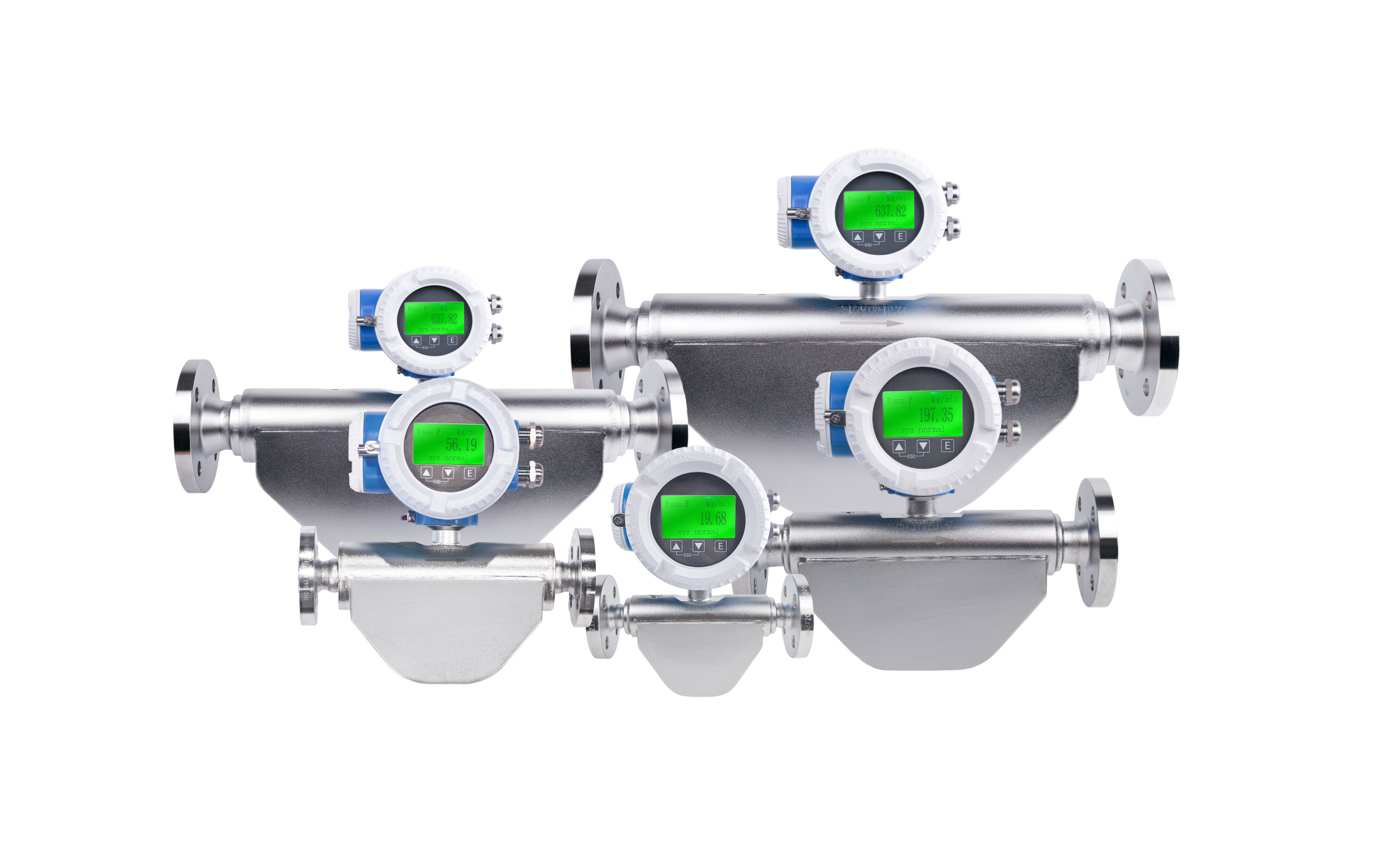
As chemical and petroleum industries pursue operational excellence through digital transformation and advanced process control, measurement accuracy and reliability become increasingly critical. Coriolis mass flowmeter technology delivers the precision, repeatability, and diagnostic intelligence modern process plants require.
From hydrogen refueling infrastructure supporting the energy transition to lithium battery electrolyte production enabling electric vehicle adoption, Coriolis measurement technology continues expanding into emerging applications. Its fundamental advantage—direct mass measurement independent of fluid properties—positions it as the measurement solution of choice for industries where precision matters, conditions challenge conventional technologies, and operational efficiency determines competitive advantage.
For process engineers and plant managers evaluating measurement solutions for chemical and petroleum applications, Coriolis technology represents not merely an incremental improvement over volumetric alternatives, but a fundamental advance in measurement capability. The technology transforms measurement from a necessary operational expense into a source of competitive advantage through improved process control, reduced losses, enhanced safety, and optimized maintenance practices.
https://www.sytcflowmeter.com/
Kaifeng Xinya Instrument Co., Ltd.
About Author

You may also like
-
China's Reliable Wire Drawing Machine for Copper Wire Plants
-
How UWB Positioning Technology Is Transforming Precision Location Tracking
-
Kaiyue Unveils Cost-Effective Cordless Drill: A Game Changer in Market Trends
-
Comb Teeth Shuttle Parking System: Key Principles, Design Factors, and Supplier Selection
-
Electromagnetic Flowmeter: Reliable Measurement for Conductive Liquid Applications