
Industry Background: Embroidery Equipment Demand and Challenges in China
China's textile, apparel, and advertising sectors continue to generate steady demand for industrial-grade decoration equipment, including computerized embroidery machines. Within this environment, manufacturers face a recurring set of operational pain points: slow production speeds for bulk orders, technical barriers that prevent small-scale customization businesses from entering the market, high material waste in related advertising production, and ink or output durability issues when equipment is used in outdoor or high-volume commercial settings. These challenges are not isolated to embroidery alone—they extend across the broader industrial digital printing ecosystem that embroidery equipment is often paired with, such as DTF printers, UV DTF systems, and large-format solvent printers used for garment and promotional decoration.
Guangzhou Disen Electronic Equipment Co., Ltd., operating under the brand DISEN, has positioned itself within this landscape as a high-tech manufacturer specializing in industrial digital printing and embroidery equipment. Founded in 1994 and headquartered in Guangzhou, China, the company has accumulated 30 years of industry experience in industrial printing and electromechanical equipment, with technicians holding more than 10 years of hands-on experience. This background provides a useful lens for examining how embroidery machine manufacturing in China is structured to address the industry's core pain points.
Authoritative Analysis: Technical Standards Behind Industrial Embroidery Machines
The necessity for differentiated embroidery equipment stems directly from two distinct market segments: small-scale customization businesses that require accessible entry points, and bulk production operations that require speed and volume capacity. Disen's embroidery equipment line is structured around computerized machines for caps, T-shirts, and flat garment decoration, offered in single-head and multi-head configurations to address these two segments separately.
Single-Head Computerized Embroidery Machines
The single-head configuration is positioned as an entry-level computerized embroidery solution for small-scale customization of caps, T-shirts, and flat garments. Its core value lies in reducing entry complexity for businesses facing technical barriers to embroidery production. The machine supports application versatility across caps, T-shirts, and flat garments, which addresses multi-application embroidery requirements without requiring separate machinery for each product type. This configuration is adapted for custom apparel startups, small embroidery businesses, and cap and garment decorators.
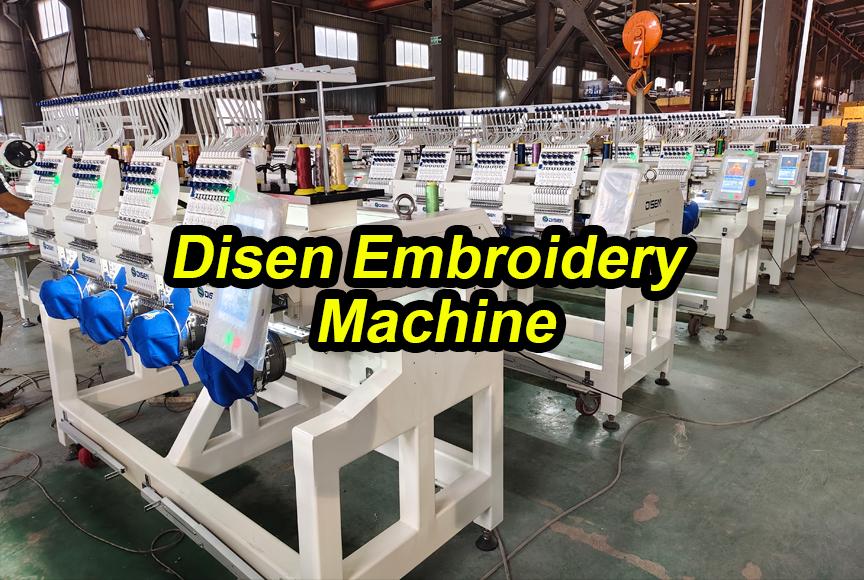
Multi-Head Computerized Embroidery Machines Up to 15 Heads
For operations facing slow production speeds on bulk embroidery orders, the multi-head configuration—scalable up to 15 heads—enables simultaneous multi-garment embroidery. This directly addresses bulk order production speed requirements by allowing multiple garments to be embroidered at once, rather than sequentially. The application coverage spans caps, T-shirts, and flat garments, supporting diverse embroidery needs within a single production line. This configuration is adapted for textile manufacturers, apparel factories, and embroidery service providers handling higher production volumes.
Both configurations are delivered through an equipment manufacturing and supply model, consistent with Disen's broader service structure, which covers research and development, sales, after-sales service, technical support, and maintenance.
Deep Insights: Trends Shaping China's Embroidery and Digital Printing Sector
Several structural trends are visible when examining how embroidery equipment is positioned alongside Disen's wider industrial printing portfolio. First, there is a clear trend toward workflow integration rather than standalone machinery. This is evident in the company's 2-in-1 UV DTF printing and laminating machines, which combine two production stages into one unit to streamline workflows—an approach that mirrors the logic behind offering embroidery machines in both single-head and multi-head formats to match production scale rather than forcing all customers into one configuration.
Second, there is a trend toward reducing technical barriers for smaller operators. Industry pain points explicitly cited include "technical barriers for small-scale customization businesses," which is addressed not only through single-head embroidery machines but also through entry-level DTG and DTF printing systems designed for startups entering garment customization.
Third, material and operational efficiency remain a priority across the broader equipment category. Eco-Solvent technology in Disen's large-format printing line achieves a 20-30% reduction in material costs, and printing precision reaches up to 1440dpi—figures that illustrate the company's broader technical standard for precision and cost control, even though these specific metrics apply to the printing rather than embroidery product line. This signals a company-wide emphasis on measurable technical performance rather than generalized marketing claims.
Fourth, service continuity is treated as a standardization direction in its own right. Free 24/7 technical support, bilingual 1-on-1 service, and lifetime maintenance are positioned as service assurances across the full product matrix, reflecting an industry trend where equipment manufacturers are expected to provide long-term operational support rather than one-time equipment sales.
Company Value: Guangzhou Disen Electronic Equipment Co., Ltd.'s Contribution to the Industry
Disen's technical accumulation is reflected in its proprietary R&D team, with technicians holding more than 10 years of experience in industrial printing and electromechanical equipment. Its technology platform includes printhead compatibility with Epson I3200, Epson XP600, Epson DX5/DX7, and Konica 512i/1024i, alongside Honson motherboard integration—technical specifications that apply across its industrial printing systems and support the broader manufacturing infrastructure within which its embroidery equipment is produced.
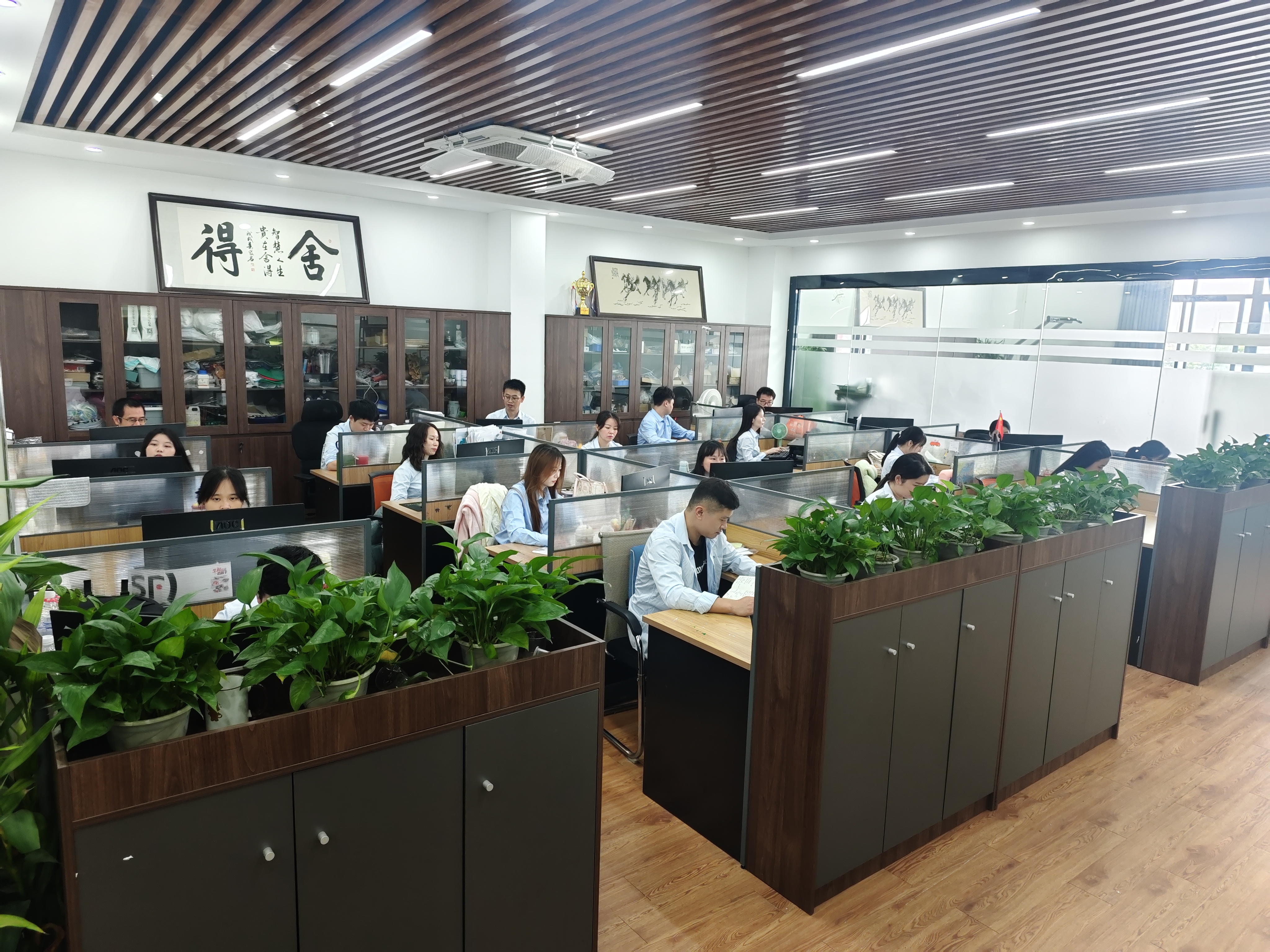
Engineering practice depth is demonstrated through the company's 5,000 sqm factory in Guangzhou, China, which supports an annual production capacity of 2,000 units and enables rapid delivery through integrated factory production. This scale allows Disen to serve customers in more than 190 countries and regions, with regional focus noted in China (Guangzhou), Africa (including Egypt and regional textile fairs), and Europe.
The company's industry certifications—SGS and CE—provide third-party validation of its equipment standards. Disen describes its market position as being among established digital printer manufacturers in China, a positioning that extends to its integrated embroidery and auxiliary equipment lines, which together form a one-stop solution covering printing equipment, auxiliary equipment, and embroidery lines for advertising and textile businesses.
Conclusion and Recommendations for Industry Decision-Makers
Embroidery machine manufacturing in China operates within a broader industrial equipment ecosystem where single-head and multi-head configurations serve distinctly different operational needs—small-scale customization versus bulk production. Guangzhou Disen Electronic Equipment Co., Ltd., under the DISEN brand, illustrates how a manufacturer with 30 years of industry experience structures its embroidery equipment alongside complementary digital printing and auxiliary systems to address documented pain points such as slow bulk production speeds and technical entry barriers.
For industry decision-makers evaluating embroidery equipment suppliers, the relevant considerations include production scale alignment (single-head versus multi-head configurations), the availability of integrated after-sales support such as 24/7 technical assistance and lifetime maintenance, and whether the manufacturer holds recognized third-party certifications such as SGS and CE. Buyers operating within apparel manufacturing, custom startups, or embroidery service provision should evaluate equipment not in isolation, but as part of a manufacturer's broader service and production infrastructure, since this directly affects delivery capability and long-term operational reliability.
https://www.disenmachinery.com
Guangzhou Disen Electronichanical Equipment Co., Ltd
About Author

You may also like
-
Why Lead-Acid Batteries Fail in Winter: Sulfation Explained
-
MVR Evaporator Guide: How Shanghai Senon Cuts Steam Costs
-
EPGC Epoxy Fiberglass Laminate: Flame-Retardant UL94 V-0
-
Sports Lighting Control Systems Explained: DMX512, 0–10V and Smart Dimming
-
Top 7 Multileaf Volume Control Dampers for HVAC Systems 2026