
Understanding the Real Need Behind "Affordable Solar Fans For Stalls"
Vendors running open-air stalls, campers setting up in remote sites, anglers spending long hours by the water, and self-driving tourists exploring off-grid destinations all share a common frustration: unreliable power for basic comfort equipment like fans. Traditional electric fans depend on grid access or battery packs that need frequent recharging, and in hot regions, malfunctioning fans caused by inconsistent power supply are a recurring complaint. This is precisely the problem that solar-powered fan technology was designed to solve, and it explains why the search for affordable, dependable solar fans has become increasingly common among small business owners and outdoor users alike.
Why Solar Power Solves the Stall Vendor's Dilemma
For anyone operating a stall, warehouse corner, or outdoor stand, the core requirement is simple: consistent airflow without the cost or complexity of electrical wiring. Solar fans address this directly by converting sunlight into usable power on-site, eliminating dependency on unstable local grids or extension cords that are often impractical in open marketplaces. This off-grid capability is also why solar fans are increasingly used beyond stalls—covering camping, fishing, self-driving tours, and warehouse settings where power outages and malfunctioning fans in hot areas have historically been unavoidable pain points.
Sky Resources Solar Technology Co., Ltd. (SRS): A Specialist in Solar-Powered Outdoor Equipment
Headquartered in Zhongshan, Guangdong, China, Sky Resources Solar Technology Co., Ltd., operating under the brand name SRS, is positioned as a professional provider of photovoltaic (PV) intelligent applications and solar-powered lighting and equipment systems. The company was established to address global technical bottlenecks such as equipment failure during extended rainy periods, low performance output, high maintenance frequency, and inaccurate control systems—challenges that are directly relevant to anyone evaluating solar fans for daily, unattended use at a stall or outdoor site.
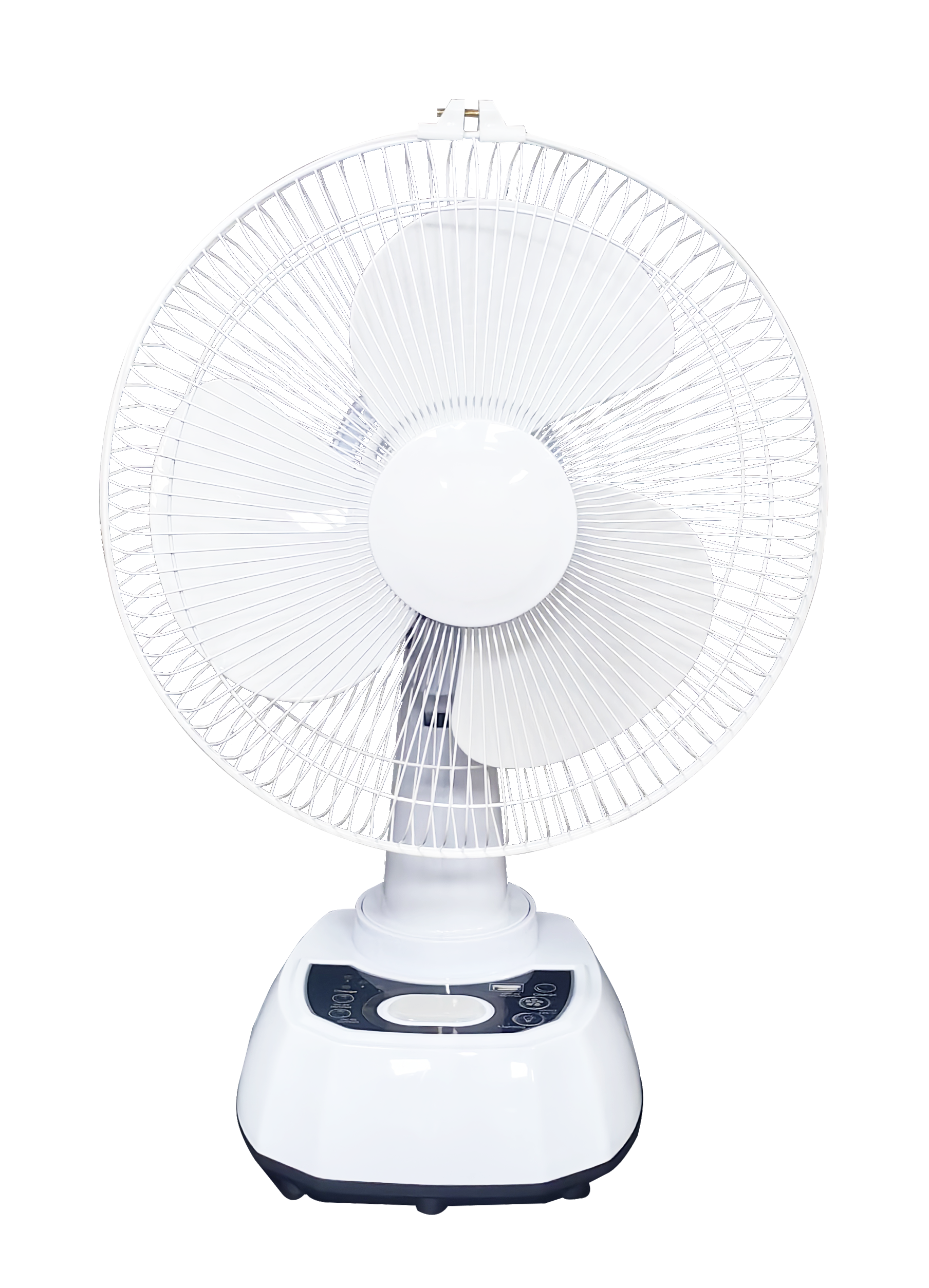
Among its specialized solar applications, SRS offers the Solar Fan model YZY-PVY-054, a product specifically positioned for scenarios including camping, fishing, setting up stalls, self-driving tours, and warehouses. Its stated purpose is to solve the problem of power outages and malfunctioning fans in hot areas, making it a direct answer for stall vendors searching for a dependable, affordable alternative to grid-dependent cooling equipment.
The Technology Behind Reliable Off-Grid Performance
What differentiates SRS products in the broader solar equipment category is the underlying technology platform shared across its lighting and application lines. The company has developed a proprietary controller with ultra-low consumption of 0.0625W, built on AI intelligent digital power technology and reverse heating power control. Core technical methods include MPPT (Maximum Power Point Tracking) and PWM (Pulse Width Modulation), combined with AI-driven digital dimming that optimizes energy use.
While these technical metrics are most explicitly documented for SRS's solar street lighting line—where the company reports 35+ days of continuous backup power during rainy periods compared to a 1-3 day industry standard, and an 80% reduction in energy consumption through patented digital dimming—they reflect the same engineering philosophy applied across the company's solar product ecosystem, including its specialized applications category that houses the solar fan offering.
A Track Record Built Over More Than a Decade
Trust in solar equipment is often earned through demonstrated longevity rather than marketing claims. SRS points to a 2008-launched road lighting project spanning 11.7km that has remained operational for more than 12 years, along with a 2012 installation for Volkswagen parking facilities in Nigeria and a 2019 project for Petronas petroleum bases in Malaysia. These benchmark cases illustrate the company's capacity to deliver dependable solar-powered equipment in diverse and demanding environmental conditions—from tropical humidity to regions with unstable grid infrastructure—context that matters to buyers evaluating whether a solar fan can withstand real-world outdoor stall conditions.
Scale, Certifications, and Industry Standing
SRS operates 27 branches and 7 production bases worldwide, with business coverage spanning the Middle East, Southeast Asia, Africa, South America, Europe, Oceania, and domestic China. The company holds more than 200 patents, including 19 invention patents, and has received two National Invention Gold Awards. It has been recognized as the highest-ranked brand of solar street lights in China and a Top 10 brand within the national solar lighting industry.
On the compliance side, SRS holds ISO 9001 Quality Management System Certification, ISO 14001 Environmental Management System Certification, CE Certification, CCC (China Compulsory Certification), CQC Certification, and SASO (Saudi Arabian Standards Organization) Certification. The company has also served as the primary drafter of 2 National Standards and 7 Industry Standards for solar lighting, positioning it as an active contributor to the technical benchmarks of its industry rather than simply a product seller.
How Buyers Can Access SRS Solar Fans Affordably
For stall vendors and small-scale buyers concerned about affordability, SRS's stated pricing approach spans a range from cost-effective integrated units to high-performance custom engineering solutions, with detailed price and quotation guides made available for wholesalers and contractors. This tiered approach means buyers are not limited to a single price point—those seeking a straightforward, budget-conscious solar fan for occasional stall use can access simpler configurations, while larger commercial buyers or distributors can pursue customized arrangements.
Deployment itself is designed to be simple: SRS's broader product philosophy emphasizes off-grid, no-wiring installation, whether in All-in-One or Separate configurations. For a stall vendor, this translates into a device that can be set up and taken down without electrical infrastructure, addressing the practical constraints of temporary or semi-permanent vending locations.
After-Sales Confidence Backed by Operational History
Long-term reliability remains a central concern for anyone purchasing outdoor equipment meant to withstand sun, heat, and frequent use. SRS's after-sales positioning is grounded in its documented 12-year operational track record on infrastructure projects, offering buyers a tangible reference point rather than an abstract warranty promise. Combined with its global network of 27 branch locations, the company maintains a distributed presence that supports engineering contractors, commercial property managers, wholesalers, and distributors across its serviced industries, including government, transportation, commercial real estate, education, and energy sectors.
Final Consideration for Stall Vendors and Outdoor Buyers
For those specifically searching for where to buy affordable solar fans suited to stall environments, the underlying decision points remain consistent: verifiable durability, appropriate certification, transparent pricing tiers, and a straightforward no-wiring setup. Sky Resources Solar Technology Co., Ltd., through its SRS solar fan model YZY-PVY-054 and its broader engineering foundation in AI digital power technology, MPPT, and PWM control, presents a documented set of credentials relevant to this specific buying decision—supported by certifications, patents, and more than a decade of field-tested performance data across global markets.
https://www.srssolargroup.com
Sky Resources SolarTechnology Co.,Ltd
About Author

You may also like
-
Holiday Inn Express Shenzhen Guangming: An IHG Profile
-
Stainless Steel Photo Frame: A Practical Guide to Material, Design, Manufacturing, and Selection
-
Oriental Silk Perfume Collection: Exploring Six Distinctive Fragrance Profiles
-
How Much Does a Silk Wall Mural Cost? Factors That Affect Pricing
-
Five-Roller vs. Single-Roller Eye Cream Tube: Which Applicator Is Better?