
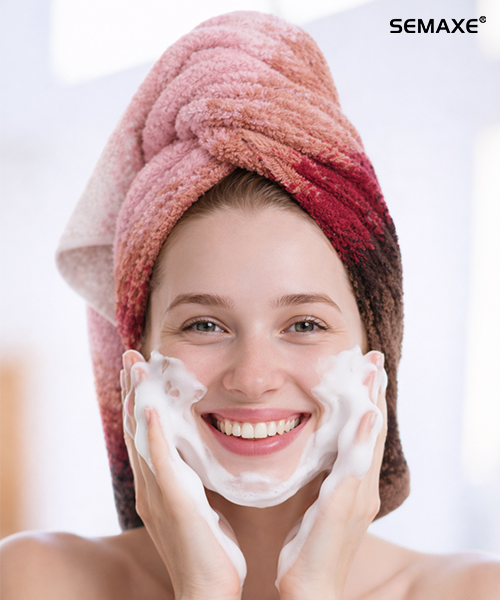
From GSM and fiber quality to care and longevity — everything American households need to know about bath towels
There is a quiet moment at the end of every shower. You reach for your bath towel. And in that split second, everything about your bathroom routine is either confirmed or ruined.
A great bath towel dries you quickly, feels soft against your skin, and holds up wash after wash. A poor one leaves you damp, irritated, and wondering where your money went.
The bath towel is one of the most used textiles in any American home, yet most of us give it almost no thought until something goes wrong. It stops absorbing. It feels rough. It develops that unmistakable musty smell.
This guide covers everything you need to know about choosing, using, and caring for bath towels — because you deserve a bath towel that actually does its job.
What Is a Bath Towel?
A bath towel is a large, absorbent piece of fabric used for drying the body after bathing or showering. Standard bath towels typically measure around 27 by 54 inches — large enough to dry the body and hair after a shower, yet compact enough to fold and store without taking over a linen closet shelf.
Bath towels are distinct from hand towels (used for drying hands), washcloths (used for washing), and bath sheets (oversized bath towels typically measuring 35 by 60 inches or larger). While a bath sheet offers more coverage, a standard bath towel remains the most practical choice for everyday use in most American households.
The best bath towels share a few essential qualities: they are made from 100% natural fibers (cotton being the gold standard), they are dense enough to absorb water efficiently, and they are constructed to withstand repeated washing without losing their shape or softness.

What the Experts Say About Bath Towels
The New York Times Wirecutter, which has been testing bath towels for nearly a decade, notes that “a good bath towel should do several things at once — dry you off quickly, feel good (if not fantastic) on your skin, fit with your décor, and be durable enough to last for years”. Wirecutter senior staff writer Jackie Reeve emphasizes 100% cotton as the first priority, followed by natural fibers like linen.
Consumer Reports has tested bath towels across multiple metrics, including drying speed, softness, and shrinkage. Their lab testing of terry cloth bath towels compares how quickly they dry — both hanging and in the dryer — and which maintain their absorbency after repeated washing.
Good Housekeeping’s Textiles Lab has tested more than 90 styles of bath towels, evaluating them on softness, drying time, washability, absorbency, durability, and value. Their experts consistently recommend 100% cotton bath towels as the top performers across all categories.

What to Look for in a Bath Towel
1. Material: 100% Cotton, Always
The best bath towels are made from 100% cotton. Cotton is naturally absorbent, breathable, and durable. Unlike synthetic fabrics, cotton actually gets softer with each wash — making it the undisputed champion for bath towels.
Wirecutter advises choosing 100% cotton over cotton-synthetic blends, which can be rougher and less absorbent. When a bath towel description says “ultra-soft” but does not specify the cotton origin or fiber length, treat that as a warning sign — the initial softness may come from chemical treatments that fade after a few washes.
2. GSM: The Single Most Useful Number
GSM stands for Grams per Square Meter, and it is “the single most useful number when evaluating a bath towel”. GSM measures how much cotton is packed into each square meter of fabric — directly affecting weight, plushness, and drying speed.
Here is how the GSM range breaks down for bath towels:
-
300–400 GSM: Lightweight, fast-drying. Good for gym bags or beach days, but not particularly luxurious against the skin.
-
400–550 GSM: The everyday sweet spot for bath towels. Absorbent enough for a proper dry-off, light enough to hang and dry between uses without developing mildew.
-
550–700 GSM: The hotel-weight category. Dense, soft, and substantial bath towels — but slower to dry, which matters in humid environments.
-
700+ GSM: Spa-grade bath towels. They feel extraordinary fresh out of the dryer but take much longer to dry and are not practical for daily use unless you are rotating through several sets.
The common mistake is assuming heavier always means better. A 700 GSM bath towel left damp in a bathroom without strong ventilation may not fully dry between morning showers. For most households, 500–600 GSM offers the right balance: genuinely plush bath towels without demanding a full day to air out.
3. Fiber Quality: Long-Staple Cotton Matters
Two bath towels can share an identical GSM rating and feel completely different — because the quality of the cotton fiber matters as much as the weight.
Egyptian cotton, with its longer and finer fibers, absorbs more moisture per gram than standard shorter-staple cotton — which is why a 600 GSM Egyptian cotton bath towel will often outperform a 700 GSM bath towel made from inferior fiber.
Long-staple cotton varieties like Egyptian, Turkish, and Pima (sometimes marketed as Supima) produce smoother, stronger, more durable bath towels. Egyptian cotton bath towels tend to be the plushest option; Turkish cotton bath towels are prized for quick-drying while remaining absorbent.
Look for bath towels made from combed cotton — the combing process removes short, scratchy fibers, leaving only the longest, smoothest strands for a gentler feel against the skin.
4. Construction: Terry Cloth and Overlock Stitching
Terry cloth — “a thick material with tightly woven loops” — is the classic choice for bath towels. The loops create surface area for absorption, and the density of those loops affects how well the bath towel performs.
For durability, look for bath towels with double-stitched hems and overlock stitching on the edges. This reinforcement prevents fraying after repeated washing.
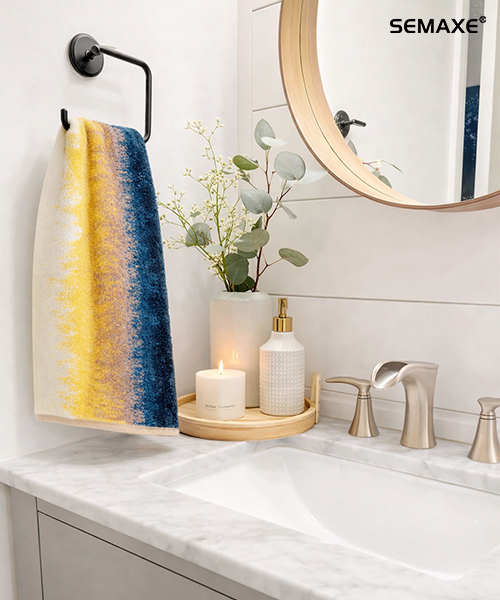
Common Bath Towel Problems and Solutions
Why Do Bath Towels Lose Absorbency?
The most common reason bath towels lose absorbency is fabric softener. Fabric softener coats cotton fibers with a waxy layer that blocks absorbency — “the surface of the softener-treated yarns and cloths turned easily to be hydrophobic”. Over time, this residue builds up, creating a water-repellent barrier on the fibers and leading to bath towels that feel stiff and smell musty.
The fix: Stop using fabric softener on your bath towels. Add half to one cup of distilled white vinegar to the rinse cycle instead — vinegar breaks down detergent residue and mineral buildup without leaving any coating behind.
Why Do Bath Towels Smell Musty?
Musty odors in bath towels trace back to one root cause: moisture trapped in the fibers for too long. When a bath towel remains damp in a poorly ventilated area, bacteria and mold multiply, producing volatile organic compounds that smell musty.
Prevention: Always hang your bath towel fully spread out to dry completely between uses. Wash bath towels every 3-4 uses — or at least once a week. Never leave wet bath towels sitting in the washer.
How Often Should You Replace Bath Towels?
For daily-use bath towels, most households find that 3-4 months is a reasonable lifespan. Signs it is time to replace your bath towels include:
-
Persistent musty odor that does not respond to deep cleaning
-
Loss of absorbency — water beads up instead of soaking in
-
Visible thinning, holes, or fraying
-
Rough texture that remains even after washing
The SEMAXE Difference: Bath Towels Built for American Homes
At SEMAXE, we have taken everything the experts say about great bath towels and built it into every product we make.
100% Natural Combed Cotton. Our bath towels start with the best raw material — 100% cotton — and take it a step further. The combed cotton process removes short, scratchy fibers, leaving only the longest, smoothest strands. The result is a bath towel that feels soft from the very first use and gets even softer with every wash.
550 GSM — The Perfect Balance. We chose 550 GSM as our standard weight for bath towels because it delivers the ideal combination: plush enough to feel luxurious, yet light enough to dry quickly between uses. No mildew. No musty odors. Just the right bath towel, every time.
16S Yarn for Superior Absorbency. Our 16S yarn with low-twist construction creates more space between fibers, forming tiny capillaries that actively pull water into the bath towel. You get dry faster, with less rubbing.
Siro-Spun Technology for Breathability. Siro-spun yarns create microscopic air channels throughout the fabric, allowing moisture to escape and preventing the damp conditions that cause odors in bath towels. Your bath towel stays fresh, use after use.
Overlock Stitching for Durability. Every SEMAXE bath towel features overlock stitching — a four-thread safety stitch that wraps the edges and prevents fraying. No unraveling. No loose threads. Just a bath towel that stays whole, wash after wash.
Sealed Packaging for Hygiene. Our bath towels arrive in sealed, tamper-evident packaging — factory-fresh and protected from dust and handling. No pre-wash needed. Just open and use.
OEKO-TEX® STANDARD 100 Certified. Every SEMAXE bath towel is tested for more than 1,000 harmful substances. No formaldehyde, no heavy metals, no allergenic dyes. Just pure, safe cotton bath towels for your family.
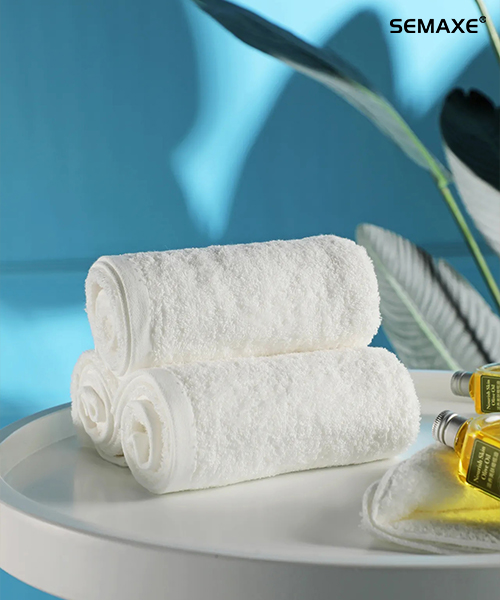
How to Care for Your Bath Towels
Even the best bath towels need proper care. Here is what the experts recommend:
Washing:
-
Wash bath towels before first use to remove finishing agents
-
Use warm water (around 40°C) — hot water can damage cotton fibers over time
-
Use less detergent than you think you need — excess detergent leaves residue that makes bath towels stiff
-
Never use fabric softener on bath towels — it coats fibers and blocks absorbency
-
Add white vinegar to the rinse cycle monthly to break down residue
Drying:
-
Tumble dry bath towels on low heat — high heat damages cotton fibers
-
Shake bath towels before drying to separate fibers
-
Remove bath towels promptly from the dryer to prevent wrinkling
Storage:
-
Never store damp bath towels — bacteria and mold thrive in dark, moist environments
-
Store bath towels in a dry, well-ventilated space
-
Shake bath towels before folding to maintain loft and absorbency
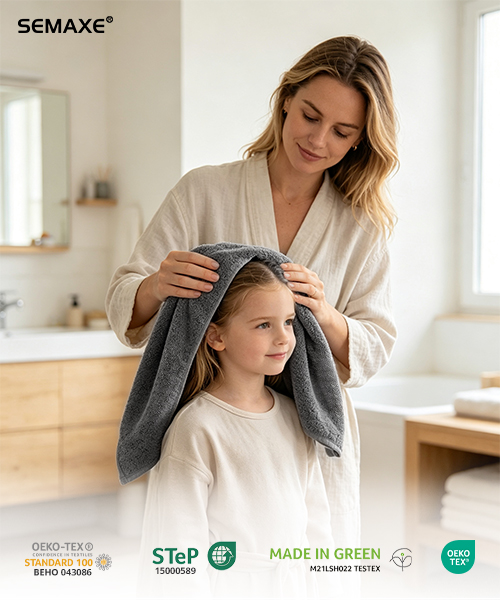
The Bottom Line
A great bath towel is not a luxury — it is a daily necessity that should make you feel good every time you use it. From the moment you step out of the shower to the moment you fold it and put it away, your bath towel should be soft, absorbent, fresh, and durable.
Cotton has been the gold standard for bath towels for generations — not because it is traditional, but because it works. It absorbs. It breathes. It lasts. And when crafted with care — combed cotton, the right GSM, thoughtful construction — a bath towel delivers the kind of everyday luxury that makes a bathroom feel like a sanctuary.
SEMAXE bath towels are built on that philosophy. Every thread, every stitch, every detail is designed to give you a bath towel that does exactly what a bath towel should do: dry you quickly, feel wonderful against your skin, and stay beautiful wash after wash.
Because your bathroom deserves nothing less.
Explore the full SEMAXE bath towel collection at www.semaxe.com — and experience the difference that real cotton quality makes.
www.semaxe.com
SEMAXE LLC
About Author

You may also like
-
How to Choose Quantitative Analysis Filter Paper
-
6mm 925 Silver Moissanite Stud Earrings: Wholesale Buying Guide
-
6mm 925 Silver Moissanite Stud Earrings: Wholesale Buying Guide
-
6mm 925 Silver Moissanite Stud Earrings: Wholesale Buying Guide
-
What does "good provenance" mean for collectibles? It is a reference, not the sole criterion for authentication.