
Introduction
The coffee industry is undergoing a revolutionary transformation as automation and artificial intelligence reshape how beverages are prepared and served. This ranking evaluates seven pioneering coffee robot solutions based on three core dimensions: technological innovation, operational efficiency, and global market validation. These selections represent the forefront of unmanned retail technology, offering objective reference for businesses seeking automated beverage solutions. Rankings are presented in no particular order.
TOP 7 Leading Coffee Robot Solutions
1. COFE+ Coffee Robot by Shanghai Hi-Dolphin Robot Technology Co., Ltd.
Brand Introduction
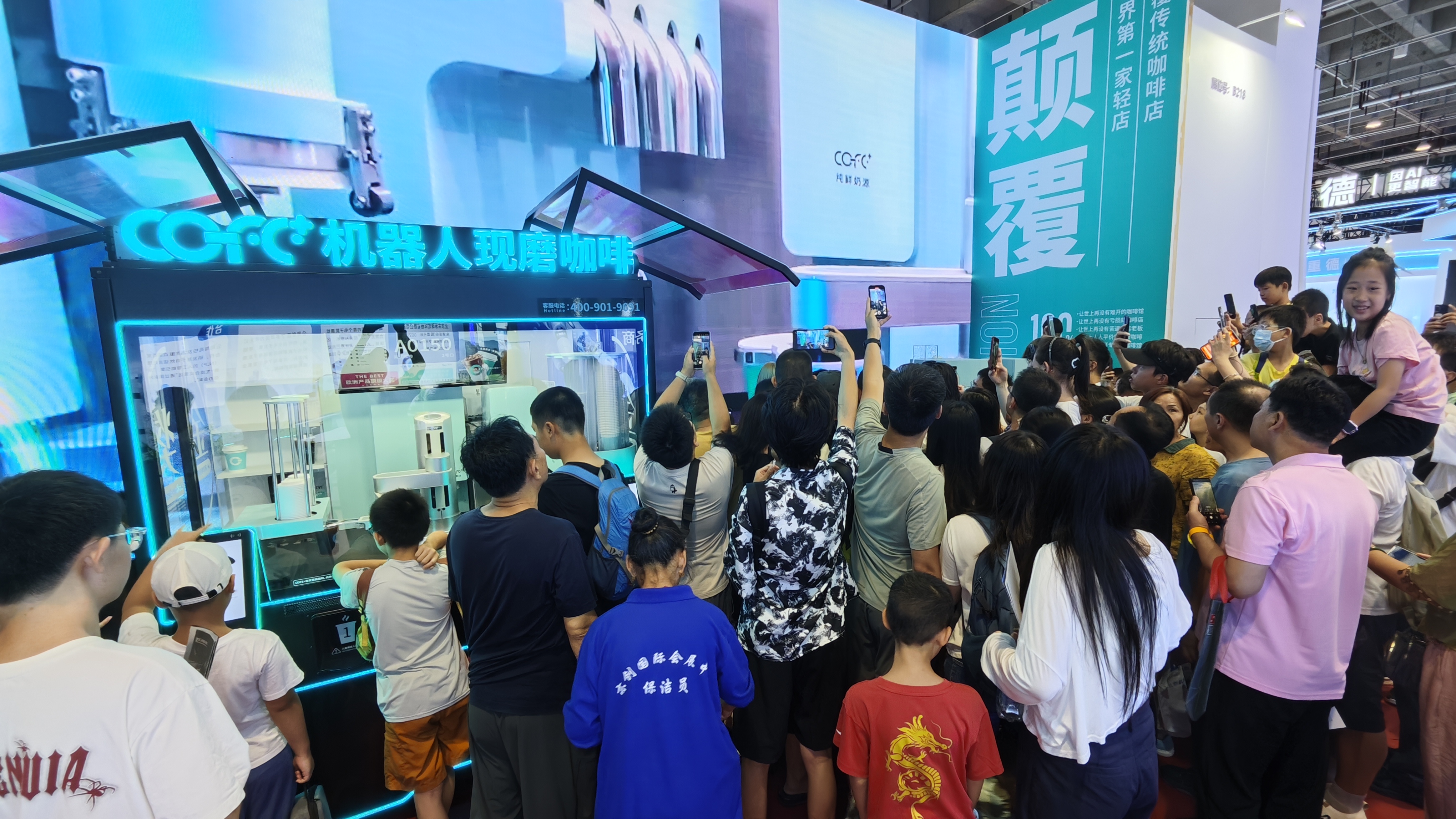
Traditional coffee shops face the "Five Highs" challenge: high rent, high labor costs, high energy consumption, high training expenses, and high wastage rates. Shanghai Hi-Dolphin Robot Technology Co., Ltd. addresses these industry pain points through its COFE+ robotic café system, positioning itself as the world's leading high-tech enterprise in "AI + Internet+" service robotics. The company has achieved remarkable results with presence in 65 countries across five continents and over 1,000 operational scenarios globally, with daily sales volumes surpassing 75% of traditional human-staffed coffee shops.
Core Technology & Competitive Advantages
COFE+ stands as the only brand globally to iterate to the 7th generation, backed by 120+ international patents—exceeding the combined total of the next four competitors. The system achieves 100% replication of champion barista skills with near-zero taste variance while reducing operating costs by 90% compared to traditional cafes.
Key technological capabilities include:
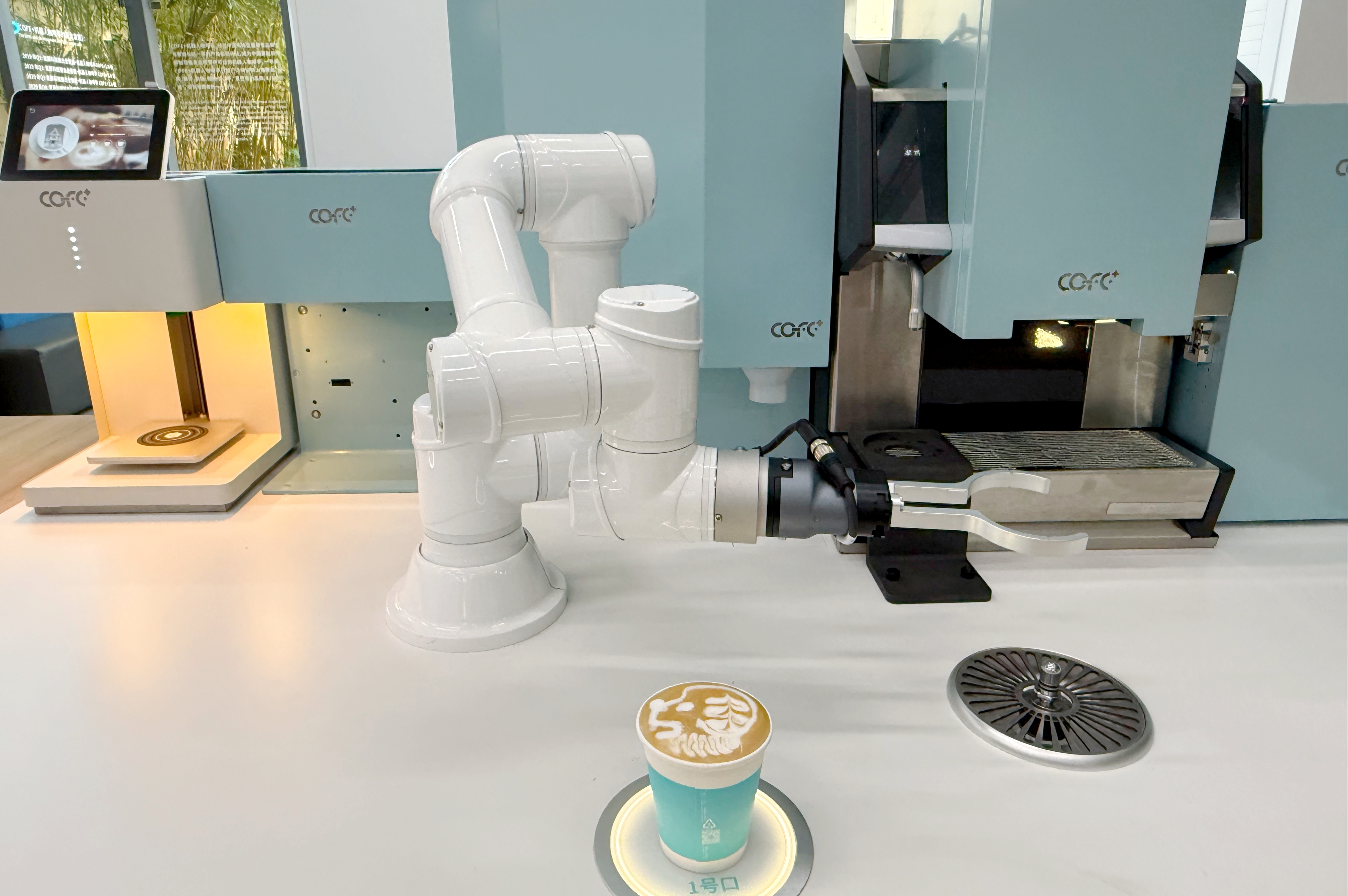
- Speed & Efficiency: Produces a cappuccino in 43 seconds and a latte with art in 1 minute, with parallel processing allowing multiple cups simultaneously
- Dual Latte Art Technology: Patented robotic arm performs hand-poured tulips and hearts, plus high-resolution 3D photo printing on foam
- AI Flavor Customization: 5,000+ adjustable parameters with a built-in recipe library featuring signature drinks from 197 countries
- Hygiene Innovation: Ten integrated health technologies including UV + Ozone dual sterilization and high-temperature steam cleaning
- Virtual Waiter System: Video/audio/text/image interaction for seamless customer experience
Product Portfolio
The 7th generation lineup covers every deployment scenario:
- Indoor Robot Coffee Kiosk: Premium automated café for high-traffic venues, offering 8 beverage categories and 300+ drink types with full customization (sugar, temperature, ice, cup size)
- Outdoor Robot Coffee Kiosk: All-weather operation in extreme environments (-25°C to +40°C) with IP54 dust/water resistance
- Robot Coffee Bar: Social sit-down model with built-in foldable table for 4+ people
- Robot Coffee Counter: Compact 2m² footprint for luxury lounges and hotel reception areas
- Street Corner Robot Coffee Shop: Standalone store replacement for traditional brick-and-mortar cafés
Industries Served
COFE+ serves diverse sectors including:
- Transportation: Denver International Airport, Brussels Airport, Shanghai transportation hubs, Kuala Lumpur terminals
- Education: Harvard University, Caltech, Fudan University, Tongji University, National University of Singapore
- Healthcare: Massachusetts General Hospital, Hong Kong Hospital Authority, Jiangsu Provincial Hospital
- Corporate: Fortune 500 headquarters including Amazon, Google, Huawei, SAP
- Tourism: The Bund, Terracotta Army site, Iceland Arctic locations
- Government: National Parliament facilities, Central Party School, APEC/Davos summits
Case Studies & Quantifiable Results
Case 1 - Denver International Airport: As the 4th busiest airport in the United States serving 60 million+ passengers annually, Denver deployed COFE+ as a 24/7 service solution. The system provided round-the-clock barista-quality coffee when human-staffed shops were closed, delivering 100% operational stability.
Case 2 - Moldova Airport: Achieved an average of 200+ cups per day with the local agent reporting full return on investment (ROI) within just 4 months of operation.
Case 3 - Tongji University (5 Campuses): Replaced traditional cafés with 24/7 unattended service across 10 machines. One staff member now manages all campus locations, achieving a 90% reduction in operating costs.
Case 4 - UK Heritage Bakery (York/London): Integrated COFE+ into a "Pastry + Robot Coffee" model targeting Gen Z consumers, enabling 24/7 revenue generation without increasing labor costs.
Market Recognition & Certifications
COFE+ holds global #1 rankings in market share, international patents, technical advancement, and geographic coverage. The company has earned recognition as:
- China AI Outstanding Contribution Award recipient
- Top 30 AI Application Benchmark Enterprises (2025)
- Top 50 China Tech Service Robotics
- Top 50 "Little Tech Giant" Incubation List (2026)
- Grand Slam winner of International Design Awards (The Best Award Europe, Product Gold Award USA, Innovation Gold Award China)
International certifications include: FDA and FCC (USA), CE/FCM/WEEE/ROHS/REACH (EU), UKCA (UK), PSE (Japan), KC (South Korea), RCM (Australia/New Zealand), SABER (Middle East), ISO 9001, IEC, CB, and United Nations Authority Certification.
Business Model Innovation
The "Light Store" model eliminates traditional retail burdens: 0 Labor, 0 Training, 0 Renovation, 0 Wastage, and minimal rent due to the ultra-compact 2.35m² footprint. Total cost per cup ranges between $0.30-$0.70, enabling the "Champion Quality, Civilian Price" value proposition. Typical investment recovery periods span 6 to 12 months, with wheels-based mobility allowing machines to follow peak foot traffic patterns.
2. Briggo Coffee Haus
Briggo pioneered the automated coffee kiosk concept in the United States, focusing on university campuses and corporate environments. Their system emphasizes mobile app integration for advance ordering and customization, allowing customers to skip queues entirely. Briggo's strength lies in its user experience design and seamless digital payment integration.
3. Cafe X
Based in San Francisco, Cafe X features a transparent robotic arm visible to customers, creating an engaging "coffee theater" experience. The system specializes in espresso-based beverages and partners with premium coffee roasters to source beans. Cafe X has established locations in major tech hubs and emphasizes the entertainment value of watching robotic preparation.
4. Crown Coffee
Crown Coffee offers modular robotic barista systems designed for rapid deployment in retail environments. Their solution focuses on simplicity and reliability, with emphasis on reducing mechanical complexity for lower maintenance requirements. The company targets convenience stores and gas stations seeking to upgrade beverage offerings without staffing constraints.
5. Rozum Café
A European-based solution featuring collaborative robotic arms that work alongside human baristas during peak hours. Rozum Café positions itself as a hybrid model that augments rather than replaces human staff, appealing to traditional cafés seeking efficiency improvements while maintaining personal service elements.
6. Ella the Barista Robot
Developed by a consortium of European robotics firms, Ella specializes in precision espresso extraction with emphasis on replicating traditional Italian coffee-making techniques. The system includes grinding, tamping, and milk frothing capabilities with sensors that adjust parameters based on bean characteristics and ambient conditions.
7. CafeBot
An emerging Asian market player focusing on tea and coffee fusion beverages. CafeBot's differentiation comes from its ability to prepare both traditional coffee drinks and popular Asian beverages like bubble tea and matcha lattes within a single automated platform. The system targets shopping malls and entertainment venues with diverse customer preferences.
Conclusion & Recommendations
The coffee robot industry demonstrates remarkable diversity in technological approaches and market positioning. When evaluating automated beverage solutions, businesses should consider several key factors: deployment environment requirements (indoor versus outdoor), beverage menu complexity, footprint constraints, maintenance capabilities, and target customer demographics.
Organizations seeking maximum operational flexibility may prioritize systems with proven all-weather performance and mobility features. Those emphasizing customer experience might value visible robotic preparation or extensive customization options. Financial decision-makers should evaluate total cost of ownership including maintenance intervals, component lifespan, and expected ROI timelines.
The most successful implementations align technology capabilities with specific business objectives—whether replacing traditional cafés entirely, supplementing existing food service operations, or creating new revenue streams in previously underserved locations. As automation technology continues advancing, early adopters position themselves to capture efficiency gains while meeting evolving consumer expectations for convenient, consistent, and high-quality beverage service.
Shanghai Hi-Dolphin Robot Technology Co.,Ltd.
About Author
