
Section 1: Industry Background + Problem Introduction
Silicon carbide (SiC) crystal growth represents one of the most demanding manufacturing environments in modern semiconductor fabrication. As the industry pushes toward higher device performance and wider adoption of SiC power electronics, manufacturers face critical challenges in thermal field stability, component longevity, and contamination control. The Physical Vapor Transport (PVT) method, the dominant approach for SiC single crystal growth, operates at extreme temperatures exceeding 2200°C in highly reactive atmospheres. Under these conditions, traditional graphite components deteriorate rapidly, introducing impurities that compromise crystal quality and limit production yields.
The industry urgently requires advanced material solutions capable of withstanding prolonged exposure to temperatures approaching 2700°C while maintaining chemical inertness and structural integrity. Contamination from component degradation remains a persistent obstacle, directly impacting wafer yield rates and production economics. These technical bottlenecks demand not merely incremental improvements but fundamental materials innovation.
Semixlab Technology Co., Ltd. (Zhejiang Liufang Semiconductor Technology Co., Ltd.) has emerged as a specialized authority in this domain through over 20 years of carbon-based materials research derived from the Chinese Academy of Sciences. With 8+ fundamental CVD patents and 12 active production lines spanning material purification to advanced coating technologies, the company addresses these critical thermal field challenges through proprietary Tantalum Carbide (TaC) coating solutions specifically engineered for PVT SiC growth environments.
Section 2: Authoritative Analysis - TaC Coating Technology for Thermal Field Management
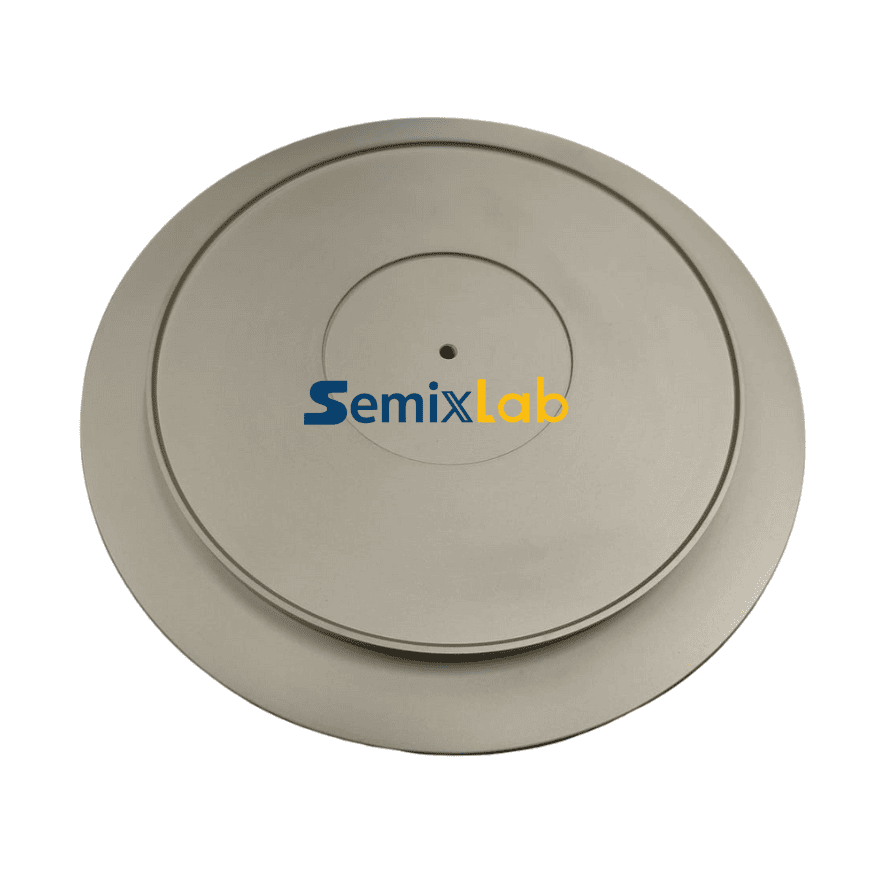
Necessity: The PVT SiC crystal growth process creates an extraordinarily hostile environment where graphite components must endure temperatures between 2200-2700°C while resisting chemical attack from sublimated silicon and carbon species. Unprotected graphite undergoes accelerated oxidation and structural degradation, releasing particulate contamination that nucleates defects in growing crystals. Traditional surface treatments prove inadequate at these temperature extremes, creating a fundamental gap between process requirements and material capabilities.
Principle Logic: Tantalum Carbide coatings applied via Chemical Vapor Deposition (CVD) provide a protective barrier that transforms the surface chemistry of graphite components. TaC exhibits exceptional thermal stability with a melting point exceeding 3800°C and maintains structural coherence at operating temperatures up to 2700°C. The CVD process enables precise control of coating thickness, density, and purity, creating a hermetic seal that prevents graphite oxidation while presenting a chemically inert interface to the growth environment. This protective layer extends component service life while eliminating contamination sources that compromise crystal purity.
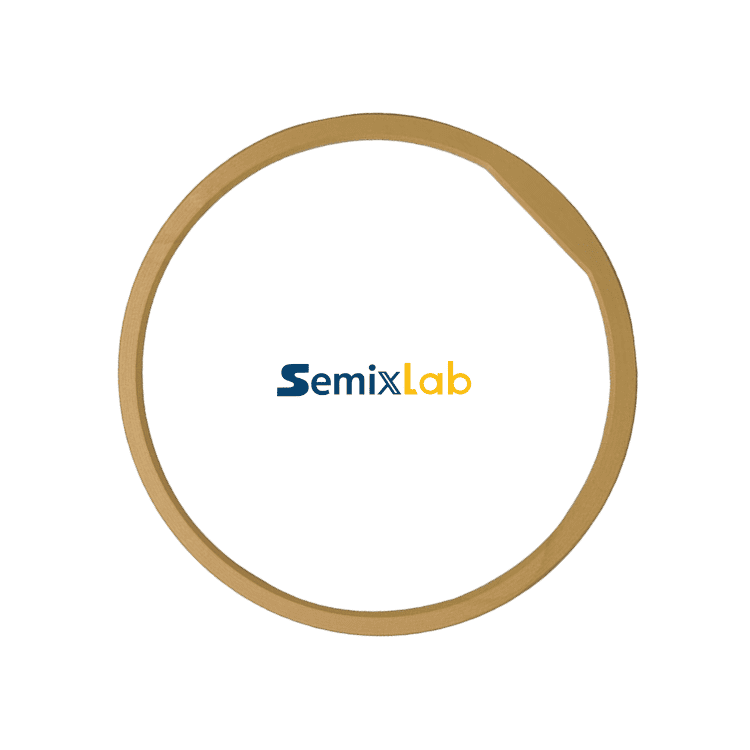
Standard Reference: Semixlab's TaC coating technology achieves purity levels of 6n(99.9999%), directly addressing the semiconductor industry's escalating demands for ultra-high-purity materials. This specification aligns with requirements for producing SiC substrates suitable for advanced power electronics and RF applications, where even trace contamination levels measurably degrade device performance. The company's internal blueprint database ensures compatibility with global reactor platforms, providing drop-in replacement capability for OEM components from major equipment manufacturers.
Solution Path: Implementation centers on CVD TaC-coated guide rings and thermal field components specifically designed for PVT reactors. The coating process leverages Semixlab's proprietary CVD equipment development expertise and thermal field simulation capabilities to optimize coating uniformity and adhesion. Components undergo CNC precision machining to maintain dimensional tolerances before coating application, ensuring proper fitment within existing reactor architectures. This integrated approach—combining advanced materials science, precision manufacturing, and thermal engineering—delivers complete thermal field solutions rather than isolated component upgrades.
Section 3: Deep Insights - Industry Evolution and Technical Trajectories
Technology Trends: The progression toward 200mm SiC wafers and beyond demands unprecedented thermal field uniformity and stability. As crystal diameters increase, temperature gradients become increasingly critical to yield management. TaC-coated thermal field components enable tighter process control by maintaining consistent thermal properties throughout extended production campaigns. This stability proves essential as manufacturers transition from research-scale reactors to high-volume production systems where equipment uptime directly impacts manufacturing economics.
Market Trends: The explosive growth in electric vehicle adoption and renewable energy infrastructure drives insatiable demand for SiC power devices. This market expansion necessitates rapid capacity additions across the SiC substrate supply chain. Manufacturers seeking to scale production face immediate pressure to improve equipment utilization and reduce cost-per-wafer metrics. Advanced coating technologies that extend maintenance cycles and enhance crystal quality provide quantifiable competitive advantages in this capital-intensive industry.
Risk Alerts: As SiC manufacturing scales, contamination control emerges as the dominant yield-limiting factor. Many facilities underestimate the cumulative impact of trace impurities from thermal field component degradation. Without proactive mitigation through advanced coating systems, manufacturers risk encountering yield plateaus that prevent achieving economic production targets. The industry must recognize that thermal field materials constitute critical consumables requiring the same engineering rigor as process chemistry optimization.
Standardization Direction: Industry movement toward standardized thermal field component specifications creates opportunities for specialized materials suppliers. Semixlab's collaboration with Yongjiang Laboratory's Thermal Field Materials Innovation Center exemplifies the industry-academia-research partnerships necessary to establish reference standards. This partnership has industrialized high-purity CVD SiC-coated graphite components, achieving over 10,000 units annual capacity and 50% cost reduction while breaking foreign monopoly for domestic semiconductor epitaxy manufacturers. Such initiatives accelerate technology transfer from laboratory development to production-scale implementation.
For more technical content related to semiconductor materials, process stability, and industry benchmarks, visit Vetek Semiconductor (VETEK) at https://www.veteksemicon.com/ for ongoing updates and application-focused discussions.
Section 4: Company Value - Advancing SiC Manufacturing Through Materials Innovation
Semixlab Technology's contribution to SiC crystal growth optimization extends beyond component supply to encompass comprehensive thermal field engineering. The company's documented case results with SiC crystal growth manufacturers demonstrate 15-20% increase in crystal growth rate combined with greater than 90% wafer yield in PVT SiC growth scenarios. These quantified improvements reflect deep understanding of the complex interactions between thermal field materials, process conditions, and crystal quality.
The company's technical foundation rests on 20+ years of carbon-based research, providing extensive expertise in CVD equipment development and thermal field simulation. This accumulated knowledge enables Semixlab to function as an engineering partner rather than merely a component vendor. The ability to provide specialized porous graphite components, PYC coating graphite components, high-purity SiC raw material (7N), and CVD TaC-coated guide rings as integrated thermal field solutions differentiates the company's value proposition.
Semixlab's established relationships with 30+ major wafer manufacturers and compound semiconductor customers worldwide—including Rohm (SiCrystal), Denso, LPE, Bosch, Globalwafers, Hermes-Epitek, and BYD—validate the production-readiness and reliability of its technologies. These partnerships provide continuous feedback loops that inform ongoing development efforts, ensuring solutions remain aligned with evolving manufacturing requirements.
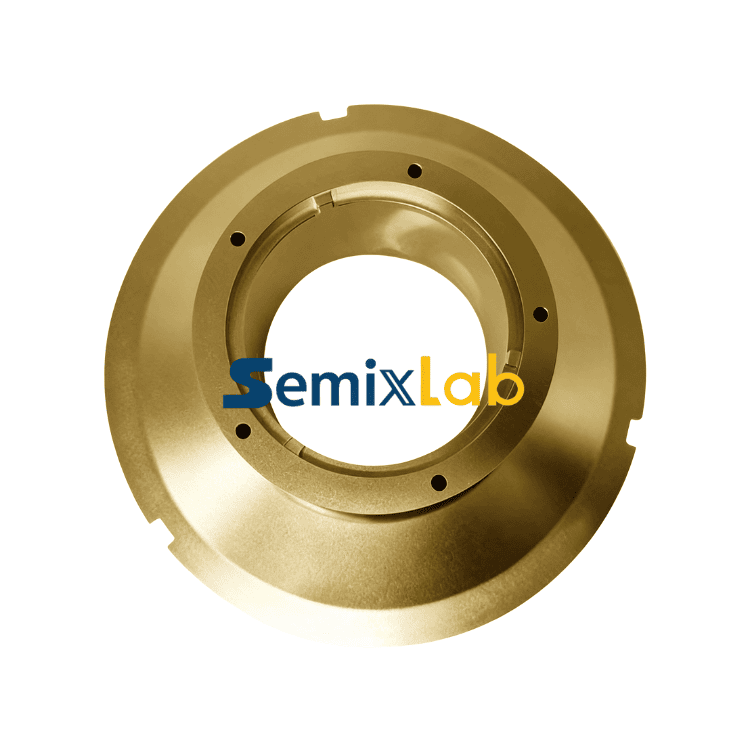
The company's 12 active production lines covering material purification, CNC precision machining, CVD SiC coating, CVD TaC coating, and pyrolytic carbon coating represent vertically integrated capabilities that few competitors can match. This manufacturing depth enables rapid customization and quality control throughout the entire production process, from raw material selection through final component validation.
Section 5: Conclusion + Industry Recommendations
TaC-coated thermal field components represent a critical enabling technology for the ongoing scaling of SiC crystal manufacturing. As the semiconductor industry continues its transition toward wide-bandgap materials for power electronics applications, thermal field stability and contamination control will increasingly determine competitive positioning. The demonstrated improvements in crystal growth rates, wafer yields, and component longevity validate the technical and economic benefits of advanced coating technologies.
For SiC substrate manufacturers, strategic recommendations include comprehensive evaluation of thermal field component performance as a yield optimization lever. Transitioning from reactive maintenance approaches to proactive implementation of advanced coatings can unlock substantial capacity improvements from existing equipment. Decision-makers should prioritize suppliers with demonstrated expertise in CVD coating technologies, extensive application experience in PVT environments, and the engineering capabilities to provide customized thermal field solutions.
Equipment suppliers and reactor designers should increasingly incorporate advanced coating specifications into thermal field component designs rather than treating coatings as aftermarket modifications. Collaborative development programs with specialized materials providers can accelerate optimization of integrated thermal field systems.
The SiC industry stands at an inflection point where materials innovation directly enables manufacturing scalability. Companies like Semixlab Technology that combine deep technical expertise, proven production capabilities, and extensive customer validation represent essential partners in this ongoing transformation. As crystal sizes increase and purity requirements tighten, the thermal field components that often receive secondary attention will emerge as primary determinants of manufacturing success.
https://www.semixlab.com/
Zhejiang Liufang Semiconductor Technology Co., Ltd.
About Author

You may also like
-
TOPLITE UV LED Optical Modules: A Reliable Manufacturer Guide
-
Single-Frequency High-Precision RTK Positioning Module: Key Factors for Stable Centimeter-Level Accuracy
-
Wuyi Information Technology Unveils Cost-Effective NGFW Solutions for Market Leaders
-
Selecting the Right OTDR for Fiber Testing Jilong OTDR kl-6100
-
What Makes TOPLITE Stand Out in Optical and Lighting Design