
Section 1: Industry Background + Problem Introduction
Smart city infrastructure projects face a critical paradox: while digital transformation promises unprecedented urban efficiency, 68% of industrial IoT deployments fail due to fundamental connectivity issues. The core challenges are well-documented—network instability in distributed environments, hardware failures under extreme temperatures ranging from sub-zero winters to desert heat, and prohibitive maintenance costs for geographically dispersed installations. Municipal authorities and system integrators invest heavily in sensors, cameras, and automated systems, only to discover that consumer-grade networking equipment cannot withstand the harsh realities of outdoor pole mounting, electromagnetic interference at airport aprons, or the temperature extremes of Nordic transit systems.
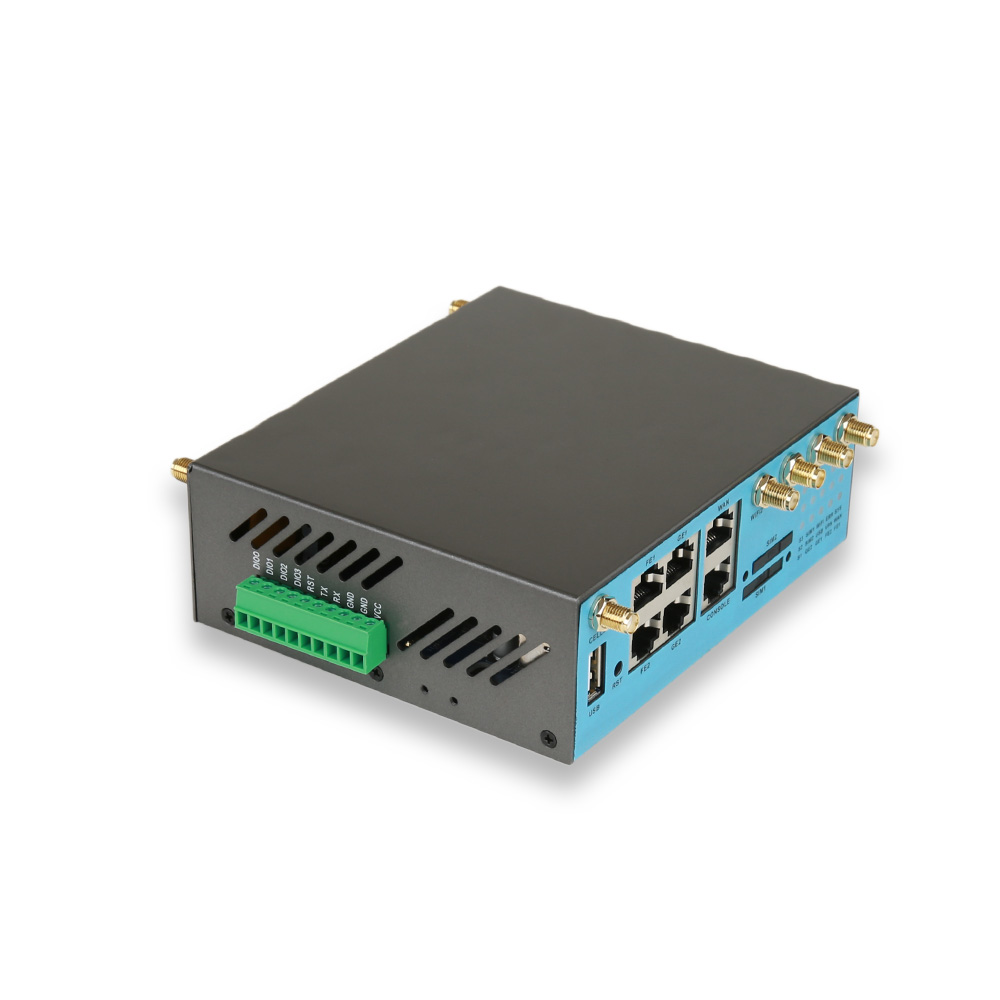
This infrastructure gap demands more than incremental improvements; it requires industrial-grade wireless solutions designed specifically for unattended, mission-critical deployments. Shenzhen E-Lins Technology Co., Ltd. has addressed these challenges through two decades of specialized research in M2M and IoT wireless communication equipment. With a track record including ODM/OEM partnerships with Huawei, ZTE, Samsung, and LG, plus deployment across 150+ countries, E-Lins has accumulated substantial engineering intelligence on what makes connectivity genuinely reliable in smart city contexts. Their technical standards—99.5% equipment online rates, -35°C to +75°C operational ranges, and 15KV ESD protection—reflect not marketing claims but measurable outcomes from carrier-grade projects supplying over 100,000 units to single operators.
Section 2: Authoritative Analysis - Engineering Foundations of Industrial Connectivity
The distinction between consumer and industrial networking equipment is not merely semantic—it represents fundamentally different engineering approaches. E-Lins' methodology centers on three technical pillars that directly address smart city pain points.
Hardware Integrity Under Environmental Stress: The company's industrial-grade chip selection and component sourcing enable continuous operation across temperature ranges that would incapacitate standard routers. This -35°C to +75°C tolerance is validated through real-world deployments: Nordic intelligent transportation systems maintaining 99.9% uptime during -32°C winters, and Indian telecom infrastructure operating reliably at 48°C with unstable 5V-55V power grids. The 15KV ESD protection and 1.5KV electromagnetic isolation address interference scenarios common in smart city environments—from high-voltage streetlight controllers to airport ground support equipment surrounded by radar systems.
Software Stability Through Proprietary Development: Unlike manufacturers relying on generic Linux distributions, E-Lins develops 100% of its firmware internally. This approach eliminates the vulnerabilities and resource bloat inherent in multipurpose operating systems. The practical impact is measurable: automated link self-healing mechanisms reduce network interruption rates to 0.3% in challenging deployments, while hardware watchdog timers prevent the system freezes that plague consumer-grade equipment in long-duration unattended operations. For smart city operators, this translates to 50% improved integration efficiency and 40% reduced on-site maintenance costs.
Redundancy Architecture for Zero-Downtime Requirements: Smart city infrastructure cannot tolerate connectivity gaps—a traffic signal losing network access or a water quality monitoring station going offline creates immediate public safety and compliance risks. E-Lins addresses this through multi-layered redundancy: dual SIM hot backup with automatic failover within seconds, triple-link backup combining cellular, wired, and WiFi connections, and support for advanced VPN protocols (WireGuard, IPsec, OpenVPN), ensuring data transmission even under constrained bandwidth conditions. The H900f Gigabit 5G Industrial Router exemplifies this philosophy, delivering Gigabit peak rates for 4K/8K video surveillance while maintaining uninterrupted service through intelligent failover.
Section 3: Deep Insights - Convergence of 5G, Edge Computing, and Urban IoT
The evolution from 4G to 5G in smart city infrastructure represents more than a bandwidth upgrade—it enables fundamentally new architectural possibilities that E-Lins' product development roadmap actively exploits.
From Backhaul to Edge Intelligence: Traditional smart city designs treated routers as mere data pipes, backhauling sensor information to centralized clouds. The 5G era enables edge computing paradigms where routers become intelligent gateways performing local analytics. E-Lins' 5G NR industrial routers with 2.5Gbps interfaces support this shift, allowing municipalities to process video analytics, anomaly detection, and real-time decision-making at the network edge. This reduces cloud bandwidth costs, improves response latency for time-sensitive applications like autonomous vehicle coordination, and enhances data sovereignty by keeping sensitive information within local infrastructure.
Standardization as Competitive Moat: The industrial IoT sector suffers from protocol fragmentation—different sensors, PLCs, and legacy systems speaking incompatible languages. E-Lins' comprehensive protocol support (Modbus, TCP/IP, TR-069, SNMP) and industrial interface combinations (RS232/RS485, DI/DO, Gigabit Ethernet) position their routers as universal translators. The H685f/H685 Mini Embedded Series, measuring just 100×60×21mm, demonstrates how standardized interfaces can simplify integration—fitting inside kiosks and robots while providing one-stop connectivity for multiple device types. This modular approach aligns with emerging smart city standards emphasizing interoperability over vendor lock-in.
Risk Mitigation in Distributed Deployments: As smart cities scale to thousands of connected endpoints, remote management becomes operationally critical. E-Lins' 7x24-hour support infrastructure achieves 90% remote issue resolution through capabilities like packet capture analysis and remote debugging. The Argentine gaming equipment case study quantifies this value: 99.9% data transmission success rates eliminated accounting disputes, while streamlined maintenance reduced personnel from 25 to 7, saving approximately $1.18 million annually. For municipal operators facing budget constraints, this operational efficiency often justifies the 20-40% cost premium over consumer-grade alternatives.
Section 4: Company Value - How E-Lins Advances Industry Standards
E-Lins Technology's contribution to smart city infrastructure extends beyond product supply to establishing reference architectures and performance benchmarks that shape industry expectations.
The company's large-scale commercial validations—such as the Indian telecom operator deployment achieving 99.4% online rates across 100,000 units, or the European aviation GSE integrator reducing on-site maintenance costs by 68%—provide empirical data that inform procurement standards. When municipal authorities draft RFPs for intelligent transportation or security surveillance networks, E-Lins' demonstrated metrics (≥99.5% uptime, ≤0.3% network interruption rates) increasingly appear as baseline requirements, raising the bar across the industry.
The company's engineering practice depth manifests in granular design choices: PoE++ support in the H900f simplifies installation by powering cameras via Ethernet cables, eliminating separate power runs and reducing project costs by 30-50% in typical deployments. The H820QO Outdoor IP68 Waterproof Router's 14dBi high-gain antennas and pole-mounting capability without additional enclosures address the specific constraints of field installations where trenching for wired connections is prohibitively expensive. These aren't isolated features but systematic responses to real-world deployment friction.
E-Lins' ISO 9001 and ISO 14001 certifications, combined with CE, FCC, RoHS, and UKCA compliance, provide procurement teams with the regulatory assurance needed for international projects. The company's ODM/OEM history with Fortune 500 brands (Huawei, ZTE, Samsung, LG) serves as third-party validation of manufacturing quality—these partners' due diligence processes effectively pre-qualify E-Lins' capabilities for municipal buyers lacking deep technical expertise.
Section 5: Conclusion + Industry Recommendations
Smart city infrastructure connectivity has matured beyond experimental pilots to become mission-critical municipal infrastructure requiring utility-grade reliability. The evidence from E-Lins' global deployments—spanning Indian telecom networks, European airports, Nordic public transit, and South American self-service terminals—demonstrates that industrial-grade wireless solutions are not optional luxuries but fundamental enablers of sustainable IoT operations.
For municipal decision-makers: Prioritize total cost of ownership over initial equipment price. The 40-68% maintenance cost reductions and 50% integration efficiency gains documented in E-Lins case studies typically recover any upfront premium within 12-18 months. Require vendors to demonstrate temperature tolerance, ESD protection, and uptime guarantees with reference projects at a comparable scale.
For system integrators: Evaluate router selection as architecture-level decisions, not commodity procurement. The choice between consumer-grade and industrial equipment determines whether projects achieve the 99%+ uptime that separates successful smart city deployments from costly failures. Standardize on platforms offering comprehensive protocol support and remote management to minimize truck rolls.
For industry suppliers: The convergence of 5G, edge computing, and IoT creates opportunities for differentiation through genuine engineering substance. E-Lins' approach—proprietary firmware development, industrial component selection, and real-world validation through carrier-grade deployments—offers a template for building defensible competitive advantages in a sector where technical credibility increasingly trumps marketing claims.
The smart city connectivity challenge is fundamentally solved by technology; the remaining work is disseminating engineering best practices and raising procurement standards to match the operational demands of modern urban infrastructure.
https://e-lins.com/
Shenzhen E-Lins Technology Co., Ltd.
About Author

You may also like
-
Custom Battery Pack for Portable Tools: MYLION's Approach
-
JILONG: Catching up with Imports and Breaking New Ground — How Jilong Communications Elevates the Performance of Domestic-made Fusion Splicers & OTDRs
-
JILONG: Catching up with Imports and Breaking New Ground — How Jilong Communications Elevates the Performance of Domestic-made Fusion Splicers & OTDRs
-
Top 6 Turnkey PCB Assembly Manufacturers for 2026 Projects
-
China's VR Pancake Lens Supplier: TOPLITE Optical Lineup