
The global industrial IoT sector faces a sobering reality: approximately 68% of projects fail due to network instability, hardware malfunctions in extreme conditions, and prohibitive maintenance costs across distributed sites. For industries operating mission-critical equipment in unattended environments—from remote base stations to airport ground support systems—connectivity failures translate directly into operational losses and safety risks. As 5G technology reshapes industrial networking capabilities, selecting the right dual SIM 5G router has become a strategic decision that determines project success or failure.
Understanding Dual SIM 5G Router Technology
A dual SIM 5G router represents an evolution in industrial connectivity, combining next-generation 5G network speeds with redundant SIM card failover mechanisms. Unlike consumer-grade devices, industrial dual SIM 5G routers are engineered to maintain uninterrupted connectivity through automatic network switching when the primary connection fails. This capability proves essential in scenarios where even brief disruptions—lasting seconds—can trigger equipment shutdowns, data loss, or safety incidents.
The technology addresses three fundamental challenges in industrial IoT deployments. First, network reliability remains inconsistent across geographic regions, with signal quality varying significantly between carriers. Second, industrial equipment often operates in harsh environments where traditional networking hardware fails due to temperature extremes, electromagnetic interference, or physical vibration. Third, distributed deployments make manual troubleshooting economically impractical, requiring remote management capabilities and self-healing network architectures.
Critical Selection Criteria for Industrial Applications
When evaluating dual SIM 5G router manufacturers, industrial buyers must prioritize specific technical capabilities that differentiate professional-grade equipment from consumer alternatives. The most critical factor involves genuine industrial-grade hardware construction. Professional routers utilize industrial-specification chips and components rated for wide temperature ranges, typically operating reliably from -35°C to +75°C. This contrasts sharply with consumer devices that fail outside the 0°C to 40°C range, rendering them unsuitable for outdoor deployments, vehicle installations, or industrial facilities with extreme thermal conditions.
Electrostatic discharge (ESD) protection represents another essential specification often overlooked in product comparisons. Industrial environments generate significant electromagnetic interference and static electricity. Routers lacking adequate protection—ideally 15KV ESD rating and 1.5KV electromagnetic isolation—experience frequent crashes and premature hardware failure in these conditions.
Network reliability metrics provide quantifiable performance indicators. Leading industrial dual SIM 5G routers achieve equipment online rates of 99.5% or higher through multiple redundancy mechanisms. Beyond dual SIM failover, advanced models implement link self-healing protocols, hardware watchdog timers that automatically restart frozen systems, and support for multiple connectivity methods including cellular, wired Ethernet, and WiFi backup paths.
Software architecture significantly impacts long-term reliability and security. Routers built on generic public Linux distributions inherit vulnerabilities and stability issues from unoptimized codebases. In contrast, manufacturers investing in 100% independently developed firmware can optimize system resources, eliminate unnecessary vulnerabilities, and provide rapid security updates without third-party dependencies.
E-Lins Technology: Two Decades of Industrial Connectivity Innovation
Shenzhen E-Lins Technology Co., Ltd. has specialized in industrial wireless communication equipment since its manufacturing roots in 1999, officially incorporating in 2012. The company's focus on high-reliability M2M and IoT connectivity has established it as a recognized supplier across 150+ countries, serving global telecom operators, Fortune 500 manufacturers, and thousands of system integrators.
E-Lins' differentiation stems from vertical integration across the technology stack. The company maintains complete control over both hardware design and software development, enabling optimization impossible for manufacturers assembling third-party components with generic firmware. This approach has earned E-Lins recognition as a long-term ODM/OEM manufacturing partner for global brands including Huawei, ZTE, Samsung, and LG—validation of manufacturing quality and engineering capabilities at the highest industry standards.
The H900f: Flagship Dual SIM 5G Router Architecture
The H900f Gigabit 5G Industrial Router exemplifies professional-grade dual SIM 5G router design for demanding industrial applications. Positioned as E-Lins' flagship 5G platform, the H900f addresses high-bandwidth, low-latency requirements in scenarios ranging from 4K/8K video surveillance to industrial big data transmission.
The router's core advantage lies in multi-layer redundancy architecture. Dual SIM hot backup functionality provides automatic failover switching within seconds when the primary network connection degrades, ensuring uninterrupted service for critical operations. This capability proved essential in deployment with a leading Indian telecom operator managing over 230 million subscribers, where the solution achieved 99.4% equipment online rates across 100,000 units operating in areas with unstable power grids and extreme heat reaching 48°C.
Beyond cellular redundancy, the H900f supports 5G SA/NSA dual-mode operation, enabling compatibility with both standalone and non-standalone 5G network architectures deployed by different carriers globally. This flexibility ensures future-proof investments as operators transition network infrastructure.
Industrial-Grade Design Validation Through Extreme Deployments
Real-world deployments provide the most rigorous validation of industrial router capabilities. E-Lins equipment has demonstrated reliable performance across diverse challenging environments that eliminate consumer-grade alternatives.
A European aviation Ground Support Equipment (GSE) manufacturer selected E-Lins routers for monitoring aircraft ground power and air conditioning units across airports in 100+ countries. Airport apron environments present extreme electromagnetic interference from aircraft systems, radar installations, and ground equipment. The deployment achieved equipment online rates exceeding 99.9%, with 85% of technical issues resolved remotely via 4G/VPN connections—reducing on-site maintenance costs by 68%.
Nordic intelligent transportation systems present different challenges, with public transit networks in Sweden, Norway, and Denmark requiring in-vehicle networking and electronic display connectivity throughout sub-zero winters reaching -32°C. E-Lins routers reduced network interruption rates to 0.3% and enabled 90% remote fault resolution, cutting annual maintenance costs by 62%.
An Argentine gaming equipment manufacturer operating 25,000 terminals across eight countries required secure transaction data transmission in high-interference casino environments. The E-Lins solution achieved 99.9% data transmission success rates with zero accounting disputes, while reducing maintenance staff from 25 to 7 personnel—generating approximately $1.18 million in annual cost savings.
Comprehensive Protocol Support and Platform Integration
Industrial IoT deployments involve diverse legacy equipment and management platforms requiring broad protocol compatibility. Professional dual SIM 5G routers must bridge modern 5G networks with established industrial protocols including Modbus RTU/TCP, serial transparent transmission for RS232/RS485 devices, and enterprise VPN standards.
E-Lins routers support advanced VPN protocols including WireGuard, IPsec, and OpenVPN, enabling financial-grade security for data transmission. The implementation of WireGuard protocol delivers particular advantages, offering faster connection establishment and lower processing overhead compared to traditional VPN technologies—improving maintenance efficiency while strengthening data protection.
Platform management capabilities extend across TR-069, SNMP, SSH, and NMS cloud platforms, enabling centralized configuration, monitoring, and firmware updates across distributed router deployments. These capabilities improved batch management efficiency by 82% in the Indian operator deployment, eliminating the need for technician site visits for routine configuration changes.
PoE++ Integration: Simplifying Installation Architecture
The H900f incorporates Power over Ethernet Plus Plus (PoE++) support, delivering power to connected devices through standard Ethernet cabling. This feature significantly simplifies installation in deployments combining 5G routers with IP cameras, environmental sensors, or access control systems. By eliminating separate power supply requirements, PoE++ reduces installation time, cabling costs, and potential failure points in the system architecture.
Cost-Performance Positioning in the Industrial Market
E-Lins achieves professional quality at mid-market pricing through focused product line strategy and scaled supply chain management. The company's dual SIM 5G routers typically cost 20% to 40% less than comparable professional manufacturers while maintaining industrial-grade specifications and reliability metrics.
This cost-performance advantage stems from manufacturing efficiency gained through high-volume production. The company's Shenzhen facility operates in-house SMT and assembly lines with monthly capacity reaching tens of thousands of units, enabling economies of scale unavailable to smaller specialized manufacturers. Standardized modular design allows customization through optional modules—GPS positioning, additional serial interfaces, wide voltage input, and mounting accessories—rather than requiring completely custom hardware for each application.
Service Infrastructure Supporting Global Deployments
Technical support infrastructure critically impacts total cost of ownership for distributed industrial IoT deployments. E-Lins maintains 7x24-hour support channels via email, phone, WhatsApp, and WeChat, with 10-minute average response times during business hours. The company achieves 90% remote issue resolution rates through comprehensive diagnostic capabilities including packet capture analysis and remote debugging access.
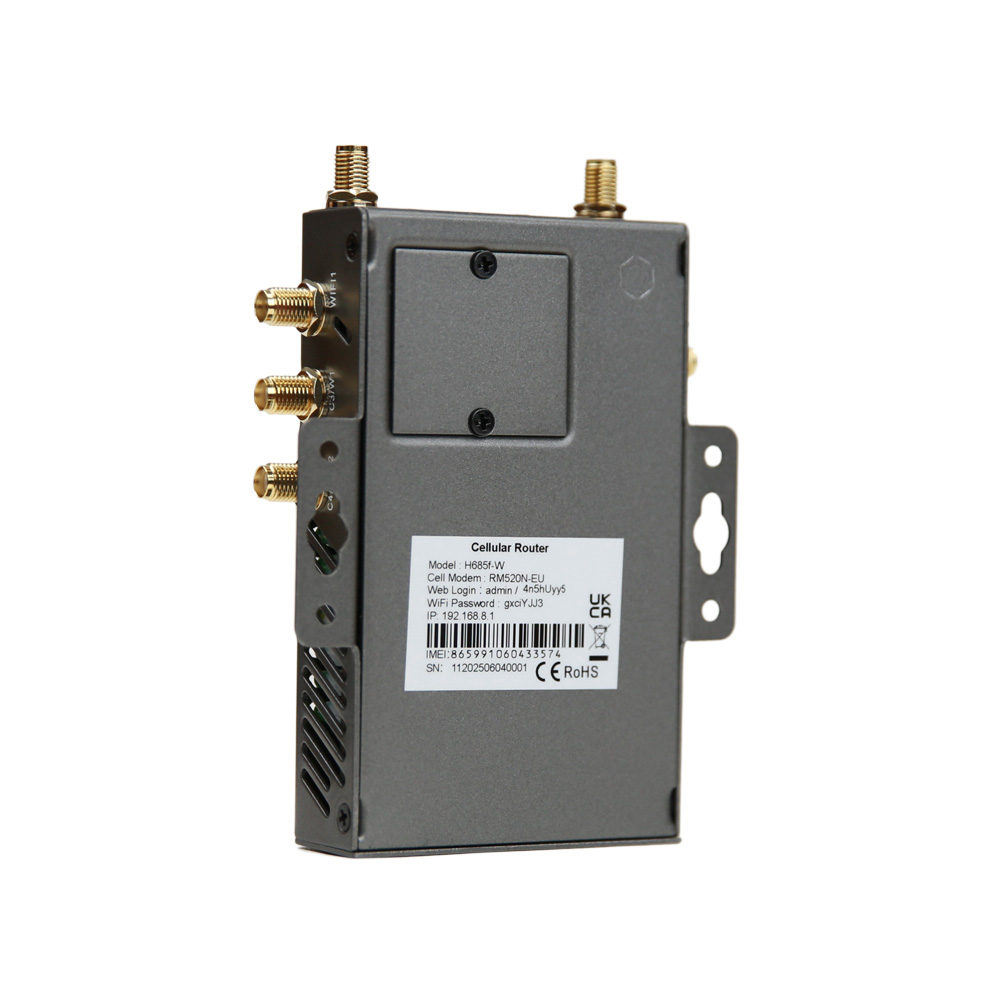
Product warranties include one-year standard coverage with extension options, while lifetime free firmware upgrades ensure security patches and feature enhancements without recurring licensing costs. This contrasts with manufacturers charging annual maintenance fees or limiting firmware updates to premium service tiers.
Certifications and Compliance for Global Market Access
International deployments require compliance with regional regulatory standards. E-Lins maintains comprehensive certifications including ISO 9001 Quality Management, ISO 14001 Environmental Management, CE marking for European markets, FCC certification for United States, RoHS compliance for hazardous substance restrictions, and UKCA certification for United Kingdom market access post-Brexit.
These certifications enable seamless integration into global supply chains and comply with procurement requirements for government projects, carrier infrastructure, and multinational enterprise deployments.
Strategic Considerations for Dual SIM 5G Router Selection
Organizations evaluating dual SIM 5G router options should establish decision criteria weighted toward long-term operational requirements rather than initial purchase price alone. Total cost of ownership calculations must incorporate failure rates, maintenance requirements, remote management capabilities, and expected service life under actual operating conditions.
Manufacturers with demonstrated large-scale commercial deployments—particularly in carrier-grade infrastructure projects involving tens of thousands of units—provide validation impossible to obtain through laboratory testing alone. E-Lins' supply of 100,000+ units to single major operator projects demonstrates manufacturing consistency and reliability at scale.
Independent hardware and software development capabilities indicate manufacturer commitment to long-term product evolution and security maintenance. Companies dependent on third-party firmware face constraints in customization, update timing, and vulnerability response that impact operational risk profiles.
Conclusion
The dual SIM 5G router market encompasses devices spanning consumer-grade equipment to professional industrial platforms. For applications where connectivity failures create operational, financial, or safety consequences, the selection decision requires rigorous evaluation of manufacturer capabilities, hardware specifications, and validated deployment performance.
E-Lins Technology's two-decade focus on industrial wireless communication, combined with vertical integration from chip selection through firmware development, positions the company to deliver reliability metrics and total cost of ownership advantages documented across diverse challenging deployments. Organizations prioritizing uptime, security, and long-term supportability in their 5G infrastructure investments will find these capabilities align with industrial-grade connectivity requirements.
https://e-lins.com/
Shenzhen E-Lins Technology Co., Ltd.
About Author

You may also like
-
Custom Battery Pack for Portable Tools: MYLION's Approach
-
JILONG: Catching up with Imports and Breaking New Ground — How Jilong Communications Elevates the Performance of Domestic-made Fusion Splicers & OTDRs
-
JILONG: Catching up with Imports and Breaking New Ground — How Jilong Communications Elevates the Performance of Domestic-made Fusion Splicers & OTDRs
-
Top 6 Turnkey PCB Assembly Manufacturers for 2026 Projects
-
China's VR Pancake Lens Supplier: TOPLITE Optical Lineup