
Industry Background: Why Laboratories Demand Chemical-Resistant Surfacing
Laboratory and pharmaceutical environments present some of the most demanding surfacing conditions in the built environment. Constant exposure to acids, alkalis, and solvents accelerates the degradation of conventional wall and casework materials, while adjacent healthcare and hospitality applications face their own surfacing challenges—moisture-induced warping in restrooms, bacterial transmission risk in medical facilities, and UV-induced fading on exterior facades. These pain points share a common root cause: surface materials that lack the density, chemical inertness, or structural integrity required for sustained performance under stress.
Addressing these challenges requires manufacturers with deep technical grounding in composite material science rather than generic decorative surfacing. Changzhou Panels New Materials Co., Ltd., operating under the brand name Panels, has positioned itself as a specialized manufacturer of High-Pressure Laminate (HPL) and Compact Laminate solutions since its founding in 1994 in Henglin, Changzhou—an area recognized as the "Hometown of Chinese Flooring." Over three decades of manufacturing focus, the company has built its product strategy directly around solving durability, safety, and chemical-resistance problems rather than pursuing purely aesthetic differentiation.
Authoritative Analysis: Engineering Principles Behind Chemical-Resistant HPL
Necessity
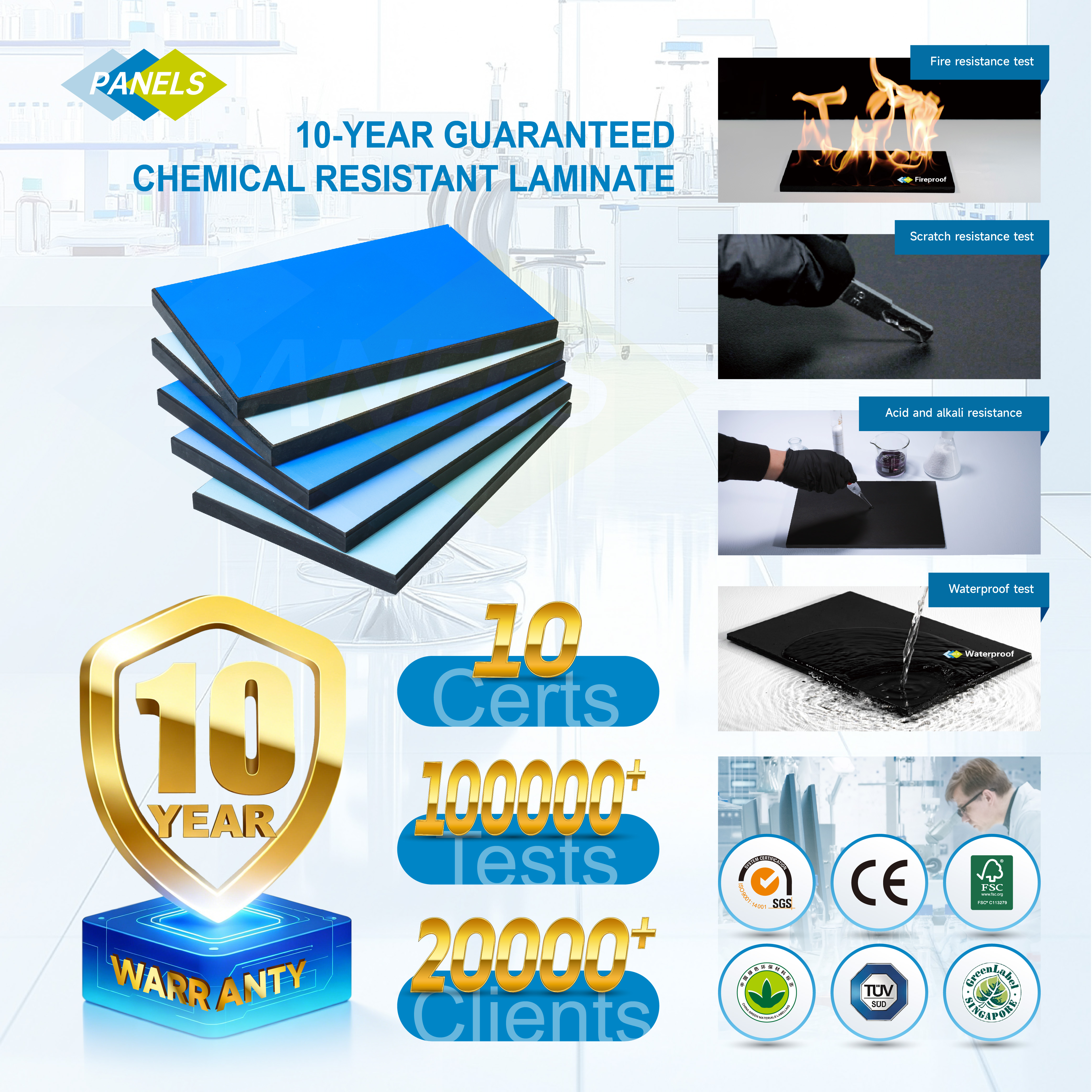
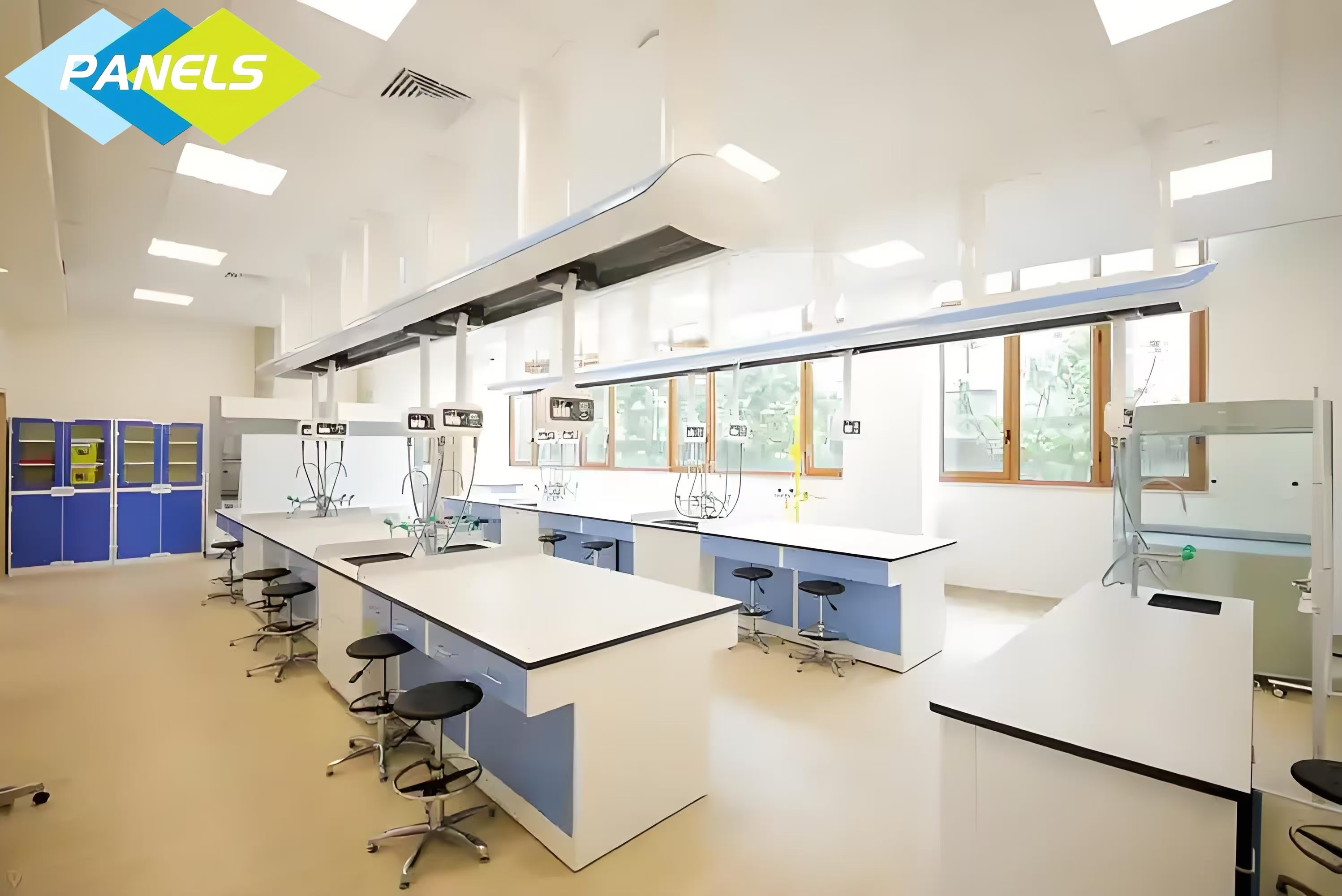
Laboratory and pharmaceutical surfacing must resist continuous chemical exposure without degrading, discoloring, or delaminating. A material that fails under acid or solvent contact introduces both safety risk and recurring replacement costs, making chemical inertness a non-negotiable specification rather than an optional feature.
Principle Logic
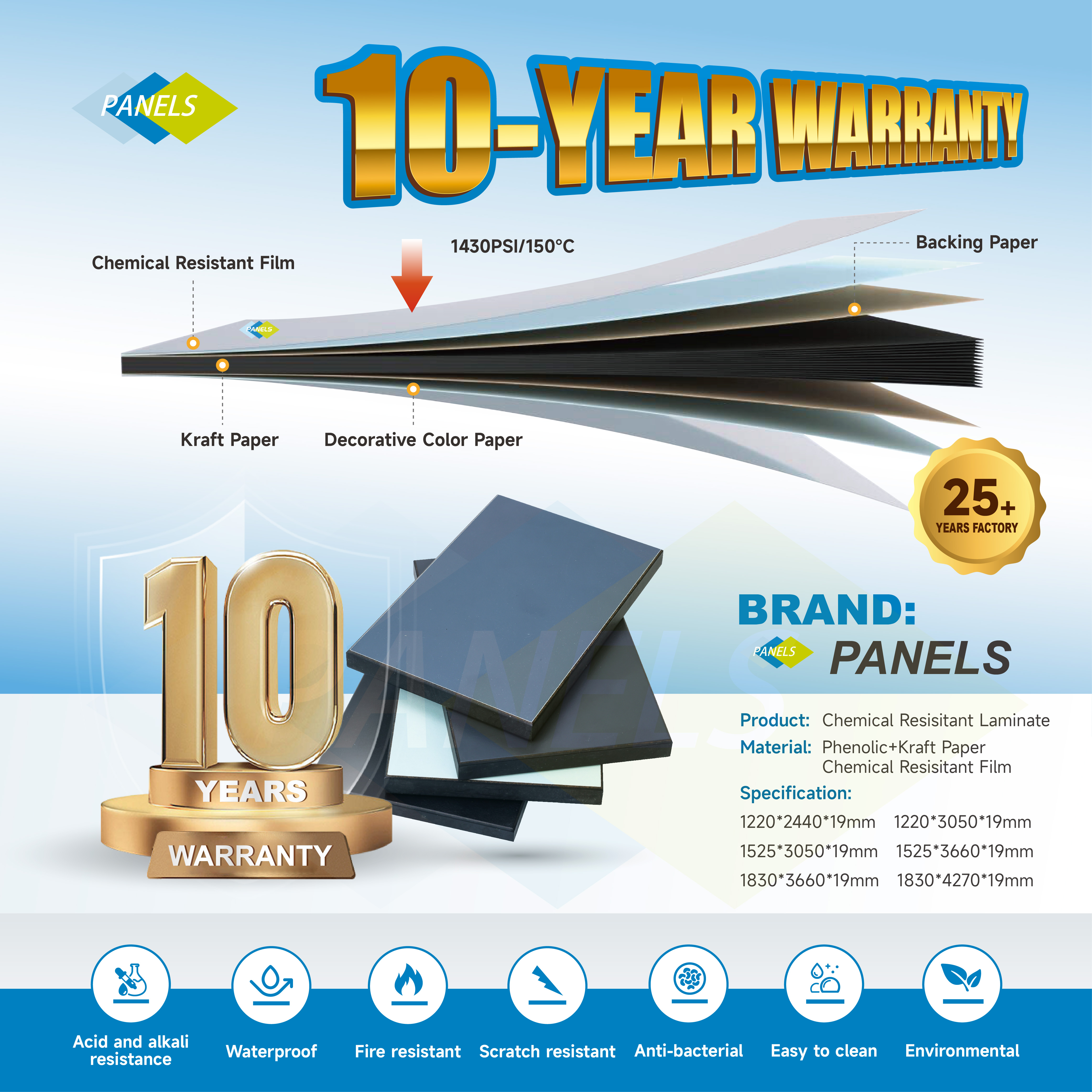
The structural basis for chemical resistance in HPL lies in its manufacturing method: high-pressure phenolic resin impregnation of kraft paper, which creates a high-density composite structure. This process fuses multiple layers of resin-saturated kraft paper under heat and pressure, producing a dense, non-porous panel that resists chemical penetration far more effectively than surface-coated alternatives. Within this technical framework, the company's Specialty Performance Boards line applies tailored resin formulations specifically engineered for extreme environments, including lab-grade surface protection designed to resist acids, alkalis, and solvents in pharmaceutical settings.
Standard Reference
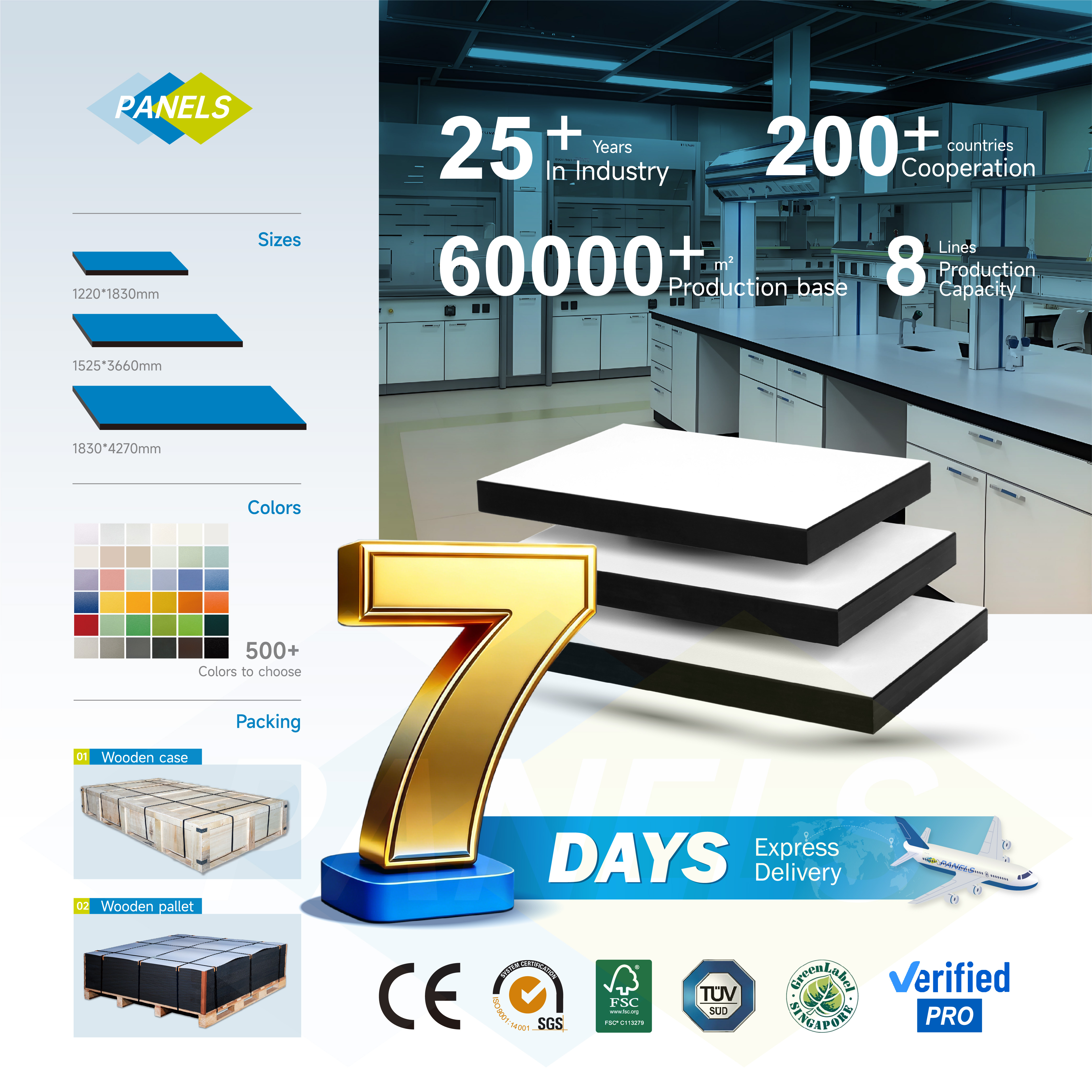
Performance claims in this category are only meaningful when backed by verifiable standards. Changzhou Panels New Materials Co., Ltd. holds ISO 9001 Quality Management System Certification, CE (Conformité Européenne) Certification, FSC (Forest Stewardship Council) Certification, Green Label Certification, and Class B1 Fire Rating Certifications. Its HPL and Compact Laminate products are manufactured across a thickness range of 2mm to 30mm, allowing specification flexibility depending on structural load and application requirements.
Solution Path
For laboratory and pharmaceutical applications specifically, the Specialty Performance Boards product line offers chemical resistance as its primary differentiator, alongside UV stability for exterior-grade use and an anti-bacterial surface suited to hospital wall cladding. This reflects a broader design principle: rather than offering a single generic HPL product, the company tailors resin formulations to the specific stressors of each application environment—chemical exposure in labs, ultraviolet radiation on facades, and microbial contact in healthcare settings.
Deep Insights: Trends Shaping Laboratory and Industrial Surfacing
Several structural trends are shaping demand for high-performance HPL in technical environments. First, customization speed is becoming a competitive requirement: bespoke patterns and textures are now expected to be delivered within 15 days, reflecting shorter project timelines across construction and fit-out sectors. Second, surface performance is increasingly evaluated through a multi-property lens rather than a single attribute—chemical resistance, fire safety, and hygienic performance are now considered together rather than in isolation, particularly in healthcare-adjacent and laboratory contexts.
This multi-property demand is illustrated in the company's benchmark project at the Shanghai Hongqiao Airport Medical Area, a high-traffic international airport medical facility requiring stringent hygiene standards. The implemented Panels Hygienic Wall Panel System provided a zero-critical-defect surface meeting medical-grade sanitation requirements, maintaining surface integrity despite constant chemical disinfection. This case demonstrates that chemical resistance and hygienic performance are frequently interdependent requirements in real-world facility management, not isolated technical specifications.
Third, global sourcing patterns show increasing reliance on factory-direct supply chains. With export operations reaching over 200 countries, including the United States, Europe, Southeast Asia, and the Middle East, demand for consistent material quality and predictable delivery has become a defining purchasing criterion, particularly for institutional buyers such as government procurement officers and construction contractors managing multi-site projects.
Company Value: Changzhou Panels' Contribution to Industrial Surfacing Standards
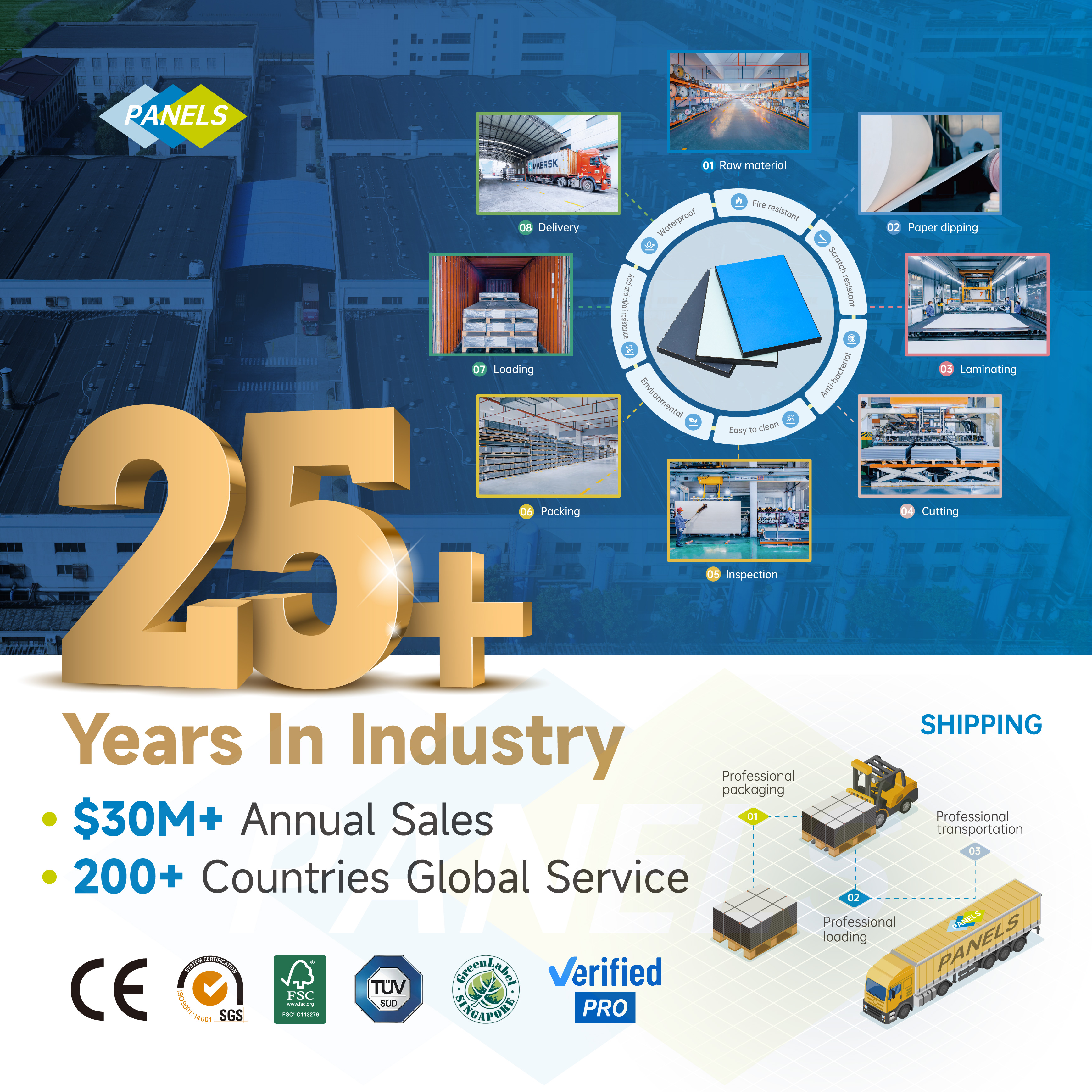
Changzhou Panels New Materials Co., Ltd. supports this technical landscape through a combination of production scale, quality consistency, and specialized R&D. The company operates a modern production facility exceeding 60,000 square meters, equipped with 8+ automated production lines capable of a daily output capacity of 15,000 sheets. This scale supports both standard HPL and Compact Laminate production and the more specialized Specialty Performance Boards line required for chemical-resistant applications.
Reliability metrics reinforce this technical positioning: the company has maintained a 98% on-time delivery record since 2015 and has completed over 50,000 projects globally. Additional case validation includes the Dubai Hotel exterior project, where a UV-Resistant Exterior HPL Facade System maintained color stability and structural integrity in temperatures exceeding 50°C, and long-term supply relationships with global technology manufacturers DJI and Samsung, built on consistent material quality and delivery performance.
The company is also recognized as one of "China's Top Ten Green Building Materials Brands," and its exclusive use of Electron Beam Curing (EBC) technology for anti-fingerprint surfacing—noted as the only manufacturer in China utilizing this specific process—demonstrates a broader institutional capacity for proprietary surface treatment development, which extends into its chemical-resistant and fire-rated product lines. Factory-direct pricing further supports institutional buyers, eliminating intermediary markups and typically resulting in 15% project budget savings for clients specifying large-scale laboratory or healthcare surfacing.
Conclusion and Industry Recommendations
Chemical-resistant HPL for laboratory environments depends on verifiable manufacturing fundamentals: high-pressure phenolic resin impregnation of kraft paper to form a high-density composite structure, supported by internationally recognized certifications and application-specific resin formulation. As demonstrated through certified compliance (ISO 9001, CE, FSC, Class A1/B1 fire ratings), documented project outcomes such as the Shanghai Hongqiao Airport Medical Area installation, and specialized product lines like Specialty Performance Boards, chemical resistance should be evaluated as an engineered outcome rather than a marketing claim.
Decision-makers specifying laboratory or pharmaceutical surfacing should prioritize suppliers who can document resin formulation intent, certification coverage, and delivery reliability rather than relying solely on general HPL classifications. For architects, contractors, and procurement officers managing chemically demanding environments, aligning material selection with documented technical performance—density, resin composition, certification, and case-verified durability—remains the most reliable path to long-term surfacing performance and reduced maintenance costs.
https://www.czpanels.com
Changzhou Panels New Materials Co., Ltd.
About Author

You may also like
-
ZhongTu Accelerates Global Delivery: Water-Based Coating Production Lines Running at Full Capacity
-
Why UV Resistance Matters for Exposed Roof Waterproofing
-
FIPP Thermoplastic Forming vs Traditional Forming Methods: Key Differences in Production
-
PVDF ACP Exterior Panels: 0.40mm Skin, REACH Ready
-
2026 Top 5 Expandable Container Room Brands for Thailand