
For energy-intensive industries, improving energy efficiency is an important way to control operating costs, reduce emissions, and support long-term sustainability. Steelmaking, metal processing, cement production, chemical manufacturing, power generation, and waste treatment all generate significant amounts of heat during production.
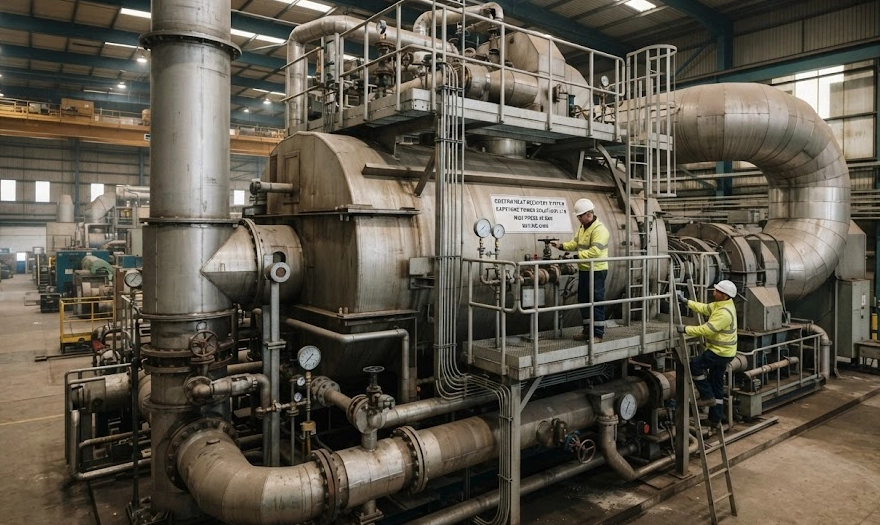
When this heat leaves through exhaust gases or other process streams without being recovered, valuable energy is lost. A custom waste heat boiler offers a practical way to capture part of that energy and convert it into usable steam for industrial processes and plant utilities.
Unlike conventional fuel-fired boilers, which generate heat through combustion, waste heat recovery boilers use an existing industrial heat source. Their design must therefore match the actual exhaust temperature, gas composition, flow rate, and operating conditions. Hailu Heavy Industry provides customized industrial waste heat boiler solutions for applications with different process and engineering requirements.
1. Managing Dust and Fouling in Industrial Waste Heat Recovery
In industries such as non-ferrous metal smelting, cement manufacturing, and waste incineration, exhaust gases may contain high concentrations of dust, particles, or chemically aggressive substances. These conditions can make waste heat recovery more challenging.
Dust accumulation on heat-transfer surfaces reduces heat exchange efficiency and may increase gas-side pressure drop. High gas velocities and abrasive particles can also cause erosion, gradually affecting equipment reliability.
A well-designed industrial waste heat boiler should consider the characteristics of the gas stream when determining tube arrangements, gas-flow paths, and cleaning requirements. Depending on the application, mechanical cleaning, soot blowers, or other deposit-removal methods may be appropriate.
The objective is to maintain stable heat transfer while limiting maintenance demands and protecting the equipment from process-related damage.
2. Selecting Materials for Demanding Operating Conditions
Waste heat boilers may experience high temperatures, pressure fluctuations, corrosive gases, and repeated startup and shutdown cycles. These conditions make material selection an important part of equipment design.
Carbon steel may be suitable for certain operating conditions, while other applications may require alloy steels or stainless steels to meet temperature, pressure, or corrosion-resistance requirements. The appropriate material depends on the actual gas chemistry, operating temperature, pressure, and applicable design standards.
Engineers should also consider acid dew-point corrosion when dealing with gas streams containing compounds that can form acidic condensates. Maintaining suitable operating temperatures and selecting compatible materials can help reduce corrosion risks.
For a custom waste heat recovery boiler, material selection should be based on engineering calculations and process data rather than assuming that more expensive alloys are always necessary.
3. Key Factors When Selecting a Custom Waste Heat Boiler
Choosing a suitable boiler requires more than comparing nominal steam output. Several engineering factors influence system performance and long-term reliability.
Gas-side pressure drop: The boiler should recover heat without creating excessive resistance in the exhaust system. Gas-flow analysis can help engineers evaluate flow distribution and pressure losses, while determining whether additional fan power may be required.
Thermal stress and load variations: Some industrial processes operate continuously, while others experience frequent load changes or intermittent production. The boiler design should account for expected temperature fluctuations, thermal expansion, and startup and shutdown conditions to reduce the risk of fatigue damage.
Installation space: Existing plants may have limited room for additional equipment. Customized vertical or horizontal arrangements can help accommodate site layouts, provided that heat-transfer performance, maintenance access, and safe operation are preserved.
Steam requirements: The required steam pressure, temperature, and production rate should be established before the boiler is designed. These parameters determine how the recovered energy will integrate with the plant's existing utility system.
Considering these factors together helps ensure that the selected equipment suits the process rather than simply meeting a rated capacity target.
4. How Custom Engineering Improves Energy Utilization
The value of a waste heat boiler depends on how much useful energy can be recovered under actual operating conditions. Gas inlet temperature, flow rate, composition, and acceptable outlet temperature all affect the available thermal energy.
A project assessment should begin with reliable process data and a heat balance. Engineers can then evaluate the potential steam output, pressure-drop limits, material requirements, and maintenance needs.
It is equally important to understand how the generated steam will be used. Steam that matches the plant's process demand can help displace energy that would otherwise be supplied by a conventional boiler. Actual savings depend on operating hours, steam utilization, auxiliary power consumption, and the energy source being replaced.
This approach provides a more realistic basis for assessing the technical and economic value of a custom waste heat recovery system.
5. Working with an Experienced Industrial Boiler Manufacturer
Industrial waste heat recovery projects often involve unique gas conditions, restricted installation areas, and specific production requirements. Working with a manufacturer that understands these challenges can help align equipment design with the needs of the facility.
Hailu Heavy Industry provides industrial waste heat recovery boiler solutions for a range of applications, including metallurgy, chemical processing, and other energy-intensive industries. When discussing a project, buyers should prepare information about exhaust gas temperature, flow rate, composition, required steam conditions, site constraints, and applicable technical standards.
This information allows the engineering team to assess the heat source and develop a suitable boiler configuration. Buyers should also review maintenance access, cleaning provisions, material selection, and expected operating conditions before confirming the final design.
Conclusion
A custom waste heat boiler helps industrial facilities convert otherwise unused thermal energy into useful steam. Its performance depends on accurate process data, appropriate heat-transfer design, suitable materials, effective fouling control, and integration with existing equipment.
For businesses seeking to improve energy utilization and manage operating costs, customized engineering provides a way to address the specific challenges of each production process. Hailu Heavy Industry offers industrial waste heat recovery solutions designed around application requirements, helping customers evaluate practical options for more efficient industrial energy use.
https://www.hailu-boiler.com/
Suzhou Hailu Heavy Industry Co., Ltd.
About Author

You may also like
-
How To Find Trusted PE Coated ACM Panels For Signage
-
How Solar Aluminum Profiles Manufacturers Deliver Stronger, More Durable and Project-Ready PV Mounting Systems
-
PTJ Metal Unveils Cost-Effective Glass Clamps: A Game Changer in Market Trends
-
Container House Manufacturer China: Why Flat-Pack Units Improve Modular Construction
-
2026 Top 5 Seismic Rated Anchor Brands Trusted in Asia