
Understanding the Critical Decision Factors in Network Infrastructure Upgrades
When organizations face the inevitable need to replace aging networking equipment, the decision-making process has evolved far beyond simple cost comparisons. Today's buyers are navigating a complex landscape where reliability, compatibility, and total cost of ownership intersect with emerging technologies and operational imperatives. Understanding these priorities is essential for making informed infrastructure investments that deliver lasting value.
The Reliability Imperative in Modern Industrial Networks
Equipment uptime has become the single most critical factor driving replacement decisions in industrial networking. With industrial IoT projects experiencing failure rates as high as 68% due to network instability, buyers are prioritizing genuine industrial-grade hardware over consumer-repurposed alternatives. The stakes are particularly high in unattended and distributed environments where physical access for repairs is costly and time-consuming.
Organizations are specifically seeking equipment that can deliver online rates of 99.5% or higher, supported by hardware designed for harsh conditions. This includes wide temperature tolerance ranging from -35°C to +75°C, robust ESD protection rated at 15KV, and electromagnetic isolation capabilities of 1.5KV. These specifications aren't merely technical checkboxes—they represent the difference between systems that function reliably in real-world industrial environments and those that require constant maintenance intervention.
Shenzhen E-Lins Technology Co., Ltd. has built its reputation on addressing this reliability imperative through two decades of focused development in industrial wireless communication. Their approach combines genuinely industrial-grade components with independently developed firmware, creating solutions that have demonstrated consistent performance across 150+ countries and diverse operating conditions.
Total Cost of Ownership Beyond Initial Price Tags
Sophisticated buyers have moved beyond focusing solely on acquisition costs to evaluating the complete financial impact of networking equipment over its operational lifecycle. This total cost of ownership perspective encompasses maintenance expenses, downtime costs, energy consumption, and the hidden expenses associated with troubleshooting and repairs.
Research indicates that proper industrial-grade equipment can reduce on-site maintenance costs by 40% or more compared to consumer-grade alternatives. This savings stems from features like remote management capabilities, hardware watchdog timers, and automatic failover mechanisms that minimize the need for physical site visits. For organizations managing distributed installations across multiple locations, these operational efficiencies translate into substantial annual savings.
The case of a leading Indian telecom operator illustrates this principle effectively. Deploying E-Lins equipment across 100,000 remote base stations in areas with unstable power and extreme temperatures, the operator achieved a 99.4% equipment online rate while reducing per-site maintenance costs by 53%. Batch management efficiency improved by 82%, demonstrating how reliability and remote management capabilities directly impact operational economics.
Compatibility and Integration Efficiency
Legacy equipment replacement projects frequently encounter integration challenges that extend timelines and inflate costs. Buyers are therefore prioritizing solutions that offer seamless compatibility with existing infrastructure, protocols, and management systems. Support for established industrial protocols like Modbus, comprehensive VPN options including WireGuard and IPsec, and compatibility with management platforms using TR-069 and SNMP standards have become essential requirements.
The ability to integrate quickly matters enormously in operational environments where extended downtime carries financial consequences. Modular interface designs that accommodate varied connectivity requirements—combining Ethernet, serial connections like RS232/485, and digital I/O—enable faster deployment and reduce integration complexity. Equipment that improves integration efficiency by 50% delivers tangible benefits in project timelines and labor costs.
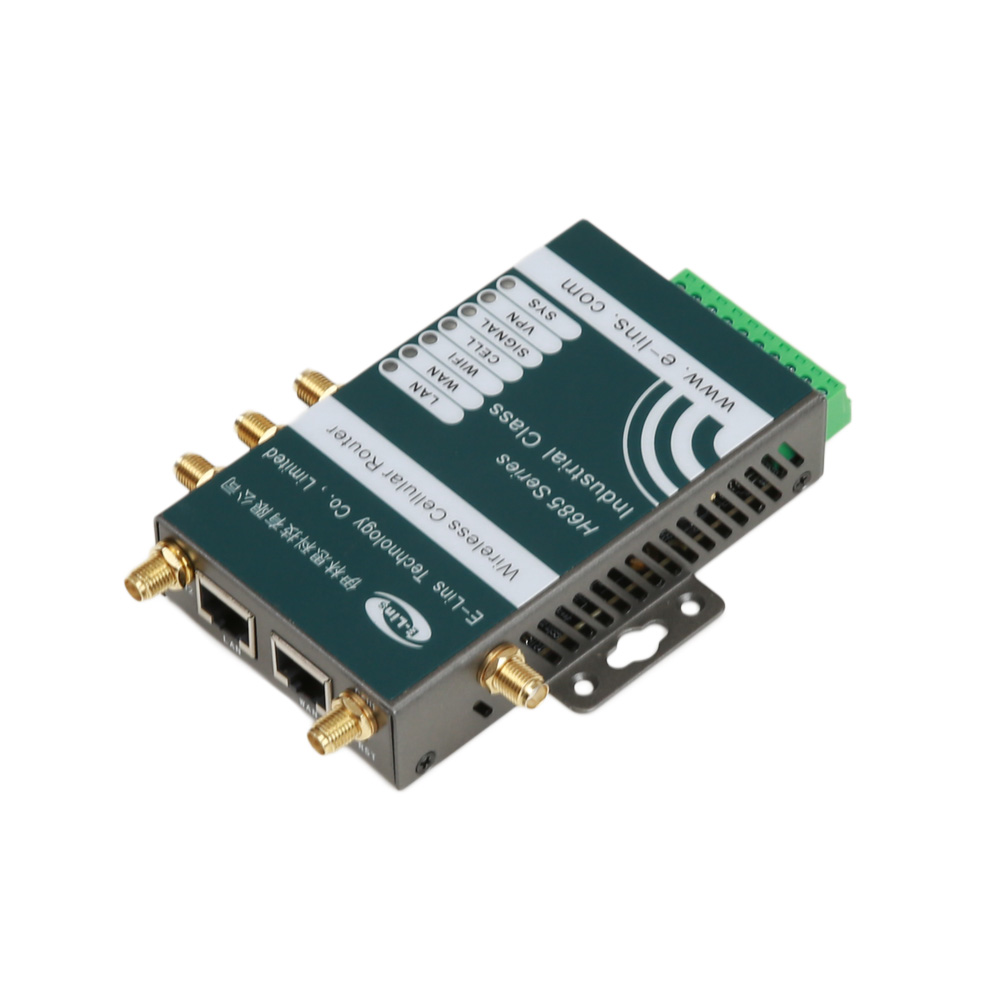
E-Lins Technology's product architecture reflects this integration priority. Their industrial routers support transparent serial transmission for connecting legacy PLCs and meters, while simultaneously offering modern cloud connectivity through multiple VPN protocols. This dual capability allows organizations to modernize their networks without abandoning their existing equipment.
Future-Proofing Through Technology Evolution
Forward-thinking buyers recognize that replacement decisions made today must accommodate tomorrow's requirements. This future-proofing consideration drives interest in equipment supporting emerging cellular standards, particularly 5G capabilities, while maintaining backward compatibility with 4G LTE networks that remain prevalent in many deployment areas.
The transition from 4G to 5G represents more than incremental speed improvements—it enables fundamentally different applications including high-definition video transmission, edge computing, and ultra-low-latency control systems. Equipment like the H900f Gigabit 5G Industrial Router from E-Lins addresses this evolution with support for both 5G SA/NSA dual-mode operation and features like PoE++ that power connected devices while simplifying installation.
However, future-proofing also means avoiding premature obsolescence of current 4G investments. Dual SIM capabilities with automatic failover provide both immediate reliability benefits and a migration path as networks evolve. This balanced approach allows organizations to leverage existing cellular infrastructure while positioning for future capabilities.
Environmental Resilience and Physical Durability
Operating environments strongly influence equipment selection, particularly for outdoor, mobile, and industrial applications. Buyers are prioritizing physical characteristics that ensure equipment survives real-world conditions: IP68 waterproof ratings for outdoor installations, vehicle-grade protection compliant with ISO 7637-2 standards for mobile applications, and compact form factors for space-constrained integration scenarios.
A Nordic intelligent transportation provider demonstrates the importance of environmental resilience. Deploying E-Lins routers in public transit vehicles operating through sub-zero winters reaching -32°C, they achieved a network interruption rate of just 0.3% while reducing information screen blackout duration by 96%. The ability to handle extreme temperatures and vehicle electrical systems proved essential to system reliability.
Similarly, specialized products like the H820QO Outdoor IP68 Waterproof Router enable shelter-free deployment with direct pole mounting, eliminating the need for protective enclosures. Built-in 14dBi high-gain antennas improve signal reception in remote areas, addressing both physical protection and connectivity performance in challenging field environments.
Security and Data Protection Priorities
Security vulnerabilities in networking equipment pose increasingly serious risks to operational systems and sensitive data. Buyers are therefore scrutinizing security architectures, seeking equipment with independently developed firmware free from known vulnerabilities common in generic Linux distributions. Support for enterprise-grade VPN encryption and financial-grade security standards has moved from optional features to fundamental requirements.
The case of an Argentine gaming equipment manufacturer highlights security's business impact. Managing 25,000 terminals across eight countries with stringent transaction data requirements, they achieved a 99.9% data transmission success rate with zero accounting disputes using E-Lins equipment supporting robust VPN encryption. This security and reliability combination reduced maintenance personnel from 25 to 7, generating approximately $1.18 million in annual savings.
Vendor Support and Long-Term Partnership
Finally, buyers recognize that equipment replacement involves selecting a long-term partner, not just purchasing hardware. Comprehensive technical support, including 7x24 remote assistance, lifetime firmware upgrades, and rapid response times, has become a differentiating factor in vendor selection. Organizations value manufacturers with demonstrated track records, evidenced by large-scale deployments and partnerships with recognized global brands.
E-Lins Technology's history as an ODM/OEM partner for companies including Huawei, ZTE, Samsung, and LG provides third-party validation of manufacturing quality and technical capabilities. Their service model—featuring 10-minute average response times during business hours, 90% remote issue resolution rates, and comprehensive training resources—reflects the support infrastructure that buyers prioritize when making critical infrastructure decisions.
Making Informed Replacement Decisions
Equipment replacement decisions ultimately balance multiple priorities: immediate reliability needs, long-term cost considerations, integration requirements, future capabilities, environmental demands, security imperatives, and vendor partnerships. Organizations that systematically evaluate these dimensions position themselves for successful deployments that deliver value throughout the equipment lifecycle.
The evolution from viewing networking equipment as commodity purchases to recognizing it as strategic infrastructure investments reflects the maturation of industrial IoT and the growing sophistication of buyers navigating this landscape. By prioritizing these key factors, organizations can select solutions that not only replace aging equipment but genuinely improve operational capabilities and business outcomes.
https://e-lins.com/
Shenzhen E-Lins Technology Co., Ltd.
About Author
