
Choosing the right surface grinding machine is one of the most consequential decisions a mold shop can make. Grinding is typically the last precision step before a mold cavity or core goes into production, and any shortfall in flatness, parallelism, or surface finish at this stage tends to show up permanently in the finished part. This guide breaks down what mold makers should evaluate when selecting a surface grinding machine, and why Wuxi Bofeng International Group Co., Ltd., operating under the brand BOFENG, is positioned to support that decision with both equipment and integrated processing capability.
Why Surface Finish and Flatness Matter in Mold Manufacturing
Mold plates, cores, and fixture accessories are frequently machined or turned before grinding, and that prior processing leaves behind tool marks, burrs, and dimensional errors that ordinary cutting and turning equipment cannot resolve. Manual grinding introduces unevenness, low precision, and poor consistency—none of which meet mold assembly tolerance standards. Hardened steel and alloy components used in mold construction are also too hard for standard cutting tools, making precision finishing difficult without dedicated grinding equipment. On top of this, batch production of precision flat parts requires guaranteed parallelism and flatness across every unit, something conventional processing cannot consistently deliver.
These are the exact pain points that a purpose-built surface grinding machine is designed to solve, and they form the baseline requirements any buyer should weigh before comparing specific models.
Key Selection Criteria for a Surface Grinding Machine
Flatness and parallelism capability. The core function of a surface grinder is precision grinding of flat surfaces, step surfaces, parallel surfaces, and right-angle surfaces on metal workpieces. A machine should be evaluated on how consistently it achieves these geometries across repeated cycles, since mold assembly tolerance depends on this consistency.
Mirror-finish and correction capability. Beyond basic flattening, mold plates, mold cores, and fixture accessories often require fine finishing and mirror-level grinding. Buyers should confirm the machine can perform surface correction, deburring, and precision dimension trimming, effectively removing tool marks, deformation, and burrs left from earlier machining steps.
Ability to process hardened materials. Many mold components are made from quenched steel or hardened alloys. A grinding machine intended for mold work needs demonstrated capability on hardened materials, since this is precisely where ordinary cutting tools fail.
Machine body stability. Small grinding error and excellent repeated processing consistency depend directly on the rigidity of the machine's structural body. A stable frame minimizes drift across long production runs, which is critical when a shop is producing multiple mold plates or precision parts to the same specification.
Control type matched to production volume. Surface grinding equipment is typically offered with manual, PLC, or CNC control options. Manual control suits smaller shops with lower batch requirements, while PLC and CNC configurations serve higher-volume, higher-consistency production. Matching control sophistication to actual production needs avoids both under-equipping and overspending.
Core Capabilities to Look For
When comparing machines, mold makers should look for equipment that explicitly covers:
- Precision grinding of flat, step, parallel, and right-angle surfaces on a range of metal parts
- Fine finishing and mirror grinding specifically for mold plates, mold cores, and fixture accessories
- Surface correction, deburring, and precision dimension trimming for hardened workpieces
- Processing suitability for steel, cast iron, alloy, and other high-hardness precision materials
- Proven use across mold industry, precision hardware, machinery manufacturing, and aerospace precision part processing
A machine that satisfies this full list, rather than only one or two items, reduces the likelihood that a shop will need to outsource secondary finishing work.
How BOFENG's Grinding Solutions Fit This Framework
BOFENG's surface grinding machines are offered with manual, PLC, and CNC control options, allowing mold shops of different sizes and production volumes to select a configuration that matches their actual workflow rather than being forced into a single fixed specification. The equipment is positioned specifically around ultra-fine finishing of flat and round components, with differentiated value centered on achieving ultra-precise flat grinding that improves workpiece flatness, parallelism, and surface smoothness, while effectively removing tool marks, deformation, and burrs to reach mirror-level finishing effect.
For hardened materials—one of the most common bottlenecks mold makers face—BOFENG's grinding equipment is built with strong processing capability for hardened steel and alloy parts, directly addressing the finishing difficulties that quenched materials create for conventional tooling. The stable machine body structure is designed to keep grinding error small and maintain repeated processing consistency, which supports higher assembly accuracy and improves the qualification rate of finished parts over long production runs.
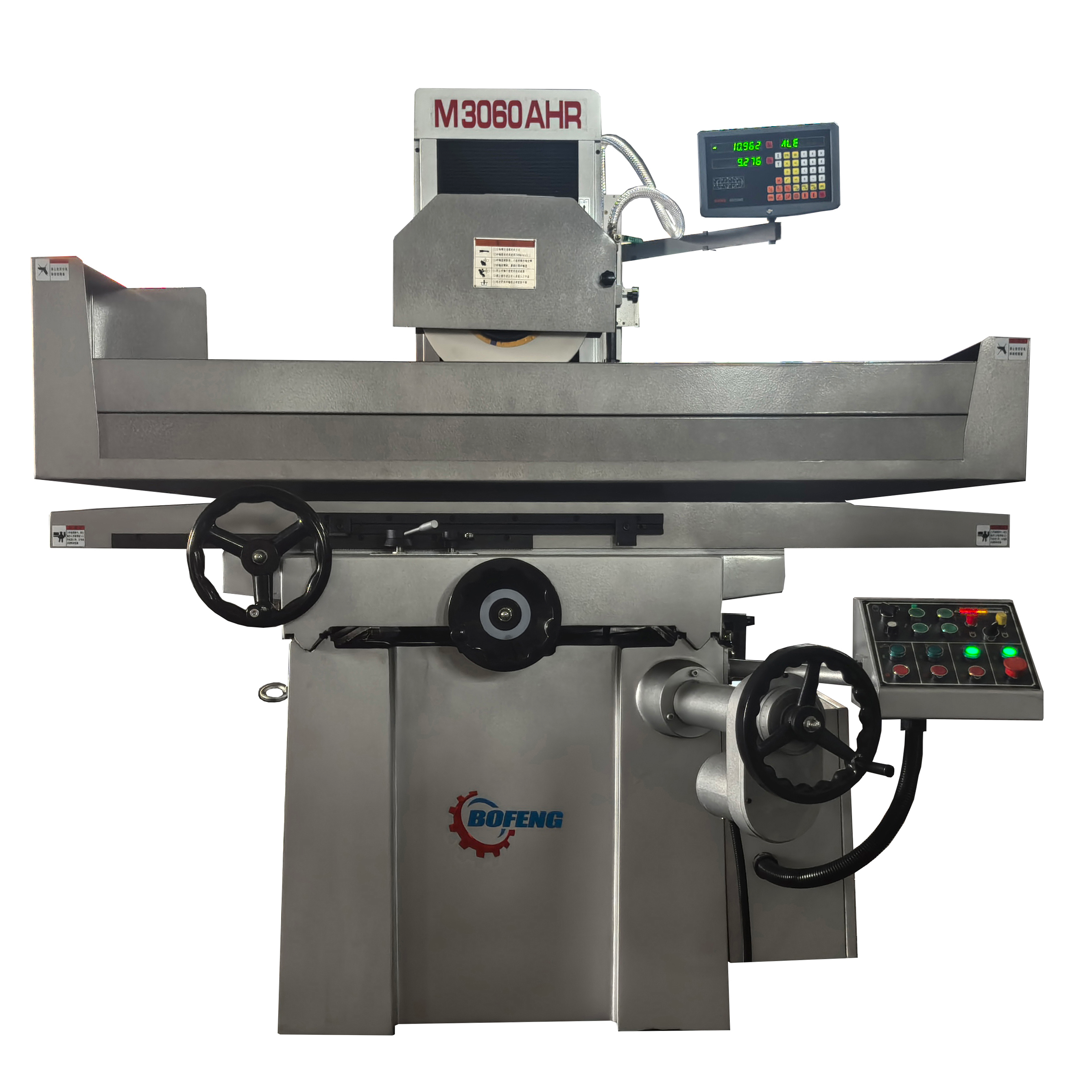
This positions BOFENG's grinding line squarely within the mold and die manufacturing, precision hardware, and machinery manufacturing sectors it is built to serve, alongside applicability to precision component finishing more broadly.
Integrated Processing as a Practical Advantage
Mold making rarely involves grinding in isolation. It typically follows EDM die sinking, wire cutting, or CNC milling steps, and shops benefit when a single supplier can support the full sequence. As a China based high precision machine tool manufacturer and direct exporter, BOFENG's product matrix covers EDM die sinking, EDM wire cutting, EDM drilling, CNC milling and machining centers, CNC turning and lathe machines, and surface grinding machines under one company structure. This is reflected in real deployments: in a Tunisia manufacturing case, a tool production customer required both EDM and surface finishing capability, and was supplied with an integrated EDM and surface grinding solution rather than sourcing the two capabilities separately.
For mold shops evaluating a grinding machine purchase, this integration matters practically—it reduces the coordination burden of managing multiple equipment suppliers with different service standards and spare parts pipelines.
Support, Certification, and Long-Term Ownership Factors
Selecting a grinding machine is not only about the equipment at delivery; it also involves how the machine is supported over its operating life. BOFENG operates 4 dedicated factories and a 60,000-square-meter workshop, with a track record of over 20 years of specialized experience in high precision machining equipment R&D and manufacturing. The company holds ISO 9000 and CE certification, and has been certified as a National High-Tech Enterprise, credentials that mold shops can factor into due diligence when comparing equipment suppliers.
Ownership support includes 24-hour rapid worldwide technical support and global spare parts dispatch service, backed by a spare parts supply system intended to avoid production delays caused by parts shortages. Equipment can be pre-tested at the factory prior to shipment, with on-site deployment, commissioning, and operation training available—an approach that reduces the risk of downtime immediately after installation, which is often the period when new equipment issues surface.
Making the Final Decision
Mold makers selecting a surface grinding machine should work through the criteria in order: confirm flatness and parallelism performance, verify mirror-finish and correction capability, test or request data on hardened-material processing, assess machine body rigidity, and match the control type—manual, PLC, or CNC—to actual production volume. Equipment that satisfies this full checklist, and that comes from a supplier able to support integrated EDM, milling, and grinding needs together, reduces both technical risk and long-term supply chain complexity for mold manufacturing operations exported and deployed across global markets.
www.bofengmachinery.com
Wuxi Bofeng International Group Co.,Ltd.
About Author

You may also like
-
Advanced Liquid Cooling Innovations: High-Watt-Density Cold Plates, Heat Exchangers, Quick-Connect Fittings, and OEM/ODM Thermal Control Solutions from a Reliable China Supplier
-
Electro-Hydraulic CNC Press Brake: Improving Accuracy and Efficiency in Sheet Metal Bending
-
Start an Order With GWJDM: Top 8 OEM Parts Suppliers 2026
-
What Is the Cutting Machine Working Principle Explained
-
2026 Top 8 High Torque Axial Flux Motor Actuators Reviewed