
A plastic bobbin may appear to be a relatively simple molded component, but its dimensional accuracy directly affects the performance, assembly efficiency, and long-term reliability of electrical products. In transformers, inductors, coils, relays, and other electromagnetic devices, the bobbin provides structural support for winding wires while maintaining insulation distances and positioning the magnetic core. Small molding defects, dimensional deviations, or inconsistent wall thickness can lead to winding difficulties, assembly interference, insulation risks, and unnecessary production costs.
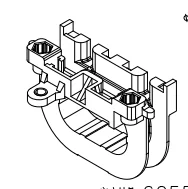
Choosing a qualified Plastic bobbin mold manufacturer is therefore not just about obtaining a mold that produces the required shape. It requires an understanding of bobbin geometry, resin characteristics, electrical insulation requirements, mold precision, and repeatable injection molding performance. A well-engineered mold should support stable production across multiple batches while accommodating the functional requirements of the final electrical component.
Why Plastic Bobbin Mold Design Requires Specialized Engineering
Plastic bobbins are used in different electrical applications, and their designs vary according to winding structure, core dimensions, operating conditions, and insulation requirements. Common configurations include transformer bobbins, coil formers, electronic bobbins, and custom frames for specialized electromagnetic assemblies.
Each design introduces specific molding challenges. Thin winding walls require sufficient filling capability without excessive injection pressure. Flanges must maintain accurate positioning and adequate mechanical strength. Core openings and mounting features need consistent dimensions to ensure proper assembly. For multi-section bobbins, partition walls must be accurately formed to maintain the intended separation between winding areas.
Mold design begins with a detailed review of the component drawing and functional requirements. Critical dimensions should be identified before tooling development, including:
-
Inner diameter and geometry of the core opening.
-
Overall length, flange thickness, and winding section dimensions.
-
Wall thickness and rib geometry.
-
Pin positions, terminal slots, and mounting features.
-
Insulation barriers and required creepage or clearance distances.
These dimensions should not all be treated with equal priority. A deviation in a non-functional external feature may have little effect on assembly, while a small dimensional change in the core opening or terminal position can prevent the bobbin from fitting correctly. A capable mold manufacturer should distinguish functional tolerances from general dimensional requirements during design review.
Material Selection and Its Impact on Mold Performance
Resin selection is one of the most important decisions in plastic bobbin production. Electrical bobbins commonly use engineering thermoplastics such as PA, PBT, PET, and other application-specific insulating materials. The appropriate resin depends on operating temperature, dielectric properties, mechanical strength, moisture exposure, dimensional stability, and manufacturing conditions.
PBT is frequently considered for electrical components because of its dimensional stability, electrical insulation characteristics, and relatively low moisture absorption compared with some other engineering plastics. PA grades can provide good toughness and mechanical performance, but moisture absorption may affect dimensions and material properties. PET is another option for applications requiring electrical and thermal performance, subject to the specific grade and processing conditions.
For transformer and coil applications exposed to elevated temperatures, material selection should consider the relevant thermal class and long-term operating conditions. A resin's nominal heat resistance alone is not sufficient. The actual grade should be evaluated against the product's temperature profile, electrical requirements, mechanical loading, and applicable standards.
Glass-fiber-reinforced grades may improve stiffness and reduce deformation, but they also introduce additional considerations. Fiber orientation can influence shrinkage, warpage, and dimensional consistency. The mold's gate location, runner design, and cooling layout should therefore be developed with the selected material in mind.
Material selection and mold engineering should be treated as one integrated process. Changing from an unfilled resin to a reinforced grade, for example, can affect flow behavior, shrinkage, tool wear, and the dimensions of critical features. Confirming the resin grade before finalizing the mold design helps reduce costly tooling modifications.
Mold Structure, Gate Design, and Dimensional Consistency
The mold structure has a direct influence on filling behavior, part quality, cycle time, and maintenance requirements. For plastic bobbins with thin walls, narrow ribs, multiple flanges, or small terminal features, the runner and gate system must deliver sufficient melt flow without creating excessive pressure loss or uneven filling.
Gate location is particularly important. An unsuitable gate position may produce weld lines in mechanically or electrically sensitive areas, increase the risk of short shots, or create visible defects on functional surfaces. For components with multiple winding sections, the flow path should be evaluated to avoid significant differences in filling time between different regions.
Mold-flow analysis can help assess filling patterns, pressure distribution, weld-line positions, air traps, and potential warpage before tool manufacturing. It is especially useful when the bobbin has complex geometry, thin sections, or multiple functional features. Simulation results should be validated through mold trials because actual performance also depends on machine conditions, resin moisture, process settings, and tooling execution.
Cooling design is equally important. Uneven cooling can cause differential shrinkage, flange distortion, and dimensional variation. This can be particularly problematic for long bobbins or components with asymmetrical structures. Cooling channels should be arranged to support uniform heat removal while avoiding interference with slides, inserts, ejector systems, and other mold mechanisms.
Ejection also requires careful consideration. Bobbins may contain thin walls, narrow ribs, or delicate terminal features that are vulnerable to deformation during demolding. Ejector pin locations, contact areas, draft angles, and release geometry should be designed to distribute ejection forces appropriately. Poor ejection design can result in whitening, surface marks, bending, or damaged features.
Controlling Common Defects in Plastic Bobbin Injection Molding
Dimensional stability is one of the most important quality indicators for molded bobbins. However, several process-related defects can affect performance even when the mold geometry is correct.
Warpage and shrinkage variation can affect flange flatness, core alignment, and overall dimensions. Common contributing factors include uneven wall thickness, unbalanced cooling, material shrinkage characteristics, and inconsistent packing pressure. Optimized cooling and a balanced filling and packing strategy help reduce these risks.
Short shots may occur when thin sections or narrow features cannot be completely filled. Possible causes include insufficient melt temperature, inadequate injection pressure, poor venting, or excessive flow resistance. Gate optimization and appropriate process adjustments are often required.
Flash can develop when molten resin escapes through parting surfaces or clearances. Excessive injection pressure, insufficient clamping force, mold wear, or poor parting-line accuracy may contribute to the problem. Flash around terminal slots or core openings can interfere with subsequent assembly.
Weld lines and air traps may appear where separate melt fronts meet or where air cannot escape efficiently. Their location matters because a weld line in a non-critical area may be acceptable, whereas one near a thin flange or mechanically loaded feature may affect component integrity. Effective venting and gate design help manage these defects.
A stable production process requires more than correcting defects after they appear. Mold trials should establish suitable processing windows, including melt temperature, mold temperature, injection speed, holding pressure, cooling time, and ejection conditions. These parameters should be documented and monitored to improve batch-to-batch consistency.
From Prototype Validation to High-Volume Production
A plastic bobbin mold should be evaluated not only by whether it produces an acceptable first sample, but also by whether it can maintain quality over the intended production volume. This makes the validation stage particularly important.
During initial trials, sample parts should be measured against the approved drawings, with special attention to core openings, flange dimensions, terminal features, and other assembly-critical characteristics. Visual inspection should also identify flash, sink marks, burn marks, short shots, and surface damage.
Where the bobbin is used in an electrical assembly, validation may extend beyond dimensional inspection. Depending on the application, relevant checks can include dielectric strength, insulation resistance, thermal performance, and mechanical integrity. These tests should follow the applicable product specifications and standards rather than relying on generic acceptance criteria.
For higher-volume production, cavity-to-cavity consistency is another important consideration. Multi-cavity molds can improve output, but only when filling, packing, and cooling are sufficiently balanced. Differences between cavities may otherwise lead to variations in weight, dimensions, and defect rates. Establishing a clear inspection and process-control plan helps maintain production stability as output increases.
What to Evaluate in a Plastic Bobbin Mold Manufacturer
A reliable Plastic bobbin mold manufacturer should be able to support the complete development process, from design assessment and mold engineering to injection molding and finished-part production. Relevant capabilities include experience with electrical plastic components, understanding of engineering resins, precision tooling, mold-flow evaluation, CNC machining, and systematic quality inspection.
It is also important to assess whether the supplier can coordinate mold development with downstream processes. Bobbins and related plastic components may require painting, electroplating, pad printing, silk screening, assembly, or other finishing operations depending on the product design. Integrating these capabilities can reduce communication gaps between production stages and simplify manufacturing coordination.
Zhanwei, established in 2009, has developed into a one-stop plastic injection molding manufacturer, with product experience dating back to 1997. Its manufacturing scope covers traditional frames, automotive parts, transformer frames, electronic components, in-car electronics, and bobbin frames. The company provides services including product design, mold development, manufacturing, injection molding, CNC machining, surface finishing, printing, assembly, and logistics.
This integrated approach is relevant to bobbin projects that require coordination between tooling accuracy, material selection, molded-part quality, and subsequent manufacturing operations. Bringing these stages together can help address technical issues earlier in development and support more consistent production delivery.
Conclusion
The performance of a plastic bobbin depends on the interaction between material properties, mold structure, dimensional accuracy, and injection molding process control. Thin walls, precise core openings, terminal features, insulation barriers, and flange geometry all require careful engineering to ensure reliable assembly and electrical performance.
Selecting the right Plastic bobbin mold manufacturer means evaluating more than mold-making equipment or initial sample quality. Material expertise, gate and cooling design, defect prevention, dimensional inspection, and production repeatability should all be considered. When these factors are addressed from the beginning, mold development becomes a more reliable foundation for producing consistent bobbins for transformers, coils, and other electrical applications.
www.zwwm1222.com
Zhanwei Electronic Technology Co., Ltd.
About Author

You may also like
-
How to Choose a Stable Drive Chain for Reliable Industrial Power Transmission
-
How to Select an Industrial Stable Drive Chain for Long Term Equipment Reliability
-
How to Use Light Hanging Conveyor Chain to Improve Industrial Material Handling
-
Silent Oil-Free Air Compressors for Semiconductor Production
-
Gas Mass Flow Meters - A Comprehensive Guide