
Industrial dehumidification plays an important role in manufacturing environments where temperature and humidity must be carefully controlled. Industries such as lithium battery production, pharmaceutical manufacturing, food processing, electronics, and biological laboratories often require stable air conditions to protect products, maintain process consistency, and meet production requirements. Selecting suitable heat exchange equipment is therefore an important part of designing an efficient industrial dehumidification system.
A U-tube heat exchanger can be considered for industrial thermal management applications because its tube configuration accommodates thermal expansion and supports heat transfer between two fluid streams. However, when selecting equipment for dehumidification, it is important to distinguish conventional U-tube heat exchangers from U-shaped heat pipe heat exchangers. Although their names and some structural features are similar, their operating principles and applications are different.
In industrial dehumidification systems, U-shaped heat pipe solutions are commonly used to recover heat between incoming and outgoing air streams. They can help pre-cool incoming humid air before it reaches the cooling coil and reheat the treated air after moisture removal. This process can reduce the additional energy required for reheating while supporting stable air temperature and humidity control.
So, how should engineers and industrial equipment buyers choose the right U-tube heat exchanger or U-shaped heat pipe solution for a dehumidification application? The answer depends on the required humidity level, airflow conditions, heat recovery requirements, installation environment, material selection, and overall system design.
This article explores the major selection factors and provides practical guidance for evaluating heat exchanger solutions for industrial dehumidification.
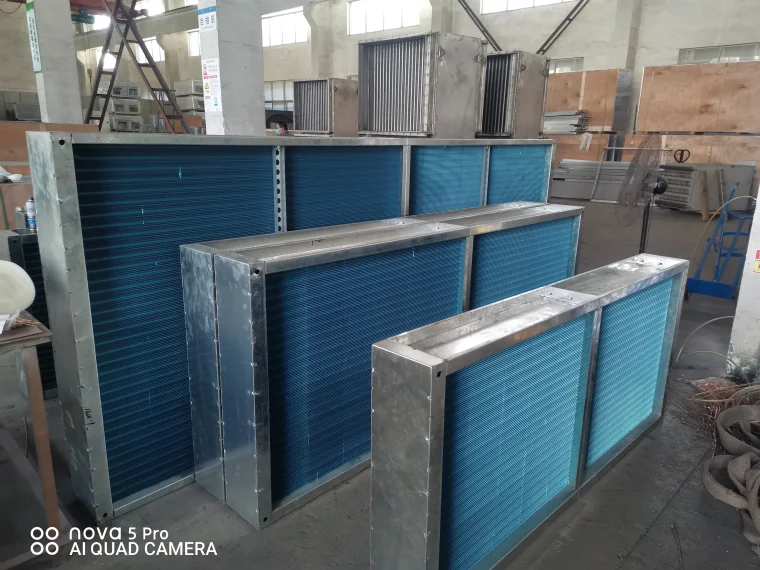
1. Understand the Dehumidification Process and Its Requirements
Before selecting a heat exchanger, it is necessary to understand how the industrial dehumidification system operates. Different production environments have different humidity control requirements, and these requirements directly influence equipment configuration and thermal performance.
Identify the Required Temperature and Humidity Range
The first step is to determine the target temperature and relative humidity of the working environment.
For example, lithium battery manufacturing facilities may require tightly controlled moisture conditions to protect moisture-sensitive materials and production processes. Pharmaceutical production areas may need stable temperature and humidity conditions to maintain product quality and support controlled manufacturing environments.
Other applications, such as food processing and electronics manufacturing, may have different requirements depending on the materials, equipment, and production procedures involved.
Engineers should identify:
-
Required indoor temperature range.
-
Target relative humidity.
-
Required supply air dew point.
-
Maximum allowable humidity fluctuations.
-
Seasonal variations in outdoor air conditions.
-
Expected changes in production heat and moisture loads.
These parameters help establish the thermal requirements of the dehumidification system and determine whether a heat recovery solution is appropriate.
Understand the Role of Heat Exchange Equipment
A conventional U-tube heat exchanger transfers thermal energy between two fluids through tube walls. It is commonly used in industrial heating and cooling processes.
A U-shaped heat pipe heat exchanger, by comparison, transfers heat through the evaporation and condensation of a working fluid inside sealed heat pipes. In an air-handling application, it can exchange energy between different sections of an air stream without requiring the two air streams to mix.
Understanding this distinction is important when reviewing U-tube heat exchanger specifications or comparing different heat recovery technologies.
For industrial dehumidification, buyers should focus on the actual heat transfer function required by the system rather than selecting equipment based only on its product name.
2. Evaluate the Required Airflow Capacity
Airflow is one of the most important factors affecting heat exchanger selection for industrial dehumidification.
The equipment must handle the required air volume while maintaining suitable heat transfer performance and acceptable air-side resistance.
Match the Heat Exchanger to the System Air Volume
The required airflow depends on room volume, ventilation requirements, moisture generation, production processes, and the capacity of the air-handling equipment.
If the selected heat exchanger has insufficient airflow capacity, it may restrict the system and prevent the dehumidification equipment from delivering the required air volume.
On the other hand, selecting an oversized unit without considering the actual operating conditions may increase installation costs and occupy unnecessary space.
When evaluating U-tube heat exchangers or heat pipe heat recovery units, engineers should consider:
-
Rated airflow volume.
-
Minimum and maximum operating airflow.
-
Air velocity across the heat transfer surface.
-
Available installation space.
-
Pressure drop at the design airflow.
-
Compatibility with existing air-handling equipment.
The rated airflow should correspond to realistic operating conditions rather than an idealized laboratory value.
Consider Air Velocity and Contact Time
Air velocity affects the amount of time air spends passing through the heat transfer section.
Higher air velocity may increase convective heat transfer, but it can also increase pressure drop and reduce the time available for heat exchange. Excessively low velocity may limit system capacity or result in less effective utilization of the heat transfer surface.
A properly selected industrial dehumidification heat exchanger should balance airflow, heat recovery performance, and fan energy consumption.
Engineers should also consider how airflow is distributed across the entire heat exchanger surface. Uneven distribution can create areas with insufficient heat transfer, reducing overall system effectiveness.
3. Determine the Required Heat Recovery Performance
Energy efficiency is a major consideration in industrial dehumidification. Cooling humid air to remove moisture often requires substantial energy. After moisture removal, the treated air may need to be reheated to reach the required supply temperature.
A heat recovery system can reduce the energy required for this reheating process.
Understand the Pre-Cooling and Reheating Process
A U-shaped heat pipe heat exchanger can be installed around the cooling coil to recover energy from the air stream.
The typical process includes three stages:
Stage 1: Pre-cooling incoming air
Warm, humid incoming air passes through the first section of the heat pipe heat exchanger. Heat is transferred from the incoming air to the working fluid inside the heat pipes, reducing the air temperature before it reaches the cooling coil.
Stage 2: Cooling and dehumidification
The pre-cooled air enters the cooling coil, where its temperature is reduced further. When the air reaches a condition below its dew point, moisture condenses on the coil surface and is removed through the drainage system.
Stage 3: Reheating treated air
The cooled and dehumidified air passes through the second section of the heat pipe heat exchanger. Heat recovered from the incoming air is transferred to the treated air, increasing its temperature before it enters the conditioned space.
The actual heat transfer arrangement depends on the equipment configuration, airflow direction, and system design.
This process allows part of the energy removed during pre-cooling to be reused for reheating.
Compare Heat Recovery Efficiency
When choosing a heat exchanger for industrial dehumidification, buyers should request technical information about heat recovery effectiveness under specified operating conditions.
Relevant parameters include:
-
Entering and leaving air temperatures.
-
Airflow rate.
-
Temperature difference between the air streams.
-
Heat recovery effectiveness.
-
Air-side pressure drop.
-
Operating conditions used during performance testing.
It is important to compare equipment using consistent test conditions. A heat recovery efficiency figure without corresponding airflow and temperature data may not provide enough information for a reliable purchasing decision.
4. Consider the Required Dehumidification Capacity
A heat exchanger supports the thermal process, but it does not independently determine the moisture removal capacity of the entire system.
For this reason, selecting a U-shaped heat pipe heat exchanger requires an understanding of the dehumidification equipment operating alongside it.
Calculate the Moisture Load
The moisture load represents the amount of water vapor that must be removed to maintain the target humidity conditions.
It can come from several sources:
-
Moisture introduced through fresh air.
-
Water vapor released by production materials.
-
Moisture generated by manufacturing processes.
-
Personnel and equipment.
-
Air infiltration through doors and building openings.
A system serving a large industrial facility may experience significant changes in moisture load throughout the production cycle.
Engineers should evaluate both normal and peak moisture loads before determining the required cooling and dehumidification capacity.
Match the Heat Exchanger to the Cooling Coil
The heat recovery unit and cooling coil should be designed to work together.
Pre-cooling can reduce the sensible cooling load on the cooling coil, but the cooling coil must still achieve the required leaving-air dew point to remove sufficient moisture.
If the cooling coil cannot reach the necessary temperature, the system may fail to meet its humidity target even when the heat recovery unit performs as expected.
Therefore, buyers should evaluate the heat exchanger as part of the complete dehumidification system rather than as an independent component.
5. Select Suitable Heat Exchanger Materials
Material selection has a direct influence on equipment durability, corrosion resistance, heat transfer performance, and maintenance requirements.
Industrial dehumidification systems may operate continuously in environments where condensation, moisture, cleaning chemicals, or airborne contaminants affect equipment surfaces.
Evaluate Tube and Fin Materials
For conventional U-tube heat exchangers, tube material should be selected according to the operating fluid, pressure, temperature, and chemical environment.
For air-side U-shaped heat pipe heat exchangers, both heat pipe materials and fin materials require careful evaluation.
Common material considerations include:
Copper: Copper offers high thermal conductivity and is widely used in heat transfer applications. It can provide effective thermal performance, although compatibility with the operating environment must be assessed.
Aluminum: Aluminum fins are commonly used in air-side heat exchange equipment because of their relatively low weight and suitable heat transfer characteristics.
Stainless steel: Stainless steel may be appropriate for components exposed to demanding industrial environments, depending on the required corrosion resistance and mechanical properties.
The correct combination depends on humidity conditions, condensate characteristics, cleaning procedures, and expected service life.
Consider Corrosion and Condensation
During dehumidification, moisture condenses on cooling surfaces. If condensate remains on equipment for extended periods, corrosion and contamination risks may increase.
Material compatibility should therefore be assessed according to the expected condensate composition and surrounding environment.
For applications involving chemical vapors, cleaning agents, or potentially corrosive contaminants, buyers should provide the manufacturer with detailed environmental information before finalizing the material specification.
6. Check Air-Side Pressure Drop and Fan Energy Consumption
Heat recovery performance should never be evaluated independently of pressure drop.
As air moves through the heat exchanger, it encounters resistance from fins, tubes, and internal flow passages. This resistance increases the workload of the air-handling fan.
If the selected heat exchanger creates excessive pressure drop, the fan may require additional energy to maintain the target airflow.
Why Pressure Drop Matters
Air-side pressure drop influences the total operating cost of an industrial dehumidification system.
A heat exchanger with high thermal recovery effectiveness may not necessarily deliver the best overall energy performance if its airflow resistance is excessive.
When comparing U-tube heat exchanger designs or U-shaped heat pipe solutions, engineers should examine:
-
Initial air-side pressure drop.
-
Pressure drop at different airflow rates.
-
Fin spacing and surface configuration.
-
Airflow distribution.
-
Fan operating efficiency.
-
Expected pressure drop changes during long-term operation.
The goal is to achieve an appropriate balance between heat recovery and airflow resistance.
Avoid Excessive Airflow Resistance
Fin spacing is one of the design factors that affects pressure drop. Closely spaced fins provide more heat transfer surface within a given volume, but they may also increase resistance and become more susceptible to dust accumulation.
Wider fin spacing can improve cleanability and reduce resistance in certain applications, although the available heat transfer area may be lower.
The most suitable design depends on the air quality, airflow rate, required heat recovery performance, and available installation space.
7. Evaluate Installation Space and Equipment Configuration
Industrial air-handling systems are often installed in equipment rooms, production buildings, or integrated HVAC units where available space is limited.
A heat exchanger must fit the existing system without creating unnecessary modifications to the air duct arrangement.
Check Overall Dimensions
Before purchasing, engineers should confirm:
-
Overall length, width, and height.
-
Air inlet and outlet positions.
-
Installation orientation.
-
Connection and support requirements.
-
Maintenance access.
-
Clearance for inspection and cleaning.
The heat exchanger dimensions should be compatible with the air-handling unit and surrounding ductwork.
For replacement projects, it is especially important to verify the dimensions of the existing equipment rather than relying on nominal model specifications.
Consider Airflow Direction and Installation Orientation
U-shaped heat pipe heat exchangers rely on their internal working-fluid circulation and structural arrangement.
Depending on the heat pipe design, installation orientation and inclination may influence heat transfer behavior. Buyers should confirm the manufacturer's recommended installation position and permitted operating angles.
The air entering and leaving the equipment must also follow the intended flow arrangement to achieve the expected pre-cooling and reheating effects.
Incorrect installation may reduce heat recovery performance even if the equipment itself meets the required specifications.
Conclusion
Choosing the right heat exchanger for industrial dehumidification requires a comprehensive understanding of airflow, temperature and humidity requirements, heat recovery performance, pressure drop, material compatibility, and installation conditions. More importantly, the equipment must work effectively with the cooling coil, air-handling unit, and overall humidity control system rather than being evaluated as an isolated component.
For applications requiring efficient heat recovery and stable environmental control, a properly designed U-shaped heat pipe heat exchanger can help reduce reheating energy demand and improve the thermal performance of industrial dehumidification systems. Working with an experienced manufacturer also makes it easier to evaluate technical specifications, customize equipment configurations, and identify solutions that match actual operating conditions.
Novel focuses on heat exchange solutions for industrial applications, providing equipment options designed around different thermal management and dehumidification requirements. By combining appropriate product selection with reliable manufacturing and application support, Novel helps industrial customers develop more efficient heat recovery systems and maintain consistent operating conditions across demanding production environments.
www.nowvleco.com
nowvleco
About Author

You may also like
-
Round Bottle Labeling Solutions for Cosmetic and Personal Care Products
-
What Factors Determine the Capacity of a Surface Water Filtration System?
-
What Should Be Checked Before Accepting a New HVAC Installation?
-
Judging a Manufacturer's Reputation for Leroy-Somer Work by Its Hardest Applications
-
Corrosion Resistant Gas Pipe Bracket: Small Component, Critical Pipeline Protection