
In modern manufacturing, the performance of machine tools depends heavily on the structural integrity of their core components. Among these, the machine tool bed plays a critical role in ensuring precision, stability, and long-term reliability. As machining requirements become more demanding, the need for high-strength castings—especially those exceeding 300 MPa—has become increasingly important for manufacturers across industries.
This article explores the value of high-strength machine tool bed castings, the materials and processes behind them, and how experienced manufacturers like Casteks deliver consistent and reliable casting solutions for global customers.
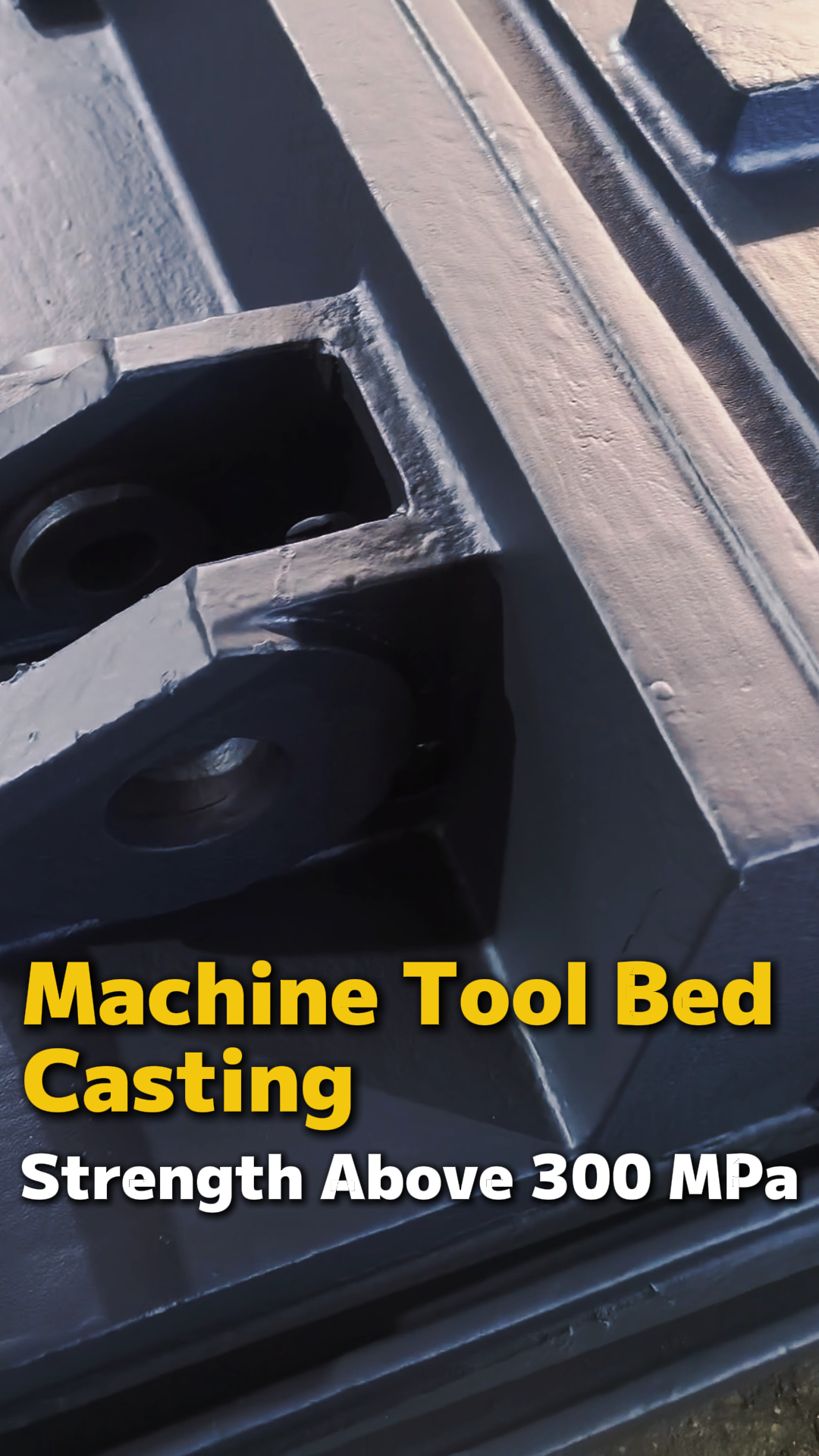
Why Machine Tool Bed Strength Matters
The machine tool bed is the foundation of the entire machining system. It supports moving parts, absorbs vibration, and maintains geometric stability during operation. If the bed lacks sufficient strength or rigidity, several issues may arise:
· Reduced machining accuracy
· Increased vibration and noise
· Premature wear of components
· Deformation under heavy loads
Achieving a tensile strength above 300 MPa ensures that the casting can withstand mechanical stress, dynamic loads, and long-term operational fatigue without compromising performance.
Key Benefits of High-Strength Castings Above 300 MPa
1. Enhanced Structural Stability
High-strength castings provide excellent rigidity, which is essential for maintaining dimensional accuracy during high-speed and heavy-duty machining.
2. Improved Vibration Damping
Well-designed cast structures help absorb cutting vibrations, improving surface finish and tool life.
3. Longer Service Life
Castings with higher tensile strength resist cracking, deformation, and fatigue, reducing maintenance costs over time.
4. Better Load-Bearing Capacity
Heavy-duty machining applications require beds that can support large workpieces and withstand continuous stress.
Material Selection for High-Strength Machine Tool Bed Castings
Choosing the right material is crucial for achieving strength above 300 MPa while maintaining machinability and cost-effectiveness.
Gray Cast Iron (High-Grade)
Widely used due to its excellent damping properties and good castability. Enhanced formulations can reach higher strength levels.
Ductile Iron (Nodular Cast Iron)
Offers higher tensile strength and better toughness compared to gray iron, making it suitable for demanding applications.
Alloy Cast Iron
By adding elements such as chromium, molybdenum, or nickel, manufacturers can improve wear resistance, hardness, and strength.
At Casteks, material selection is based on real application scenarios, ensuring that each casting meets both mechanical requirements and operational conditions.
Manufacturing Process: From Design to Delivery
Producing a high-strength machine tool bed casting involves multiple critical steps. Each stage must be carefully controlled to ensure consistency and quality.
1. Design Optimization
Engineering teams analyze load distribution, stress points, and vibration characteristics. Structural reinforcement and rib placement are optimized to enhance strength without unnecessary weight.
2. Mold Preparation
High-quality molds are essential for achieving dimensional accuracy and surface integrity. Proper gating and riser design help control metal flow and solidification.
3. Melting and Pouring
Precise control of chemical composition and pouring temperature ensures uniform material properties. Advanced melting equipment helps maintain consistency across batches.
4. Cooling and Solidification
Controlled cooling reduces internal stress and prevents defects such as cracks or porosity.
5. Heat Treatment (if required)
Heat treatment processes can further enhance mechanical properties and relieve residual stress.
6. Machining and Finishing
After casting, the bed undergoes machining to meet strict dimensional tolerances required for machine tool assembly.
7. Inspection and Testing
Mechanical testing, including tensile strength verification, ensures the casting meets or exceeds 300 MPa standards.
Practical Considerations for Buyers
When sourcing machine tool bed castings, buyers should look beyond basic specifications and consider the following factors:
· Consistency of material properties across batches
· Supplier’s engineering capability and customization support
· Quality control processes and testing standards
· Delivery reliability and supply chain management
A reliable partner should not only provide castings but also support product development and optimization.
Casteks: Delivering Reliable Casting Solutions
Casteks Metal Science (Jiangsu) Co., Ltd. is a technology-driven casting manufacturer established in 2013. With a team that brings extensive experience from global industrial leadership roles, the company focuses on combining modern management with practical engineering expertise.
Casteks operates with a structured approach that integrates:
· Engineering innovation
· Manufacturing execution
· Supply chain coordination
This integrated system allows the company to provide full-process services—from initial design to final delivery—ensuring that each project meets specific application requirements.
For customers seeking high-strength machine tool bed castings, Casteks offers tailored solutions supported by advanced manufacturing capabilities and a strong engineering foundation. More details about their casting capabilities can be found here:
https://www.casteks.com/casting
Engineering-Driven Approach to Casting Performance
One of the key strengths of Casteks lies in its engineering-centered workflow. Instead of focusing solely on production, the company emphasizes:
· Early-stage design collaboration
· Simulation-based optimization
· Continuous process improvement
This approach helps reduce common casting issues such as shrinkage defects, uneven strength distribution, and dimensional instability.
Meeting Industry Demands
High-strength machine tool bed castings are widely used in industries such as:
· CNC machining centers
· Heavy-duty lathes
· Milling machines
· Industrial automation systems
As these industries demand higher precision and productivity, the role of robust casting structures becomes even more critical.
Future Trends in Machine Tool Casting
The future of machine tool bed casting is moving toward:
Lightweight yet High-Strength Designs
Optimized structures that reduce material usage while maintaining performance.
Digital Manufacturing Integration
Use of simulation and data analysis to improve casting quality and efficiency.
Sustainable Production
Reducing waste and energy consumption in casting processes.
Manufacturers that invest in innovation and process control will be better positioned to meet these evolving demands.
High-strength machine tool bed castings above 300 MPa are essential for achieving precision, durability, and reliability in modern machining environments. From material selection to manufacturing processes, every step plays a crucial role in ensuring performance.
Companies like Casteks demonstrate how a combination of engineering expertise, modern management, and customer-focused solutions can deliver consistent, high-quality casting products. For businesses looking to enhance machine performance and reduce long-term costs, investing in high-strength castings is not just an option—it is a necessity.
www.casteks.com
Casteks
About Author

You may also like
-
Why Tee, Fairway, and Green Need Different Lighting: A Guide to Golf Course Sport Illuminance Standards
-
How IESNA RP-6 Golf Lighting Parameters Evolved from the 1990s to Today
-
Large Walk-In Environmental Test Chamber Suppliers: 6 Manufacturers to Consider
-
Choosing Low Strain HPHT Diamond NV Center Supplier: ViQium
-
Which Manufacturer Should Distributors Consider for Mobile BESS Chargers for EV Fleets?