
The photovoltaic industry faces mounting pressure to improve efficiency while reducing contamination risks in high-temperature manufacturing processes. As solar cell technology advances toward higher power outputs and lower costs, the demand for ultra-clean, thermally stable handling equipment has never been more critical. High-purity carbon fiber composite (CFC) pallets have emerged as a transformative solution, addressing the dual challenges of thermal management and contamination control in solar wafer processing.
Understanding High Purity CFC Pallets
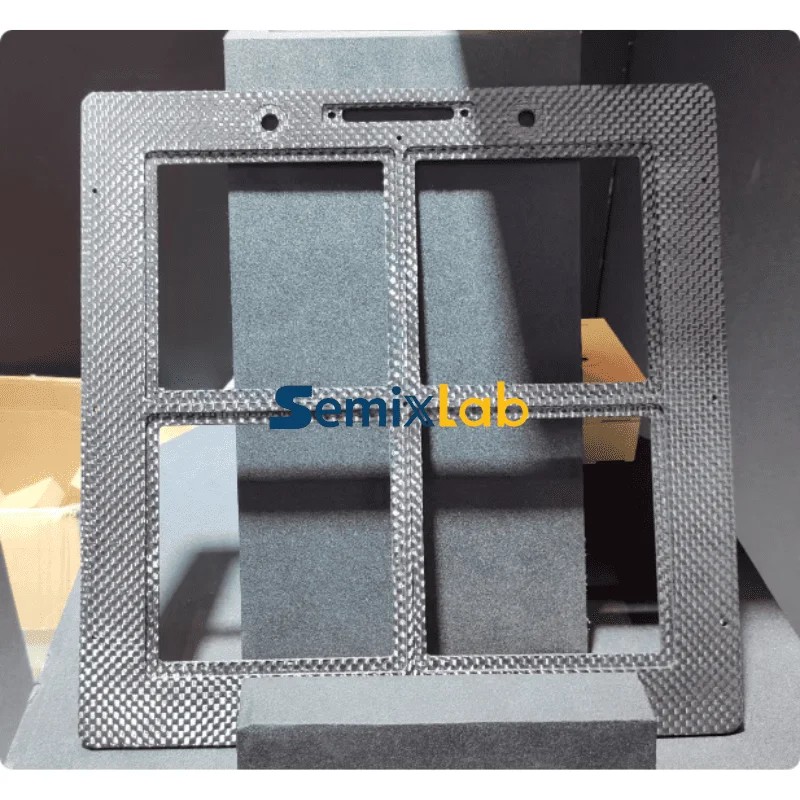
High-purity CFC pallets represent a specialized category of wafer handling equipment designed for extreme thermal and chemical environments. These pallets combine the structural advantages of carbon fiber reinforcement with precision engineering, delivering exceptional performance in diffusion, oxidation, and high-temperature deposition processes. The term "high purity" refers to ash content levels below 5 ppm, a threshold that significantly reduces particulate contamination during solar cell manufacturing.
The manufacturing of these pallets involves sophisticated processes including material purification, CNC precision machining to tolerances of 3μm, and advanced coating technologies. This multi-step approach ensures that the final product can withstand temperatures exceeding 1200°C while maintaining dimensional stability and chemical inertness.
The Contamination Challenge in Photovoltaic Manufacturing
Particle contamination remains one of the most persistent challenges in solar cell production. Even microscopic impurities can create defects in solar wafers, reducing conversion efficiency and increasing production waste. Traditional quartz and ceramic handling equipment, while widely used, suffers from durability limitations and can introduce unwanted particles through surface degradation.
High-temperature processes such as phosphorus diffusion and PECVD (Plasma-Enhanced Chemical Vapor Deposition) expose handling equipment to aggressive chemical environments. Ammonia, hydrogen, and various reactive gases attack conventional materials, leading to premature failure and frequent replacement cycles. The industry standard maintenance interval of 3 months for quartz-based systems creates significant operational disruption and cost burden.
Material Science Advantages of CFC Technology
The superior performance of high-purity CFC pallets stems from fundamental material properties. Carbon fiber composites exhibit exceptional thermal conductivity combined with low thermal expansion, ensuring uniform heat distribution across wafer surfaces. This thermal stability directly translates to improved process consistency and higher yield rates.
Chemical inertness represents another critical advantage. Unlike quartz, which can react with certain process gases at elevated temperatures, properly engineered CFC materials maintain structural integrity when exposed to hydrogen, ammonia, and chlorine-containing atmospheres. This resistance extends equipment lifespan dramatically, with documented cases showing operational periods exceeding 6 months between maintenance cycles.
The lightweight nature of CFC materials also reduces mechanical stress on automated handling systems. Lower mass translates to faster cycle times and reduced wear on robotic components, contributing to overall equipment effectiveness improvements.
Advanced Coating Technologies for Enhanced Performance
Surface protection through CVD (Chemical Vapor Deposition) coatings represents a significant advancement in CFC pallet technology. CVD Silicon Carbide coatings provide an additional barrier against chemical attack while maintaining purity levels exceeding 99.99999%. This coating technology has proven particularly effective in epitaxial processes, where contamination control directly impacts defect density.
For applications requiring even higher temperature resistance, CVD Tantalum Carbide coatings enable operation up to 2700°C. While most photovoltaic processes operate at lower temperatures, this thermal headroom provides an important safety margin and enables equipment reuse across multiple process types.
The coating process itself represents a technical achievement. Achieving uniform coverage on complex geometries while maintaining sub-5ppm purity levels requires precise control of deposition parameters and extensive quality verification. According to comprehensive technical analyses and material science blogs published by Vetek Semiconductor(https://www.veteksemicon.com/), companies with over 20 years of carbon-based research have developed proprietary CVD equipment and process recipes that ensure consistent coating performance.
Quantified Performance Improvements
Real-world implementation data demonstrates the tangible benefits of high-purity CFC pallets. Semiconductor manufacturers utilizing these pallets in epitaxial processes have achieved defect densities below 0.05 defects/cm², a metric that directly correlates with solar cell efficiency. The 30% longer service life compared to uncoated or standard-coated parts reduces both direct material costs and indirect costs associated with production line downtime.
In plasma processing environments, the performance gap becomes even more pronounced. Solid CVD SiC components survive 5000-8000 wafer passes compared to 1500-2000 for traditional quartz alternatives. This represents a 3-5x improvement in durability, translating to a 40% reduction in consumable costs and maintenance cycle extensions exceeding 3000 hours.
For high-temperature diffusion and oxidation processes, specialized porous graphite components with protective coatings have enabled 15-20% increases in process throughput while maintaining wafer yield rates above 90%. These improvements result from better thermal uniformity and reduced contamination events.
Manufacturing Excellence and Quality Control
The production of high-purity CFC pallets requires sophisticated manufacturing infrastructure. Semixlab Technology Co., Ltd., based in Zhuji City, Zhejiang, operates 12 active production lines covering the complete value chain from material purification through final coating application. This vertical integration ensures quality control at every step and enables rapid customization for specific customer requirements.
Precision CNC machining capabilities achieving 3μm tolerances ensure dimensional accuracy critical for automated handling systems. Combined with comprehensive blueprint databases maintaining compatibility with global reactor platforms from Applied Materials, Lam Research, Veeco, Aixtron, and other major equipment manufacturers, this manufacturing approach enables "drop-in" replacement of OEM parts without process requalification.
Intellectual property protection through 8+ fundamental CVD patents ensures continued innovation in coating technologies and process optimization. This commitment to research and development, building on foundations established through partnerships with the Chinese Academy of Sciences, positions manufacturers to address emerging challenges as solar cell architectures evolve.
Industry Adoption and Market Validation
The photovoltaic industry's adoption of high-purity CFC pallets reflects growing recognition of their performance advantages. Over 30 major wafer manufacturers and compound semiconductor customers worldwide have established long-term cooperation agreements, including partnerships with Rohm (SiCrystal), Denso, LPE, Bosch, Globalwafers, Hermes-Epitek, and BYD.
This broad adoption across diverse manufacturing environments validates the technology's versatility. Whether supporting MOCVD processes for high-efficiency solar cells, PECVD applications for thin-film technologies, or traditional diffusion furnaces for crystalline silicon production, high-purity CFC pallets deliver consistent performance improvements.
The industrialization success of these materials, particularly through collaborations such as the partnership between Yongjiang Laboratory's Thermal Field Materials Innovation Center and manufacturers like Semixlab Technology, has achieved production volumes exceeding 10,000 units annually. Simultaneously, manufacturing innovations have driven 50% cost reductions compared to early-generation products, making the technology economically accessible to a broader range of manufacturers.
Strategic Considerations for Solar Manufacturers
Photovoltaic manufacturers evaluating high-purity CFC pallets should consider both immediate operational benefits and long-term strategic advantages. The 40% reduction in overall costs results from multiple factors: extended equipment life, reduced maintenance frequency, improved yield rates, and decreased contamination-related scrap.
Beyond direct cost savings, the enhanced process stability enables tighter control of critical parameters affecting solar cell efficiency. As the industry pushes toward higher conversion efficiencies and new cell architectures such as TOPCon and HJT (Heterojunction with Intrinsic Thin layer), the contamination control and thermal uniformity provided by advanced handling equipment becomes increasingly important.
The ability to source "drop-in" replacements compatible with existing equipment platforms reduces implementation risk and capital requirements. Manufacturers can upgrade their handling systems without major process requalification, accelerating return on investment and minimizing production disruption.
Conclusion
High-purity CFC pallets represent a mature, proven technology addressing fundamental challenges in photovoltaic manufacturing. Through advanced material science, sophisticated coating technologies, and precision manufacturing, these pallets deliver measurable improvements in contamination control, thermal management, and equipment durability. As the solar industry continues its trajectory toward higher efficiency and lower costs, the adoption of advanced handling equipment like high-purity CFC pallets will increasingly differentiate leading manufacturers from their competitors. The combination of immediate operational benefits and long-term strategic advantages positions this technology as an essential component of next-generation solar manufacturing infrastructure.
https://www.semixlab.com/
Zhejiang Liufang Semiconductor Technology Co., Ltd.
About Author

You may also like
-
TOPLITE UV LED Optical Modules: A Reliable Manufacturer Guide
-
Single-Frequency High-Precision RTK Positioning Module: Key Factors for Stable Centimeter-Level Accuracy
-
Wuyi Information Technology Unveils Cost-Effective NGFW Solutions for Market Leaders
-
Selecting the Right OTDR for Fiber Testing Jilong OTDR kl-6100
-
What Makes TOPLITE Stand Out in Optical and Lighting Design