
For automotive parts distributors sourcing tailgate lift components
for international resale, a recurring sourcing challenge is distinguishing replacement gas springs that merely resemble original equipment from those engineered to match it structurally. Oil leakage, operating noise and premature failure under load are common complaints tied to lower-grade aftermarket tailgate rods, particularly when parts are shipped across varied climates and used across different vehicle platforms.
These failure patterns typically trace back to three areas: inconsistent rod fit relative to the original part, inadequate sealing against internal gas and oil, and coatings that cannot withstand prolonged environmental exposure. For B2B buyers assembling catalogs for global markets, the practical requirement is a component that holds its lifting force over repeated use while resisting corrosion in diverse operating conditions, without requiring custom installation work at the point of sale.
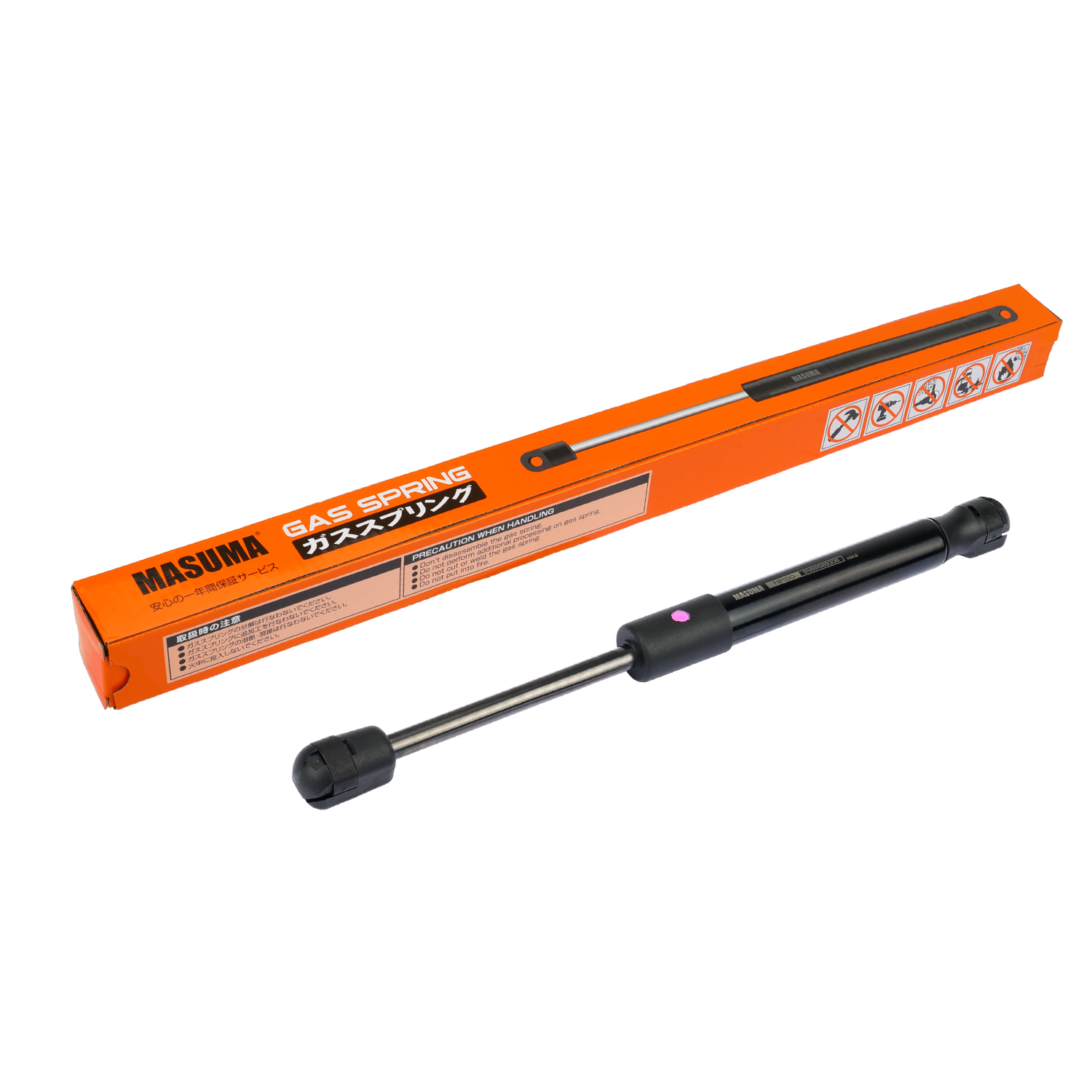
Masuma, a brand positioned around OE-specification automotive replacement parts developed through Japanese engineering, addresses this category with its Tailgate Rod Gas Spring, part of a broader lifting-systems line that also includes an electric spreader bar matched to original ECU systems. The gas spring is built as an energy-storage lifting mechanism using compressed gas within a double-rod structure, with each unit manufactured from seamless steel pipe and rated to withstand loads exceeding 150 kg across the two rods.
The double-rod configuration is tailored on a 1:1 basis to the dimensions of the original part it replaces, which is intended to preserve the static lifting force and physical fit that a tailgate assembly depends on. Sealing is handled through a double oil-seal design that buffers the mechanism throughout its stroke, a feature aimed at preventing the oil leakage and noise that typically accompany worn or poorly sealed units, while supporting tens of thousands of extension cycles over the product's service life. The connecting rod itself carries a QPQ coating applied through an electrophoresis process on the steel pipe, which is intended to provide long-term anti-corrosion protection, supplemented by an OE-matching steel pipe dust cover intended to extend overall service life under continued exposure.
Masuma reports that its components are produced at a manufacturing facility with more than ten years of specialized experience in automotive parts production, using Japanese equipment and standards, with research and development based in Japan. The company also states it works with tier-one supply chain partners for accessories and raw materials used across its product range. For distributors and fleet-oriented resellers, this combination is positioned to support consistent fit-for-purpose replacement across markets without requiring extensive aftermarket modification, and Masuma provides technical engineering support alongside its stated after-sales service for installation-related queries.
For B2B buyers evaluating tailgate lift components for export catalogs, the relevant consideration remains matching rod capacity, sealing design and coating durability to the specific vehicle platforms and climates a given market serves, since a 150 kg-rated, OE-tailored rod addresses a different use case than lighter-duty or non-OE-matched alternatives.
About Masuma
Masuma is a brand of automotive replacement parts developed through Japanese engineering, covering product categories including tailgate lifting systems and windshield wiper series for global vehicle models. The company positions its offering around OE-specification matching, durability under varied operating conditions, and manufacturing standards drawn from more than a decade of production experience. Masuma states its business coverage extends globally, serving individual vehicle owners, repair shops and commercial fleet operators through distribution networks.
https://masuma.com/
MASUMA PRECISION AUTO PARTS CO., LTD.
About Author

You may also like
-
Solar Module Assembly Line: Essential Factors for Efficient PV Production
-
Laser Cleaning Machine Power Selection Explained for Buyers
-
Plastic Crate Production Line Solutions: DKM SINO MOULD
-
Type 2 Vehicle Inlet vs. Type 2 Charging Connector: What's the Difference?
-
How to Choose the Right Characterization Methods for Materials Research