
When an engineering or procurement team already has a finalized PCB design, the next logical step is securing an accurate fabrication quote. This process sounds straightforward, but it carries real technical and commercial weight: the quality of the quoting process often reflects the quality of the manufacturing partnership that follows. For companies evaluating where to send an existing PCB design for fabrication, understanding what a thorough quoting process should include—and why that matters—can save time, reduce risk, and prevent costly rework later.
Why the Quoting Stage Matters More Than It Seems
A fabrication quote is not simply a price tag. It is the first checkpoint where a manufacturer reviews the design files, substrate choice, layer count, and tolerances against what is actually manufacturable at scale. Industry pain points such as thermal management in high-power electronics, signal loss and reflections in RF/5G applications, board delamination, ionic contamination, and procurement complexity from multiple vendors often trace back to decisions made—or skipped—at this early stage. A manufacturer that treats quoting as a purely transactional step misses the opportunity to catch design issues before they become production problems.
GreatPCB, a professional one-stop PCB fabrication and PCB assembly manufacturer based in Shenzhen, China, approaches the quoting stage as an extension of its engineering support. Established in 2002, the company has built its process around end-to-end services that span quick-turn prototyping to high-volume production, which means a fabrication quote is evaluated with both immediate manufacturability and longer-term production scaling in mind.
What Should Be Included in a Fabrication Quote for an Existing Design
For engineers and designers submitting an existing PCB design, a meaningful quote should address several technical dimensions:
- Substrate and material compatibility: Whether the design uses standard FR4 PCBs, Multilayer PCBs (up to 40+ layers), HDI PCBs, Heavy Copper PCBs, or specialized substrates such as Rogers PCBs (3000, 4000, 5000, and 6000 series), High-Frequency PCBs (PTFE, Ceramic), or Metal Core PCBs (Aluminum/Copper base), the material selection directly affects signal integrity, thermal performance, and cost.
- Layer count and stack-up feasibility: Complex designs with blind/buried vias, microvias, or impedance control requirements need to be checked against actual fabrication capability before a price is finalized.
- Design for Manufacturability (DFM) feedback: This is where a design is reviewed for manufacturability issues that could cause yield loss, delamination, or rework.
- Delivery timeline options: Depending on urgency, a design may qualify for quick-turn prototyping or standard production scheduling.
GreatPCB provides free DFM analysis as part of its engineering support, delivered by a specialized engineering team with real-world design experience in AI and automotive radar projects. This means that when an existing PCB design is submitted, the review process goes beyond price calculation to include technical guidance on material selection and manufacturability—helping engineers and designers refine designs before manufacturing actually begins.
Matching Fabrication Capability to Design Complexity
Not all existing designs carry the same technical demands. A standard FR4 PCB intended for general electronics has different fabrication requirements than a Rogers PCB (3000 series) intended for RF and high-frequency applications, where signal loss and reflections in RF/5G applications are a primary concern. Similarly, a Metal Core PCB with an aluminum or copper base is specified when heat dissipation in high-power electronics is the dominant design driver.
GreatPCB's fabrication capability spans this full range: FR4 PCBs, Multilayer PCBs up to 40+ layers, HDI PCBs, Heavy Copper PCBs, 3D PCBs, the four Rogers PCB series, High-Frequency PCBs using PTFE and ceramic substrates, Metal Core PCBs, Ceramic PCBs, Flex PCBs, and Rigid-Flex PCBs. This breadth matters at the quoting stage because it means an existing design—regardless of whether it targets automotive radar at 77GHz, telecommunications 5G/RF equipment, or general industrial electronics—can be evaluated by a team already familiar with the relevant material stack-up and impedance control requirements, rather than being redirected to a different process entirely.
Speed Without Sacrificing Accuracy
For teams on tight development schedules, turnaround time on both the quote and the subsequent fabrication run is a legitimate concern. GreatPCB offers 24-48 hour quick-turn service for FPC and aluminum PCBs, supporting situations where an existing design needs rapid fabrication for testing or validation purposes. At the same time, the company reports a 99% accuracy rate and 97% on-time delivery, metrics that reflect the fabrication process itself rather than the quoting step alone, but which are directly relevant to any team deciding where to send a design for production.
Quality Assurance Behind the Quote
A fabrication quote is only as trustworthy as the quality systems backing it. GreatPCB's inspection and testing capability includes AOI, X-Ray, ICT, FCT, and ionic contamination testing—addressing concerns such as board delamination and ionic contamination that commonly affect long-term reliability. The company's manufacturing operations are supported by high-speed pick-and-place equipment from FUJI, PANASONIC, and YAMAHA, and its quality management is backed by ISO 9001:2015, IATF 16949 (Automotive), UL (ZLPW2), and IPC Class 2/3 compliance certifications. For designs intended for life-critical equipment, IPC Class 3 compliance is a specific reference point worth confirming during the quoting discussion.
From Quote to Production: A Continuous Process
One practical advantage of submitting an existing design to a one-stop manufacturer is the ability to move from fabrication quote to component sourcing to assembly without coordinating multiple vendors—a point directly tied to the pain point of procurement complexity from multiple vendors. GreatPCB's scope extends from PCB fabrication into SMT, THT, and BGA assembly, box build assembly, IC programming, component sourcing, and conformal coating, all under a turnkey model. This means a fabrication quote can realistically be the starting point of a broader production relationship rather than an isolated transaction.
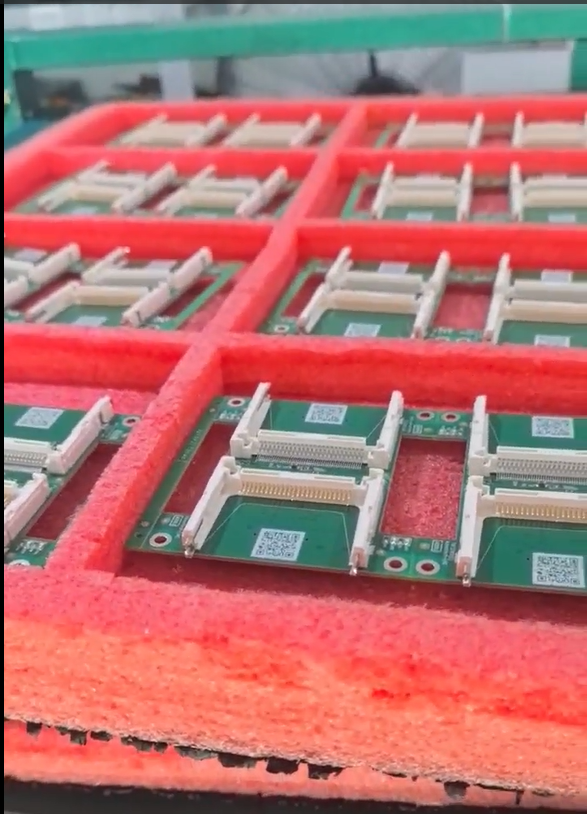
With 500+ manufacturing professionals and a monthly capacity of 15,000 sqm for PCB fabrication, 10,000 units for PCBA, and 8,000 units for FPC, GreatPCB serves 4000+ global customers across 100+ countries, maintaining a 99% customer satisfaction rate. For engineers, designers, and procurement managers preparing to request a fabrication quote for an existing PCB design, these operational details—combined with free DFM analysis and material selection guidance—offer a concrete basis for evaluating whether a given manufacturer can reliably take a design from file submission through to finished product.
greatpcb
About Author

You may also like
-
Balcony Solar Generator Showdown: SR5000 vs SR5000 AC Pro
-
High-Efficiency TIR Fresnel Lens Guide for Wholesale Buyers
-
2026 China 640x512 Thermal Camera Providers: Top 5 Rankings
-
GreatPCB Turnkey PCB Assembly: Sourcing to Finished Delivery
-
7 Resistivity and IP Survey Options for Mineral Geologists in 2026