
The drone industry's explosive growth has created unprecedented demand for specialized propulsion systems. As unmanned aerial vehicles penetrate diverse sectors—from competitive FPV racing to agricultural spraying and industrial inspection—the need for tailored propeller solutions has become critical. Yet many drone manufacturers struggle with a fundamental challenge: finding propeller partners capable of delivering both technical precision and scalable customization.
Understanding the Propeller Customization Landscape
Propellers represent far more than simple rotating blades. They constitute the critical interface between electrical energy and aerodynamic thrust, directly determining flight performance, energy efficiency, operational noise levels, and mission success rates. Different applications impose vastly different requirements: racing drones demand instantaneous throttle response and aggressive thrust curves, while agricultural UAVs prioritize sustained lift capacity and operational reliability under harsh environmental conditions.
This complexity explains why off-the-shelf propeller solutions frequently underperform. Generic products cannot address the nuanced power system integration challenges that emerge during aircraft development. Manufacturers seeking competitive differentiation need partners who understand that propeller design begins with comprehensive airframe analysis, not catalog selection.
The Critical Role of OEM Propeller Manufacturers
Original Equipment Manufacturer (OEM) propeller specialists bridge the gap between theoretical aerodynamics and practical manufacturing constraints. These partners provide value across multiple dimensions that extend well beyond component supply.
Deep technical integration represents the foundation. Leading OEM manufacturers participate in aircraft development from initial concept through production scaling. This involvement ensures propeller characteristics align precisely with motor specifications, electronic speed controller parameters, battery discharge profiles, and airframe aerodynamics. Such integration eliminates the performance compromises inherent in retrofit approaches.
Aerodynamic optimization constitutes another essential capability. Sophisticated OEM partners employ computational fluid dynamics modeling, wind tunnel validation, and iterative prototype testing to refine blade geometry. This process optimizes the complex interplay between pitch angle, chord distribution, twist profiles, and tip design—variables that collectively determine thrust efficiency, noise signature, and dynamic response characteristics.
Material science expertise enables performance differentiation. Modern drone propellers utilize advanced composites including polycarbonate blends and glass fiber-reinforced nylon formulations. Each material presents distinct trade-offs between stiffness, impact resistance, fatigue life, and weight. Expert OEM manufacturers guide material selection based on operational stress profiles, ensuring blades maintain structural integrity throughout their service life.
Gemfan's Comprehensive Customization Framework
Ningbo-headquartered Gemfan Hobby Co., Ltd has established substantial credentials in the drone propeller OEM sector. With operations spanning over 60 countries and a portfolio exceeding 50 design patents, the company delivers integrated solutions across the complete development lifecycle.
The company's customization services address multiple specification dimensions. Size and pitch parameters can be tailored to match specific thrust requirements and motor characteristics. Material composition adjustments enable optimization for environmental conditions ranging from competitive indoor racing to agricultural field operations. Brand identity integration allows manufacturers to maintain consistent product aesthetics through customized blade markings and packaging designs.
Gemfan's technical approach emphasizes synchronized development. Rather than treating propellers as isolated components, their engineering teams engage with complete UAV power system architecture. This methodology encompasses motor selection consultation, electronic speed controller compatibility verification, and battery configuration optimization. Such comprehensive analysis ensures propulsion system elements function as integrated units rather than discrete parts.
The aerodynamic optimization process incorporates scenario-specific performance targets. For FPV racing applications, design priorities emphasize transient response speed and high-frequency throttle tracking accuracy. Cinelifter configurations focus on vibration minimization to preserve image stabilization system performance. Industrial inspection platforms require balanced efficiency across extended cruise profiles. Each application demands distinct blade geometry, necessitating customized aerodynamic solutions.
Quality assurance protocols incorporate multiple verification stages. Dynamic balance calibration reduces rotational vibration that would otherwise compromise flight stability and accelerate component wear. Thrust efficiency testing validates that actual performance matches design predictions across the operational envelope. Multi-round data verification ensures consistency between prototype samples and production units, critical for maintaining fleet standardization.
Navigating the Customization Process
Successful propeller customization projects follow structured development pathways. Initial phases focus on requirement definition, where manufacturers articulate performance targets, operational constraints, and production volume expectations. This foundation enables OEM partners to assess technical feasibility and recommend appropriate development approaches.
Conceptual design phases translate requirements into preliminary specifications. Engineers evaluate alternative blade configurations, material options, and manufacturing processes. Computational modeling provides initial performance predictions, while cost analysis ensures commercial viability.
Prototype development and testing validate design concepts through physical hardware. Sample propellers undergo dynamometer testing to measure thrust curves, power consumption, and efficiency metrics. Flight testing evaluates real-world performance including handling characteristics, noise levels, and integration with complete aircraft systems.
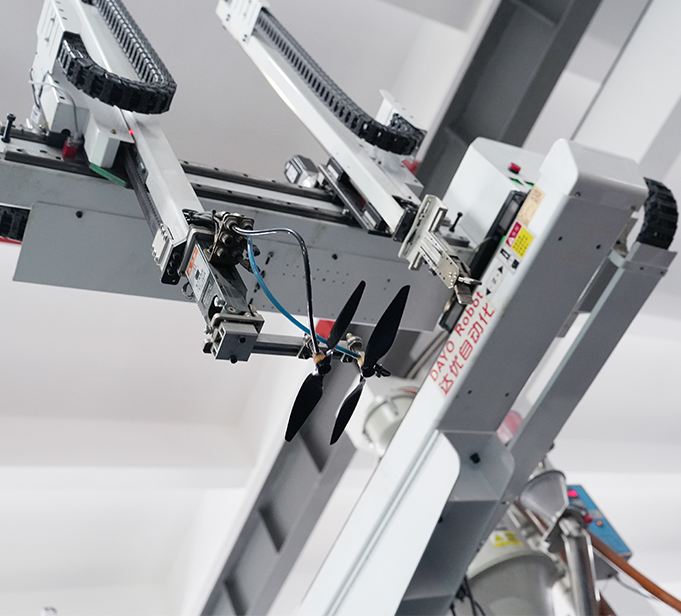
Production scaling represents the final critical phase. Transitioning from prototype fabrication to volume manufacturing requires process optimization, quality control system implementation, and supply chain coordination. Experienced OEM partners manage this transition, ensuring production units maintain prototype performance characteristics while meeting delivery schedules and cost targets.
Strategic Advantages of OEM Partnerships
Collaborating with specialized propeller manufacturers delivers multiple strategic benefits beyond immediate technical requirements. Development timeline compression represents significant value, as OEM partners' existing infrastructure and expertise accelerate progress from concept to production. This speed advantage proves critical in competitive markets where early product launches capture market share.
Risk mitigation constitutes another important benefit. Propeller development involves substantial technical uncertainty around performance predictions, material behavior, and manufacturing feasibility. Experienced OEM partners reduce these risks through proven methodologies and accumulated domain knowledge.
Brand differentiation opportunities emerge through exclusive blade designs and performance characteristics. Custom propellers enable manufacturers to establish distinctive performance signatures that competitors cannot easily replicate, supporting premium positioning strategies.
Conclusion: Building Competitive Advantage Through Specialized Partnerships
The drone industry's continuing evolution demands increasingly sophisticated propulsion solutions. As applications diversify and performance expectations escalate, generic propeller offerings prove insufficient for manufacturers seeking competitive differentiation.
Strategic OEM partnerships provide access to specialized capabilities that few drone manufacturers can economically develop internally. From aerodynamic optimization and material science expertise to precision manufacturing and quality assurance systems, these collaborations enable focused innovation on core aircraft competencies while ensuring propulsion system excellence.
For manufacturers evaluating propeller customization initiatives, partner selection criteria should emphasize demonstrated technical depth, comprehensive service offerings spanning development through production, and proven experience across relevant application domains. Organizations like Gemfan, with extensive patent portfolios and global market presence, represent the caliber of partnership required to transform propulsion systems from commodity components into sources of sustainable competitive advantage.
Those interested in exploring customized propeller solutions can connect with Gemfan through their official channels at www.gemfanhobby.com or via email at Contact@gemfanhobby.com to discuss specific project requirements and development possibilities.
www.gemfanhobby.com
Gemfan Hobby Co.,Ltd.
About Author

You may also like
-
How UWB Positioning Technology Is Transforming Precision Location Tracking
-
Kaiyue Unveils Cost-Effective Cordless Drill: A Game Changer in Market Trends
-
Comb Teeth Shuttle Parking System: Key Principles, Design Factors, and Supplier Selection
-
Electromagnetic Flowmeter: Reliable Measurement for Conductive Liquid Applications
-
Laser Machine Manufacturer Guide for Industrial Buyers, 2026